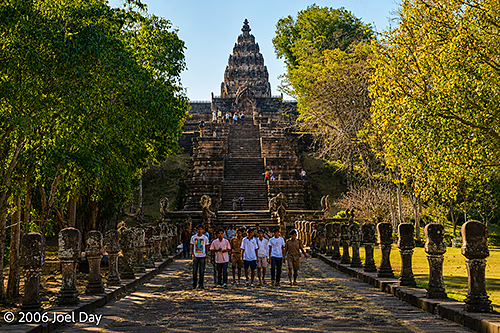
I’ve spent close to seven weeks in Thailand over the past year, so I have been looking to visit areas that offer experiences different from those I’ve already had. The easiest places to visit seem to have well-worn tourist trails, plenty of English spoken, and group excursions available for reasonable prices. The problem with these areas is that you’ll often feel you’re not even overseas, being surrounded by too many people like yourself.
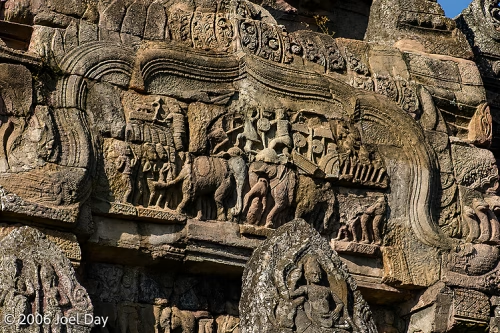
The challenge is to find a region that doesn’t get so many tourists, but is still relatively easy to travel through. I find language differences to be the biggest obstacle, but the lack of group tours/transportation can also be frustrating and expensive. Visiting Khao Yai National Park was a nice departure from the kinds of things I had previously done in Thailand, but I did have the luxury of spending most of my time with fluent English speakers, Thais, and groups of people interested in seeing and doing the same things and sharing the costs.
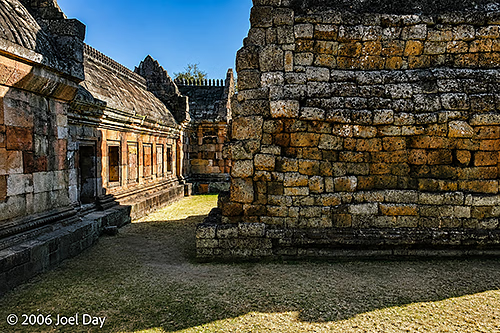
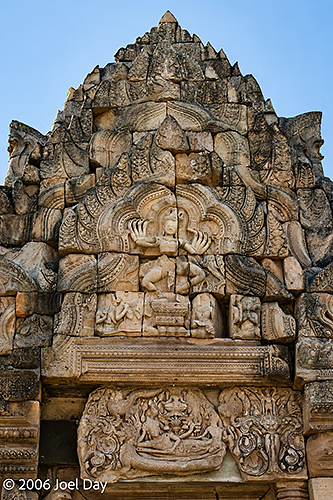
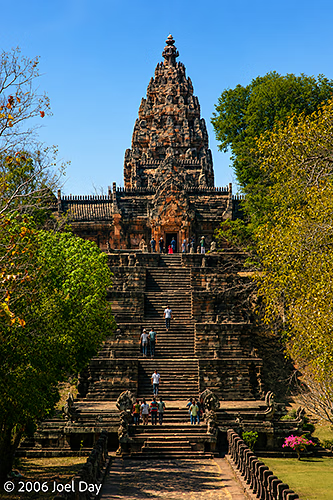
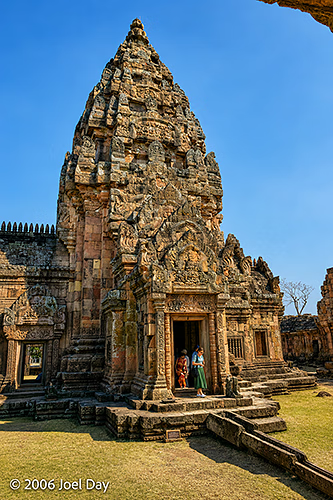
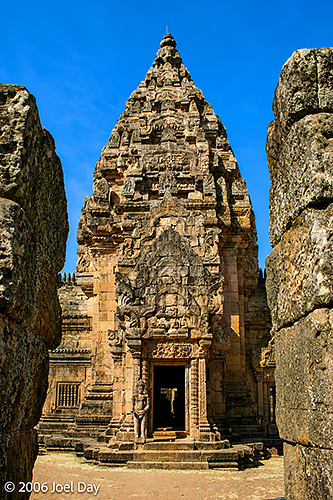
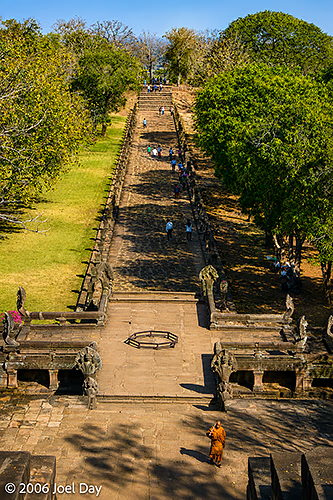
There was another historical park in Thailand that piqued my interest in the region I’ve been visiting, but it seemed difficult to find any group tour to it. The place is called Prasat Hin Khao Phanom Rung and is perched atop the summit of an old volcano, not far from the Cambodian border. It is actually related to Angkor Wat and designed in the same style—although it is much smaller. I guess you could say it’s the closest thing Thailand has to an Angkor Wat, and not really all that far away.
Why not just go to Angkor Wat? Some day I would like to, but everyone I’ve ever met who has ventured there on land from Thailand warns against it. The road there is supposed to be horrendously bad (once you cross the border into Cambodia), and the child touts are supposed to be notorious for hassling. Of all the countries in Southeast Asia, Cambodia has the reputation for being the hardest to travel through.
So a trip to Prasat Hin Khao Phanom Rung Historical Park would give me something of the same flavour of Angkor Wat without the hassle. The only problem was getting there. There are a series of trains, trucks, and tuk-tuks you can negotiate to get there — but if you don’t know Thai, it can also leave you lost.
I ended up just negotiating a deal with the manager of the safari guesthouse I was staying in in Pak Chong to be my personal driver for the day. His English was fine, and for about $50 he was essentially my chauffeur for the day — throwing in a few extra sites on the way there and back and paying all travel expenses.
The negotiation session was actually pretty funny, because we kept going back and forth trying to nail down our exact expectations for the day. He originally charged me one price but wanted to return to Pak Chong early—even though it was a 3-hour drive away. I had no interest in investing the money, and I only had a little time there. I was far more interested in being there at sunset when the light was nice for photography. He could have just said no, but he clearly wanted to do the trip for some reason. As it turned out, after our safari tour guide got involved, it was disclosed that the guesthouse manager was hoping to do a bit of marketing for his business while we were there — so he was eager to close the deal for just a few extra dollars (which would give me a longer visit). I was sitting at a table where intense negotiations were taking place among various people associated with the safari business—all in Thai —leaving me with no idea what they were getting so fired up about. It was like a meeting of the chiefs.
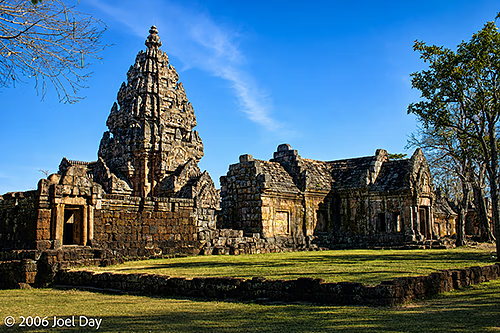
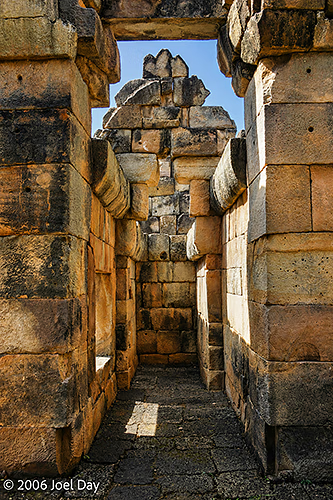
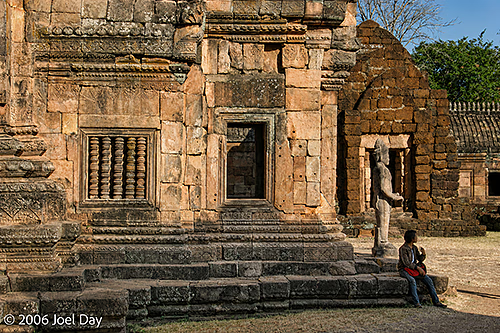
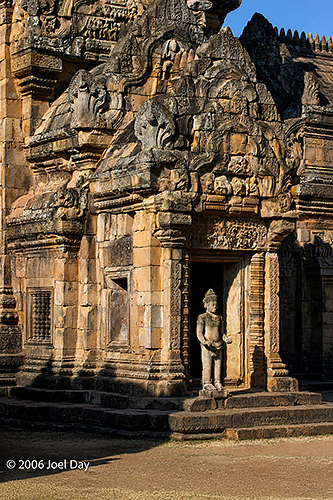
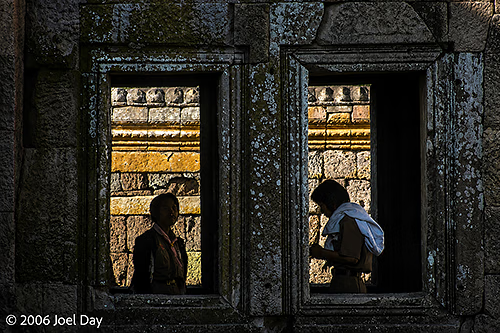
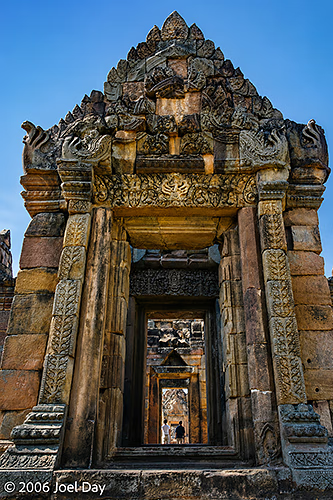
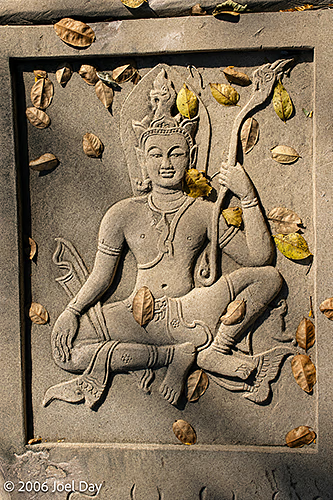
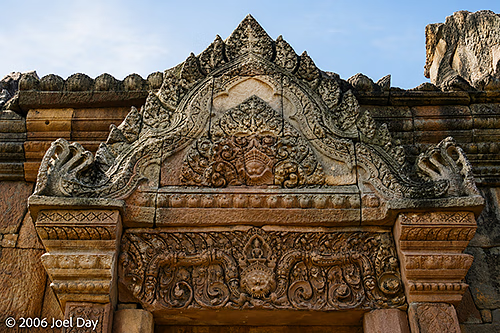
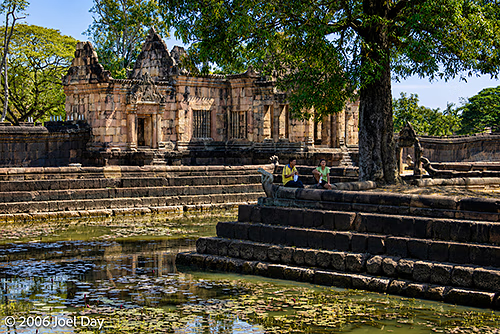
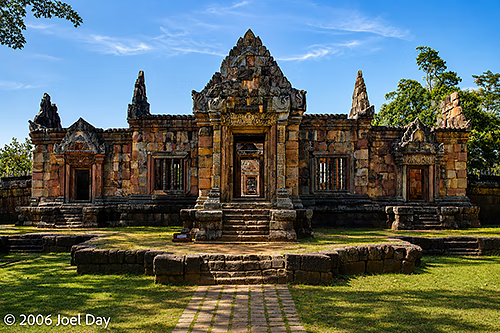
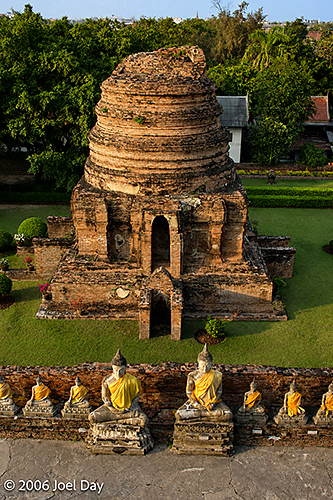
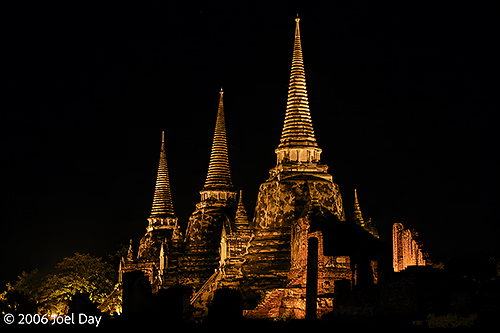
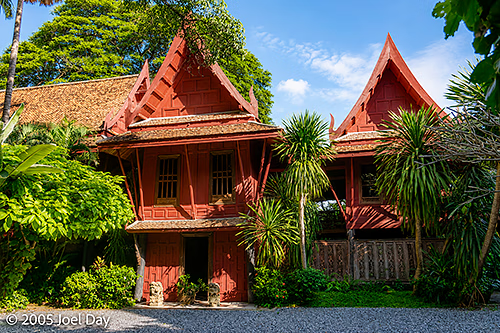
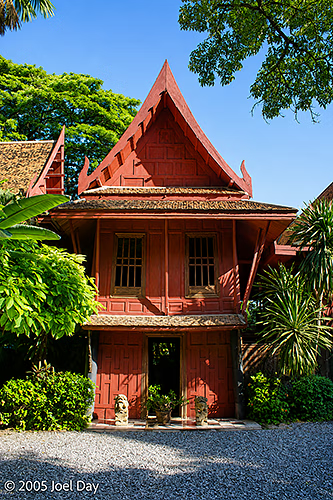
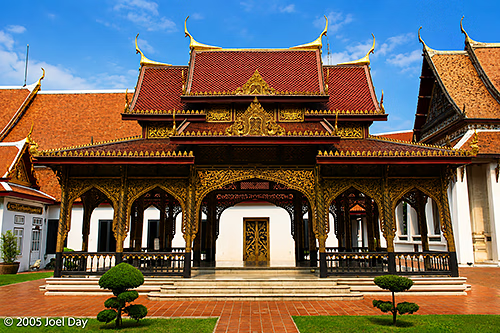
Of all the historical parks I’ve been to in Thailand, Prasat Hin Khao Phanom Rung Historical Park was by far the best restored. And its style was significantly different from that of Ayutthaya or Sukhothai. In fact, the style was much more in line with what I had seen around Delhi, India, last year. And there was a good reason for that: Ayutthaya and Sukhothai were predominantly Buddhist societies in their heyday, whereas Prasat Hin Khao Phanom Rung was originally Hindu (later Buddhist) when it was built between the 10th and 13th centuries. I think that’s right, anyway. While it was really interesting to snoop around Ayuthaya and Sukhothai and imagine what they were like when they served as Khmer capitals, Prasat Hin Khao Phanom Rung was much easier to appreciate because most of the structure had been fully restored. Another equally well-preserved historical park, Prasat Meuang Tam, was at the foot of the volcano and was also built in a similar Hindu style.
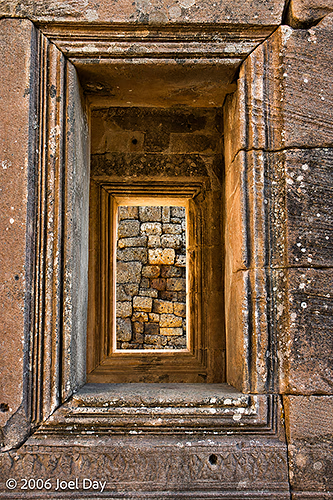
I enjoyed the visit, but couldn’t help feeling somewhat guilty about leaving my driver in the car in the heat of the day, waiting around for me to return. I did try to get him to come in with me so he would at least have something to do, but he didn’t seem interested.
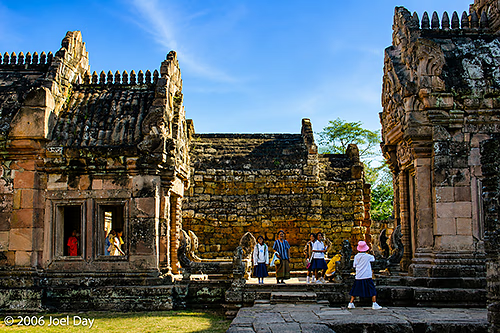
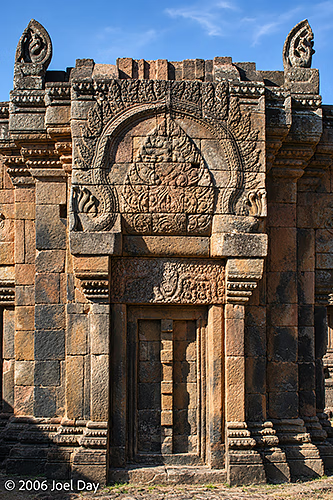
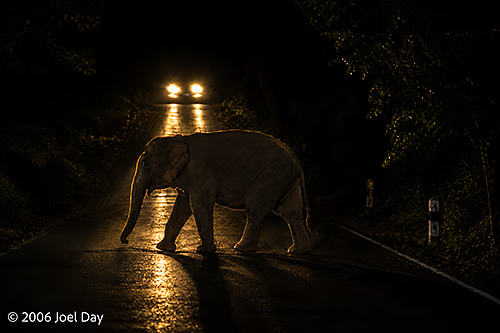
Like most of Asia, driving on Thai roads can seem quite perilous (and probably is), but I’ve rarely seen accidents. I would have to say the drive back to Pak Chong afterwards at dusk was the second most terrifying of my life. I don’t mean for that to sound like a Get Smart joke. I can tell you the most terrifying was the drive back from seeing the Taj Mahal in Agra, India last year. At least Thais turn their lights on at night, unlike a lot of Indians! Some of the roads were safer than others, but the scariest were two-lane roads with heavy traffic, all travelling at different speeds, with the faster cars desperately trying to get past the slower ones. It was fairly common to find yourself in a double pass, where two cars pass a slower car at the same time — taking up both the oncoming lane and the oncoming shoulder, all the way over on the other side of the road.
You must be logged in to post a comment.