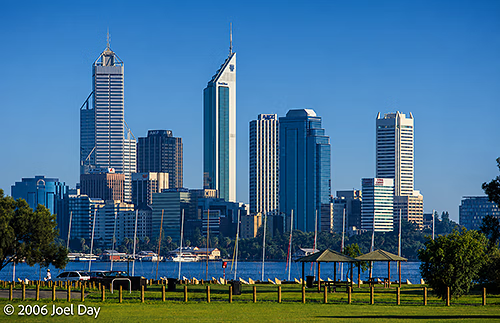
After 27 takeoffs and landings, I have finally found my way back to where I started my journey on August 1st: Perth, Australia. The air and streets seem super clean, the humidity is very low, the sun is very bright, and the people drive annoyingly slow and stay in nice, neat traffic lanes. I’m having to get used to life with Western toilets and toilet paper again. And I’m still not used to drinking tap water without having to purify it first. On the other hand, it sure seems quiet around here — without the hustle and bustle of Cairo, Delhi, Hong Kong, Bangkok, and Singapore. It will take some getting used to!
From one future world power to the next, I find myself chillin’ out in Hong Kong for a few days. What a relief it is to be here! What a contrast Hong Kong is to Delhi and Cairo.
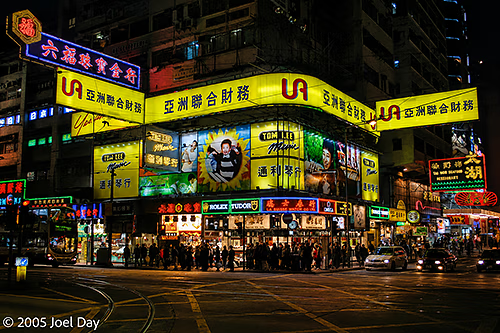
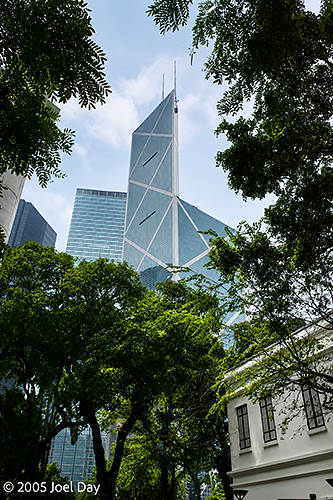
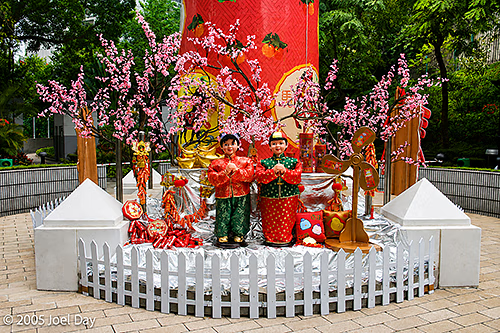
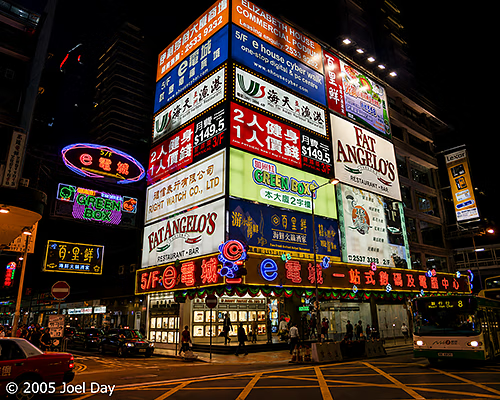
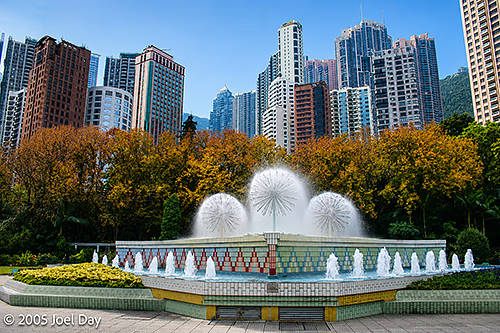
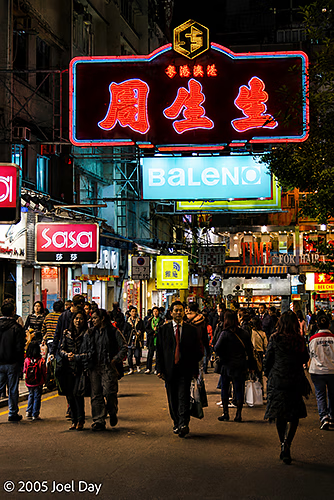
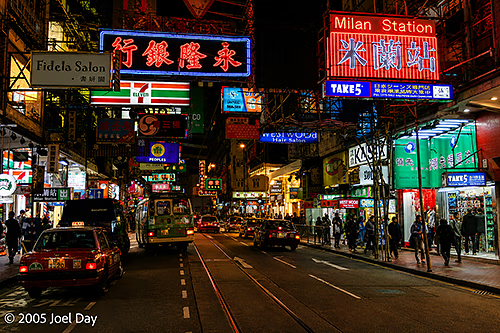
Evening Shopping in Causeway Bay, Hong Kong, ChinaSkyscrapers of Hong Kong, ChinaChinese New Year display, Hong Kong, China
It’s nice to go from constantly watching where to step (avoiding hocked phlegm and pools of urine on the pavement) to surfing the spotless, state-of-the-art subways and trekking the spectacularly steep hills of relatively clean Hong Kong. This is certainly one of the world’s great cities.
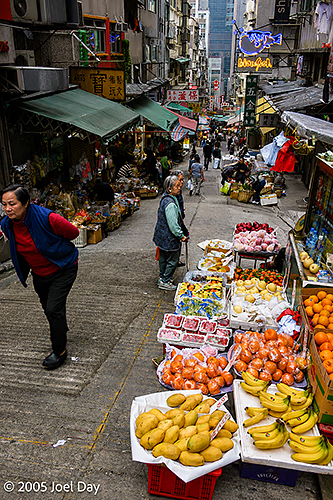
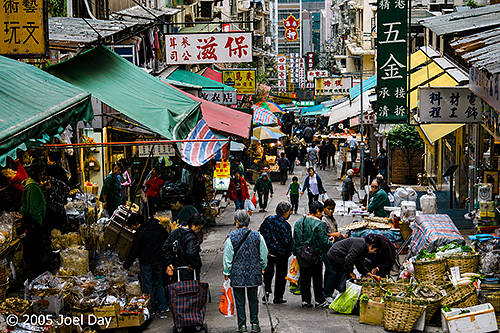
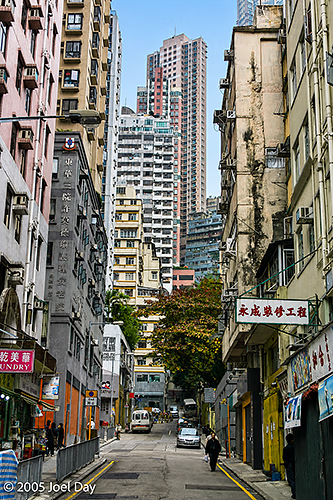
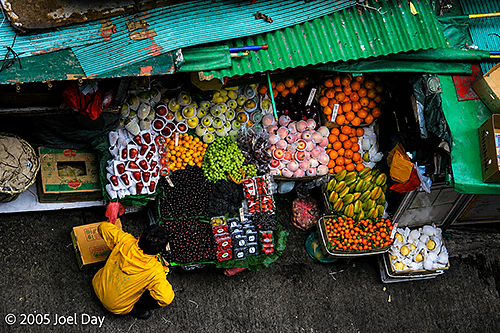
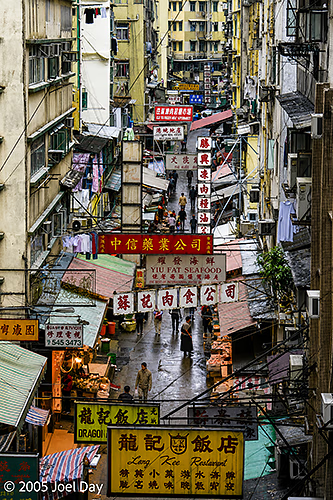
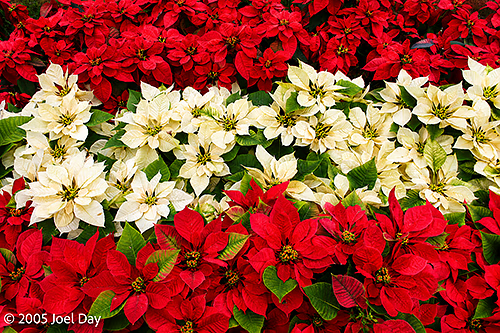
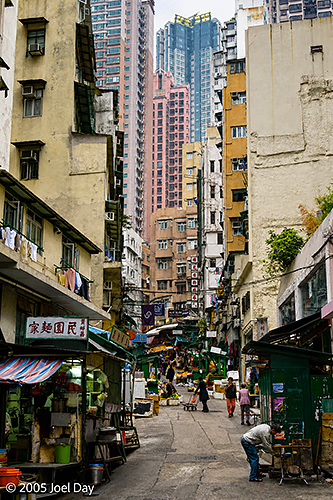
Busy street market in hilly Hong Kong, ChinaBusy street market in hilly Hong Kong, ChinaCity Streets of Hong Kong, ChinaFruit market in hilly street in Hong Kong, ChinaBusy street market in Hong Kong, ChinaChristmas displays of poinsettias in Hong Kong, China
Hong Kong probably has the nicest airport I’ve ever come across. It’s huge, and we landed at one of its most distant gates, but I was able to get from the plane into my hostel room (over 25km away) in less than an hour. I don’t think I waited more than two minutes for anything, hopping on moving sidewalks, airport shuttles, escalators, getting my temperature taken to make sure I didn’t have SARS, on through customs, through the baggage claim, onto a high speed train (that is so fast and smooth it feels like it’s levitating) into the city, onto a free hotel shuttle bus, and a then quick 1/2 block jaunt down to my cheap accommodation. The temperature taking, incidentally, consists of walking briskly past a heat-sensitive camera with everyone else. On large flat-panel screens you see an alien view of everyone, colour-coded to reflect each body temperature. If someone had a fever, I suppose they would appear a different colour and get yanked by security to the side. To get back to the airport, you actually check in with your bags in the city at a sleek train station, and they take care of the rest. It is probably the most distant check-in from your plane you’ll ever find.
Evening Shopping in Causeway Bay, Hong Kong, China
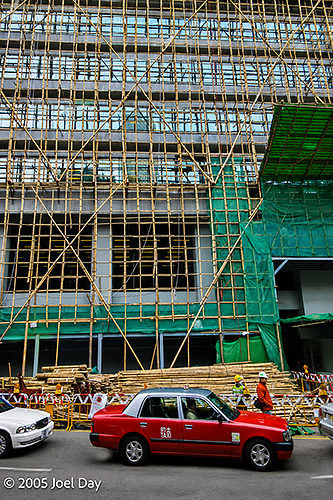
Hong Kong is very high tech in many ways. The whole city is wired for broadband. There is free Internet access in many subway stations and at the airport. I’m writing this blog at the central library, which has 500 such free terminals available on its many different floors. There are also mysterious containers whizzing over my head on the ceiling and into walls at either end of the building. I can only assume they’re full of books being sorted. On the other hand, many high-rise buildings are still built using bamboo scaffolding! There is certainly a mix of the old and new worlds in places.
City park surrounded by skyscrapers, Hong Kong, ChinaBamboo scaffolding around high-rise in Hong Kong, ChinaChinese Herbal Medicine Wholesaler, Hong Kong, China
The public transportation system here is fabulous, with probably the best subway system I’ve ever been on. There are illuminated maps on the walls of each rail car with flashing lights that show you exactly what station you’re at, which direction you’re going, which door you’ll need to exit from, and what connections you can make from the next station. In each of the underground stations, there are very clear maps showing all the subway exits and where they surface so you can plot the best one for where you’re headed. They’re all assigned letters and have signs everywhere pointing the way.
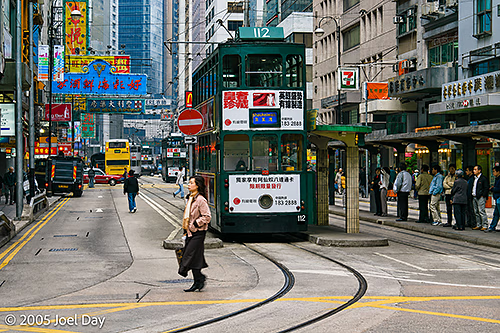
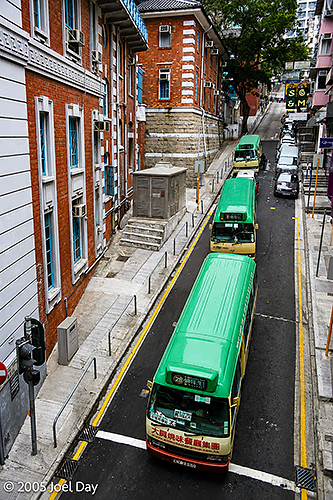
Iconic double-decker tram on streets of Hong Kong, ChinaBusses on streets of Hong Kong, China
Much of Hong Kong runs on smart cards these days. These are credit card-sized cards that contain a computer chip you can store information on. You can use them here to purchase all kinds of things, from subway trips to bus trips to parking meters to restaurants to stores, etc. You just juice them up with cash at an automated terminal from time to time. The best thing about them is that you don’t even need to remove them from your wallet to use them. You just wave your wallet within close proximity of a smart card reader, and it automatically registers where you’re coming from or going to or deducts whatever payment you’re trying to make. You never have to worry about fumbling for change.
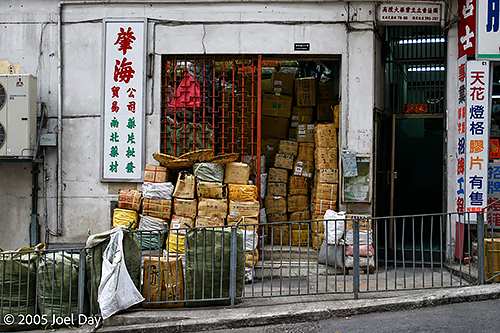
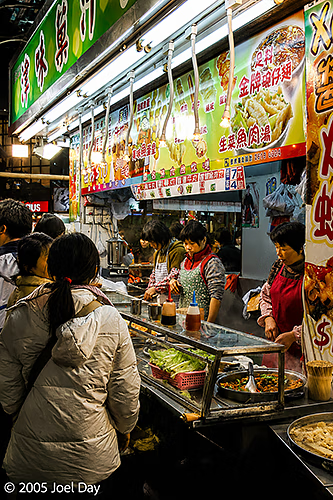
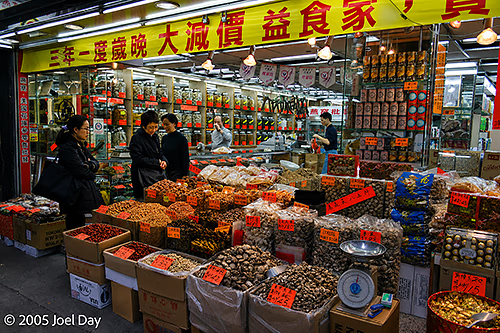
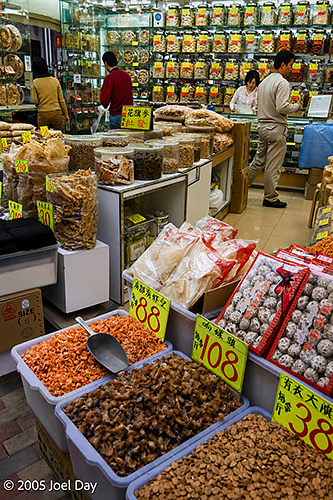
Food stall on the streets of Hong Kong, ChinaChinese dried-food and traditional ingredients shop, Hong Kong, ChinaChinese dried-food and traditional ingredients shop, Hong Kong, China
Hong Kong is also very safe, and you can wander pretty much wherever you want, day or night. The neighbourhood I’m in seems to be busy with shoppers every day up until midnight. Nobody seems to notice a Westerner like myself wandering around. This is especially nice after visiting India and Egypt, where touts were continually trying to herd you into their stores (honestly or deceitfully), never taking “no” for an answer.
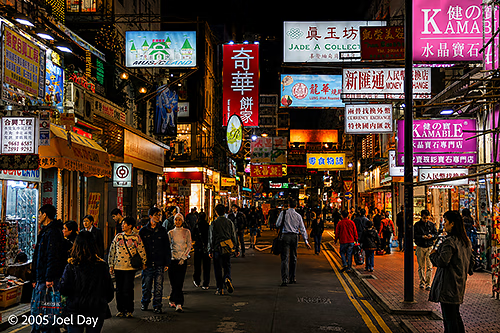
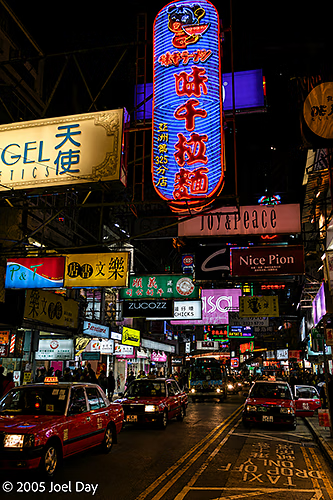
Evening Shopping in Causeway Bay, Hong Kong, ChinaEvening Shopping in Causeway Bay, Hong Kong, ChinaEvening Shopping in Causeway Bay, Hong Kong, ChinaEvening Shopping in Causeway Bay, Hong Kong, China
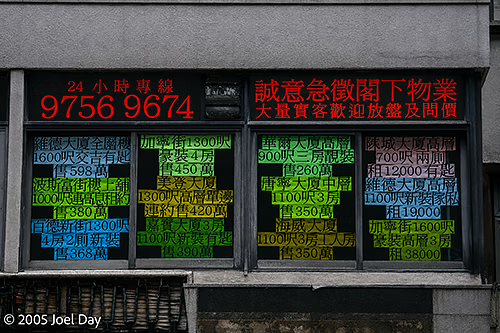
Probably the worst thing about Hong Kong is the cost of living here. I’ve been here on business a few times before, and most of the people I met had to commute an hour to find reasonably priced real estate. And that’s before and after working 12-hour days and on Saturday mornings (which seem to be the standard office hours here). The cost of food and accommodation is quite high too—which is part of the reason I’m only stopping here for a few days.
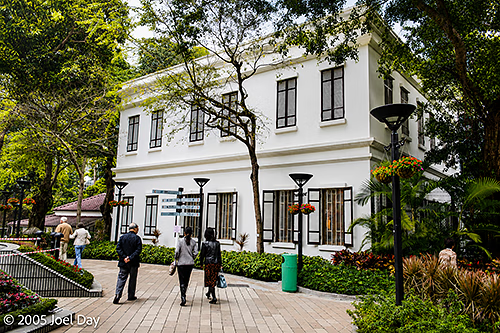
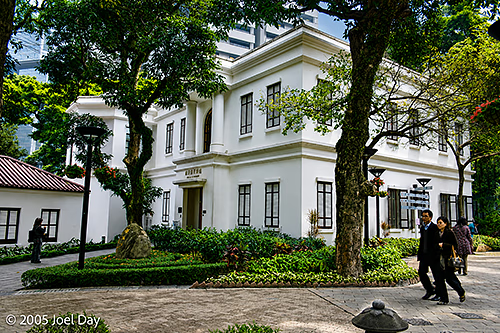
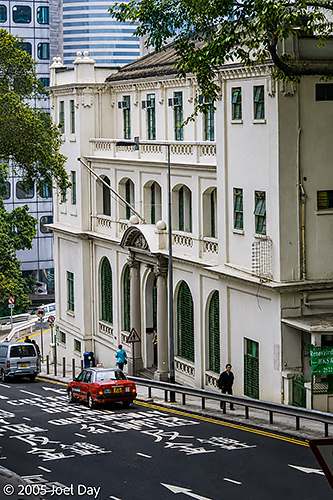
Rawlinson House in Hong Kong Park, part of the surviving Victoria Barracks complex in Central Hong Kong, built during British colonial rule.City Streets of Hong Kong, ChinaCassels Block, part of the surviving Victoria Barracks complex in Central Hong Kong, built during British colonial rule.Flagstaff House in Hong Kong Park, built on the former site of the British Army’s Victoria Barracks in 1846.Real estate listings on the window of a realtor in Hong Kong, China
You must be logged in to post a comment.