My big mountain biking experience seemed to go pretty well. I’ve done a lot of road biking, but mountain biking felt like a whole different experience.
I had a variety of routes to choose from, and the easiest would have been to be dropped on top of a 5200 foot mountain (where all the routes started) so I could just glide to the bottom. Instead, I took a route that included some rollercoaster climbs uphill as well. The problem is, riding uphill on a mountain bike is much tougher than riding uphill on a paved road. First, we had to dress up like gladiators to ensure our safety. The bikes themselves contained massive shock absorbers. The paths we took were very rough with large rocks and deep ruts, and although the bikes were designed to handle these huge obstacles, they were prone to wheelie when riding over any sizable debris uphill. I’m sure if I had the experience, I could have handled it better. That being said, I survived just fine.
We rode the bikes about 3000+ feet down very steep hills in beautiful terrain through farms and coffee plantations. One of which we stopped by for some fresh home-grown coffee.
The tour company was run by a couple of expat Americans who seemed to be on to a good thing, with lots of solid business.
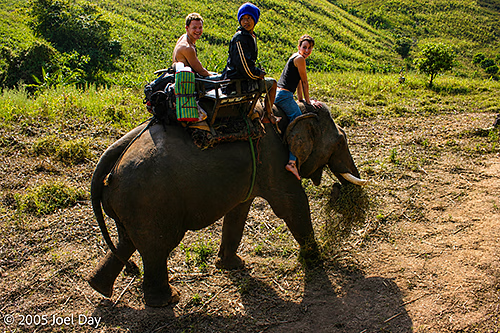
Elephant Transport near the Thai-Burma Border, Chiang Mai Province, Thailand
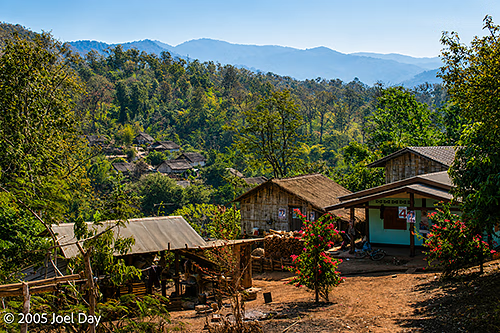
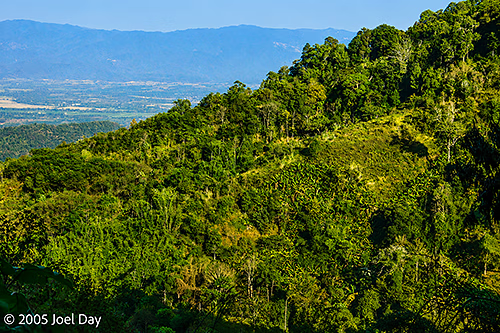
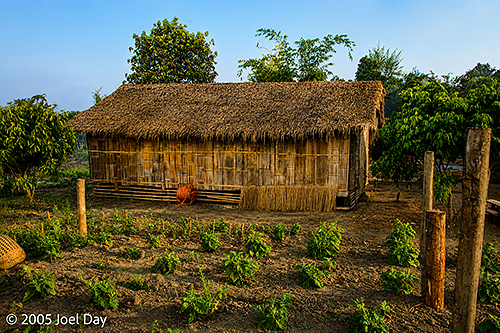
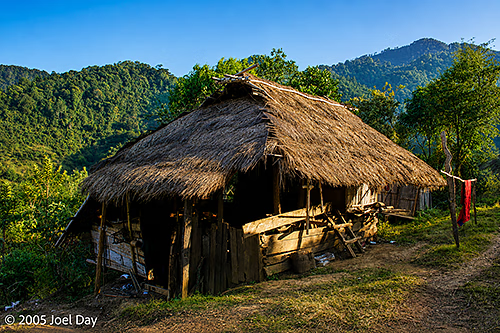
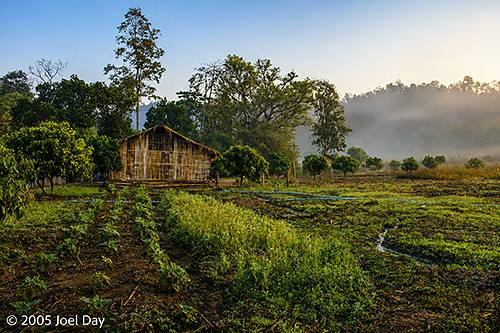
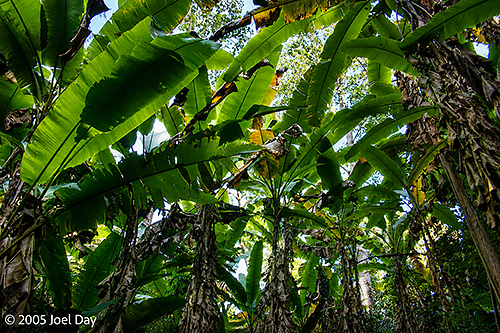
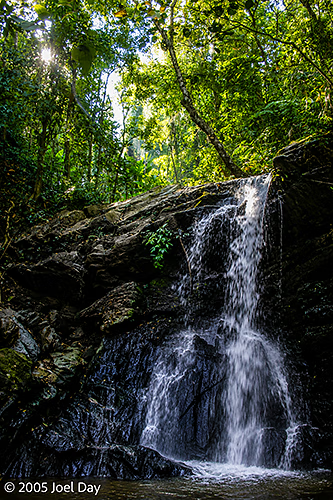
Well, it turned out to be ten people instead of six — but we all had a great time on our trek. In all, we hiked about 35 km over three days up and down beautiful mountains running along the Myanmar (Burma) border. We camped in isolated huts on top of some of the mountains with no power or plumbing and saw nobody but hill tribe people the entire time. We never saw or even heard a car or any roads until the end of our third day. Although it was technically a jungle, it was quite dry this time of year. It was nothing like the jungles I hiked through when I was in Fiji or Hawaii (which required a machete).
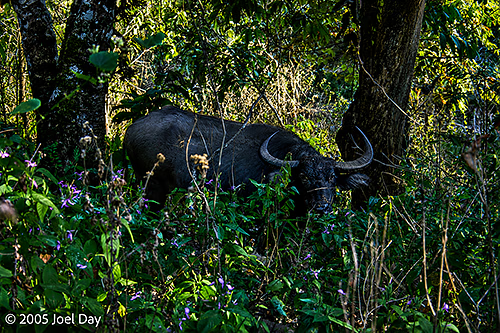
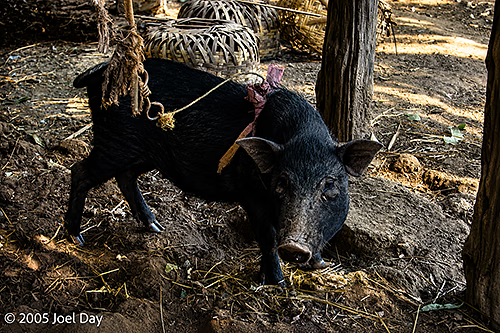
Mountain Village Huts near the Thai-Burma Border, Chiang Mai Province, ThailandMountain Jungle Terrain near the Thai-Burma Border, Chiang Mai Province, ThailandMountain Village Huts near the Thai-Burma Border, Chiang Mai Province, ThailandWater Buffalo near the Thai-Burma Border, Chiang Mai Province, ThailandMountain Village Huts near the Thai-Burma Border, Chiang Mai Province, ThailandMountain Village Pigs near the Thai-Burma Border, Chiang Mai Province, ThailandMountain Village Huts near the Thai-Burma Border, Chiang Mai Province, Thailand
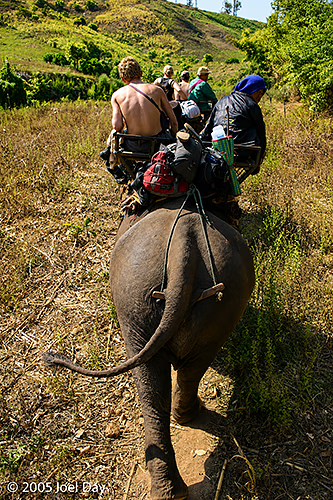
The elephant ride we took for part of the journey on our second day was very interesting, historically speaking. Thailand has a long tradition of using elephants to haul heavy goods and fight in wars (where they have been used to ram down the doors of forts, among other things). Although the ride was a bit rough in the seats provided on the elephant’s back, the ride was much more comfortable when you sat on the elephant’s neck. Occasionally they would stop at streams to fill up their trunks and shower themselves down in the heat. Of course, this is a whole different experience when you are sitting on top of them.
Elephant Transport near the Thai-Burma Border, Chiang Mai Province, Thailand
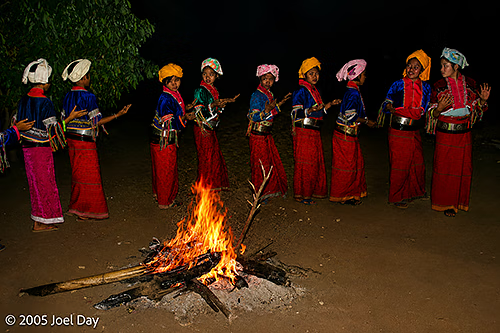
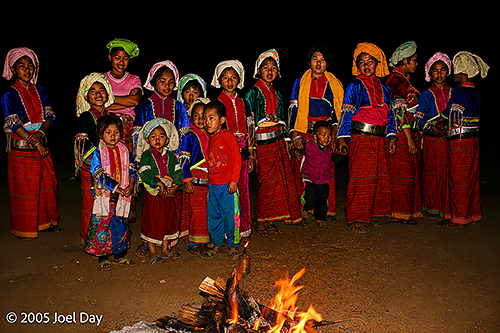
The traditional Thai food was fabulous throughout the trip, and the local guide and the people who came along, from Germany, Canada, and the U.K., were enthusiastic and fun to spend time with. The Canadians (from the Yukon) brought along a pet squirrel they picked up in a local market, which proved to be fascinating to the village kids. In the evening, the villagers entertained us with traditional dances around a bonfire.
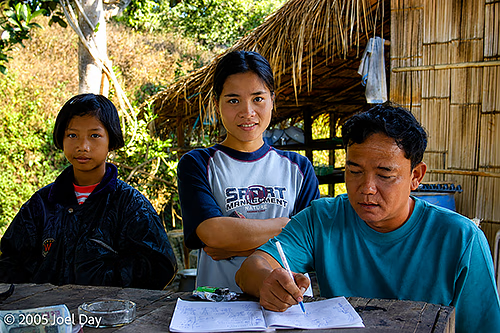
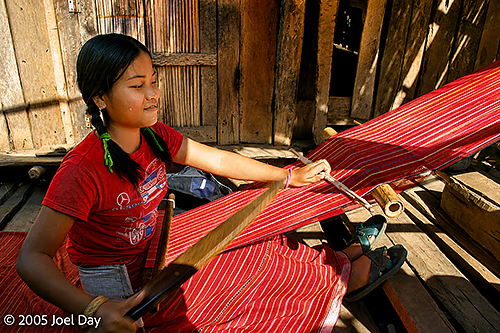
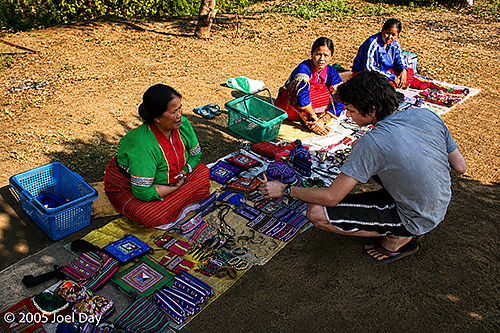
Highland Community Members, probably Karenni/Kayaw, Chiang Mai Province, ThailandHighland Community Weaver, probably Karenni/Kayaw, Chiang Mai Province, ThailandHighland Community Performers, probably Karenni/Kayaw, Chiang Mai Province, ThailandHighland Community Performers, probably Karenni/Kayaw, Chiang Mai Province, ThailandHighland Community Artisans, probably Karenni/Kayaw, Chiang Mai Province, Thailand
For the last leg of our journey, where we cruised down a river on bamboo rafts, we had a lot of fun trying to sabotage each other’s boats — causing most of the rafts to fall apart on the way downstream. As it turned out, they dismantled them to ship them back upstream, where they rebuilt them anyway, so we didn’t have to feel guilty on the ride back home to Chiang Mai.
Jungle Canopy near the Thai-Burma Border, Chiang Mai Province, ThailandJungle Waterfall near the Thai-Burma Border, Chiang Mai Province, Thailand
I decided to extend my stay here a few days so I can go on a mountain biking trip over more mountains tomorrow.
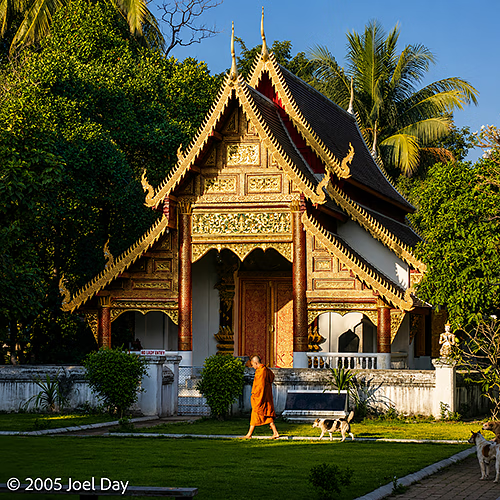
Buddhist Monk with stray dogs in front of temple in Chiang Mai, Thailand
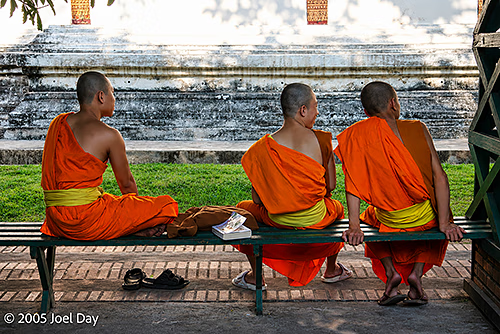
I’ve been hanging out in the northern city of Chiang Mai over the past few days. It’s the second-largest city in Thailand, but it still has a very small-town feel. Chiang Mai seems best known for its many Buddhist temples and the monks running around. It’s also considered a good base for exploring the northern reaches of Thailand, near the Myanmar (Burma) and Laos borders.
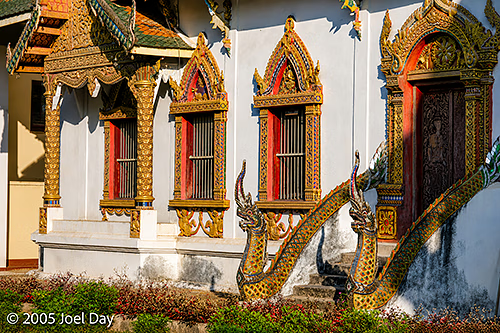
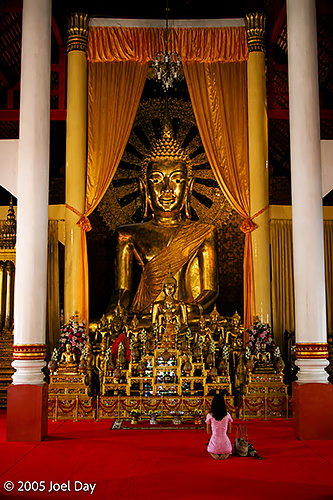
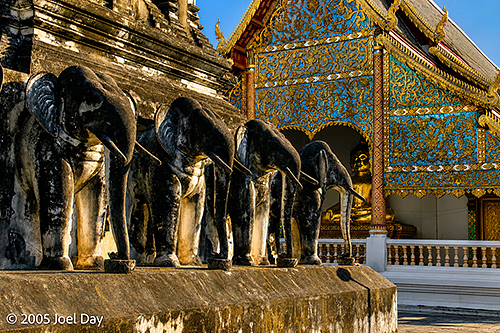
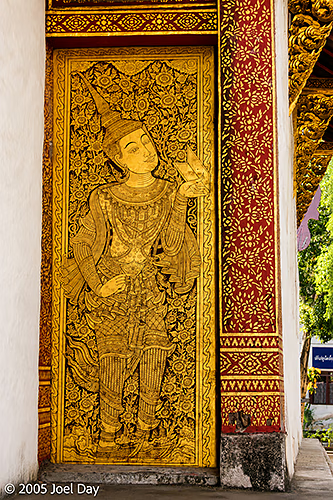
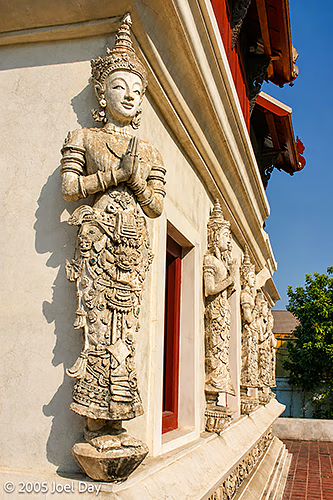
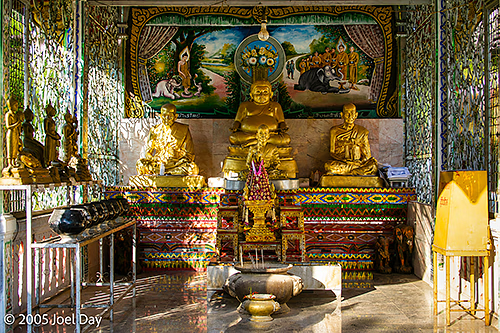
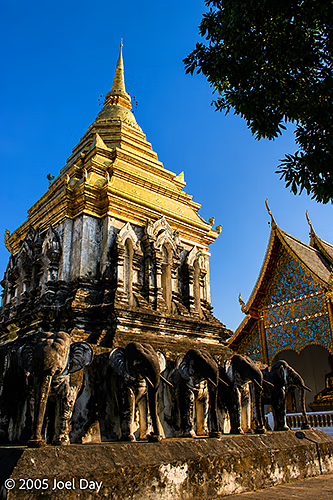
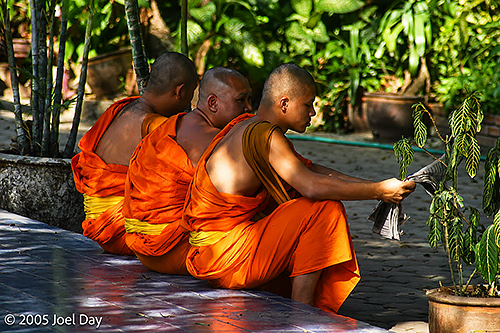
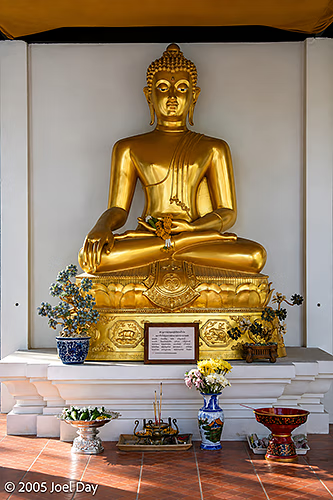
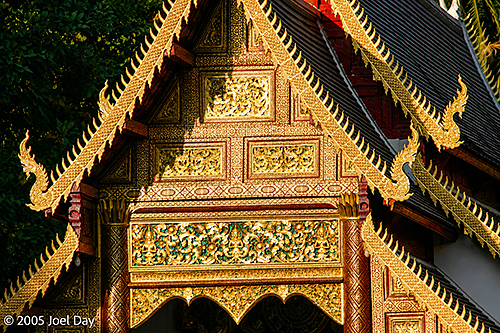
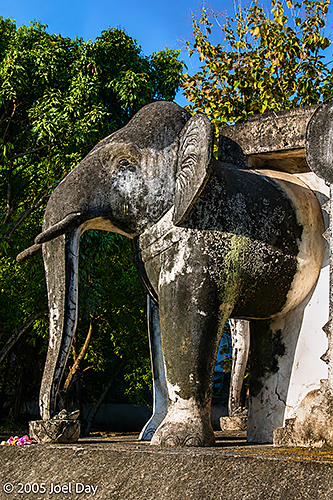
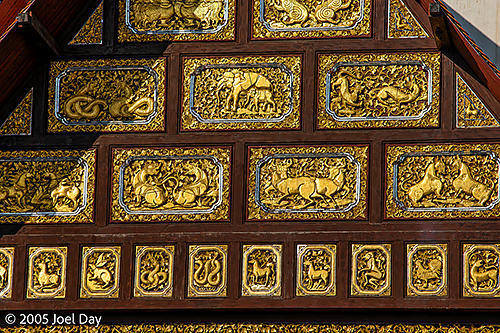
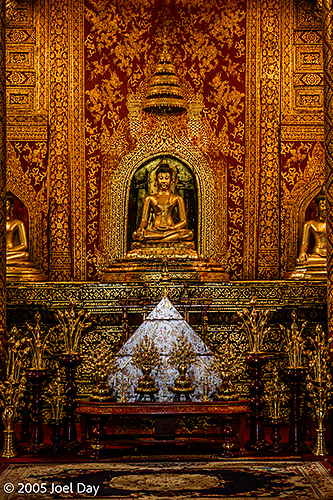
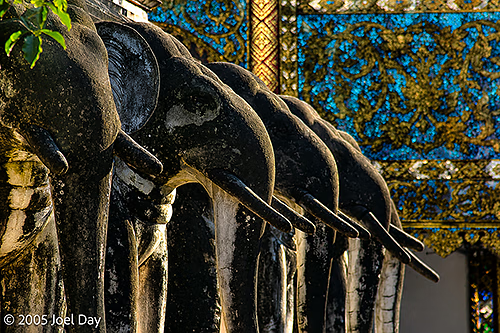
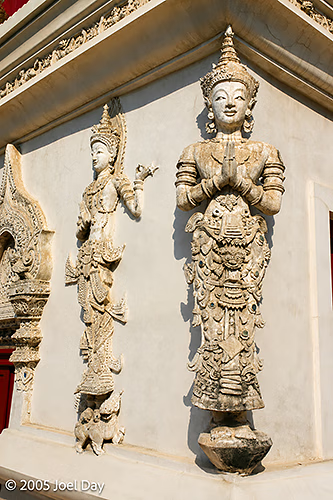
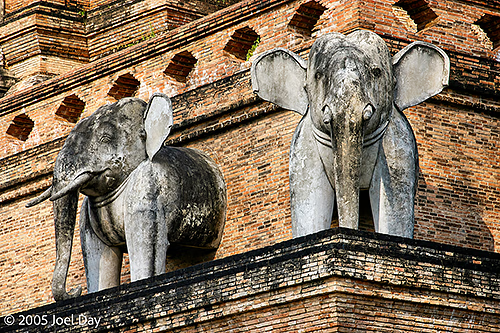
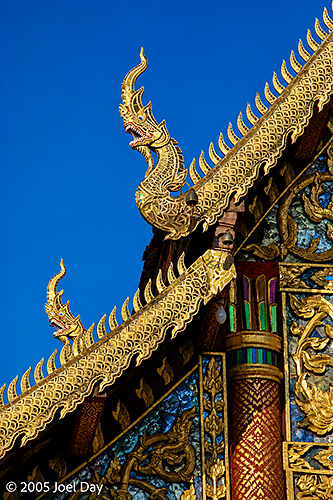
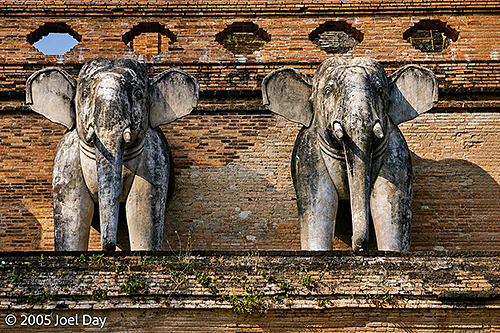
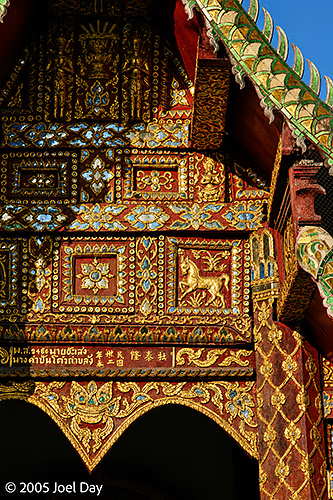
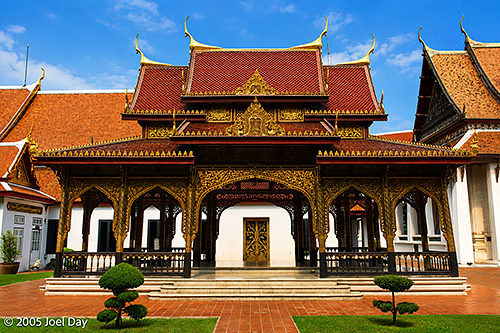
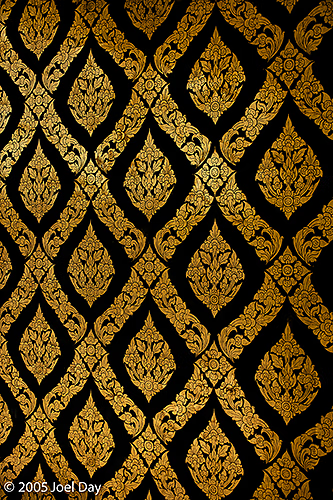
Buddhist temple design in Chiang Mai, ThailandThai Buddhist Shrine in Chiang Mai, ThailandElephants in Buddhist temple design in Chiang Mai, ThailandBuddhist temple design in Chiang Mai, ThailandBuddhist Monks relaxing in Chiang Mai, ThailandBuddhist temple design in Chiang Mai, ThailandThai Buddhist Shrine in Chiang Mai, ThailandElephants in Buddhist temple design in Chiang Mai, Thailand
Tomorrow I’m setting off on a three-day jungle adventure with a half dozen other people from my guesthouse. It will include a bit of hiking, a bit of swimming, some bamboo rafting, and, of course, elephant riding (as one does in Thailand). We’ll be sleeping in traditional huts in hill tribe villages (with those people with the elongated necks from wearing too many necklaces) up in the mountains.
Buddhist Monks reading newspapers in Chiang Mai, ThailandThai Buddhist Shrine in Chiang Mai, ThailandBuddhist temple design in Chiang Mai, ThailandElephants in Buddhist temple design in Chiang Mai, ThailandBuddhist temple design in Chiang Mai, ThailandThai Buddhist Shrine in Chiang Mai, ThailandElephants in Buddhist temple design in Chiang Mai, ThailandBuddhist temple design in Chiang Mai, ThailandElephants in Buddhist temple design in Chiang Mai, ThailandBuddhist temple design in Chiang Mai, ThailandElephants in Buddhist temple design in Chiang Mai, ThailandBuddhist temple design in Chiang Mai, Thailand
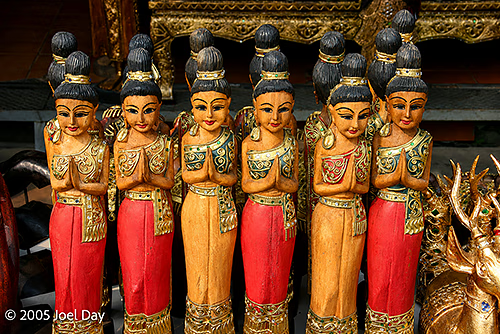
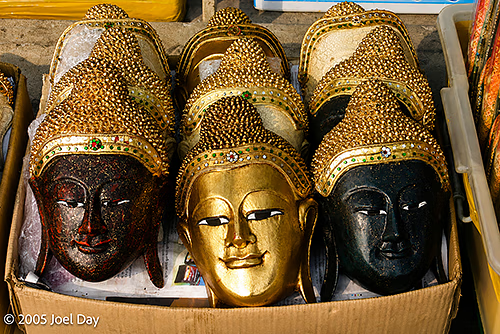
Golden Thai Wai Statues in a market stall, Bangkok, Thailand
I’ve been spending a few days wandering the back streets and neighbourhoods of Bangkok. There are lots of Buddhist temples and some monks about. They also have a Chinatown and Little India, like many Southeast Asian cities. The people are very nice, and hardly anybody hassles you about anything.
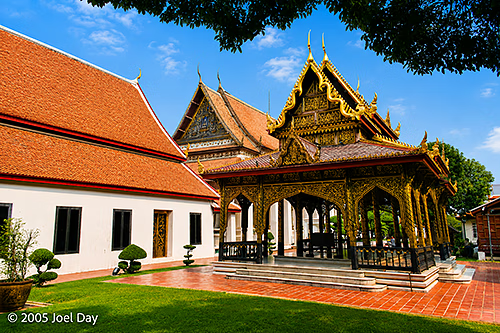
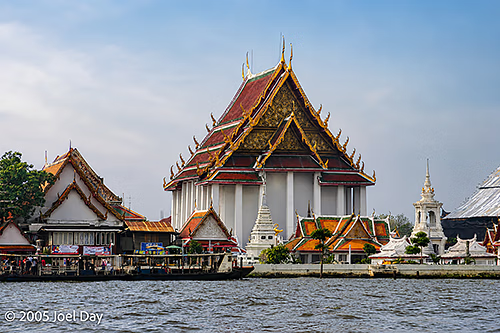
Buddhist Temple, Bangkok, ThailandBuddhist Temple, Bangkok, ThailandBuddhist Temple, Bangkok, Thailand
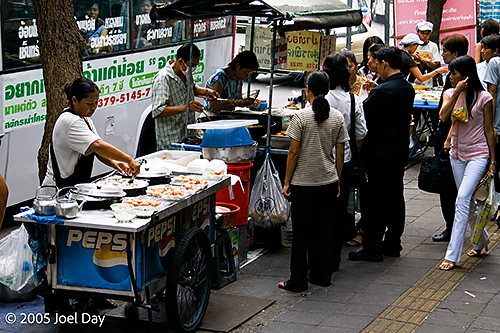
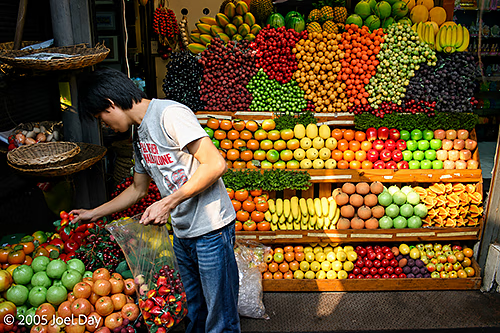
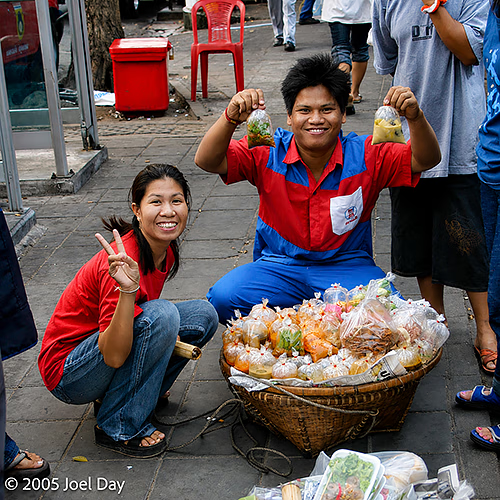
One of the nicest features of this place is the fabulous food. There seem to be endless places to eat with all kinds of food from around the world, but mostly Thai (of course). I love Thai food and have been having a wonderful time sampling many of the street-side stalls. As per the advice I’ve received, I make sure the food is kept cold and then cooked up fresh in front of my eyes. They seem to know exactly what ingredients to add to make everything taste special.
Selling meals on the streets of Bangkok, ThailandFruit Stall, Bangkok, Thailand
The street-side cooks usually don’t know too much English, so you just have to point at what you want. I usually point at just about everything and shrug my shoulders. They’ll throw in all kinds of exotic spices and fresh herbs and come up with something great. Even when I ordered popcorn from a streetside vendor, it was flavoured with a sweet coconut milk concoction. You can often get very cheap, fabulously tasting meals for around A$1 (US$0.75). And to think most Thais don’t seem to have an ounce of fat on them! I guess it just must be healthy eating.
Selling meals on the streets of Bangkok, Thailand
I found a great guesthouse on a back street in a nice quiet area in the centre of town, but next to some of the big shopping areas. Bangkok seems a bit more modern than I expected. Probably a mix of Singapore and Kuala Lumpur. Unfortunately, the public transportation system is a bit of a mess. They have a nice skytrain (monorail) that doesn’t seem to go enough places, a brand new subway that has just been shut down due to an accident, boats that cruise up and down the main river, and lots of heavy traffic everywhere else.
Ornate Buddha Heads in a Market Box, Bangkok, Thailand
I’ve booked a trip on the overnight train to Chiang Mai tomorrow night to see some of the sights in the northern part of the country. From there I will probably slowly work my way back down to Bangkok, and possibly into southern Thailand (if the post-tsunami problems improve) or east into Cambodia and/or Vietnam. I will have to see. I’ll be here for close to four weeks.
From one future world power to the next, I find myself chillin’ out in Hong Kong for a few days. What a relief it is to be here! What a contrast Hong Kong is to Delhi and Cairo.
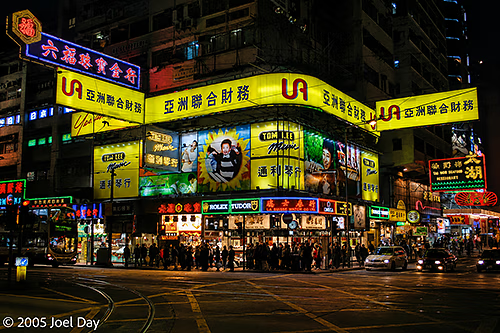
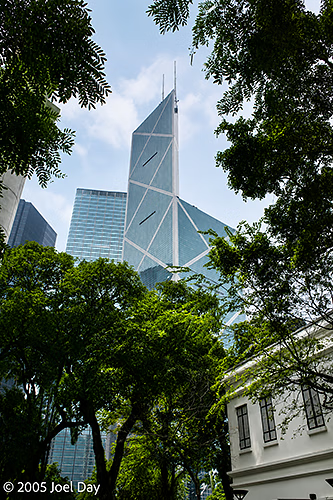
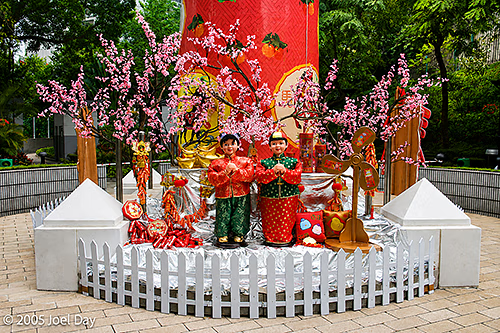
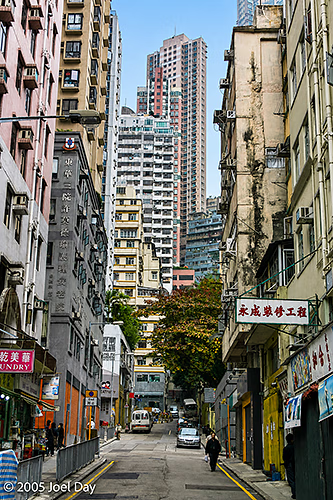
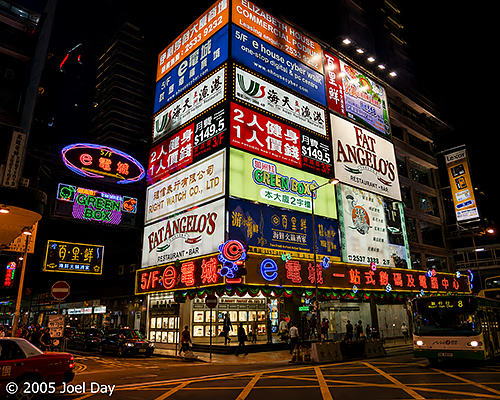
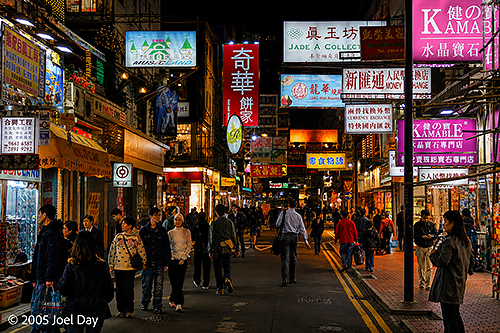
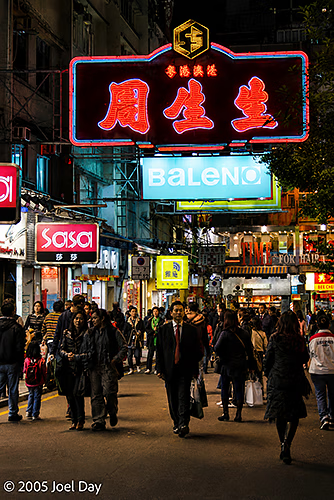
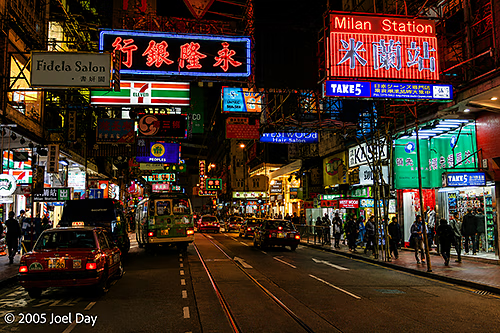
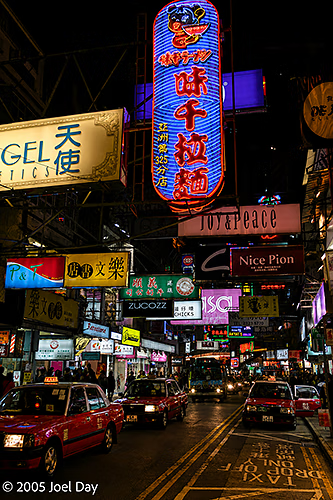
Evening Shopping in Causeway Bay, Hong Kong, ChinaSkyscrapers of Hong Kong, ChinaChinese New Year display, Hong Kong, China
It’s nice to go from constantly watching where to step (avoiding hocked phlegm and pools of urine on the pavement) to surfing the spotless, state-of-the-art subways and trekking the spectacularly steep hills of relatively clean Hong Kong. This is certainly one of the world’s great cities.
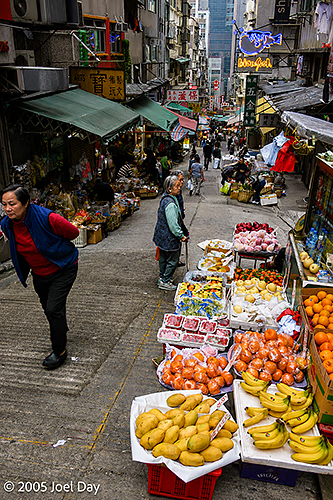
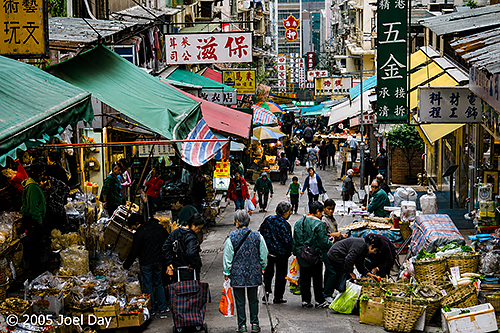
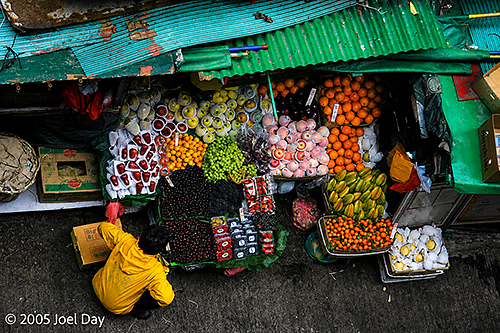
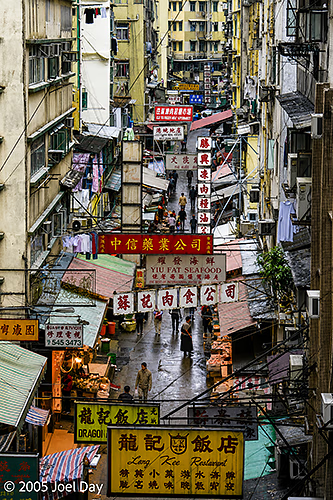
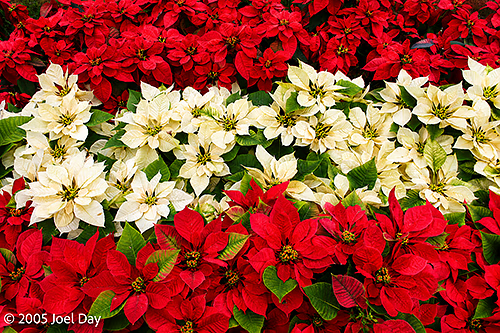
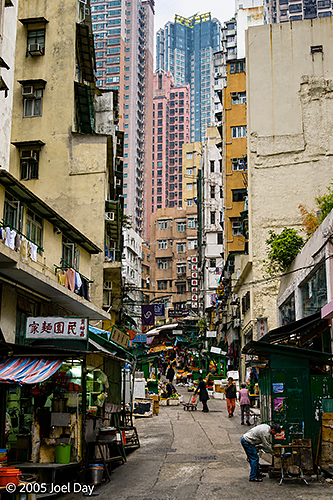
Busy street market in hilly Hong Kong, ChinaBusy street market in hilly Hong Kong, ChinaCity Streets of Hong Kong, ChinaFruit market in hilly street in Hong Kong, ChinaBusy street market in Hong Kong, ChinaChristmas displays of poinsettias in Hong Kong, China
Hong Kong probably has the nicest airport I’ve ever come across. It’s huge, and we landed at one of its most distant gates, but I was able to get from the plane into my hostel room (over 25km away) in less than an hour. I don’t think I waited more than two minutes for anything, hopping on moving sidewalks, airport shuttles, escalators, getting my temperature taken to make sure I didn’t have SARS, on through customs, through the baggage claim, onto a high speed train (that is so fast and smooth it feels like it’s levitating) into the city, onto a free hotel shuttle bus, and a then quick 1/2 block jaunt down to my cheap accommodation. The temperature taking, incidentally, consists of walking briskly past a heat-sensitive camera with everyone else. On large flat-panel screens you see an alien view of everyone, colour-coded to reflect each body temperature. If someone had a fever, I suppose they would appear a different colour and get yanked by security to the side. To get back to the airport, you actually check in with your bags in the city at a sleek train station, and they take care of the rest. It is probably the most distant check-in from your plane you’ll ever find.
Evening Shopping in Causeway Bay, Hong Kong, China
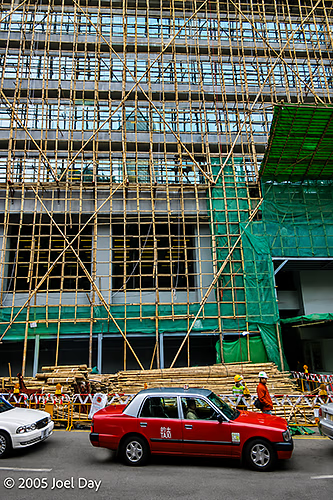
Hong Kong is very high tech in many ways. The whole city is wired for broadband. There is free Internet access in many subway stations and at the airport. I’m writing this blog at the central library, which has 500 such free terminals available on its many different floors. There are also mysterious containers whizzing over my head on the ceiling and into walls at either end of the building. I can only assume they’re full of books being sorted. On the other hand, many high-rise buildings are still built using bamboo scaffolding! There is certainly a mix of the old and new worlds in places.
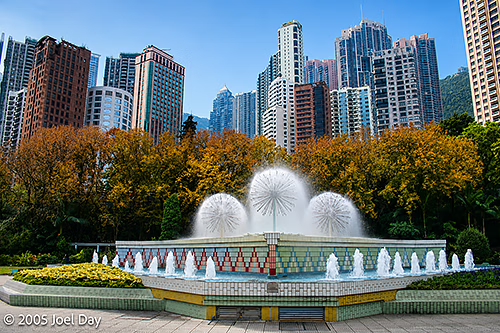
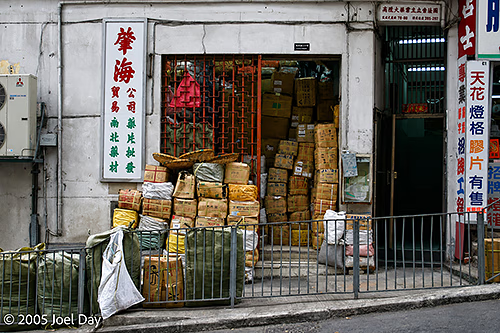
City park surrounded by skyscrapers, Hong Kong, ChinaBamboo scaffolding around high-rise in Hong Kong, ChinaChinese Herbal Medicine Wholesaler, Hong Kong, China
The public transportation system here is fabulous, with probably the best subway system I’ve ever been on. There are illuminated maps on the walls of each rail car with flashing lights that show you exactly what station you’re at, which direction you’re going, which door you’ll need to exit from, and what connections you can make from the next station. In each of the underground stations, there are very clear maps showing all the subway exits and where they surface so you can plot the best one for where you’re headed. They’re all assigned letters and have signs everywhere pointing the way.
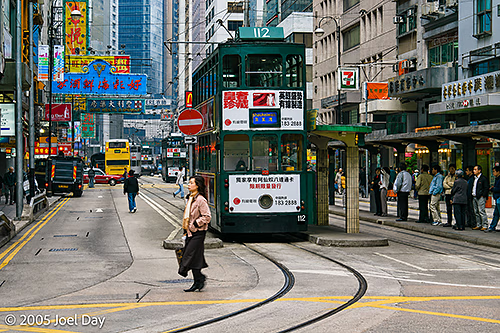
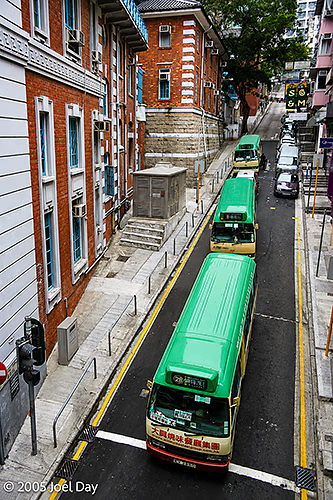
Iconic double-decker tram on streets of Hong Kong, ChinaBusses on streets of Hong Kong, China
Much of Hong Kong runs on smart cards these days. These are credit card-sized cards that contain a computer chip you can store information on. You can use them here to purchase all kinds of things, from subway trips to bus trips to parking meters to restaurants to stores, etc. You just juice them up with cash at an automated terminal from time to time. The best thing about them is that you don’t even need to remove them from your wallet to use them. You just wave your wallet within close proximity of a smart card reader, and it automatically registers where you’re coming from or going to or deducts whatever payment you’re trying to make. You never have to worry about fumbling for change.
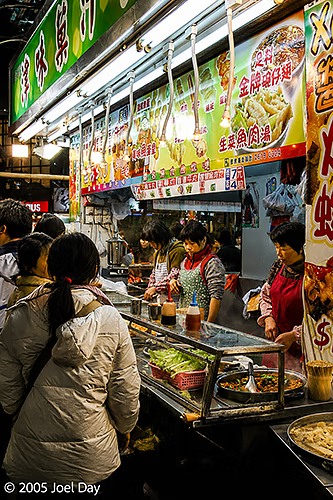
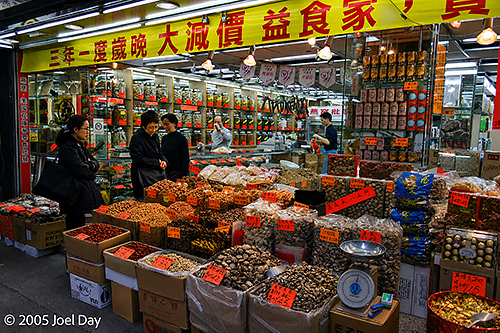
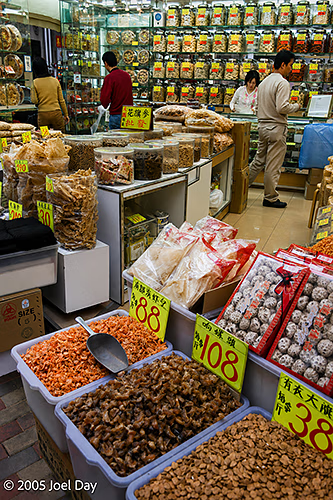
Food stall on the streets of Hong Kong, ChinaChinese dried-food and traditional ingredients shop, Hong Kong, ChinaChinese dried-food and traditional ingredients shop, Hong Kong, China
Hong Kong is also very safe, and you can wander pretty much wherever you want, day or night. The neighbourhood I’m in seems to be busy with shoppers every day up until midnight. Nobody seems to notice a Westerner like myself wandering around. This is especially nice after visiting India and Egypt, where touts were continually trying to herd you into their stores (honestly or deceitfully), never taking “no” for an answer.
Evening Shopping in Causeway Bay, Hong Kong, ChinaEvening Shopping in Causeway Bay, Hong Kong, ChinaEvening Shopping in Causeway Bay, Hong Kong, ChinaEvening Shopping in Causeway Bay, Hong Kong, China
Probably the worst thing about Hong Kong is the cost of living here. I’ve been here on business a few times before, and most of the people I met had to commute an hour to find reasonably priced real estate. And that’s before and after working 12-hour days and on Saturday mornings (which seem to be the standard office hours here). The cost of food and accommodation is quite high too—which is part of the reason I’m only stopping here for a few days.
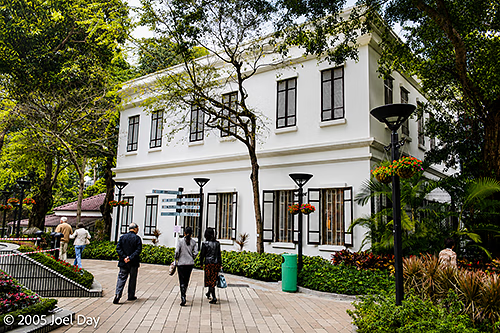
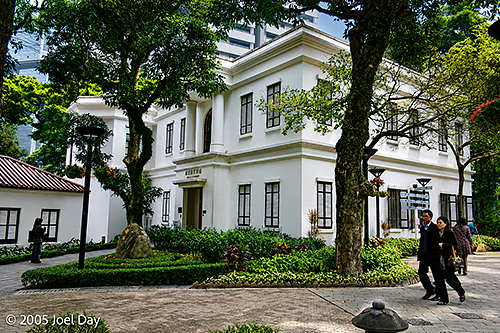
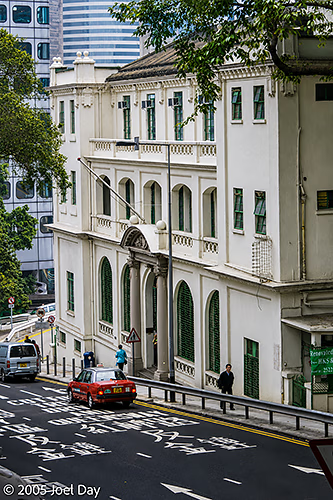
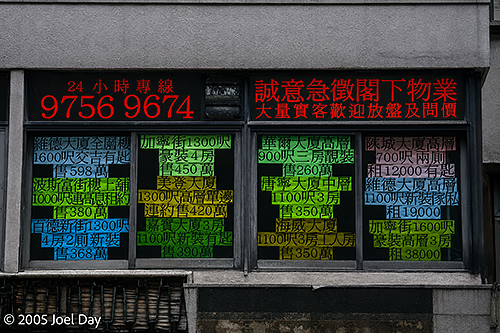
Rawlinson House in Hong Kong Park, part of the surviving Victoria Barracks complex in Central Hong Kong, built during British colonial rule.City Streets of Hong Kong, ChinaCassels Block, part of the surviving Victoria Barracks complex in Central Hong Kong, built during British colonial rule.Flagstaff House in Hong Kong Park, built on the former site of the British Army’s Victoria Barracks in 1846.Real estate listings on the window of a realtor in Hong Kong, China
Just thought you might be interested in knowing (or being reminded) that you can’t buy beef in this country, seeing as the cows are sacredly roaming the highways. Even McDonald’s has a mostly vegetarian menu (with a bit of fish and chicken thrown in for the visitors). Western restaurants post big signs on their walls stating they sell no beef products, supposedly to quell any concerns from the locals.
Refreshment stand for visitors of the monuments and buildings of the Qutb Minar complex (finished in 1368), Delhi, India
I have been trying to eat mostly local cuisine, but I can’t say that I had really great Indian food. The best Indian meals I’ve had, oddly enough, have been on the flight coming in (Gulf Air) and the flight going out (Cathay Pacific). Maybe my lack of luck in Delhi restaurants has something to do with my eating budget!
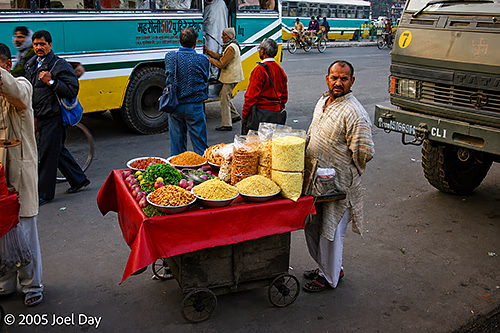
Food Vendor on the streets of Delhi, India
I have been trying to be very careful about food poisoning — seeing as I’ve gotten very sick on a few occasions over the past year. So far, no problems in Egypt or India. My water purifier is working a charm! Doesn’t sound like my neighbours can claim the same. I heard some horrible wretching through a wall in my guesthouse a few days ago.
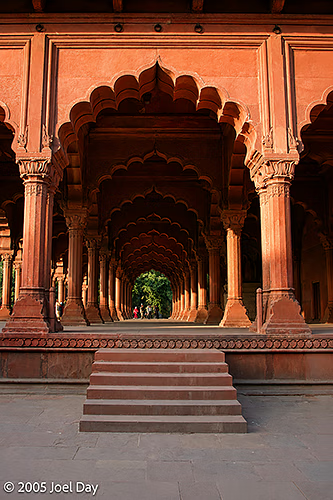
Diwan-i-Am, part of the Red Fort, a historic Mughal fort located in the Old Delhi area of Delhi, India
Tomorrow I head for Hong Kong, where I will be doing a bit of cheap shopping until flying to Thailand on Friday.
Cairo may have been Hustle City, but Delhi must be the Hustle Capital of the world. I sort of knew this would be the case, judging from my experience with Indian merchants in other parts of the world. About the only people who will hustle you in Singapore, for example, are Indian tailors. They always start out casually chatting with you as you walk down the street. They like to act like they’re just sociable people who are interested in visitors. You learn to never answer questions like “is this your first visit?” in the affirmative because you quickly realise that it will only encourage them. The next thing you’ll know, they’ll be taking advantage of your naivety while they herd you into their cousin’s shop.
So sure enough, in the lion’s den of hustle (so to speak), I found Delhi to have the most persistent hustlers I’ve ever come across. Now I had long heard that India was notorious for its hassles in getting from place to place and dealing with the crowds, but I found the hassle nothing compared to the hustle. In fact, the biggest hassle was from hustlers trying to “save” you from the alleged hassle of travelling through India.
At times it would get so bad walking around Connaught Place that I would have to retreat to my room back in the guest house. Not only did people constantly try to steer me into some travel agent or “emporium” of Indian relics, they would do so in such a persistent manner that I couldn’t help but become extremely protective of myself. I would initially try to respond politely, but when that only seemed to encourage them, I would end up snapping. I later found myself snapping at people on the street the second they opened their mouths with lines like “You look like a movie star!”
This was interspersed with beggars walking alongside me and pleading for my money as well. Even some of the begging appeared to be hustling. I spotted families of beggars walking down the street before they saw me, and they seemed to be healthy, happy people. Their kids were smiling and running around playing with each other. As soon as I came into view, however, that would immediately change, and they would start their groaning and begging act. It was quite disturbing.
The saddest incident happened when a group of kids tried to persuade me to visit a travel agent. I kept telling them I wasn’t interested, but they kept persisting with their sales pitch. I finally whipped around, glared, and snapped “I don’t care!”, only to find a frightened and confused look in their eyes — as though they honestly felt they were trying to do me a favour. Poor kids. I actually felt sorry for them. It was as if someone told them that they were doing an honourable service by helping tourists find places to spend all the money they were just dying to get rid of. As though I had been out on the street yelling that I had all this money and desperately needed somewhere to spend it all.
After a typical bout with the hustling, I would find myself back in the seclusion of my room at the guest house to watch my multitude of Indian cable TV channels and nurse my post-traumatic hustle stress disorder.
There were headlines in the India Times yesterday about a CIA study that concluded it would be inevitable that China and India would become the world’s next superpowers over the next twenty years. I didn’t get a chance to read the article, but it seems hard to imagine with all the problems India is currently facing—namely its poverty.
Labourers working to maintain paths around The Tomb of the Mughal Emperor Humayun (commissioned in 1558), Delhi, India
It almost seems as though a huge percentage of the population here is living on the streets. I had to venture out at 6 AM for a trip to Agra the other day, and I must have walked past well over 100 people sleeping on the streets in a three-block jaunt I had to make to hook up with my tour company. And those were just the ones I noticed who weren’t sleeping in total darkness. There were a number of fires burning along the way to keep several of them warm.
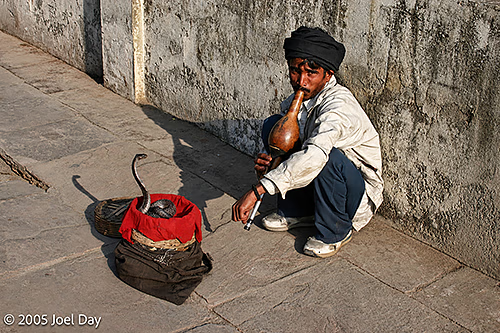
Cobra Snake Charmer on streets of Delhi, India
Along the train lines and along the highways outside of Delhi are tent villages with scores of people living outside. At most intersections and in shopping areas, you will come across beggars, staring in the windows of your taxi or reaching in for money. If you happen to be in an autorickshaw, which is a noisy tricycle-type motorcycle with a roof but no doors, they’ll just climb in with you. Some are disabled, many are small children who spend their time otherwise playing with each other in the gutter or median strip, waiting for the next traffic light to stop traffic so they can approach. No one seems to hand over any money to these people. Lonely Planet advises giving a donation to a charity that will look after them instead. It’s all quite disconcerting.
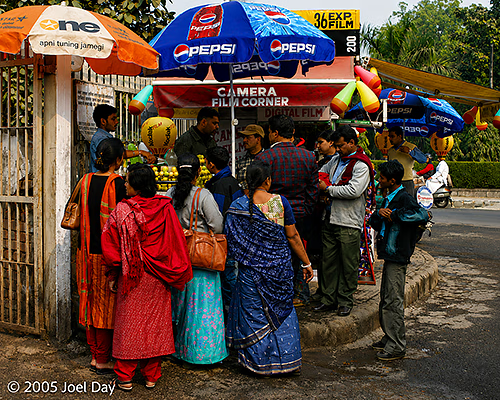
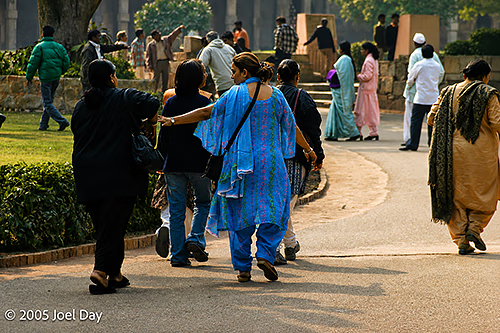
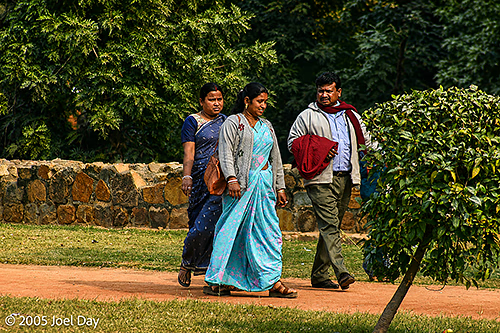
Visitors to the Monuments and Buildings of the Qutb Minar complex (finished in 1368), Delhi, India
On the other end of the scale are the very wealthy, living in individual compounds that initially looked like embassies to me—each with big gates, guards, and servants. There seem to be doormen for every store you go into and security guards lurking around inside, presumably to keep the homeless out. My guesthouse locks down tight from about 11 PM until 9 AM and has a guard sleep on the couch near the front door. Occasionally you’ll hear banging on the front door in the middle of the night, which is a bit creepy.
As I continue with the Indian government tours around Delhi and Agra with many tourists with close Indian ties, I’m discovering that five of our stops are actually beautiful UNESCO World Heritage Sites. In addition to the Taj Mahal, there was also the Agra Red Fort, Delhi’s Red Fort, and the following…
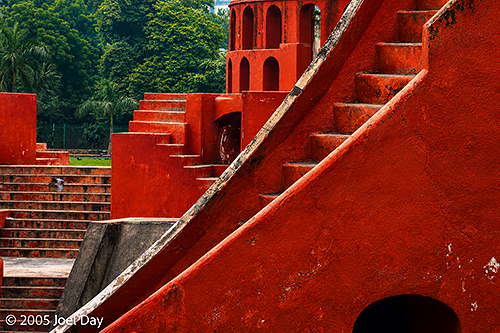
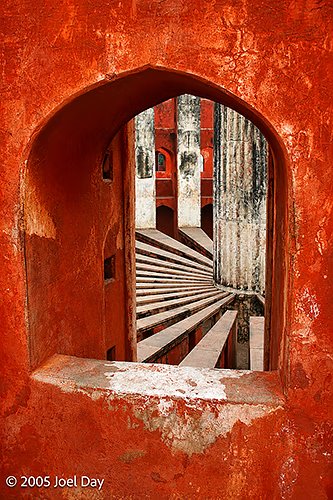
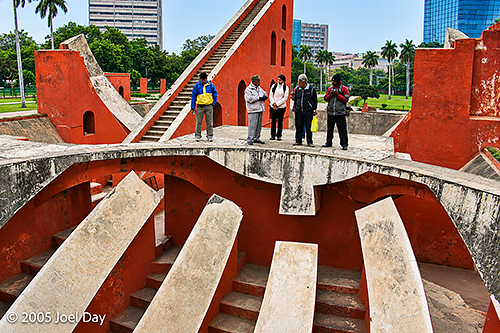
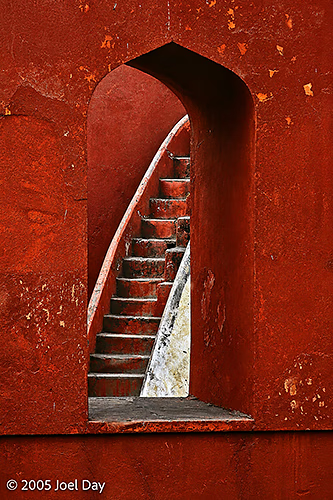
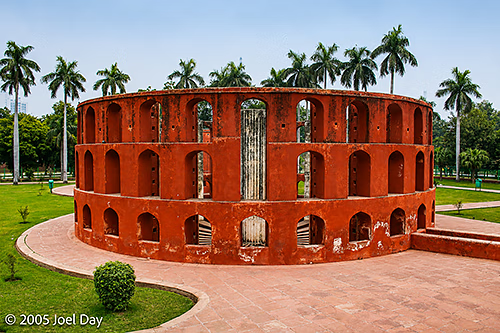
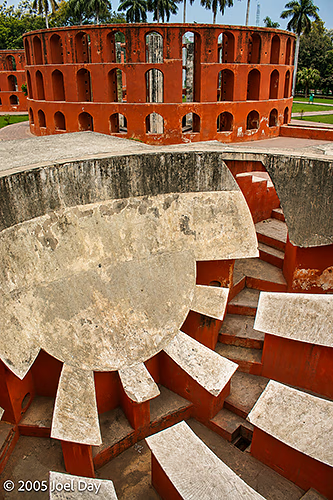
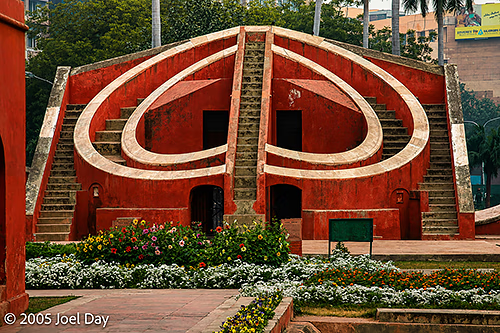
Jantar Mantar Observatory (Built in 1724), New Delhi, India (similar to a UNESCO site in Jaipur)
Jantar Mantar Observatory (Built in 1724), New Delhi, IndiaJantar Mantar Observatory (Built in 1724), New Delhi, IndiaJantar Mantar Observatory (Built in 1724), New Delhi, IndiaJantar Mantar Observatory (Built in 1724), New Delhi, IndiaJantar Mantar Observatory (Built in 1724), New Delhi, IndiaJantar Mantar Observatory (Built in 1724), New Delhi, IndiaJantar Mantar Observatory (Built in 1724), New Delhi, India
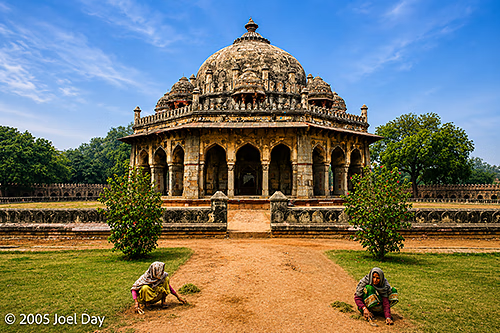
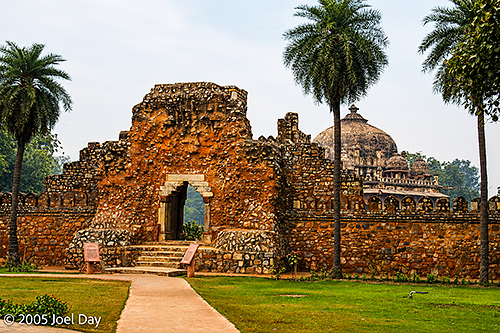
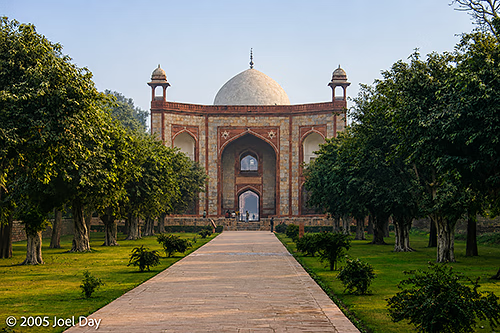
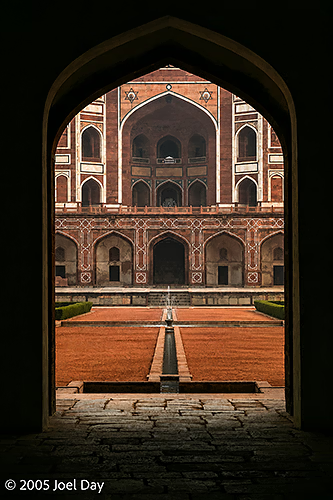
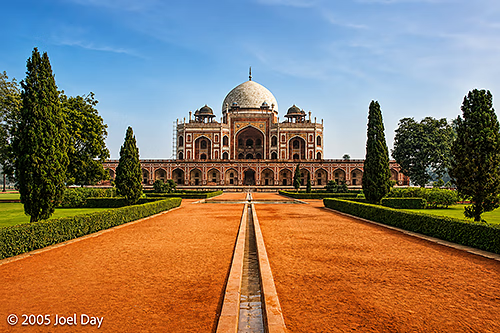
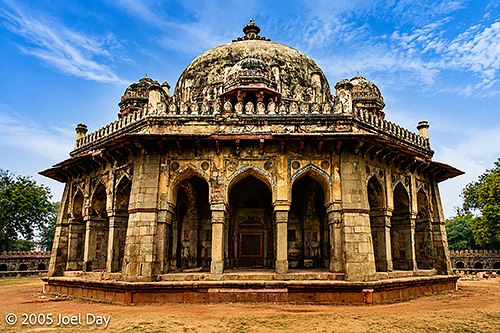
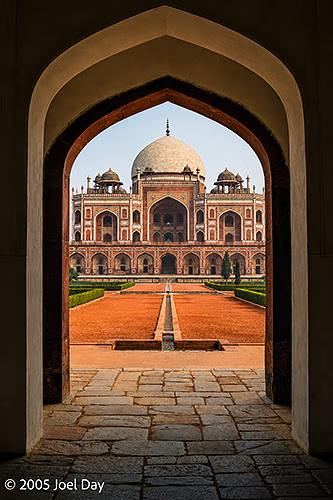
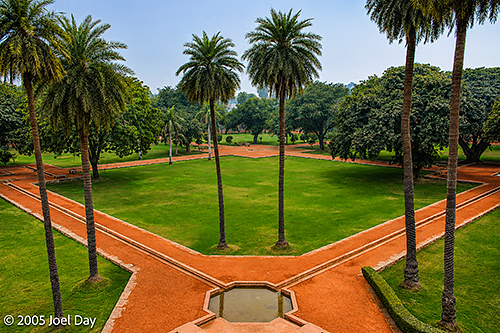
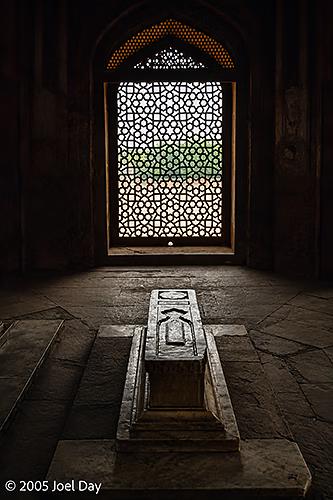
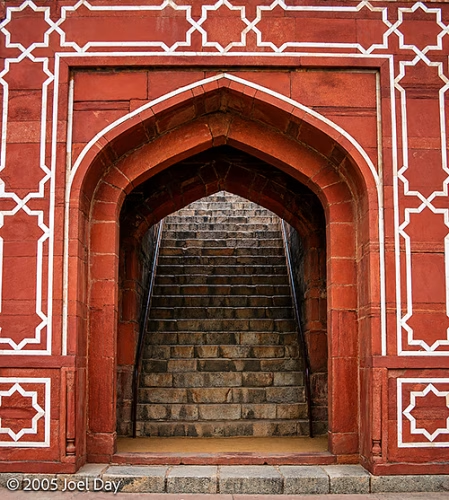
The Tomb of the Mughal Emperor Humayun (1558), Delhi, India
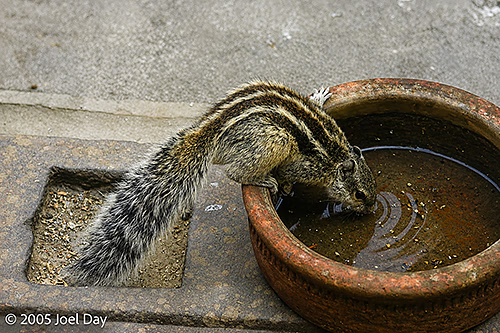
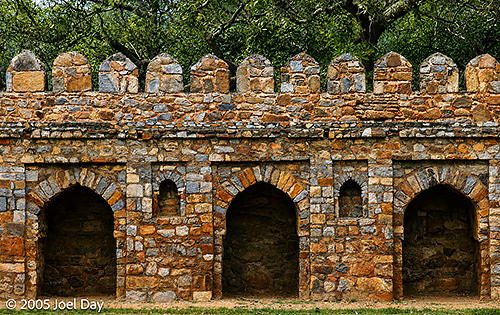
The Tomb of the Mughal Emperor Humayun (commissioned in 1558), Delhi, IndiaThe Tomb of the Mughal Emperor Humayun (commissioned in 1558), Delhi, IndiaThe Tomb of the Mughal Emperor Humayun (commissioned in 1558), Delhi, IndiaThe Tomb of the Mughal Emperor Humayun (commissioned in 1558), Delhi, IndiaThe Tomb of the Mughal Emperor Humayun (commissioned in 1558), Delhi, IndiaThe Tomb of the Mughal Emperor Humayun (commissioned in 1558), Delhi, IndiaThe Tomb of the Mughal Emperor Humayun (1558), Delhi, IndiaChipmunk in Delhi, IndiaThe Tomb of the Mughal Emperor Humayun (commissioned in 1558), Delhi, IndiaThe Tomb of the Mughal Emperor Humayun (commissioned in 1558), Delhi, IndiaThe Tomb of the Mughal Emperor Humayun (commissioned in 1558), Delhi, IndiaThe Tomb of the Mughal Emperor Humayun (1558), Delhi, India
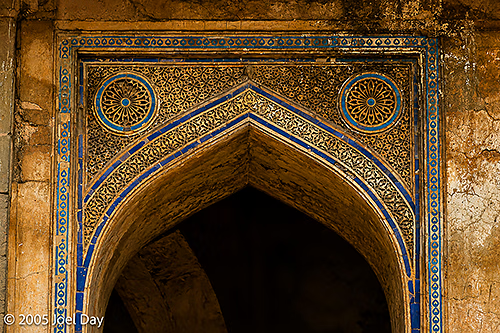
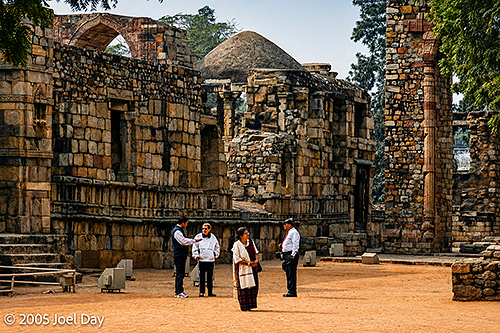
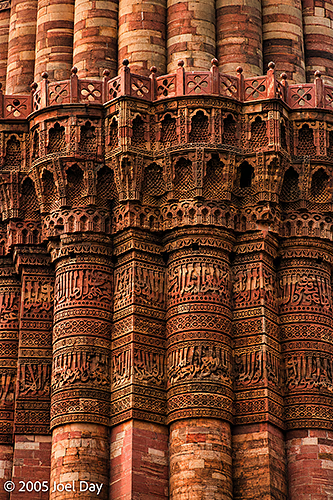
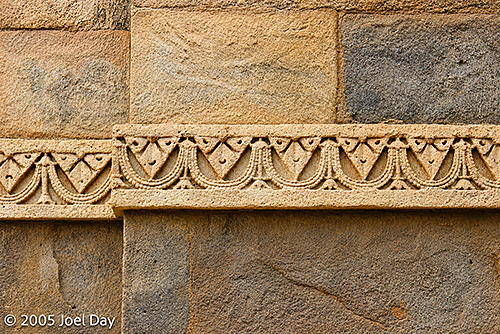
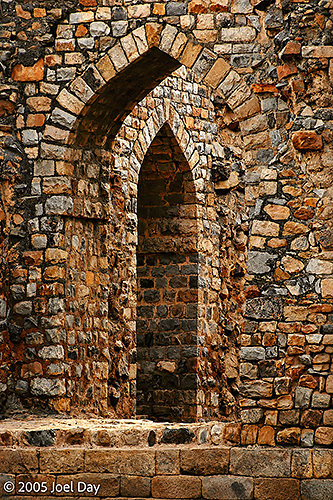
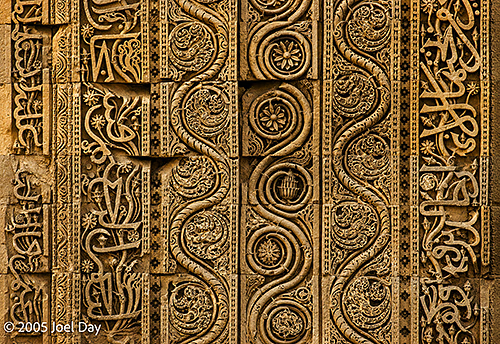
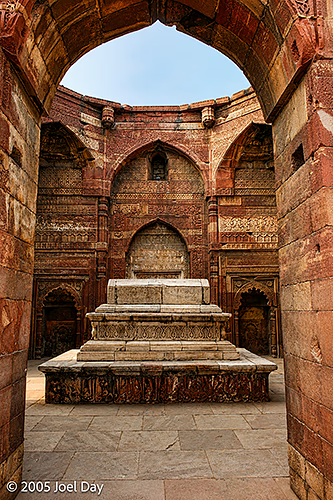
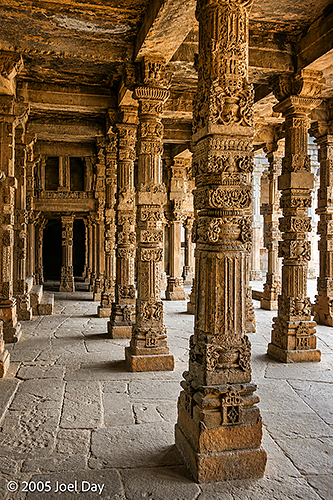
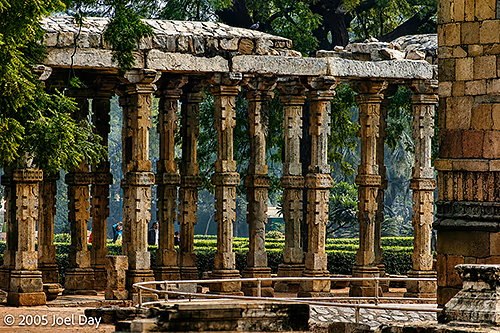
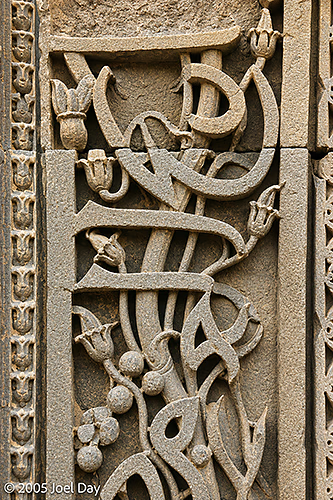
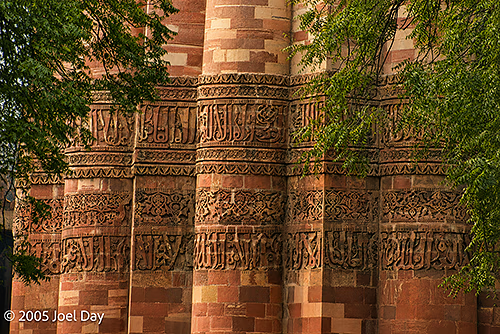
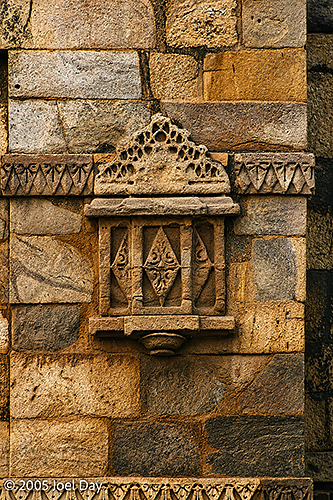
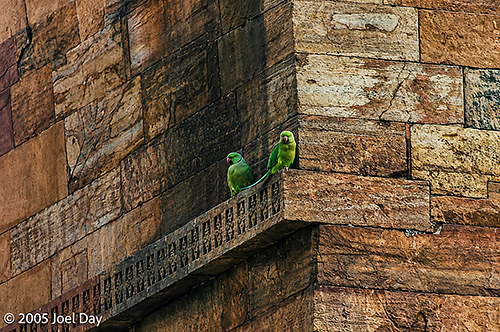
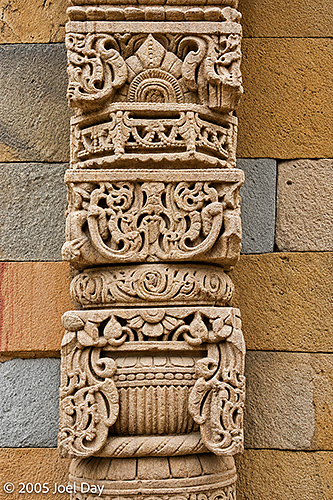
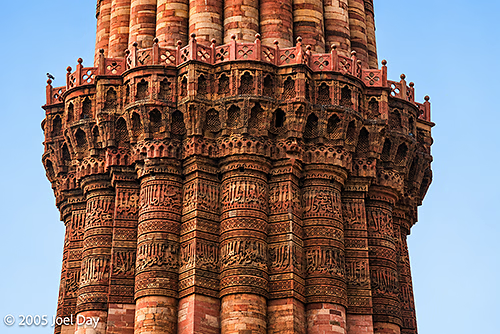
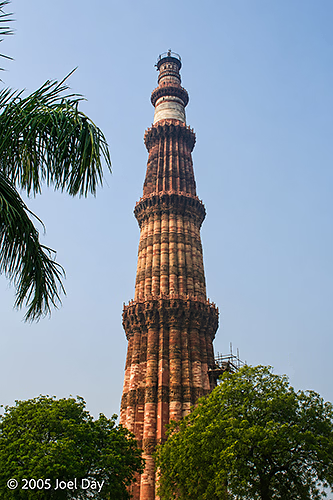
Monuments and Buildings of the Qutb Minar complex (finished in 1368), Delhi, India
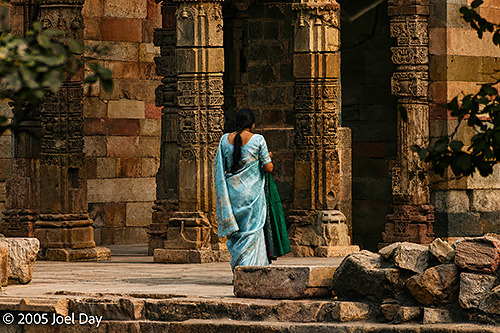
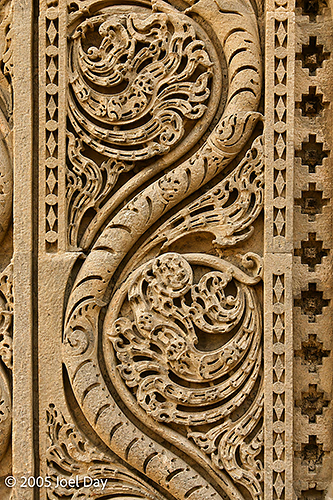
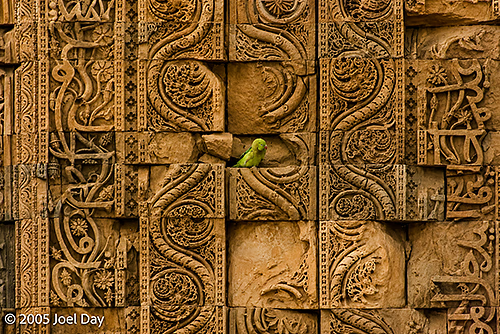
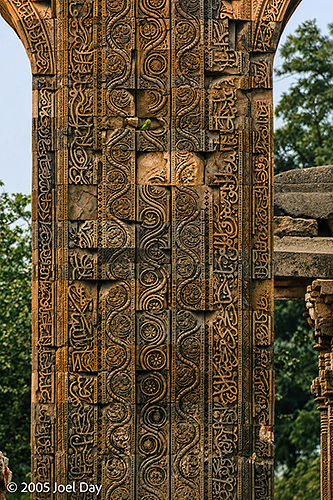
Visitors to the Monuments and Buildings of the Qutb Minar complex (finished in 1368), Delhi, IndiaMonuments and Buildings of the Qutb Minar complex (finished in 1368), Delhi, IndiaMonuments and Buildings from the Qutb Minar complex (finished in 1368), Delhi, IndiaMonuments and Buildings of the Qutb Minar complex (finished in 1368), Delhi, IndiaMonuments and Buildings of the Qutb Minar complex (finished in 1368), Delhi, IndiaMonuments and Buildings of the Qutb Minar complex (finished in 1368), Delhi, IndiaVisitors to the Monuments and Buildings of the Qutb Minar complex (finished in 1368), Delhi, IndiaMonuments and Buildings of the Qutb Minar complex (finished in 1368), Delhi, IndiaMonuments and Buildings of the Qutb Minar complex (finished in 1368), Delhi, IndiaMonuments and Buildings of the Qutb Minar complex (finished in 1368), Delhi, IndiaMonuments and Buildings from the Qutb Minar complex (finished in 1368), Delhi, IndiaMonuments and Buildings of the Qutb Minar complex (finished in 1368), Delhi, IndiaParrots perched on the Monuments and Buildings of the Qutb Minar complex (finished in 1368), Delhi, IndiaMonuments and Buildings of the Qutb Minar complex (finished in 1368), Delhi, IndiaVisitors to the Monuments and Buildings of the Qutb Minar complex (finished in 1368), Delhi, IndiaMonuments and Buildings of the Qutb Minar complex (finished in 1368), Delhi, IndiaMonuments and Buildings of the Qutb Minar complex (finished in 1368), Delhi, IndiaMonuments and Buildings of the Qutb Minar complex (finished in 1368), Delhi, IndiaMonuments and Buildings from the Qutb Minar complex (finished in 1368), Delhi, IndiaMonuments and Buildings from the Qutb Minar complex (finished in 1368), Delhi, India
I headed off on a long all-day tour down to the city of Agra and back yesterday, primarily to see the Taj Mahal, but also to see some of the other historic sites around the area.
The whole experience of getting there and back is something I don’t think I will ever forget. The drive took about four hours each way, and was about as treacherous as anything I’ve ever experienced. It doesn’t seem as though India has any safety regulations on its roads. Even when we were travelling down a paid turnpike, the road was full of roaming cows (I was wondering where all these sacred cows were since I hadn’t seen any in Delhi), camels and horses pulling carts, bicycles, motorcycles, motorised tricycles, pedestrians, buses, and trucks. And never a police officer in sight.
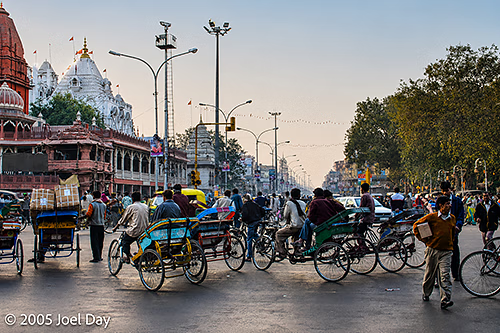
Avenue of Rickshaws, Delhi, India
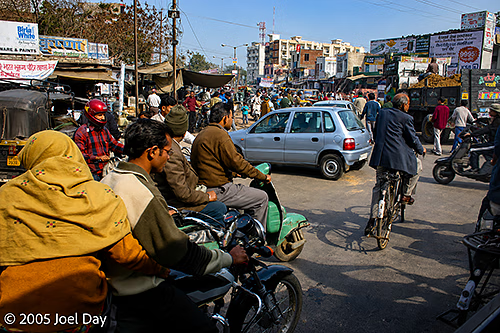
People generally drive down the middle of the road here, straight over the white lines — presumably to avoid hitting pedestrians and other dark, shadowy, slow-moving traffic. This means everyone who comes up behind must honk their horn to get drivers to pull over. Many trucks even have big signs painted on their backs asking you to honk. All you hear the whole way is horns honking continuously. Every time you hit a traffic jam, the road appears about as organised as a clogged bumper car ride — with vehicles pointed in just about every direction.
Street Traffic around Agra, Uttar Pradesh, India
One of the more unsettling experiences came when our van got a flat tire in the middle of the trip. The driver merely pulled halfway out of the lane onto the shoulder on an outer curve of the highway. We weren’t ever asked to get off the vehicle. Instead, we just sat there while he repaired the flat. While we sat there, large overloaded trucks continually came barrelling around the curve up from behind us and quickly had to swerve out of our lane to get into the clear lane. It was unbelievable!
At night, there were many vehicles on the road with no reflective material of any kind—including some oversized trucks that would be barred from most Western roads without a lead and follow-up vehicle and lots of flashing lights. The air at night was full of smoke from fires lit by all the homeless people living in tents along the road trying to keep warm, or from big, onerous factories belching black fumes from their smokestacks. Our van would typically come barreling down the highway to stumble across a giant, dark, mysterious shape that would turn out to be a slow-moving cart or truck pulling a massively over-packed load. There was no break in speeding traffic. The whole experience was quite scary, but I never actually saw any accidents.
You must be logged in to post a comment.