After 27 takeoffs and landings, I have finally found my way back to where I started my journey on August 1st: Perth, Australia. The air and streets seem super clean, the humidity is very low, the sun is very bright, and the people drive annoyingly slow and stay in nice, neat traffic lanes. I’m having to get used to life with Western toilets and toilet paper again. And I’m still not used to drinking tap water without having to purify it first. On the other hand, it sure seems quiet around here — without the hustle and bustle of Cairo, Delhi, Hong Kong, Bangkok, and Singapore. It will take some getting used to!
My final week in Fiji was spent in the historic former Fijian capital, Levuka, on the volcanic island of Ovalau, off the east coast of Viti Levu, the largest Fijian island.
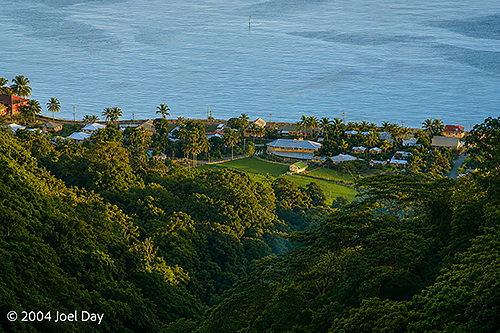
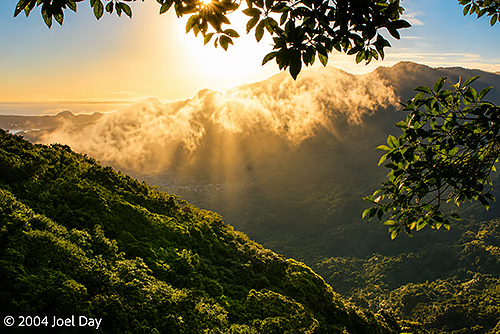
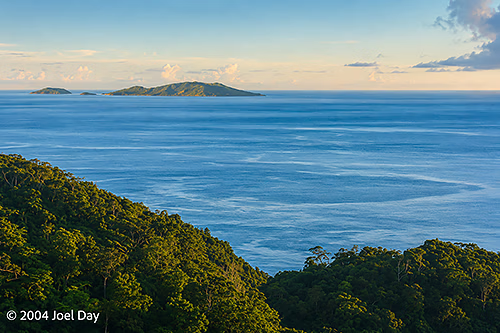
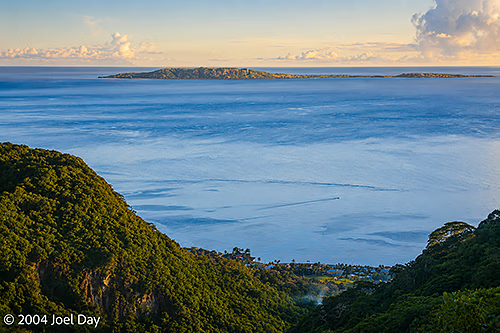
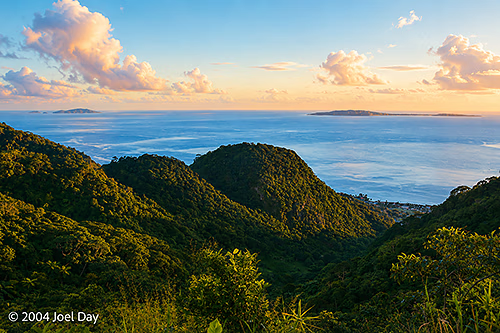
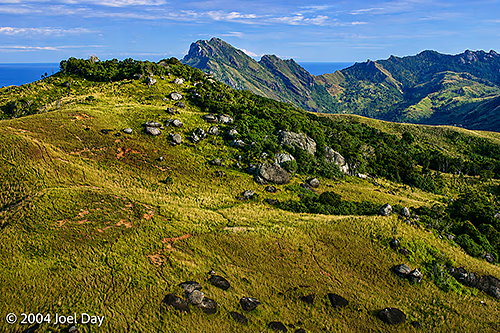
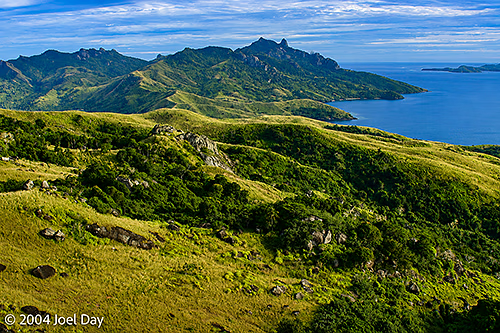
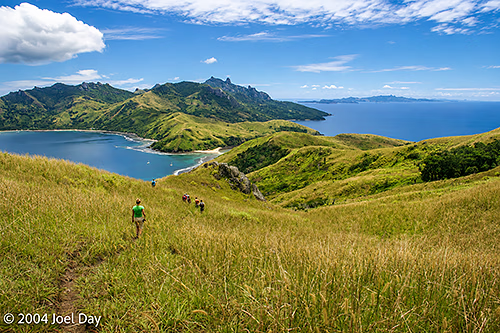
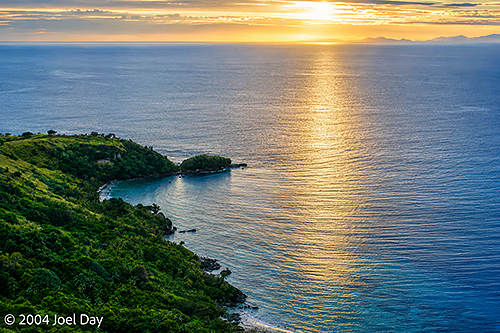
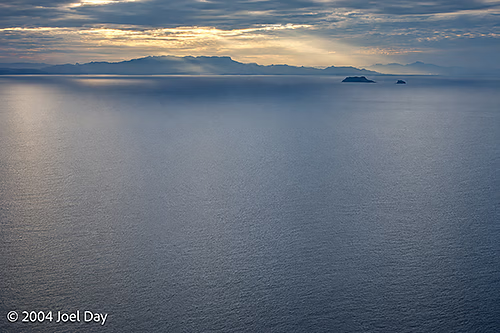
View from Volcanic Rim on Lovoni to Levuka Hiking Track, Ovalau Island, Fiji
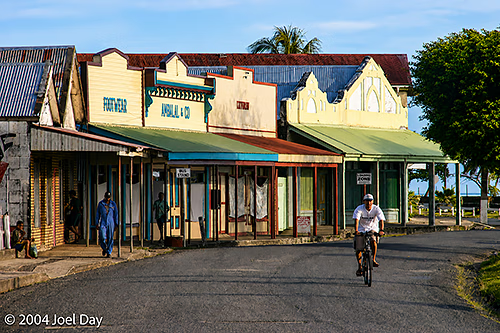
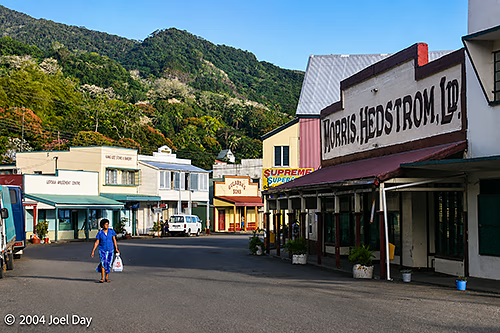
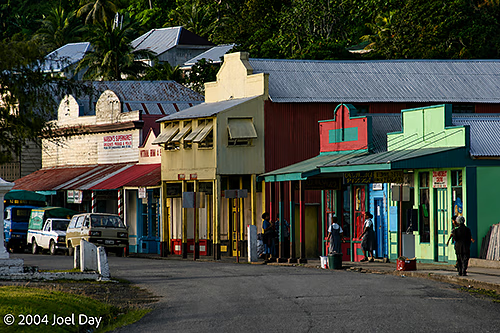
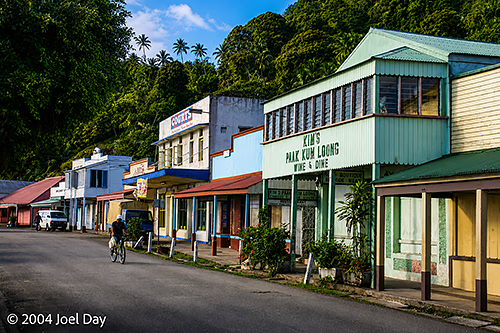
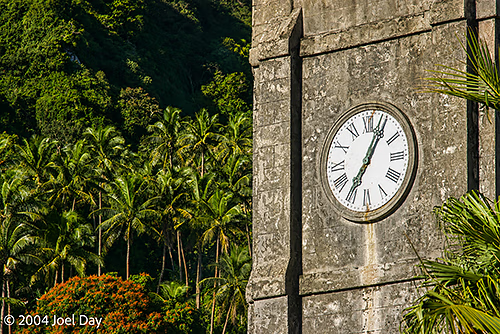
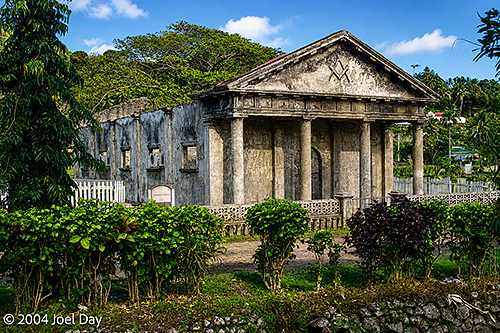
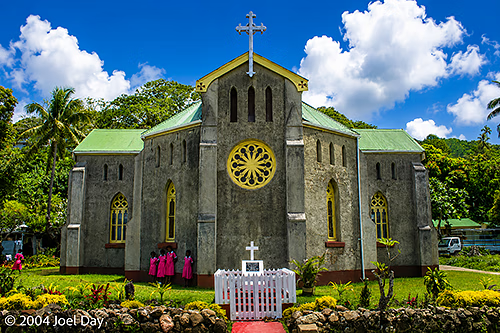
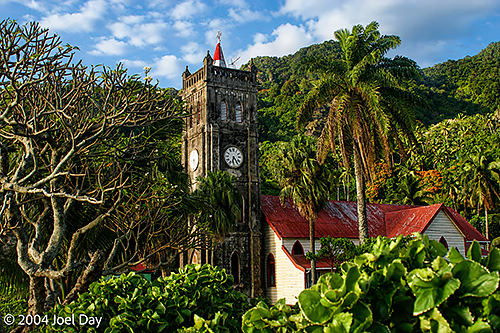
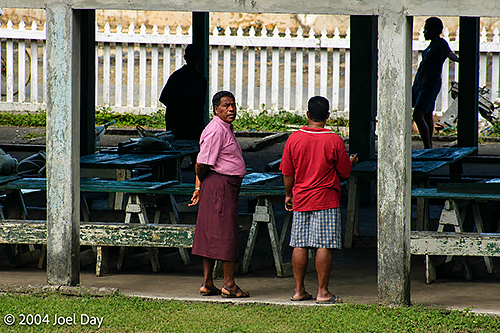
Levuka was the brief capital of Fiji for about 8 years in the 1800’s (just before it moved to Suva), and it continues to resemble a wild west town from that period — with many of the old colonial buildings still intact. Like most of Fiji, the locals were extremely friendly and hospitable, but very poor. It was nice to visit an area where you didn’t have the burden of merchants hawking their wares to you continually (like in Nadi). Nobody hassled you at all over there. Virtually everyone would just give you a big smile when they saw you and say “Bula!” (Fijian for “Cheers!”)
Early Morning on Levuka’s Main Street, Ovalau Island, FijiEarly Morning on Levuka’s Main Street, Ovalau Island, FijiEarly Morning on Levuka’s Main Street, Ovalau Island, FijiEarly Morning on Levuka’s Main Street, Ovalau Island, FijiEarly Morning on Levuka’s Main Street, Ovalau Island, Fiji
It was an interesting experience to go to the East Coast, away from most of the tourist sites. After spending a few days in a rain forest north of Suva (Fiji’s capital today), I opted to take the cheap route to Lavuka and ride the ferry with the locals to get out on the island. A mere 50-mile route became an arduous six-hour journey in a packed, cramped school-like bus, with everything imaginable sans livestock on board. All on a narrow, dangerous, bumpy road.
I was expecting to be on a ferry for most of the journey, but instead they bused us halfway up the coast for an agonising 3-hour ride to board a short ferry that runs out to the island (on the shortest stretch of sea). We had to wait an additional 2 hours for the ferry to arrive, empty, refuel, and fill up again, and then drive another hour after the ferry ride on a bumpy bus that took us around the perimeter of the island, stopping at each village along the way to drop off the odd passenger. I chose to fly back to Suva this morning to cut the aggravation, and it only took 12 minutes!
I stayed in the South Pacific’s oldest continually used hotel while in Lavuka. It was pretty well preserved from the colonial period in which it was built, and dirt cheap as well. I only paid FJ$20 a night (about US$12). Lavuka was a taste of the real Fiji, but it was also a bit frustrating as a short-term tourist. It was hard to do too many activities because of the lax attitude of many tourism businesses there (often run by Europeans who would just tell you to come back tomorrow).
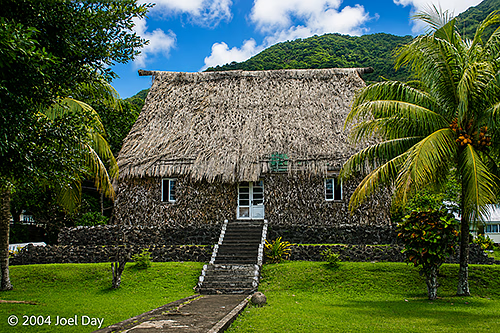
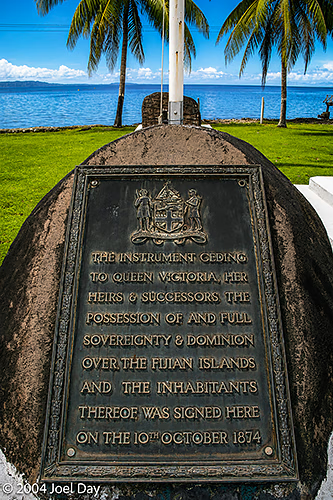
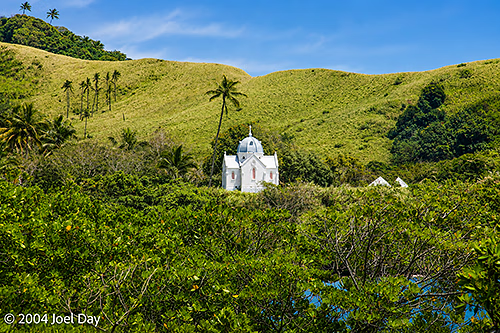
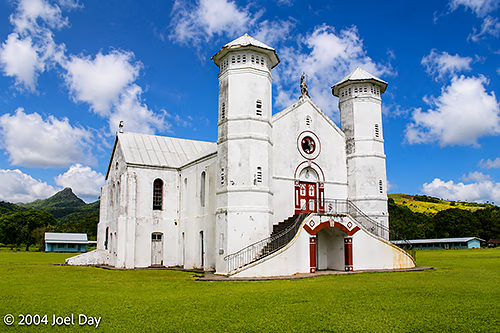
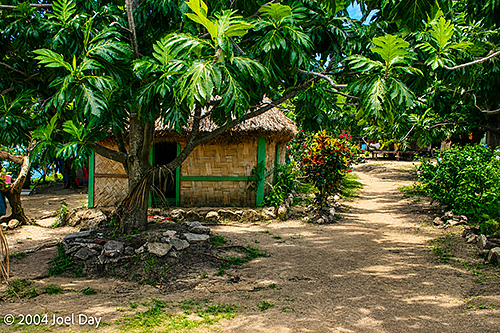
Traditional Fijian Bure, Levuka, Ovalau Island, FijiSacred Heart Parish Catholic Church, Levuka, Ovalau Island, FijiHistoric Masonic Lodge in Levuka, Ovalau Island, FijiSacred Heart Church, Levuka, Ovalau Island, FijiSacred Heart Parish Catholic Church, Levuka, Ovalau Island, FijiLevuka Deed of Cession, Ovalau Island, Fiji
The most memorable excursion out there was probably the visit to the head village of Lovonie (in the centre of the crater in the middle of the island) and the treacherous hike back up over the crater rim and back down into the coastal town of Levuka. The journey was led by a local guide who’s been doing this tour for ten years and involved trekking through dense jungle on an overgrown track. Like every other hike I’ve had in Fiji, the guide had to rely on a machete to hack through overgrown jungle throughout the hike. There were only three of us doing the hike that day, and the guide explained to us that he usually cancels if there are fewer than four — but agreed to take us for the hike if we agreed to take public transportation (the back of a truck) to his village for the included traditional lunch and storytelling.
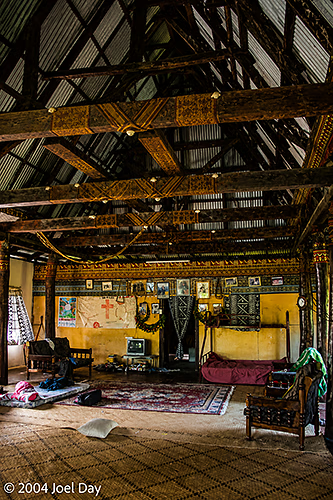
Chief’s House, Lovoni Village, Ovalau Island, Fiji
The only problem was that the delay caused by relying on public transportation forced us to start late. In addition, the three of us chose to do a more strenuous, longer trail that our guide hadn’t used in months. As it turned out, we reached the peak at sunset and ended up hiking down through the dense jungle in the pitch-black. The trail was quite treacherous (especially at night), and I was sure at times we were going to have to sleep out up there in the jungle that night — but our guide came through and built torches from dried banana leaves to illuminate our way through the pitch-black, dense vegetation. He was quite embarrassed about the whole affair and keen to sneak back into town without letting the locals know what had happened. He kept trying to buy us dinner and beer afterwards to make up for it.
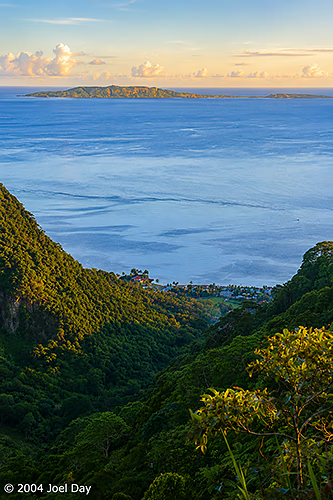
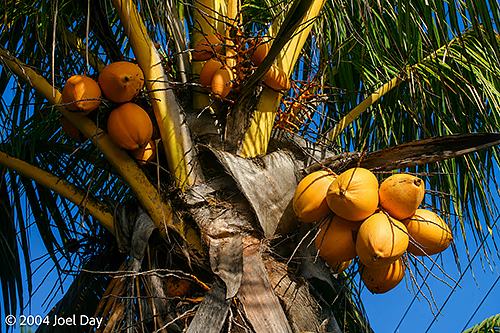
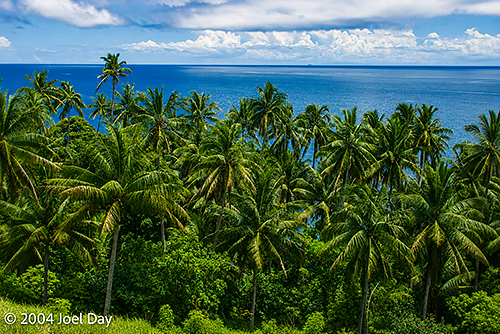
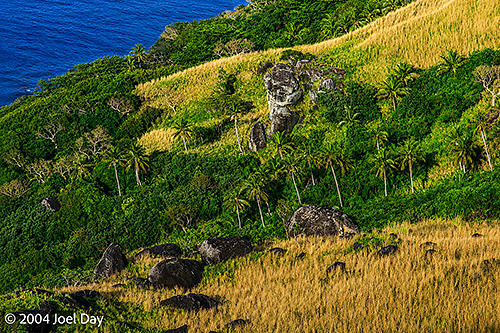
View from Volcanic Rim on Lovoni to Levuka Hiking Track, Ovalau Island, FijiView from Volcanic Rim on Lovoni to Levuka Hiking Track, Ovalau Island, FijiView from Volcanic Rim on Lovoni to Levuka Hiking Track, Ovalau Island, FijiCoconuts, Ovalau Island, FijiView from Volcanic Rim on Lovoni to Levuka Hiking Track, Ovalau Island, FijiView from Volcanic Rim on Lovoni to Levuka Hiking Track, Ovalau Island, Fiji
I also managed to get a bit of cycling around part of the island’s perimeter (where the only road runs) and do a bit of snorkelling off the coast. The snorkelling was quite good with lots of colourful tropical fish and coral — when you got away from the polluted villages. The locals seemed a bit baffled at what the tourists got up to: Snorkelling? Why would people do that? We use the ocean to fish, but otherwise just throw our trash in there. Adults on bicycles? A scene that makes the local children point and laugh.
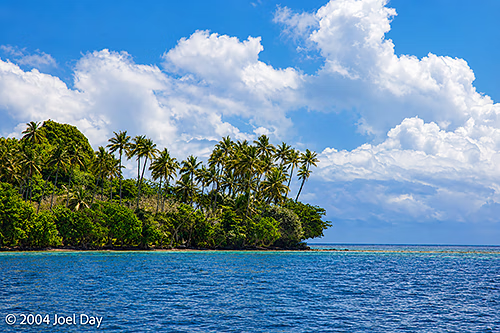
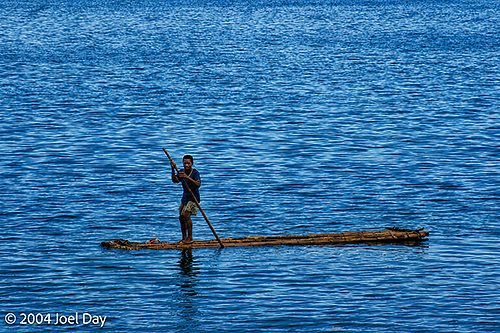
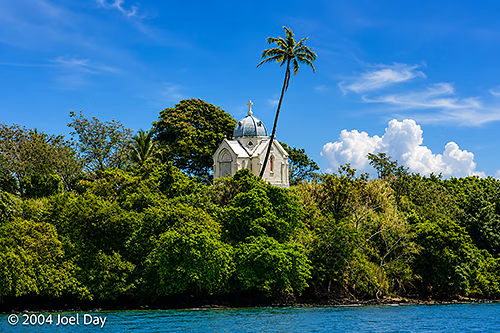
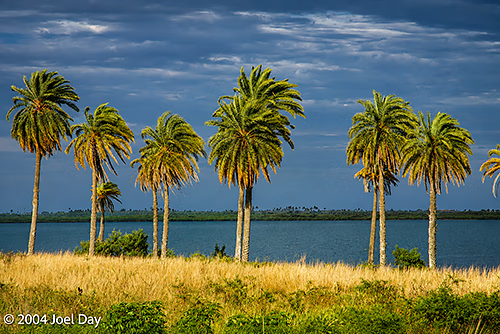
The Bishop’s Tomb Historic Site, Cawaci, Ovalau Island, FijiCoastal Palm Trees on East Coast of Ovalau Island, FijiMan Paddling Handmade Raft on Sea along Ovalau Island, FijiCoastal Palm Trees on East Coast of Ovalau Island, FijiThe Bishop’s Tomb Historic Site, Cawaci, Ovalau Island, FijiSt. John the Baptist Catholic Church, Cawaci, Ovalau Island, Fiji
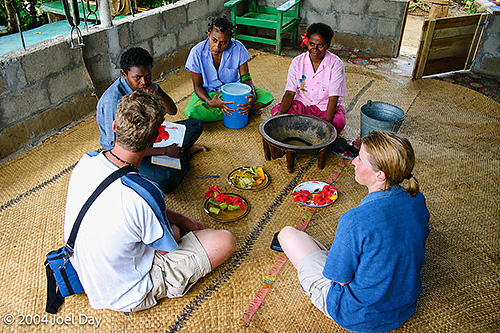
Fijians consider it rude to just rock up to a village without an invitation. You are supposed to ask to see the village chief when you arrive in a village and give them a gift, like Kava, in exchange for passage through the area. Needless to say, it gets a bit awkward trying to explore very far because you’re always stumbling across villages, and it’s time-consuming to continually have to meet with the chief to ask for permission. As I’ve said before, the people in the villages are very friendly, but very poor. Most homes are hot tin shacks with no furniture. Entertaining is done by sitting on woven mats on the floor. And despite this lack of wealth, they will offer you their food — which you are really expected to accept.
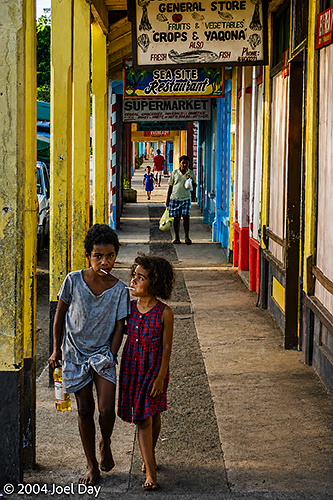
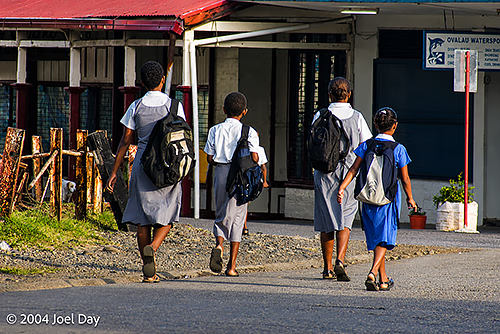
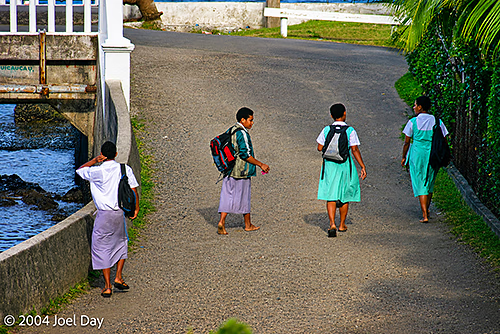
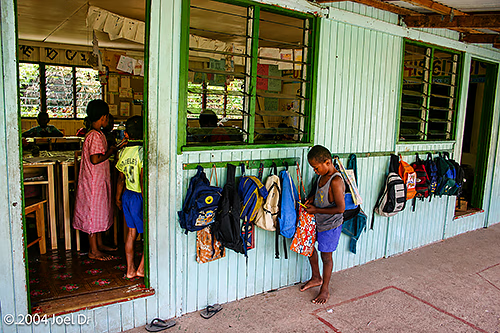
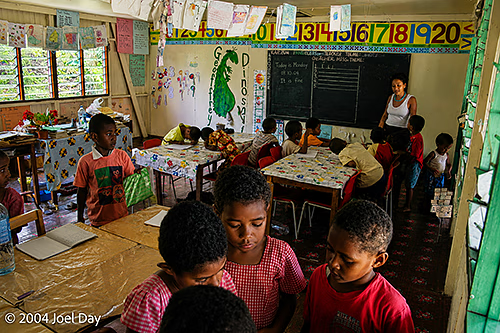
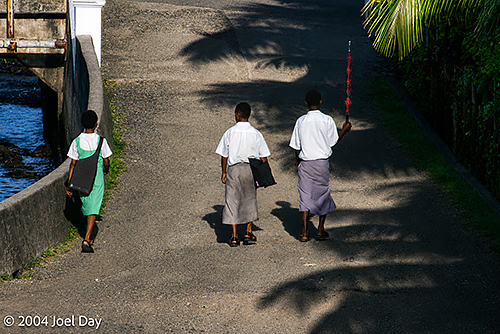
Children walking to School, Levuka, Ovalau Island, FijiChildren walking to School, Levuka, Ovalau Island, Fiji
Unfortunately, many villages are not the most sanitary, so you really have to be careful with their generosity. While the water is safe in the resort areas and big cities of Suva and Nadi, it is not safe in these small villages. I had to keep pointing to my Fiji water bottle every time someone tried to offer me water while I cycled through their villages, to avoid drinking their local water (and getting sick).
It was quite distressing to see how the locals regarded their beautiful ocean and reefs. I can’t tell you how many times I saw Levukians bundle up big bags of trash and just throw them into the ocean. The coast along the villages and towns was littered with trash. There were also plenty of other serious health concerns around the area. I spent some time with a retired American public health worker who pointed out all kinds of problems to me, including lots of raw sewage draining untreated into the sea and half the kids running around with ringworm (which you can evidently see as a fungus growing on their forearms). I think the place’s sanitation caught up with me yesterday, when I came down with a bad bout of food poisoning and couldn’t get out of bed for most of the day.
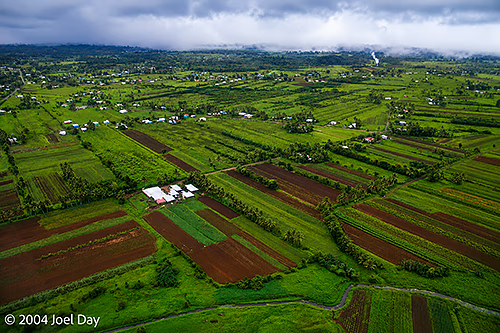
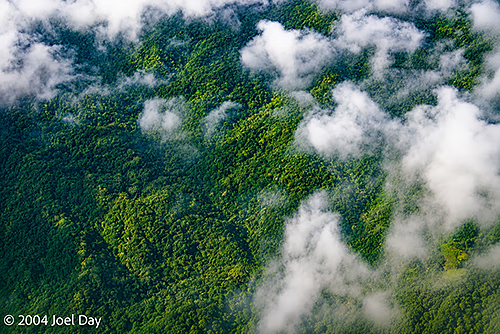
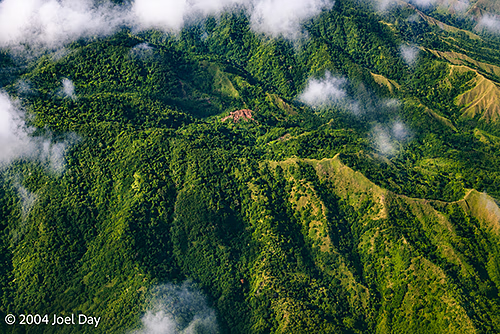
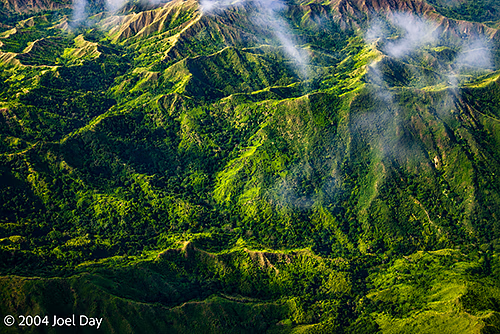
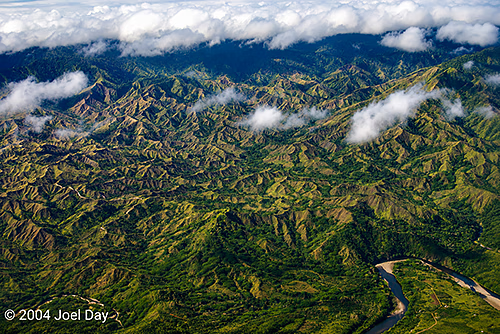
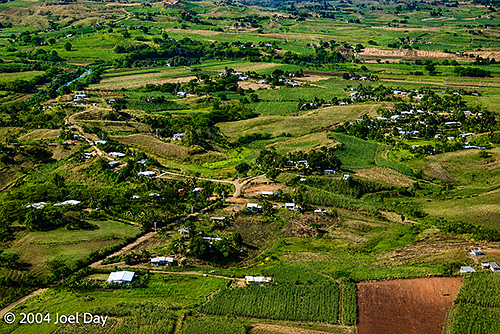
Here are some photos from the flights I took from a jungle mountain airstrip on Ovalau Island to Suva, and then on to Nadi:
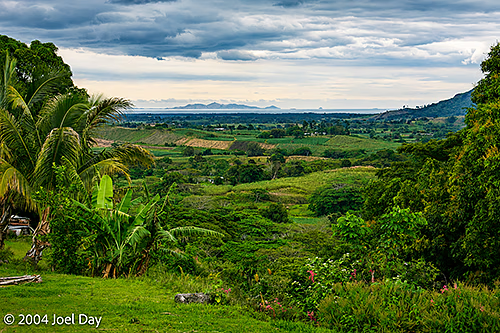
Aerial Images of Rural FijiAerial Images of Interior FijiAerial Images of Interior FijiAerial Images of Interior FijiAerial Images of Interior FijiAerial Images of Rural Fiji
I’m now in Suva, the capital of Fiji. I took a mostly harrowing bus ride over here from Nadi on the only paved road in the country, but arrived safe and sound. Suva only has a population of about 350,000, but it is still not considered the safest place to visit after dark. It is also a city ringed by armed checkpoints. Guess they’re watching out for the next coup d’etat.
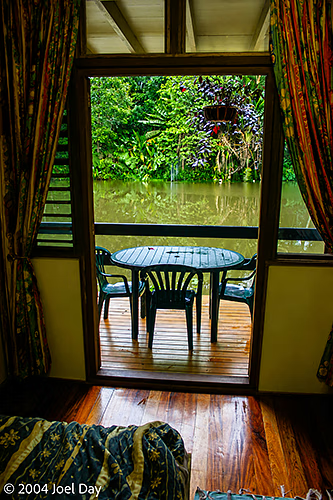
Guestroom near Suva, Fiji
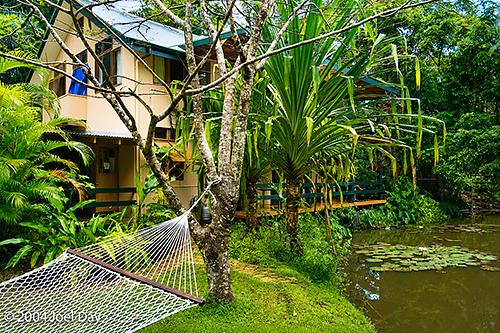
I chose to stay about 20 minutes out of town, in a rainforest area, at a wonderful lodge with rooms overlooking lakes. I went on a wonderful hike through a rainforest park to a deep swimming hole with a great rope swing this morning, then came into the city to see the sights this afternoon. Went to the Fiji Museum and learned all about cannibalism today. Lots of nasty-looking cannibal forks and other cannibal tools on display. They seemed to shy away from some of the more controversial aspects of Fiji history and played down the cannibalism as something that exists in all of our histories — with even a portrait of Jeffrey Dalmer and other recent cannibals (which seemed to offend just about everyone I know who saw it). Although Indians make up half of Fiji’s population today, they were only mentioned in an exhibition in a small upstairs room.
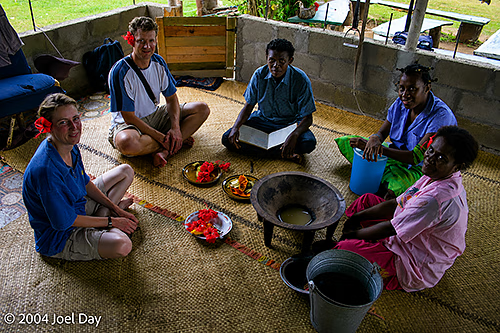
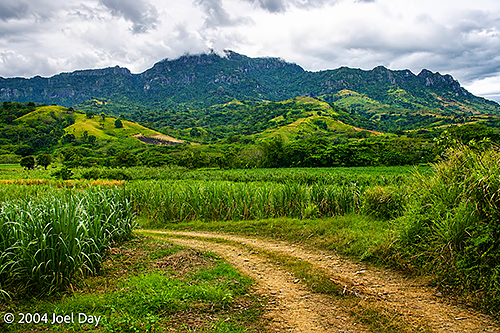
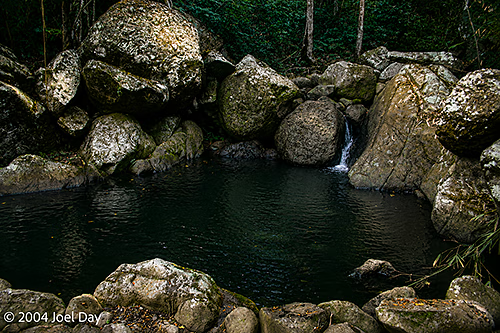
After a string of days on the islands, I decided to head back to the mainland for a mountain bike tour of the hills outside of Nadi. There were a couple of cycling options, but I chose a bike-and-hike tour that took us up into the hills through some small villages and to a traditional Fijian house. We took a break from peddling, drank Kava (as one does), and began hiking up into the rainforest to a chilly swimming hole next to a large mountain known as “The Sleeping Giant”.
Kava Ceremony in Fiji
Along the way, we munched on snacks from the surrounding fields, including grapefruit, papaya, bananas, and pineapples. We also gnawed on sugar cane stalks to reach the sweet juice. Afterwards, we hiked back down to the same house for a wonderful traditional Fijian lunch before cycling back downhill to the coastal plain. A good workout and a satisfying day.
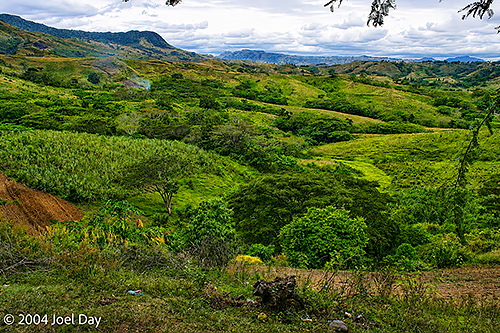
Mountain Bike Circuit through Sugarcane Fields in FijiMountain Bike Circuit views of the Fiji Countryside
An Australian couple who rode with me on this trek had just spent the past week at one of Fiji’s posh resorts. They just decided on a whim to try roughing it for a day to see what life was like outside of their sterile enclave. While for me this day was in the same vein as other eco-tourism experiences I’ve had, they were totally blown away by the richness of immersing themselves in the Fijian culture and rubbing shoulders with the locals.
Probably the best time I’ve had since I started my travels has been at an eco-tourism resort on Wayalailai Island in the Yasawa Islands chain, west of Nadi. The resort was owned and run by three indigenous Fijian villages on the island. They were very warm and hospitable, great cooks, and took us on a variety of adventure tours in the area — including lots of spectacular snorkelling and hiking atop mountains overlooking the sea. Many of the older men on the island wore the traditional Fijian outfit of a sulu (skirt) and a red hibiscus flower in their hair.
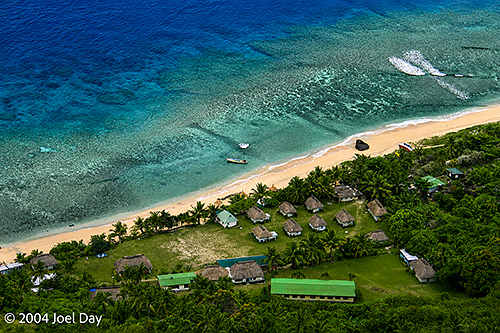
Ecotourism resort on Wayalailai Island, Yasawas Island Group, Fiji
The accommodation was quite rustic (with no power for most of the day and only fresh local spring water to drink), but everyone staying there seemed to be really enjoying themselves (and the traditional food). Three meals a day were included in the very reasonable prices (FJ$30-50 a day). The villagers would serenade us with traditional Fijian music all evening while we sat around talking. It was really wonderful.
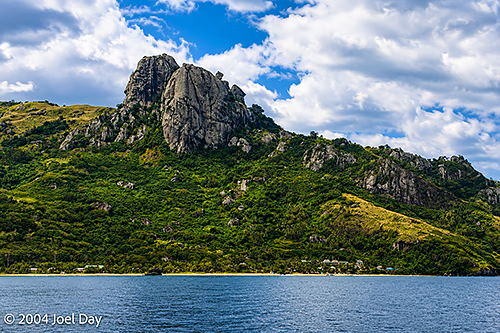
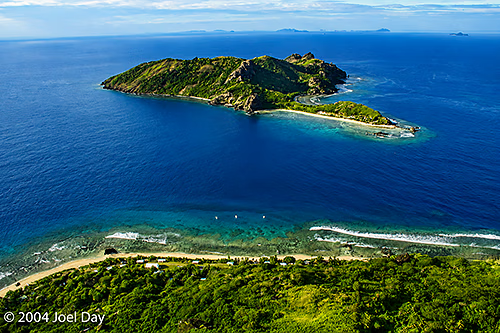
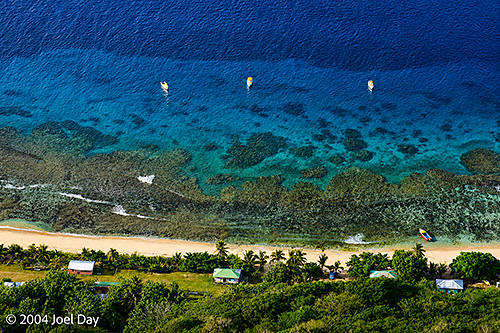
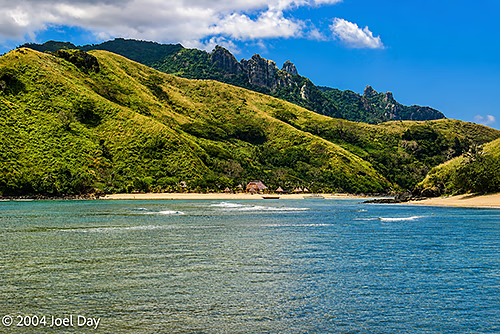
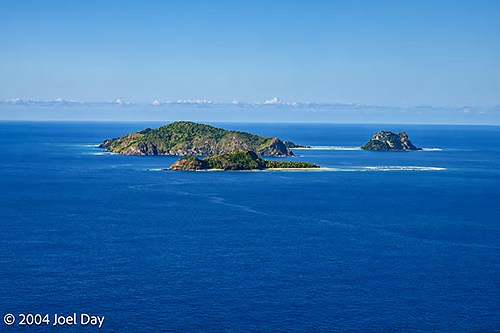
Kuata Island viewed from top of Wayalailai Island, Yasawas Island Group, FijiView from the top of Wayalailai Island, Yasawas Island Group, FijiWayalailai Island, Yasawas Island Group, Fiji
The best thing was that the money we paid them went directly toward improving the villages on the island (which reminded me of the villages I encountered in Venezuela, with chickens running around, back in the early 1970’s) instead of some guy’s Lexus payments. It warmed our hearts to go on tour over mountain tops through the island’s villages on the last day I was there to see these things. Parts of the movie Cast Away were filmed on some nearby islands we visited. I ended up spending four nights there, hiking, swimming, snorkelling, playing volleyball, and socialising with the others.
View from the top of Wayalailai Island, Yasawas Island Group, FijiView from the top of Wayalailai Island, Yasawas Island Group, FijiView from the top of Wayalailai Island, Yasawas Island Group, FijiHike across Wayalailai Island, Yasawas Island Group, FijiVillage on Wayalailai Island, Yasawas Island Group, FijiSchool on Wayalailai Island, Yasawas Island Group, FijiSchool on Wayalailai Island, Yasawas Island Group, Fiji
After spending the past nine weeks racing around Australia and New Zealand, it was nice to just chill out and relax for a change.
Sunrise viewed from the top of Wayalailai Island, Yasawas Island Group, FijiView from the top of Wayalailai Island of Yasawas Island Group, Fiji
I flew into this tropical paradise without any reservations, hoping to just wing it and get a discount for rocking up unannounced. The travel books warn of the touts you’ll face at the airport, hawking their cousin’s accommodation (one of the customs officials was even doing it) — but the travel guides recommend taking refuge from them in the Fiji Visitors Bureau at the airport.
Fiji Palm Trees
As luck would have it, the old FVB shut down and has allegedly moved somewhere between the airport and the town of Nadi, but I haven’t been able to find it yet. Maybe it never really existed. I ended up in a small hotel halfway between the airport and the city with questionable security (it looks like the door has been kicked down a few times), cleanliness (which is what my pre-trip travel immunisations were for), and no air conditioning. It has a ceiling fan instead of air conditioning, but it was cool enough to shut off the fan by 8 PM last night. They have nicer places, but they’re a lot more expensive than what I am willing to pay.
I wandered into the town of Nadi (pronounced “Nandi”) this morning, and found that there really isn’t much to it. It’s basically one main street that runs for about 4 or 5 blocks. All traffic was stopped when a small-gauged sugar cane train roared through town towards the sugar mill. The town itself is full of little Indian merchant shops, much like Little India in Singapore — all hawking their wares to the visitors (which gets annoying). One of my first impressions of the town was a long line of school students, both boys and girls, all wearing skirts. Yes, the guys often wear a “sulu” here, which is essentially a men’s skirt.
Men wearing Sulus in FijiChildren walking to School, Levuka, Ovalau Island, Fiji
Within my first hour of strolling around town, I was continually pitched products and finally succumbed to my first Kava ceremony on the pretence of a shop owner just wanting to be friendly to the visitors. Kava is a drink made from the roots of a pepper plant and is said to have medicinal properties. It’s an ancient Fijian custom. I can’t say it tastes great (sort of like ground wood), but I survived okay. A few other tourists were dragged in while I was there. We were welcomed, but warned off buying anything from the big-business Indians. Oddly, the shop owner seemed Indian. Seems like those coup tensions from a few years ago still haven’t worn off. Sure enough, I was given a hard sales pitch afterwards for buying their hand-carved trinkets to help their poor indigenous Fijian village. I later met other tourists who had been lured to the same selling scheme. We concluded that they probably had no ties to the village, and only used it because it was mentioned in a Lonely Planet guide they knew we were all carrying. I decided to walk back to my hotel, only to have every taxi driver and bus toot at me to see if I wanted a ride.
Kava Ceremony in Fiji
I have booked a catamaran ride to a small neighbouring island tomorrow, where the nicest part of Fiji is supposed to be. It’s in the string of islands where Tom Hanks’ “Cast Away” and Brooke Shields’ “Blue Lagoon” were filmed. Lots of white sandy beaches, great snorkelling, huts on the beach, and good hiking trails. I’m not expecting them to have Internet access, so it might be 3-4 days before I write again.
View from the top of Wayalailai Island of Yasawas Island Group, Fiji
After my West Island jaunt, I will probably take a bus to Suva (the capital city), a traditional village, and visit some other recommended islands to the north and east of the main island.
You must be logged in to post a comment.