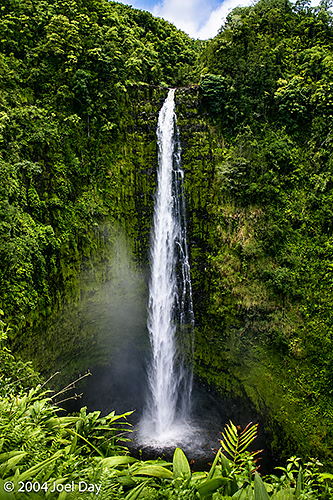
My last full day on The Big Island was quite a fitting one. As an island that is immensely diverse, with every climate imaginable and elevations that range from a warm sea level to a freezing, snow-capped 13,796-foot-high Mauna Kea Mountain, I figured it would be good to start under the ocean and end up in the stars. Sure enough, I started the day snorkelling in my newfound favourite spot of Puako north of Kona before heading up around the northern rim of the island, past the amazing 420-foot-high Akaka Falls on my way back to my Hilo hotel. From there I made an evening side-trip up the forbidden Saddle Road to an elevation of 9200 feet where the Onizuka Center of International Astronomy Visitor Center is positioned, just below the summit, for an evening of stargazing from just below one of the most revered astronomy locations in the world.
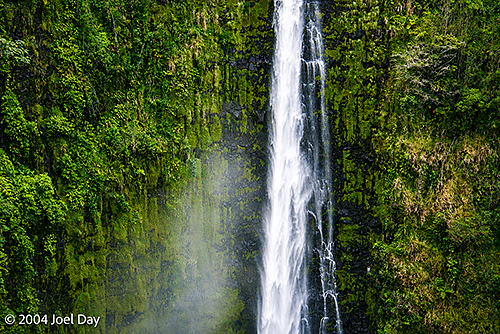
128m / 420ft high ʻAkaka Falls, Island of Hawai’i, Hawai’i128m / 420ft high ʻAkaka Falls, Island of Hawai’i, Hawai’i128m / 420ft high ʻAkaka Falls, Island of Hawai’i, Hawai’i
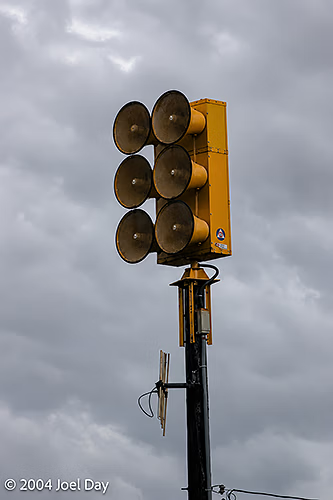
Mauna Kea is home to multimillion-dollar observatories operated by top scientists from the U.S., the U.K., and Japan. No matter how crappy the weather may be below, this mountain is high enough to poke through the clouds of most storm systems, and it is isolated enough from light pollution elsewhere in the world to offer a better view of space than anywhere else on Earth. The cities of Hilo and Kona even use special low-density, dark-yellow streetlights that emit a single wavelength, so astronomers can filter them out of their observations.
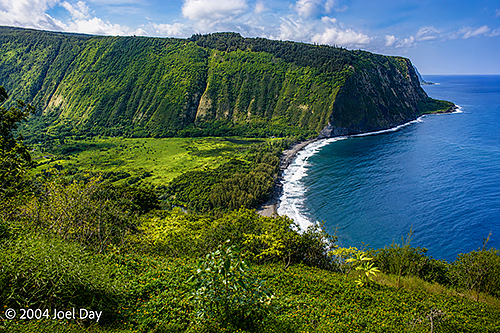
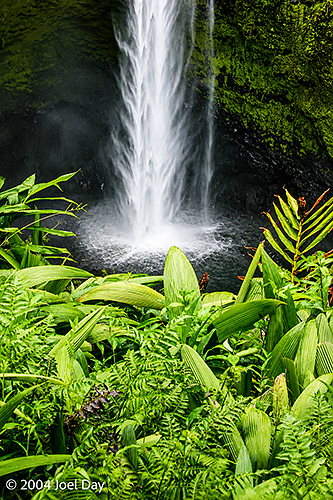
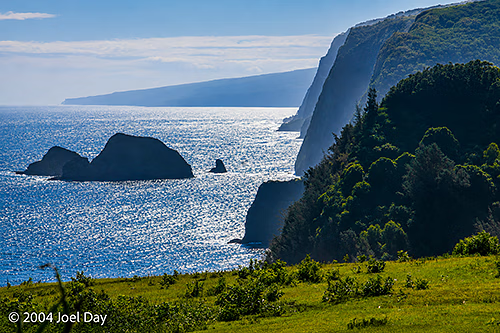
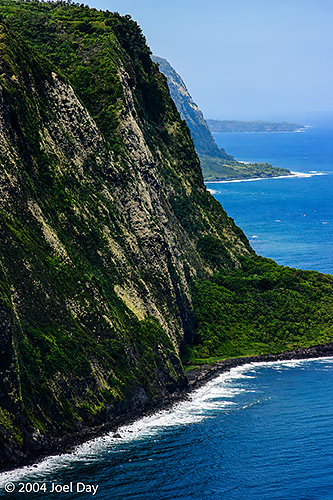
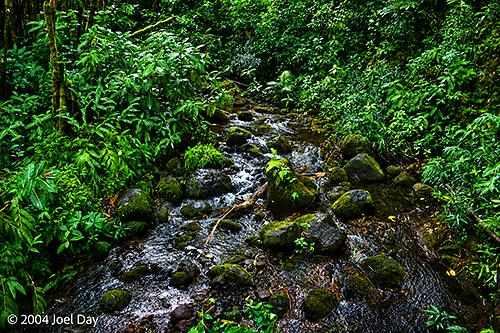
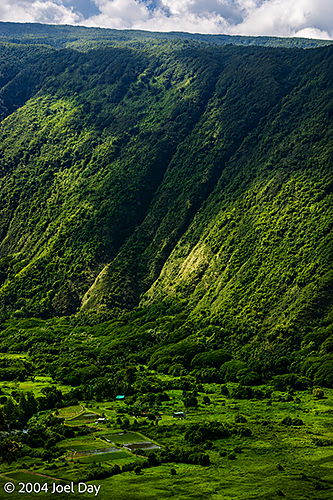
Pololū Valley Lookout on the northern end of the Island of Hawai’i, Hawai’iNorthern coast beyond Waipiʻo Valley, Island of Hawai’i, Hawai’iRainforest Creek, Island of Hawai’i, Hawai’i
The locals in Hilo also seem to like to have a bit of fun living in the tropics while being so close to the snow-capped peaks on the island. On one occasion while I was driving through Hilo, I noticed a pickup truck full of snow parked in front of a local high school. The students were using it to supply ammunition for a big snowball fight on the school’s front lawn in the hot, balmy tropical weather. What an odd scene!
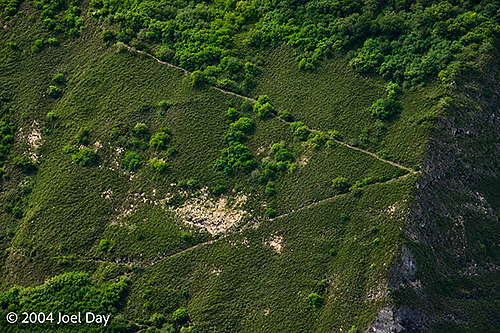
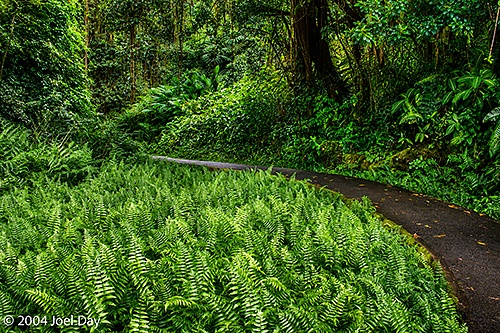
Steep trail descending into Waipiʻo Valley, Island of Hawai’i, Hawai’iWaipiʻo Valley, Island of Hawai’i, Hawai’iFerns along trail to 128m / 420ft high ʻAkaka Falls, Island of Hawai’i, Hawai’i
It was a pretty long, but very cool day. The north side of the Big Island was quite spectacular.
Like most Hawaiian Islands, the Big Island has a very wet windward coast on the east and a very dry leeward coast in the west. The rain forests on the windward coasts are usually really fascinating and full of hippies (or “ferals”, as they are known in Australia), but the constant rain and dampness can eventually start to wear you down. The dry, leeward coasts offer much warmer and sunnier weather with much calmer surf. Of course, the heat in these places can start to wear you down just as quickly.
It seems most visitors to places like the Hawaiian and Fiji Islands are primarily interested in hanging out on a beach, so these dry coasts seem to attract most tourists and tourist resorts. I can’t say I’m much for hanging out on beaches personally, but it’s nice to do a bit of everything while you’re travelling. And besides, there are some places in these areas that are good for snorkelling, and that is something I do like to do.
So there amongst the $500-a-night resorts, including a multi-million dollar Hilton (dubbed “Disneyland” by the locals), I checked into my $20-a-night cabin with ocean views overlooking Hapuna Beach State Park. Okay, it was pretty basic, and it looked like it hadn’t really had any maintenance since it was built in the 1970’s — but it did the trick and was a short walk from a fabulous beach. After being visited by a few spiders, geckos, mosquitoes, ant colonies and mice in my cabin, I just decided to pitch my freestanding tent on the floor so I could sleep in peace. I’ve been used to such nighttime visitors since I first arrived in Fiji.
Hapuna Beach State Park was a good base to use for swimming and some decent snorkelling along some reefs near the southern end of the cove. But the really nice snorkelling was a few clicks down the road behind a wealthy neighbourhood called Puako. I knew I had found a great spot when I spotted an expensive snorkelling tour operator anchored just offshore and other divers climbing out of the surf. Sure enough, it was one of the best snorkelling spots I’ve ever found, with loads of colourful tropical fish swimming into and out of deep canyons a few hundred feet offshore. The divers told me they liked it for the big underwater lava tube they could explore.
While I stayed at Hapuna Beach State Park, I also did the obligatory visit to the Hilton Waikoloa Village (aka Disneyland) — just to see how the other half lives. The answer? They live just like they do at home, with giant shopping malls right there on the beach with them. It reminded me more of King of Prussia Mall than anything else. And to think that King of Prussia is what I try to take vacations from…
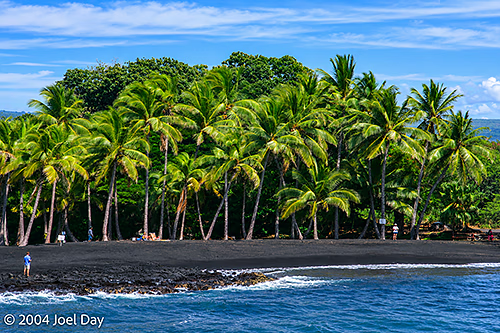
Black Sand and Palm Trees of Punalu’u Beach, Island of Hawai’i, Hawai’i
When I travel, I don’t like to be too organised with accommodation reservations. Part of the fun, for me, is letting myself drift to whatever areas interest me. This strategy works well during low-tourist seasons, but it can backfire when the crowds come in. This made travelling through some parts of New Zealand and Australia difficult.
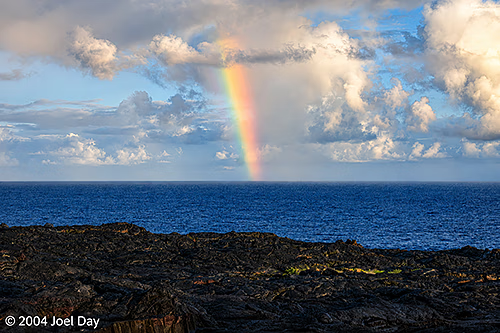
Pacific Ocean Rainbow, Hawai’i Volcanoes National Park, Island of Hawai’i, Hawai’i
Tourism on the Big Island of Hawaii seemed to be at its low point when I flew in, so I thought I would just wing it with accommodation as I made my way around the island. The only problem with Hawaii is that it doesn’t really cater for backpackers like many countries do, and finding cheap accommodation can get a bit difficult. One of the cheapest ways to spend a night is by camping in the numerous state and county (island) parks. The only problem with camping in Hawaii is that you are expected to know exactly which campsites you want to camp in and commit to specific dates as early as possible. Prices range from $3 for county parks to $5 for state parks.
Southernmost Point of the 50 United States, Island of Hawai’i, Hawai’i
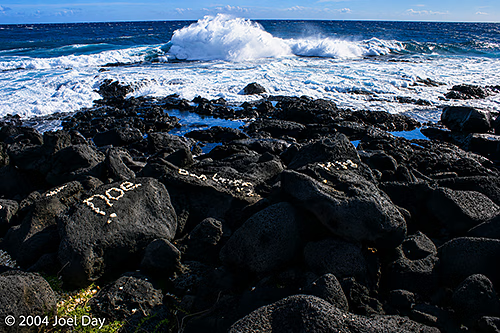
Before I left Hawaiian Volcanoes National Park (where camping was fabulous and free), I made an effort to organise my accommodation for the rest of my stay on the Big Island. This required that I make a trip back to Hilo to visit the state park system offices to make my reservations and pay my dues. I thought I was all squared away and continued on my journey from Hawaiian Volcanoes National Park down around the southern end of the island (where I popped down to see Ka Lae, the very southernmost point in the USA) before dropping off at Manuka State Wayside Park.
Much to my dismay, the Manuka State Wayside Park was a real dive. It was right along the main highway circling the island, and there was a constant stream of drunken locals dropping by to use the restrooms, and there were no other campers in sight. I couldn’t even find where I was supposed to camp in the first place.
A few hours before nightfall, I decided to see what other places I could spend the night at up the west coast (in the direction I was heading). There were very few options listed in my Lonely Planet Guide, and I had a lot of trouble finding them. Some were in seemingly unwelcome neighbourhoods with no one answering their doors; others were just too hard to find. After a long, frantic search, I finally ended up at a sister hostel to the one I stayed at on the east coast in Mountain View. This one was in the town of Captain Cook, which I thought was fitting for me since it’s where the Hawaiians killed the European founder of Australia.
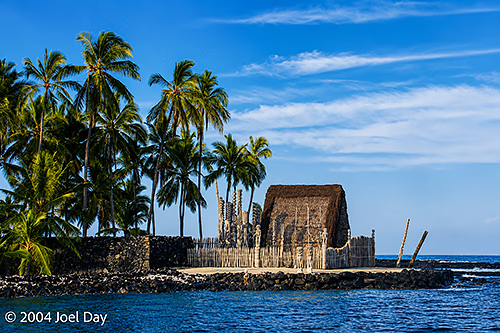
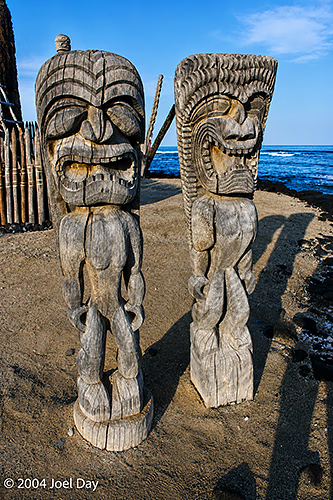
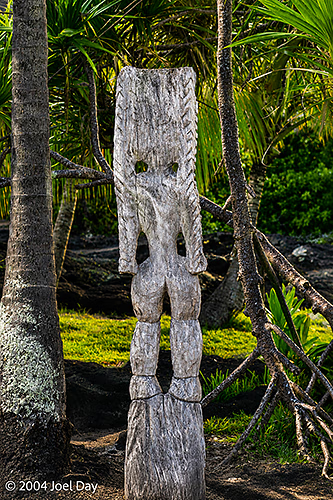
Hale o Keawe at Puʻuhonua o Hōnaunau National Historical Park, Island of Hawai’i, Hawai’i
I was expecting a nice hostel due to its association with the Mountain View hostel on the East Coast, but this place was really nothing special. The son of the eccentric woman running the East Coast hostel ran it, and you sure could see the family resemblance. Like many other former mainlanders I’ve met around here in their late fifties, the owner seemed to be an aging hippie who was bitter and cynical about a life spent too long in what was supposed to be paradise. Perhaps he lived there for decades, and his island life didn’t turn out as he had hoped. Nevertheless, I really had no option but to spend the night and avoid his proselytising friend (whom he warned me about when I checked in).
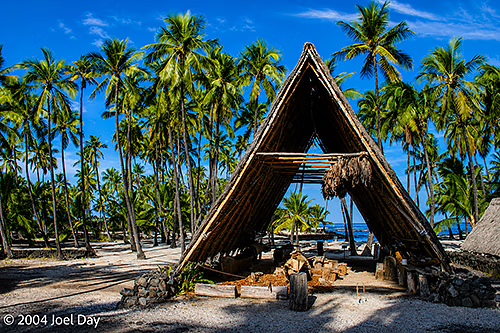
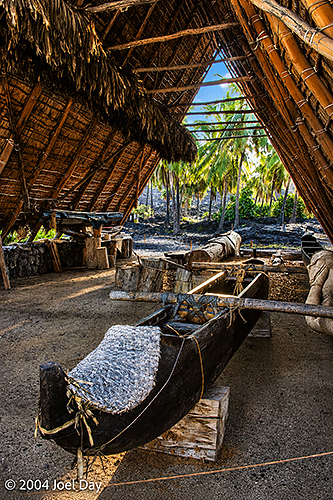
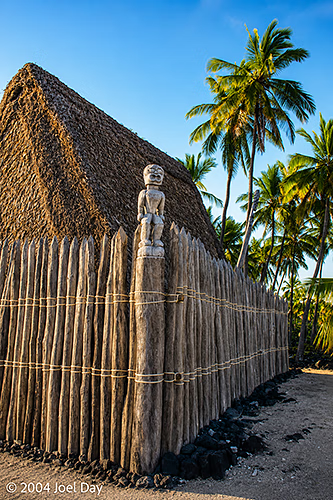
Thatched Shelter at Puʻuhonua o Hōnaunau National Historical Park, Island of Hawai’i, Hawai’i
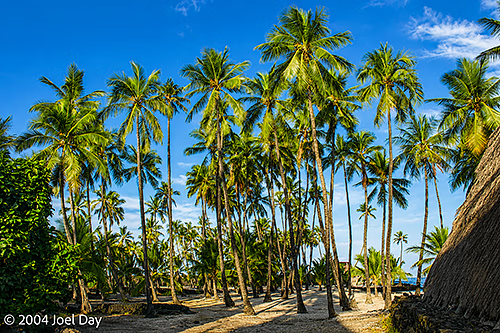
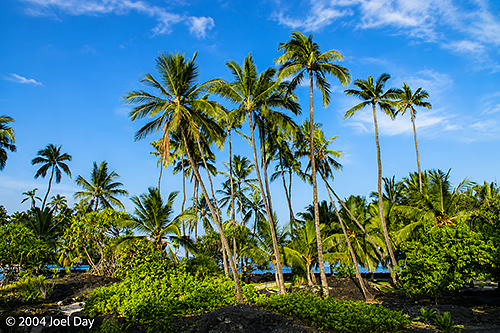
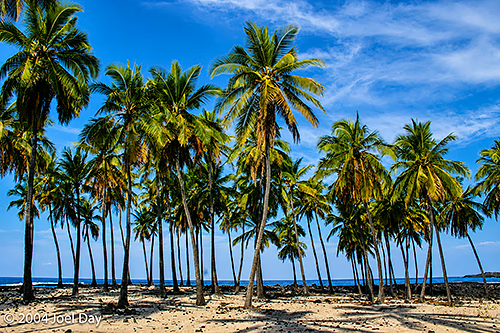
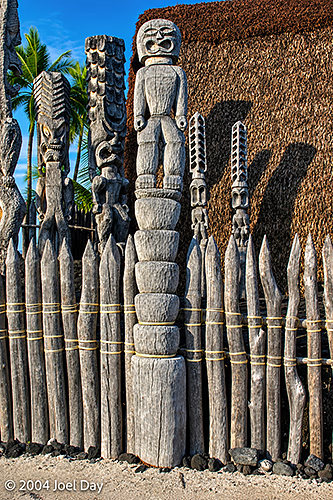
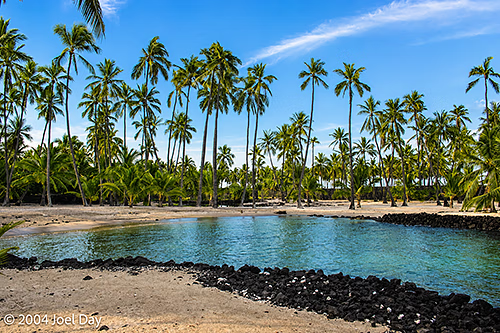
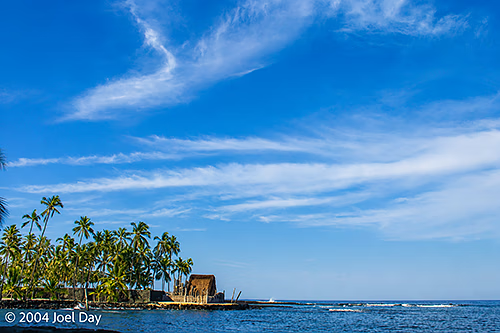
I ducked out early in the morning and headed down to a really cool and beautiful National Historical Park on Hōnaunau Point called Puʻuhonua o Hōnaunau. Like the other National Parks I came across in Hawaii, it was much nicer than the state and county parks. Historically, Puʻuhonua o Hōnaunau was a safe haven where Hawaiians could escape to avoid death sentences. It is also a place where many powerful chiefs of the Hawaiian Islands once lived. It’s yet another place around here that Mark Twain visited and wrote about. The views around Puʻuhonua o Hōnaunau were more along the lines of what people envision the paradise of Hawaii to be like, and less like what it really is.
Palm Trees on Beach at Puʻuhonua o Hōnaunau National Historical Park, Island of Hawai’i, Hawai’iThatched Shelter at Puʻuhonua o Hōnaunau National Historical Park, Island of Hawai’i, Hawai’iPalm Trees on Beach at Puʻuhonua o Hōnaunau National Historical Park, Island of Hawai’i, Hawai’iGuardians of Hale o Keawe at Puʻuhonua o Hōnaunau National Historical Park, Island of Hawai’i, Hawai’iPalm Trees on Beach at Puʻuhonua o Hōnaunau National Historical Park, Island of Hawai’i, Hawai’iHale o Keawe at Puʻuhonua o Hōnaunau National Historical Park, Island of Hawai’i, Hawai’iPalm Trees on Beach at Puʻuhonua o Hōnaunau National Historical Park, Island of Hawai’i, Hawai’iHale o Keawe at Puʻuhonua o Hōnaunau National Historical Park, Island of Hawai’i, Hawai’iHale o Keawe at Puʻuhonua o Hōnaunau National Historical Park, Island of Hawai’i, Hawai’iGuardian of Hale o Keawe at Puʻuhonua o Hōnaunau National Historical Park, Island of Hawai’i, Hawai’i
After spending a few early hours around Puʻuhonua o Hōnaunau, I started to head up north to my next night’s destination: Hapuna Beach.
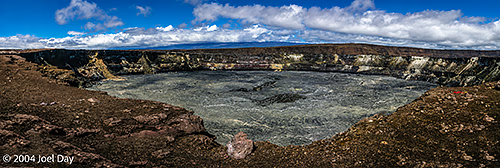
Kilauea Volcano, Hawai’i Volcanoes National Park, Island of Hawai’i, Hawai’i
As I mentioned before, the Big Island of Hawaii holds a few distinctions. Not only does it have the wettest city in the U.S. (Hilo), it also has the southernmost town in the U.S. (where I’m posting this blog entry: Naalehu), and the biggest mountain in the world (if you consider the fact that, unlike Mount Everest, it starts on the floor of the ocean).
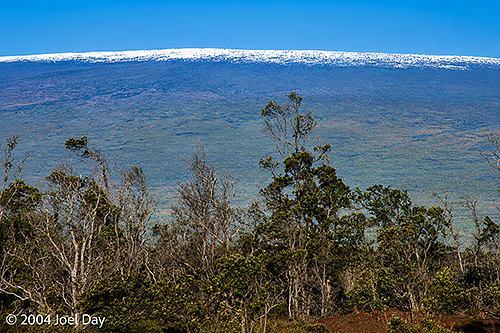
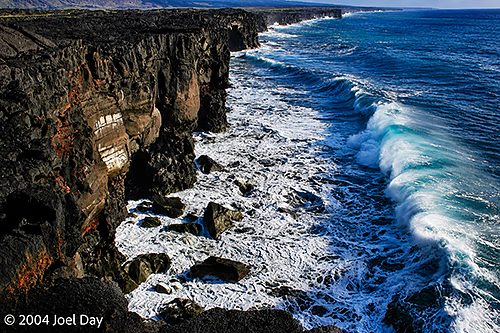
Snow-capped Mauna Loa Volcano in Hawai’i Volcanoes National Park, Island of Hawai’i, Hawai’iMauna Loa Lookout, Hawai’i Volcanoes National Park, Island of Hawai’i, Hawai’iPacific Ocean waves crashing into volcanic coast, Hawai’i Volcanoes National Park, Island of Hawai’i, Hawai’i
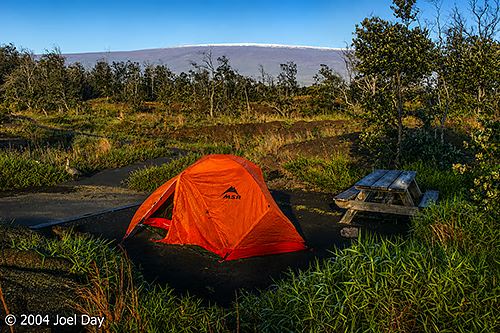
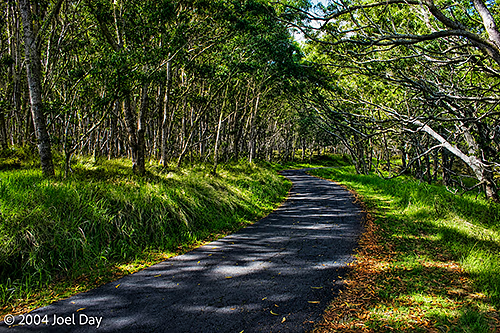
I spent the past few days camping and hiking on this world’s largest mountain while visiting Hawaii Volcanoes National Park. The park is a pretty amazing place with huge extremes in climate, elevation, and environments. The park runs from sea level up to a 13,700-foot peak covered in snow. There are about 150 miles of hiking trails throughout the park (including the summit trail), but it is best known for its very active volcanoes and lava flows.
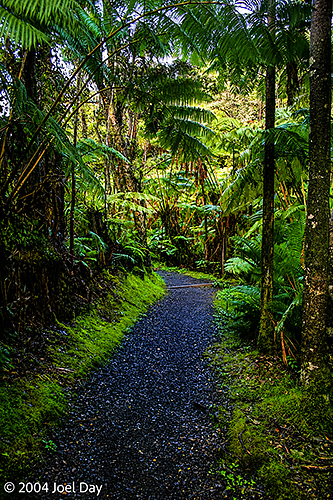
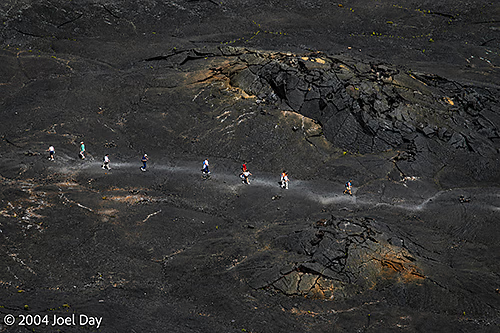
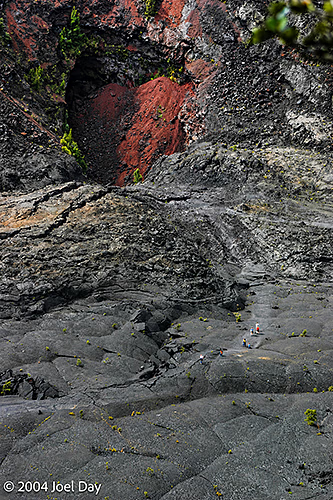
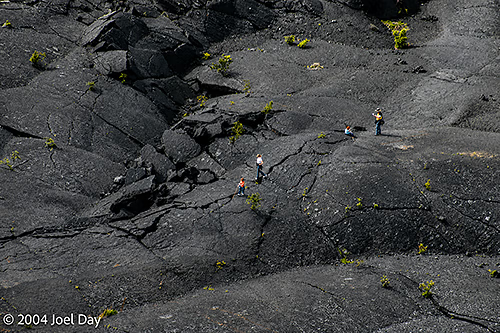
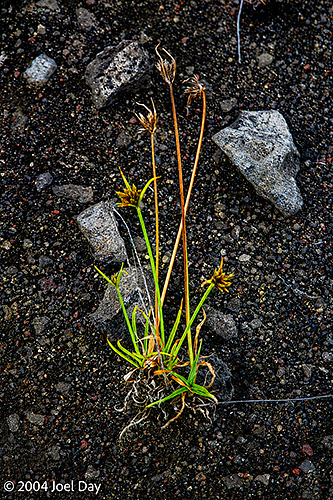
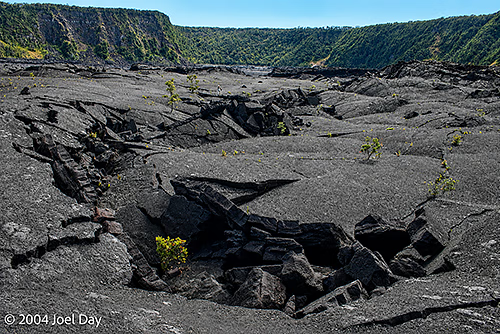
Camping in the shadow of the snow-capped Mauna Loa Volcano in Hawai’i Volcanoes National Park, Island of Hawai’i, Hawai’iRainforest walk in Hawai’i Volcanoes National Park, Island of Hawai’i, Hawai’iKīlauea Iki Crater Hike, Hawai’i Volcanoes National Park, Island of Hawai’i, Hawai’iKīlauea Iki Crater Hike, Hawai’i Volcanoes National Park, Island of Hawai’i, Hawai’iKīlauea Iki Crater Hike, Hawai’i Volcanoes National Park, Island of Hawai’i, Hawai’iGreen shoots growing out of volcanic soil, Hawai’i Volcanoes National Park, Island of Hawai’i, Hawai’iKīlauea Iki Crater Hike, Hawai’i Volcanoes National Park, Island of Hawai’i, Hawai’i
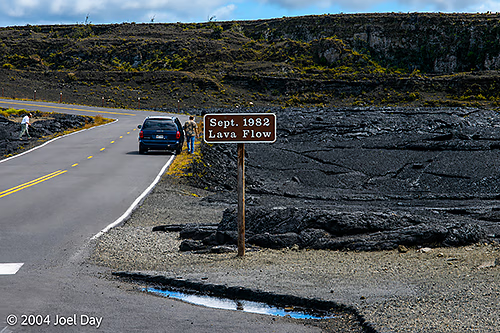
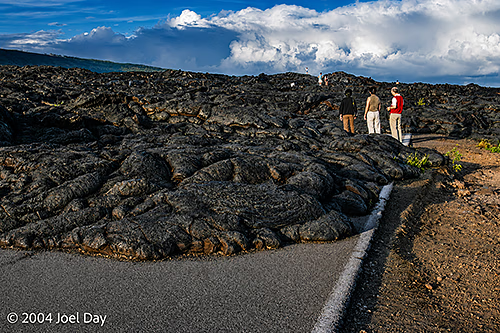
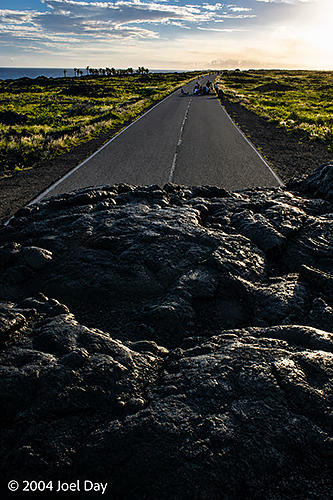
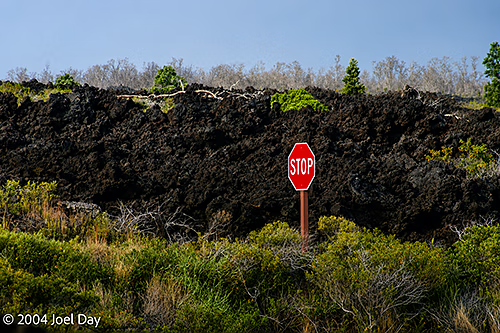
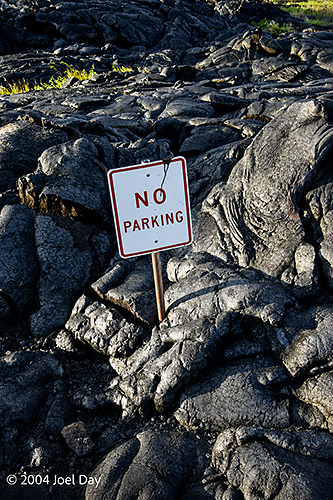
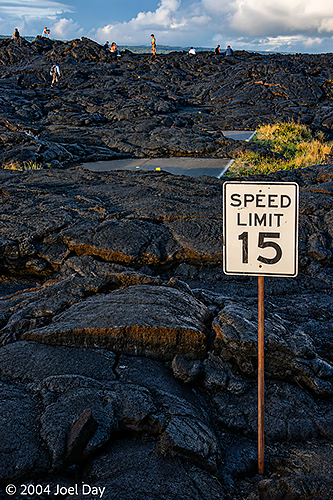
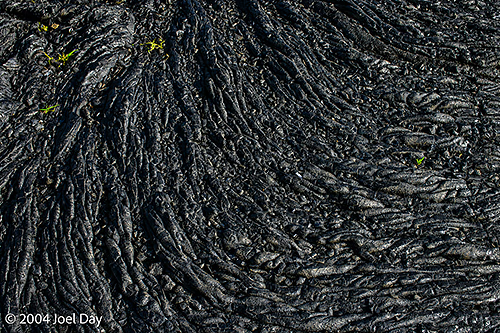
Hawaii Volcanoes National Park is the place you hear about lava flows in Hawaii, which crop up on the news every so often because they happen so frequently. The Big Island of Hawaii is the youngest of the Hawaiian Islands and continues to grow due to frequent volcanic eruptions. There are probably 15 or 20 active volcanic craters in the park, many of which have spewed lava in recent years. Throughout the park, there are huge hardened (cooled) lava flows that were making their way down to the sea before they froze into rock. You occasionally come to these clearings in the tropical growth along the road, where you’ll find nothing but black, hardened lava on either side. Signs are posted next to these flows indicating the years the lava flowed: 1959, 1974, 1982, 1998, 2002, 2003.
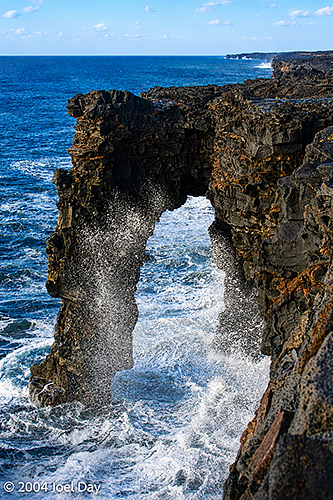
Lava Flow Path in 1982, Hawai’i Volcanoes National Park, Island of Hawai’i, Hawai’iHōlei Sea Arch, Hawai’i Volcanoes National Park, Island of Hawai’i, Hawai’i
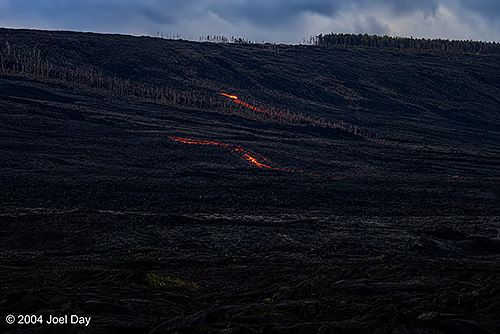
You can still see live (hot) lava flows in some parts of the park, which glow bright red at night. In other parts of the park, you can hike across craters that were last active in 1959 but continue to smell of sulphur as they steam off the rainwater that falls down into their cracks. They say these craters are much like frozen lakes, except instead of ice you walk on a relatively thin crust of rock. Instead of there being water below, you’re walking over magma — just a few hundred feet down. All of these active craters could wake up and erupt more lava at any time, but they seem better positioned to predict eruptions these days by closely monitoring seismic activity in the area.
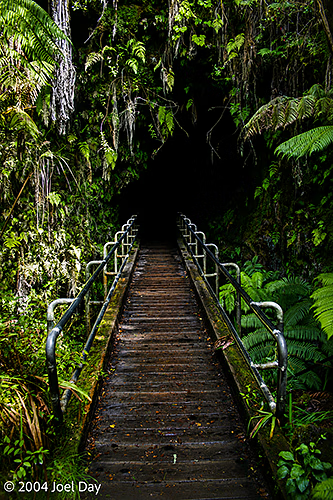
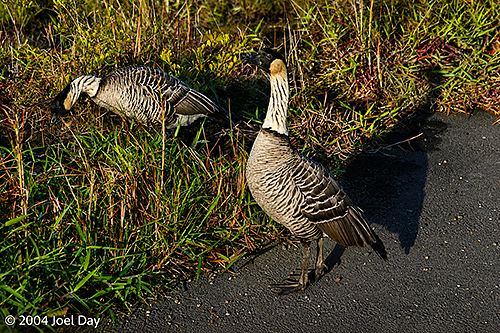
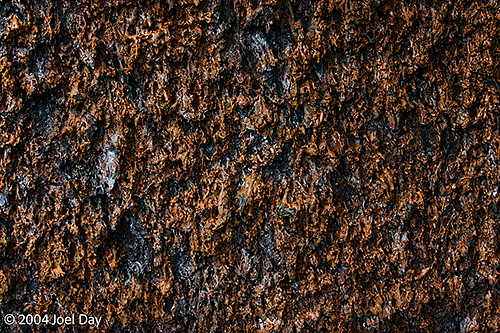
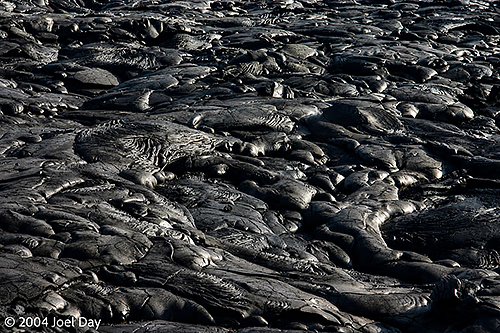
Lava glowing at night in Hawai’i Volcanoes National Park, Island of Hawai’i, Hawai’iEntrance to Nāhuku (Thurston Lava Tube), Hawai’i Volcanoes National Park, Island of Hawai’i, Hawai’iHike to Mauna Loa Lookout, Hawai’i Volcanoes National Park, Island of Hawai’i, Hawai’iNēnē, or Hawaiian geese (Branta sandvicensis), the state bird of Hawaii in Hawai’i Volcanoes National Park, Island of Hawai’i, Hawai’iVolcanic Rock Pattern, Hawai’i Volcanoes National Park, Island of Hawai’i, Hawai’i
Throughout the park, there were warnings about frequent earthquakes and fault lines opening up. There were also warnings about tidal waves, saying you should run from the ocean to higher ground if there are any earthquakes. Lava flows, earthquakes, and tidal waves have wiped out entire towns on this island in just the last century.
Hardened lava blocking road in Hawai’i Volcanoes National Park, Island of Hawai’i, Hawai’iHardened lava blocking road in Hawai’i Volcanoes National Park, Island of Hawai’i, Hawai’iHardened lava blocking road in Hawai’i Volcanoes National Park, Island of Hawai’i, Hawai’iHardened lava blocking road in Hawai’i Volcanoes National Park, Island of Hawai’i, Hawai’iHardened Lava in Hawai’i Volcanoes National Park, Island of Hawai’i, Hawai’iHardened lava blocking road in Hawai’i Volcanoes National Park, Island of Hawai’i, Hawai’i
After a few days in overpopulated Oahu (which is the home of Honolulu), I hopped on my long-planned flight to Hilo (pronounced Heel-o) on the island of Hawaii. As in New York State, people have to make the distinction between the state and the island, so they refer to the island of Hawaii as “The Big Island” (as opposed to the State of Hawaii — of which it’s part). Hilo holds the distinction of being America’s wettest city, getting about 6 meters of rain a year. Fortunately, the Big Island, roughly the size of Connecticut, is large enough that different parts of the state have distinct climates.
I spent my first couple of days roaming around the tiny city of Hilo (albeit the biggest on this island) just trying to get supplies. Hilo is probably not much bigger than Lititz or Manheim, PA (50,000?). And unfortunately, they have a Walmart. This means the city isn’t big enough to support both Walmart and small-shop owners, who are far more likely to be experts in their fields. The minimum wage paid to Walmart staff, as usual, meant they didn’t know anything about what they were selling. I also ran into this problem with K-Mart in some small Australian cities.
Getting used to shopping in American supermarkets again was another headache. Healthy food was awfully hard to find, with double-sugar here and triple-sized items there. Needless to say, this severely complicated my ability to get healthy, non-perishable camping food, camping fuel (I had to figure out what Australian “Methylated Spirits” translates to around here), and to get some basic, easy photo needs met (which were over the heads of Walmart employees).
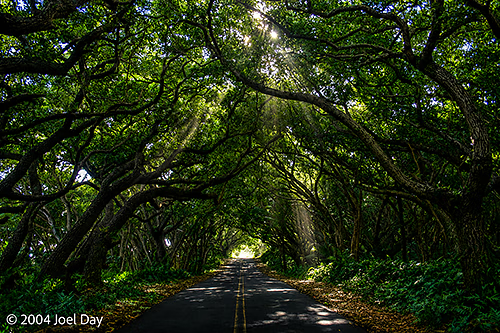
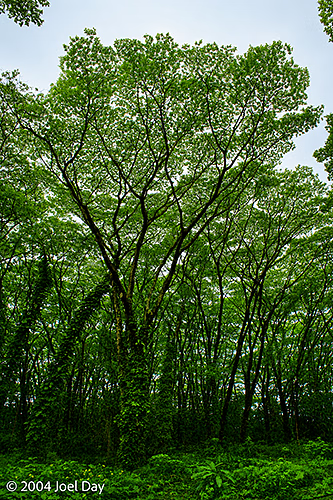
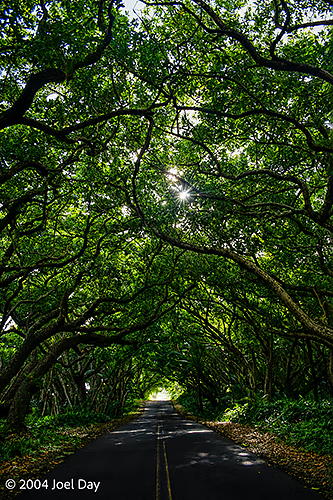
Monkeypod or Rain Trees (Samanea saman) along road south of Hilo, Hawai’i
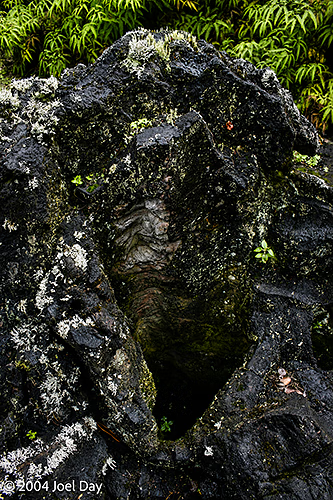
After about 24 hours of aggravation, I finally got out of Hilo and started heading down the west coast. The area, known as Puna, is famous for its hippies (or ferals, as we call them in Australia), rainforests, spectacular coasts, and volcanic remnants (including cool casts of trees caught in the lava). I found a hostel in the area with a very eccentric manager and lots of empty rooms. This seems like a really good time to visit Hawaii!
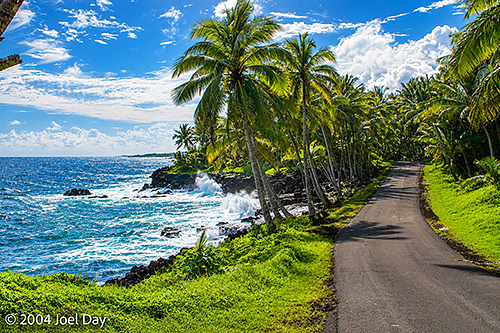
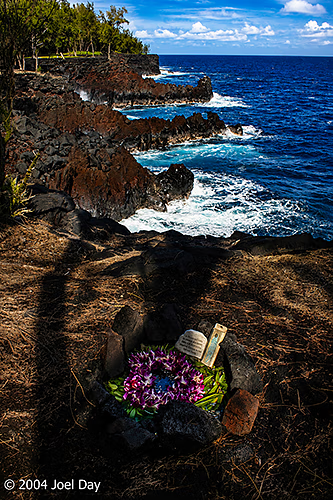
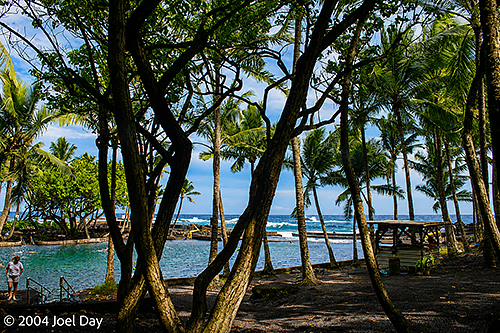
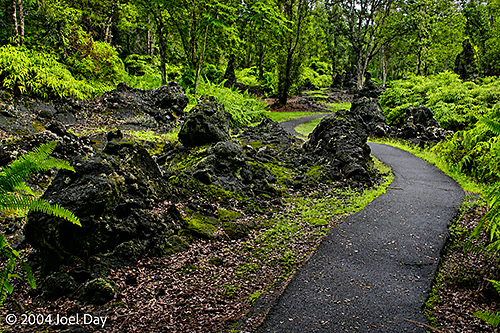
Palm Trees along coastal road south of Hilo, Hawai’iCoast south of Hilo, Hawai’iHot springs along coast south of Hilo, Hawai’iMonkeypod or Rain Trees (Samanea saman) along road south of Hilo, Hawai’iLava Tree State Monument, south of Hilo, Hawai’iLava Tree State Monument, south of Hilo, Hawai’iVolcanic terrain with green shoots south of Hilo, Hawai’iMonkeypod or Rain Trees (Samanea saman) along road south of Hilo, Hawai’i
You must be logged in to post a comment.