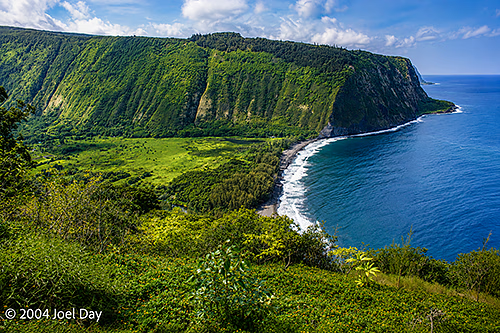
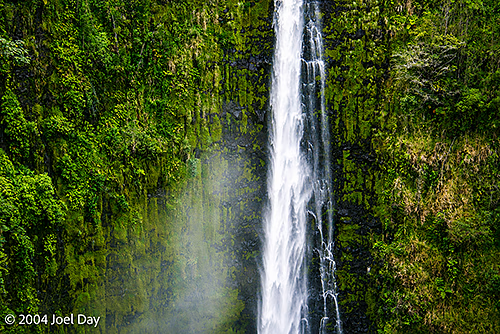
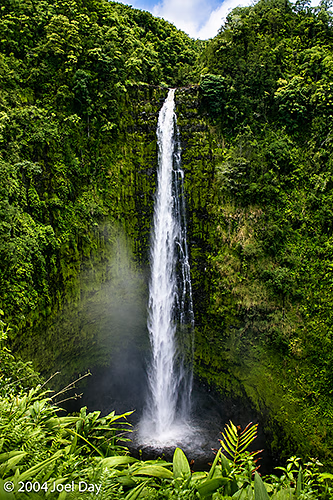
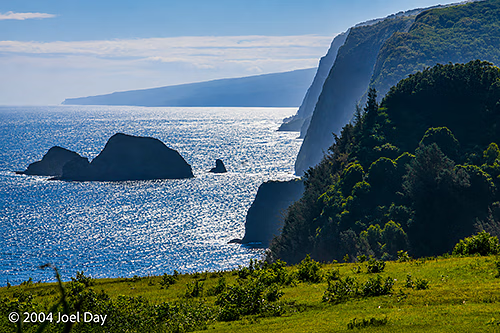
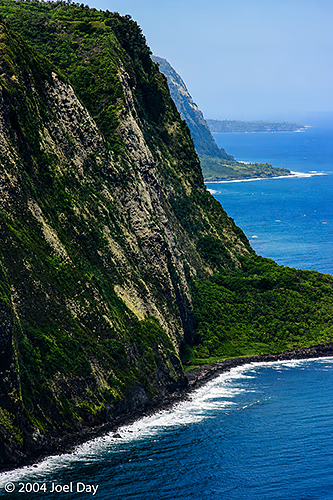
My last full day on The Big Island was quite a fitting one. As an island that is immensely diverse, with every climate imaginable and elevations that range from a warm sea level to a freezing, snow-capped 13,796-foot-high Mauna Kea Mountain, I figured it would be good to start under the ocean and end up in the stars. Sure enough, I started the day snorkelling in my newfound favourite spot of Puako north of Kona before heading up around the northern rim of the island, past the amazing 420-foot-high Akaka Falls on my way back to my Hilo hotel. From there I made an evening side-trip up the forbidden Saddle Road to an elevation of 9200 feet where the Onizuka Center of International Astronomy Visitor Center is positioned, just below the summit, for an evening of stargazing from just below one of the most revered astronomy locations in the world.
Mauna Kea is home to multimillion-dollar observatories operated by top scientists from the U.S., the U.K., and Japan. No matter how crappy the weather may be below, this mountain is high enough to poke through the clouds of most storm systems, and it is isolated enough from light pollution elsewhere in the world to offer a better view of space than anywhere else on Earth. The cities of Hilo and Kona even use special low-density, dark-yellow streetlights that emit a single wavelength, so astronomers can filter them out of their observations.
The locals in Hilo also seem to like to have a bit of fun living in the tropics while being so close to the snow-capped peaks on the island. On one occasion while I was driving through Hilo, I noticed a pickup truck full of snow parked in front of a local high school. The students were using it to supply ammunition for a big snowball fight on the school’s front lawn in the hot, balmy tropical weather. What an odd scene!
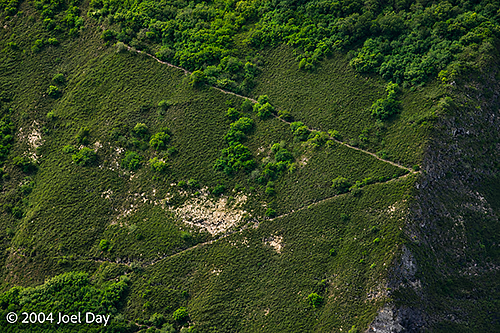
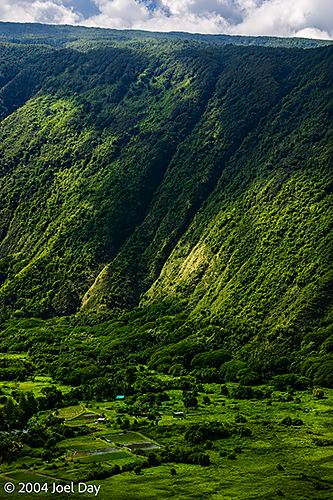
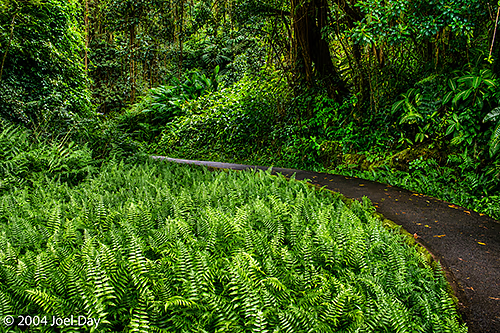
It was a pretty long, but very cool day. The north side of the Big Island was quite spectacular.
