The most tiring aspect of life in Egypt is having to endure the constant hustling. When you first arrive, they must sense your naivety and big, bright eyes because they seem to descend on you more. Now that I’ve learned to keep my head down, I tend to be left alone.
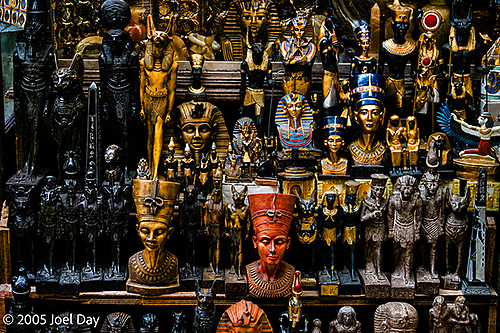
Egyptian Relics in Khan el-Khalili, a famous bazaar in the historic centre of Cairo, Egypt
Although everyone I’ve met has been very friendly, the friendliest people have seemed to be the ones after your wallet. They are always trying to steer you into a shop somewhere, although sometimes innocently (I think). If anyone tries to be extra nice to you here, you can bet they’ll want money in the end.
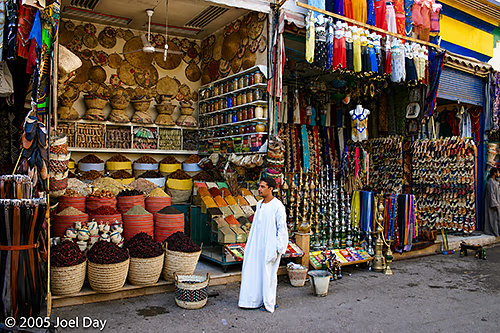
Aswan Street Markets, Aswan, Egypt
The hustlers I really resent are the ones trying to con you in some way. They will lie to you about something being closed (whether it’s a museum or pyramid) in order for you to be bundled into their shop and given a hard sell on something. Or you may find yourself being given a “free” tour you never agreed to pay for but one you’ll be expected to give a hefty tip for.
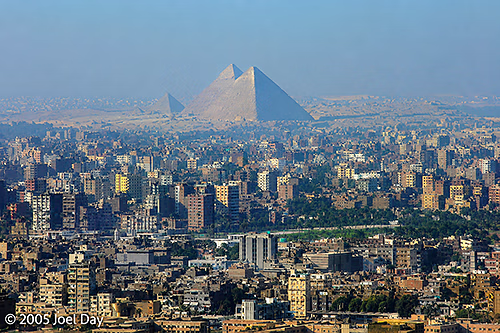
Hustle-free View of the Great Pyramids of the Giza Necropolis as seen from the top of Cairo Tower, Cairo, Egypt
Every tourist I’ve spoken with seems to agree that the area around the Great Pyramids in Giza is the worst. It’s very hard to appreciate the significance of the pyramids when you’re being bugged every few minutes for a donkey, camel, or horse ride, or a tour guide. The other really bad places have been along the Nile in towns like Luxor and Aswan, where you are constantly being asked to take a Felucca (sailboat) ride, a horse and buggy, or a taxi. It’s nice to get inside a museum, temple, or tomb because you’ll usually find a temporary moment of peace and quiet.
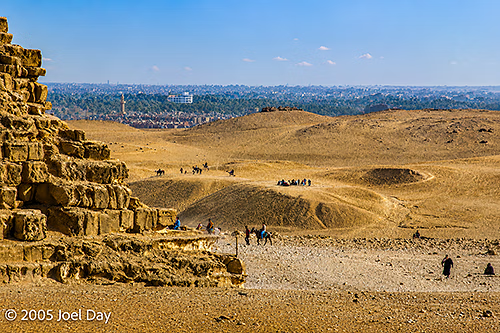
Camels and Donkeys waiting for tourists at The Great Pyramids of the Giza Necropolis near Cairo, Egypt
Other annoying hustling happens when children run up and ask you for Euros or adults try to charge you a toll for walking through their scenic neighbourhoods. The worst place I found for this was in the beautiful Nubian villages on Elephantine Island in Aswan.
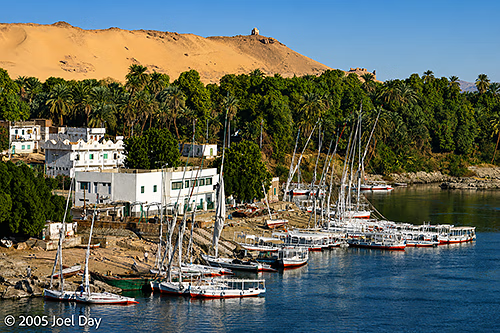
Feluccas waiting for tourists on Elephantine Island, Aswan, Egypt
Photography can be difficult because a lot of people will try to demand money if they know they will be in your shot. Market stall owners will try to charge money to let you photograph the front of their stalls. I’ve been trying to sneak telephoto shots as a result.
Tout waiting for tourists at the Ancient Karnak and Luxor Temples, Luxor, Egypt
It all gets a bit taxing, but as I said, I seem to be bothered by hustlers less and less the longer I hang around here. Either that or I’m just noticing it less.
After spending about ten days here, I thought I would give you some reflections on life in the Middle East.
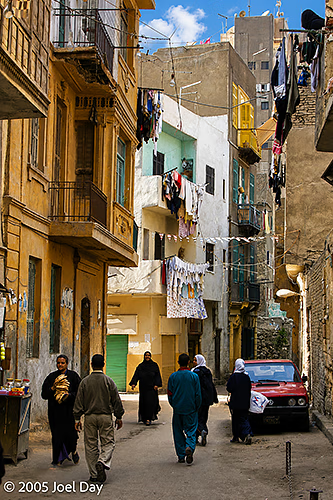
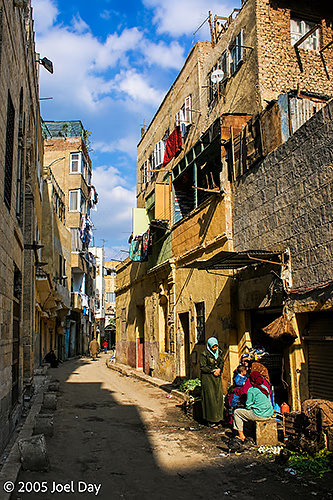
Neighbourhoods near Coptic Cairo, Old Cairo, Egypt
You can feel a slow cultural transition as you work your way across the country. The further north and east you get, the more Middle Eastern everything feels. The further south you go, the more African everything feels.
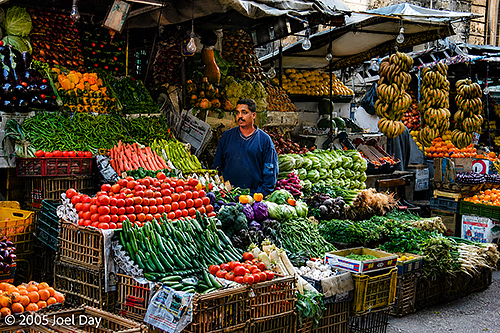
Fruit & Veg Street Market in Cairo, Egypt
One of the hardest things to get used to is Arabic script. Tourist places will usually have English translations, but you won’t find them in many areas. The most difficult thing is the numbers, which are unlike the numbering system you’ll find in the West or in Asia. They use a script that makes a “5” look like a “0” and a “0” look like a “-“, so “50” in English translates to “0-” in Arabic, among other things. Simple things like finding your train platform or an address on a street you can find on an English-language map are very difficult. The currency is printed in Arabic on one side and English on the other, so you have to keep flipping your money over to make sure you’re handing out the right amount.
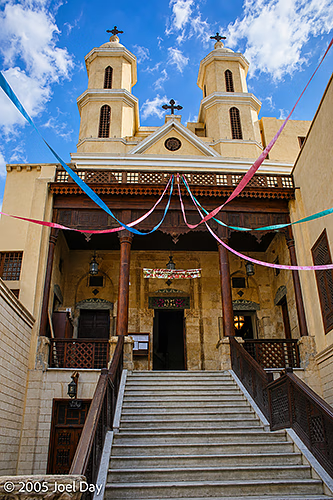
Church in Coptic Cairo, Old Cairo, Egypt
The country is predominantly Muslim, although there are a few old churches and synagogues about. While most Egyptians don’t seem to be devoted enough to drop to their knees every day, there are plenty that do. The mosques call out for prayers early in the morning (before sunrise), around 3 PM, and at sunset. Hearing all the mosques calling out is almost like hearing a multi-alarm fire going off at fire stations throughout your community. Except instead of a siren, you hear someone singing/wailing through a microphone. When travelling by train through country towns up and down the Nile, the mosques are all decorated with neon lights.
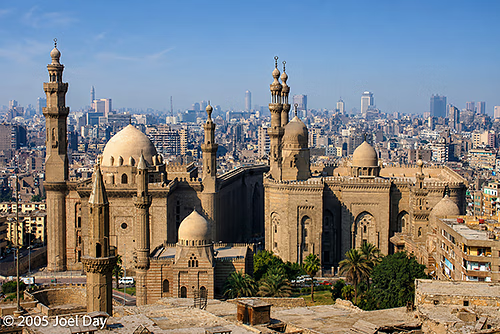
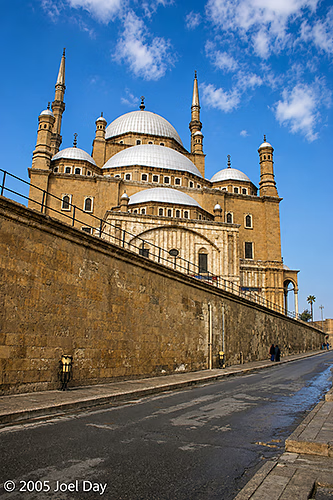
View of Old Cairo from the Citadel of Cairo, Cairo, EgyptCitadel of Cairo, Cairo, Egypt
Most women keep their heads covered, although some more than others. Some have everything but their eyes covered. Every time I have tried to speak with a woman in a head covering, she has attempted to communicate back in a friendly way, only to be snapped at in Arabic by a passing older man — forcing her to reel back somewhat. Many of the older men here dress in traditional clothing that resembles something along the lines of Libyan leader Omar Gaddafi’s getup.
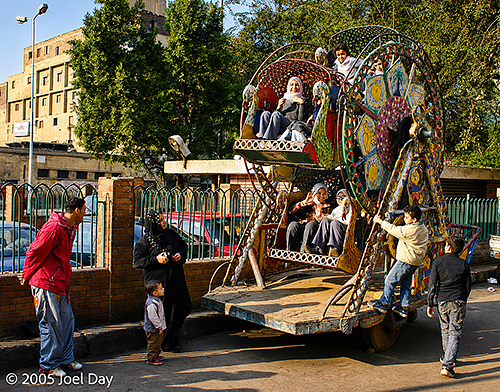
Ferris Wheel on streets of Cairo, Egypt
The younger population seems a bit more hip, listening to funky Middle Eastern music and Western rap. Many young kids seem to be learning English in school these days because they always seem eager to practice their English on you.
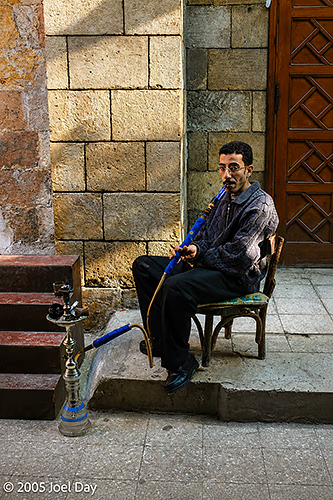
Egyptian man smoking hookah in Khan el-Khalili, a famous bazaar in the historic centre of Cairo, Egypt
That being said, virtually everyone I’ve interacted with has been very friendly and honest with their fellow Egyptians and me. It almost seems as though they’re all distantly related somehow (especially in more rural areas). They seem to know exactly how each person walking down the street fits into their huge extended family.
Neighbourhoods near Coptic Cairo, Old Cairo, Egypt
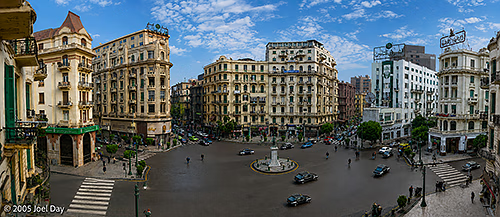
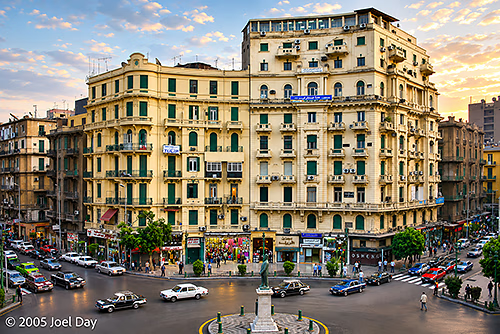
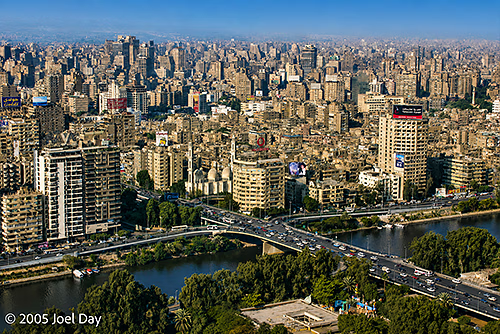
View from my Guesthouse of Talaat Harb Square in Cairo, Egypt
Just thought I would fill you in on some interesting characteristics of travelling around Egypt, now that I’m back in Cairo:
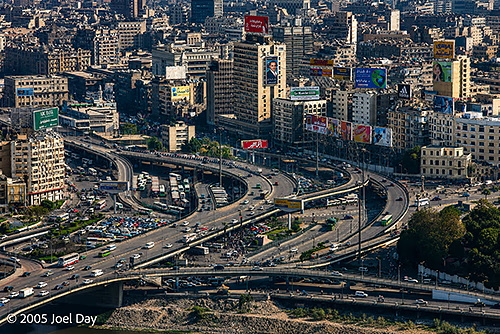
I mentioned before how crazy the drivers were in this city of 10 million. Nobody seems to pay any attention to lines in the road, traffic lights, or even police officers directing traffic. They may slow down a bit, but if they see a gap in cross traffic, they just surge straight through a red light. If police are out directing traffic, they’ll sneak behind them as soon as they turn their backs.
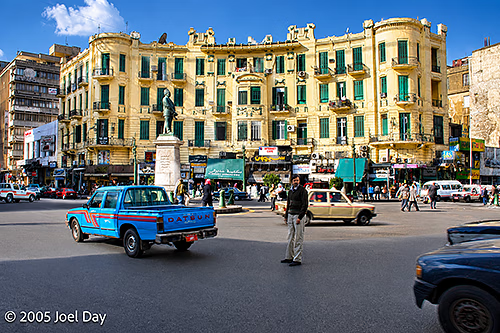
Talaat Harb Square in Cairo, Egypt
The biggest shock is their refusal to use headlights at night, for some reason. I asked one taxi driver why nobody liked to drive at night with their headlights on, and he told me they don’t use them if they can see without them. This applies to the country as well as the cities. Occasionally they’ll flash their headlights to warn someone who they think may not have seen them. It gets really dangerous on country roads because there are plenty of donkeys pulling carts without reflectors. That being said, I have yet to see an accident (although I have witnessed a few very close calls).
Talaat Harb Square in Cairo, Egypt
As you can imagine, this makes being a pedestrian very scary. I find myself continually heading down side streets where the traffic is narrow and lighter or heading for subway tunnels to get across some of the more congested parts of town.
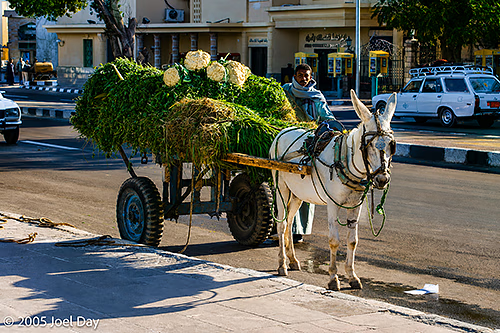
And speaking of donkeys, you’ve never seen anything as funny as someone riding on the back of a donkey. Unlike horses, they never seem to get off the ground. They just seem to roll along with little tiny bounces that resemble a dribbling basketball just before it starts to roll. It looks most uncomfortable for the riders.
Donkey Cart of Fresh Market Produce, Aswan, Egypt
Cairo happens to have a very nice subway system, although like everything else around here, it seems to be covered in a fine desert silt. Egypt is predominantly Muslim, so they reserve the first few cars of every subway train for women only. Every time I see those cars roll by, the women look like they’re having a great time without any men around. Women are allowed to sit anywhere on the trains; it’s just that men can’t sit in these first few cars.
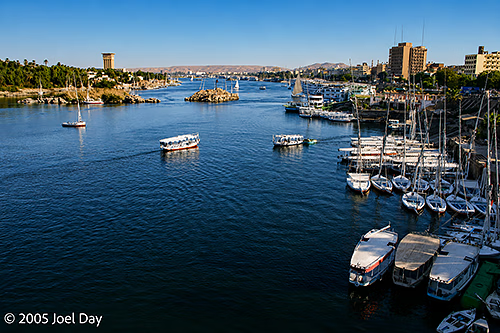
Ferries cross the Nile River, flowing past Aswan, Egypt
Boats use much the same custom, especially as you head south. I made the mistake of sitting in the women’s section of a ferry boat in Aswan and was politely invited to sit back with another guy in the rear section of the boat. He was very nice about it, but explained that it was their custom.
Taxis don’t use meters here, so you have to barter a fare before you get in. You can often get them to cut their prices in half. The most annoying thing about them is that they insist on honking every time they see a tourist (inquiring whether they might want a taxi – just in case they hadn’t already thought of it on their own). It gets really annoying and makes a walking exploration of the city quite jarring and stressful.
Cairo Traffic, Egypt
When I was riding in a half-hour taxi ride around sunrise, the driver promptly pulled over at the first hint of daylight, got out of the cab, aligned himself with Mecca, put his prayer mat down, got down on his knees, kissed the earth, and prayed for about five minutes. No meter involved since we bartered, so it didn’t cost me anything extra.
The cheapest way of getting around is to jump on a public taxi van. They seem to use the same system here that they were using in Fiji. Usually for about US$0.15 you can hop on a van packed with locals and ride as long as you want in whatever direction they’re circulating. It gets a bit wild and crazy as they boom funky music and try to cram as many passengers as they can in back, but it’s lots of fun. They seem to get a kick out of having a tourist travelling with them.
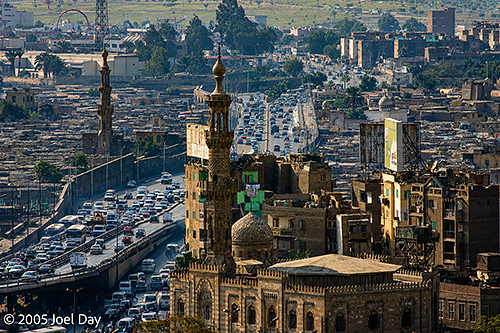
Central Cairo, Egypt
The overnight train here from Aswan was fine. They’re basically the same trains they use in Europe, and they tend to keep the tourists travelling separately from the general Egyptian population. I managed to get about five hours of sleep last night, which wasn’t too bad.
Central Cairo, Egypt
Security is pretty tight all over Egypt these days. There are armed guards with machine guns riding in the engine compartment of most trains. There are tourist police all over the popular tourist areas, and there are military checkpoints on many roads leading around the country. Most of these police seem very friendly and eager to practice their English on you. Sometimes they’ll try to bum a cigarette off you in the end since just about everyone is a chain smoker around here.
When I first arrived at my remote hotel outside Luxor, I was told they were full and that the only available room would cost me extra because it was a little nicer. I was also told they offered meals in their beautiful courtyard. As there was really no other place to eat nearby, I planned to have a snoop around the area, take a nap, and return that evening for dinner. Oddly enough, the full hotel always seemed pretty dead and empty to me, and the courtyard restaurant they claimed they had never seemed too busy either. It must have been another scam, I concluded.
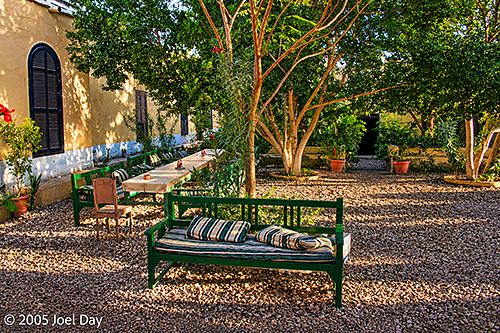
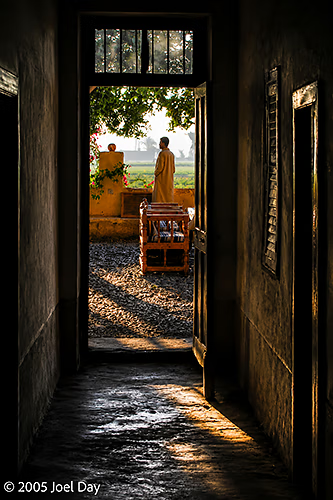
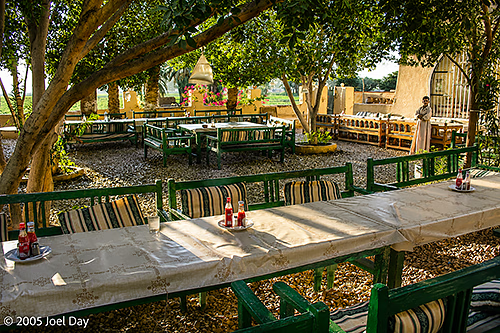
Nour El Gourna Hotel, Luxor, Egypt
I came out to eat at around 6 PM on my first night and found the courtyard deserted. The hotel manager was sitting around and socialising with some of the locals who stopped by for their daily chat. He was very friendly, offered me tea, and proceeded to talk with me in his fractured English. A local taxi driver, obviously friends with the manager, walked in and joined us for tea and conversation. He appeared to be a dead ringer for Libyan leader Omar Khadafi, down to the threads and all. A big guy, about my age.
Nour El Gourna Hotel, Luxor, Egypt
I was told the kitchen wouldn’t open until after 7 PM. When the manager stepped aside for a few moments, the taxi driver said he would be happy to have me over to his place for dinner if I was hungry. Trying to be culturally sensitive to such offers (as I had to be in Fiji) and not wanting to offend, I agreed to accompany him to his house for dinner — putting some weight on the fact that he seemed to be known and trusted around the hotel. My biggest concern, as always, was getting food poisoning. He seemed thrilled to have a guest and insisted it was all his treat. I figured it would be interesting to experience a Middle Eastern meal with a local Egyptian family.
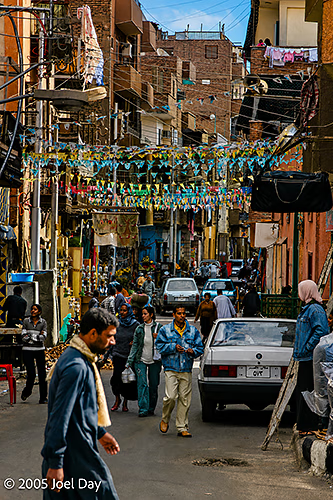
Streetlife of Luxor, Egypt
We hopped into his modern taxi van, and he told me he had to run a few errands to complete the meal. I just waited in the van while he popped into a few neighbourhood shops to get chicken, bread, and some drinks. It became apparent that he had no family and that we would be eating alone together. It was getting dark when he turned down a dirt road that led to his home: a mud shack near the border of some agricultural fields. As far as I could tell, there was no one else living around the immediate area.
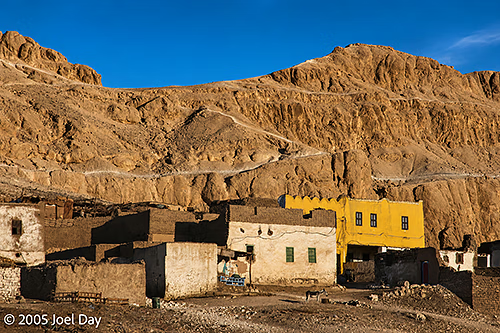
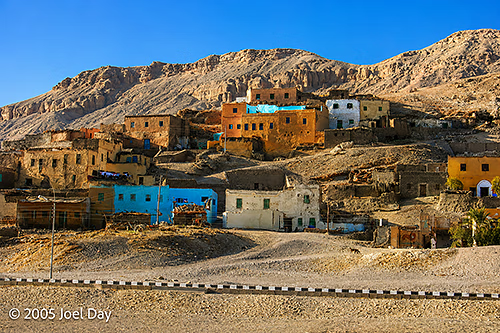
Rural Village near The Valley of the Kings, Luxor, Egypt
Needless to say, I started to feel a bit uncomfortable and a bit vulnerable in such a remote, darkened location. I wasn’t even sure how to get back to the hotel. The house was very basic, with cracked mud walls painted over, few decorations, and sparse furnishings. He was nice, smoked like a chimney (like all good Egyptians), and desperately tried to communicate with me using his broken English. He told me that he had learned the language from conversing with tourists at the hotel over the years. He seemed thrilled to finally have a visitor at his house and retreated to his kitchen to whip up a meal for us.
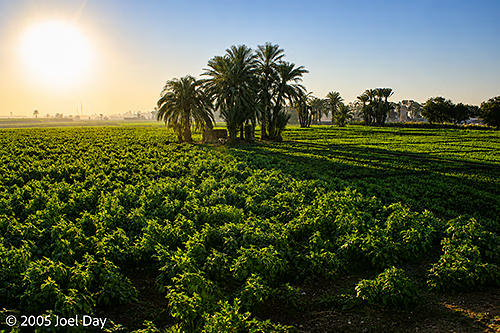
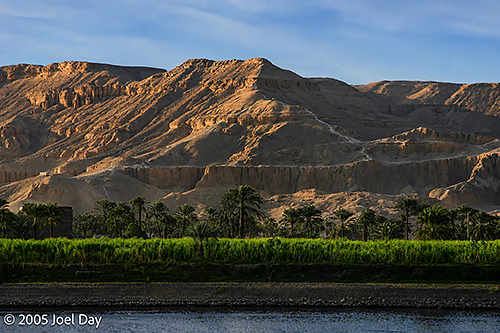
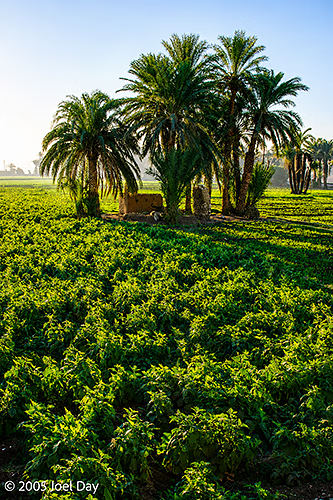
Palm Trees and Agricultural Lands along the Nile River near The Valley of the Kings, Luxor, Egypt
He brought out a simple spread of barbecued chicken, a vegetable soup, and flatbread. We would try to talk about things, but it wasn’t always easy to understand what he meant. After eating, he seemed eager to sit down next to me on my side of the table. He told me he wanted to hold my hand while we talked.
Now, as odd as that may sound, it is actually quite common to see Egyptian men holding hands and walking arm in arm in Cairo. Nothing is meant by it, but I still didn’t like the idea. Some of the conversation we had also had me a bit concerned. He went on about how he hated women and didn’t believe men and women should be friends. He told me he was divorced and his wife had moved to Cairo with the kids. He seemed quite bitter towards her. He also mentioned having once met some married men. It was hard to decipher what he was saying with his poor English.
My alarm bells were starting to go off, and I began making excuses about how tired I was from not being able to sleep on the overnight train from Cairo the previous night and how I really needed to get back to my hotel room for a good night’s sleep (even though it was only about 7:30 PM). He suggested giving me a massage to help me relax. I started insisting that I really needed to get back to my hotel, trying to be nice, but also quite adamant about getting out of there.
He finally complied with my wishes and took me home, but not before insisting on arranging to meet me the next day. Still wanting to be polite, I agreed to allow him to ferry me around the local sites in his taxi. I was very relieved to get out of there, and vowed (to myself) never to return.
For the rest of my time in Luxor, I had a very difficult time getting rid of him. He kept trying to get me back to his home, and I kept making excuses not to go. He was taxiing me around, as he was doing for other hotel guests, but he was also refusing to charge me any money. “You pay me later”, he would always say — forcing me to arrange another time to meet with him for another taxi ride.
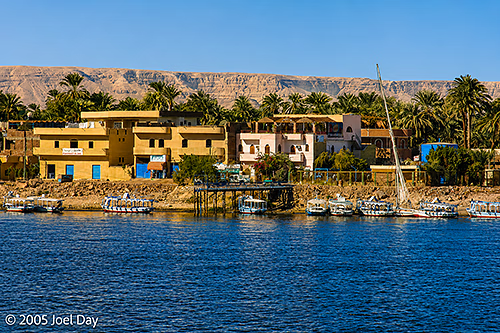
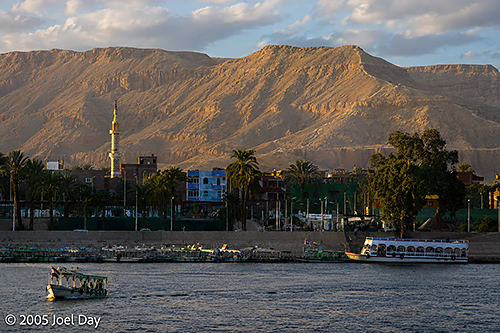
Life along the Nile River near Luxor, Egypt
At one point, he failed to meet me at an arranged time to transport me to my next chosen tourist attraction. After being twenty minutes overdue, I thought for a moment I was finally free of him and jumped into another taxi. On the way back to the hotel, he managed to spot me in this other cab. He whipped his taxi around, flagged down the other taxi driver, and got into a huge argument in Arabic with him over me — insisting that I was his customer and that he be allowed to transport me for the rest of my journey. He was quite upset. It was all very unnerving.
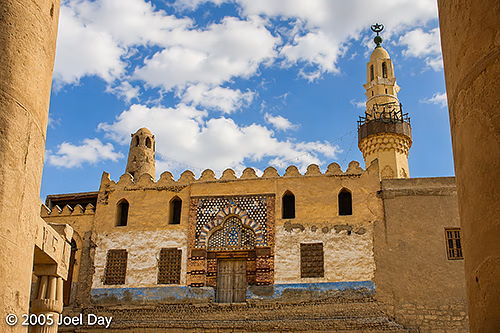
Mosque near Ancient Karnak and Luxor Temples, Luxor, Egypt
The unfortunate thing about this odd encounter is that it made me feel uncomfortable enough to leave Luxor a bit earlier than I had wanted. I could have easily spent another day in the area touring the fascinating ancient ruins. I finally told him that I was going to Aswan, a town farther south. I had to assure him I would return a few days later even though I had already booked my train ticket straight back to Cairo from Aswan with no intention of stopping back in Luxor again. This seemed to be the only way I could make an easy break free of him.
Life along the Nile River near Luxor, Egypt
When he drove me to the train station on my last day, I pulled him out a generous payment that was more than enough to cover all his taxi service and the meal he fed me. He seemed very pleased and quickly tucked the cash into his wallet, with no hesitation or suggestion of giving me any change.
The experience left me wondering… he was probably one of the world’s greatest hustlers — but I will never quite be sure what exactly he was hustling me for!
After a long (and mostly sleepless) overnight train ride from Cairo to Luxor (aka Thebes), I hopped into a taxi and made my way to a nice, quiet hotel on the west bank of the Nile River. The hotel was right in the middle of an area full of ancient Egyptian ruins and tombs and farm fields still in use today. Originally built by an archaeologist in the 1920’s, the hotel later became an artists’ retreat. Most people living around this very quiet area are still riding donkeys and working by hand in the fields.
Nour El Gourna Hotel, Luxor, EgyptPalm Trees and Agricultural Lands along the Nile River near The Valley of the Kings, Luxor, EgyptRural Village near The Valley of the Kings, Luxor, Egypt
The location was perfect, as it was within walking distance of several famous temples and tombs. And it was so nice to breathe clean desert air again after all the smoking I was forced to do breathing the air in Cairo. It was really nice to be able to easily walk to Medinat Habu (an old temple built by Ramses III, Hatshepsut, and Tuthmosis III—each adding their own bits) and to places like the Valley of the Queens (where Nefertari, Amunherkhepshef, and Khaemwaset were entombed). It was also close to the Ramesseum and the Valley of the Kings (where many of Ramses, Tutankhamun, Tuthmosis III, and others were entombed).
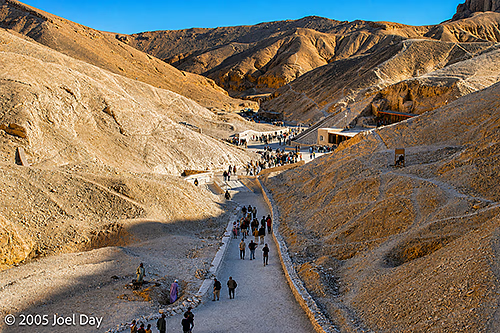
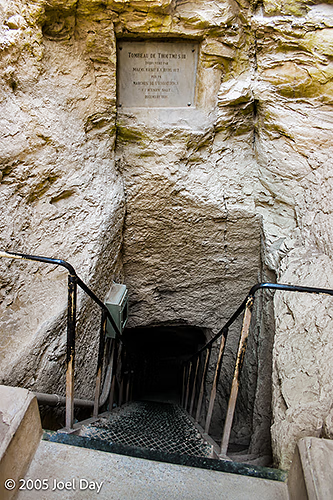
The Valley of the Kings near Luxor, EgyptEntrance into the tomb of Pharaoh Thutmose III in the Valley of the Kings near Luxor, EgyptThe Valley of the Kings near Luxor, Egypt
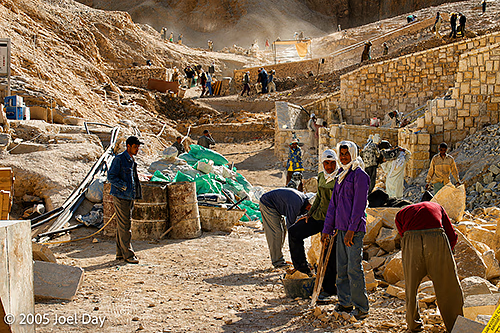
It was really amazing to walk around these old, largely reconstructed temples and through these excavated tombs, seeing the designs and thinking about what it might have been like thousands of years ago. Many of the temples were reconstructed from ruins and excavations, and most still had huge yards full of pieces they hadn’t figured out how to reassemble.
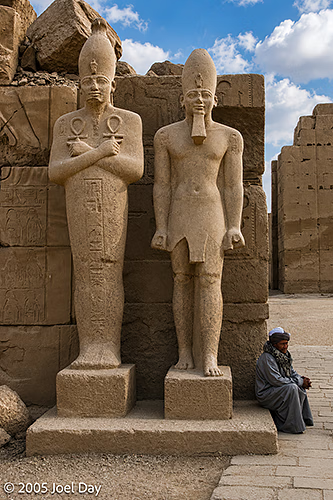
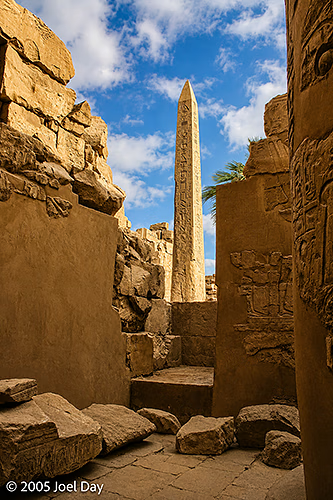
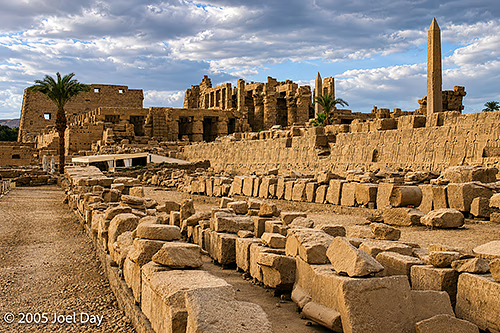
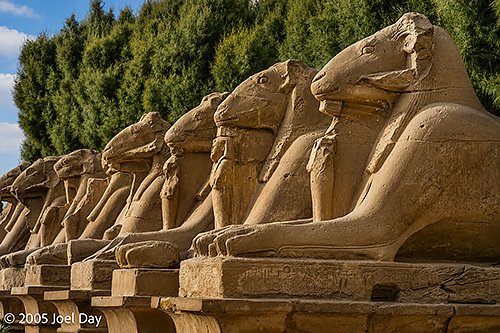
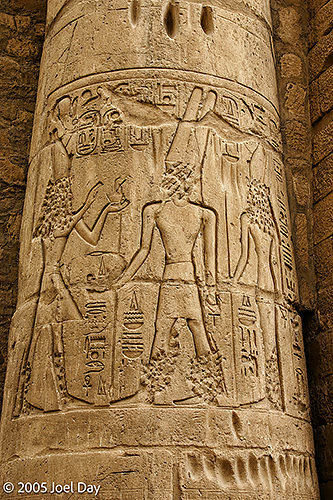
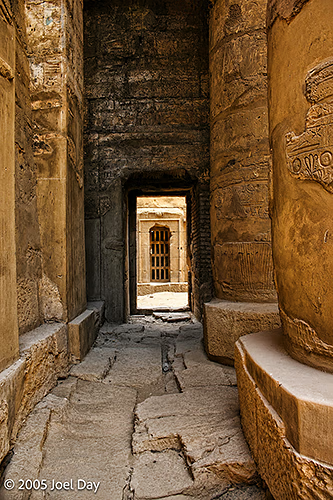
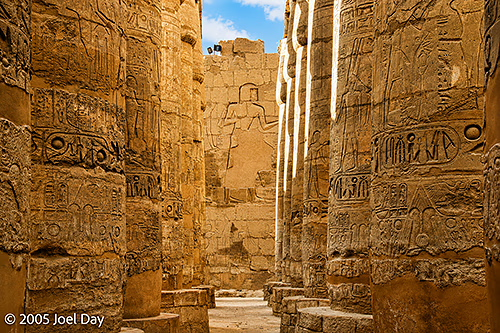
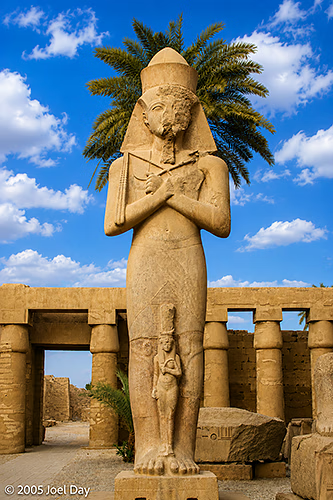
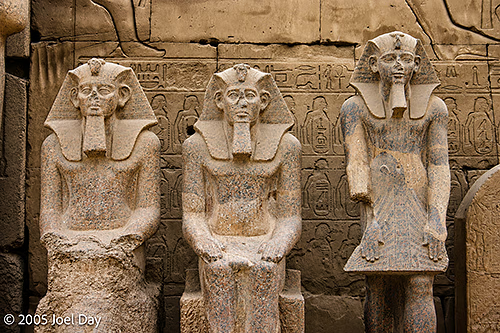
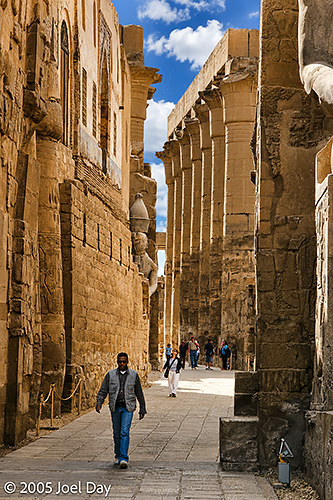
Ancient Karnak and Luxor Temples, Luxor, EgyptAncient Karnak and Luxor Temples, Luxor, EgyptAncient Karnak and Luxor Temples, Luxor, EgyptAncient avenue of ram-headed sphinxes, Karnak Temple, Luxor, EgyptAncient Karnak and Luxor Temples, Luxor, Egypt
Some temples showed signs of ancient vandalism, in which one king would have the face of a predecessor chiselled out wherever it appeared throughout the temple. Many of the tombs were very well preserved, with bright colours still visible among the hieroglyphs. It was also interesting to try to decipher the message they were conveying through their pictures and symbols. The most amazing temple I toured was the massive Temples of Karnak, which spanned about 1 mile by 1/2 mile, just north of Luxor.
Ancient Karnak and Luxor Temples, Luxor, EgyptAncient Karnak and Luxor Temples, Luxor, EgyptAncient Karnak and Luxor Temples, Luxor, EgyptAncient Karnak and Luxor Temples, Luxor, EgyptAncient Karnak and Luxor Temples, Luxor, Egypt
You must be logged in to post a comment.