Dogs are to Asia what Cats are to the Middle East, what chickens are to the Hawaiian island of Kauai: Stray. Feral. Wild. Whatever you want to call them.
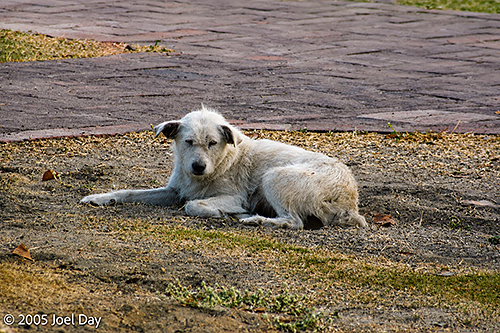
One of many stray dogs in Thailand
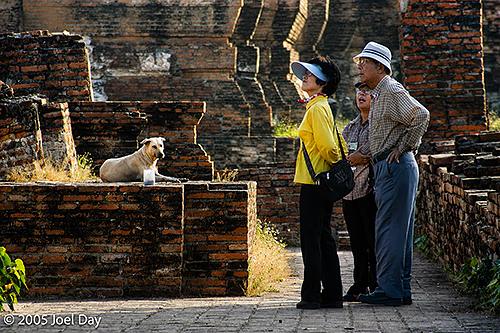
Before I started my travels, my travel doctor pondered whether I might need a rabies shot on top of all the other immunisations I had to get. Now I know why. There seems to be no shortage of stray dogs wandering the streets of Thailand. Many of them look quite sick. Many just lie around in the street and on sidewalks, where pedestrians give them a wide berth. The only ones that really seemed threatening were recent mothers nursing pups. You just had to make sure you never got between them and their young.
One of many stray dogs in Thailand
Egypt, on the other hand, seemed to be full of stray cats. They were interesting to watch, as they seemed to be always scheming to score some food. They would travel in gangs, using each other as lookouts while they found ways to sneak into buildings through broken windows and other openings.
The Hawaiian island of Kauai, as I mentioned earlier, was full of jungle fowl known as “Moa” and introduced by the Polynesians. Basically, they were chickens and roosters who loved to cock-a-doodle-do at all hours of the night and day (which was particularly fun while you were camping). The strangest scene I recall with these creatures was a family of chicks being herded by their mother through a crowded Walmart parking lot.
I guess it’s a good idea that all these strays are segregated in different parts of the world, or they’d never get along.
The most tiring aspect of life in Egypt is having to endure the constant hustling. When you first arrive, they must sense your naivety and big, bright eyes because they seem to descend on you more. Now that I’ve learned to keep my head down, I tend to be left alone.
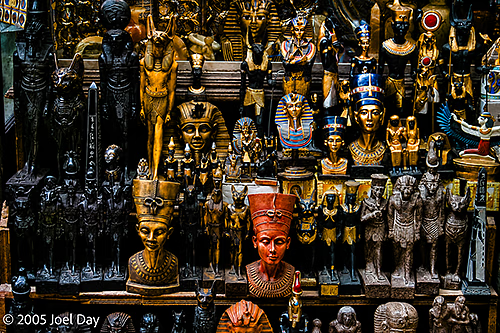
Egyptian Relics in Khan el-Khalili, a famous bazaar in the historic centre of Cairo, Egypt
Although everyone I’ve met has been very friendly, the friendliest people have seemed to be the ones after your wallet. They are always trying to steer you into a shop somewhere, although sometimes innocently (I think). If anyone tries to be extra nice to you here, you can bet they’ll want money in the end.
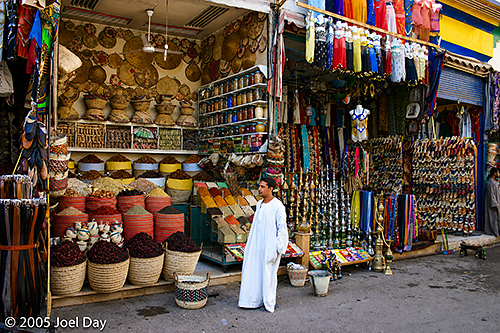
Aswan Street Markets, Aswan, Egypt
The hustlers I really resent are the ones trying to con you in some way. They will lie to you about something being closed (whether it’s a museum or pyramid) in order for you to be bundled into their shop and given a hard sell on something. Or you may find yourself being given a “free” tour you never agreed to pay for but one you’ll be expected to give a hefty tip for.
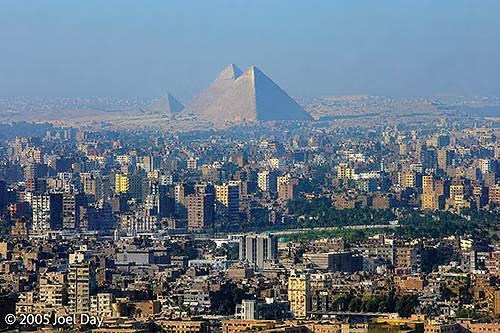
Hustle-free View of the Great Pyramids of the Giza Necropolis as seen from the top of Cairo Tower, Cairo, Egypt
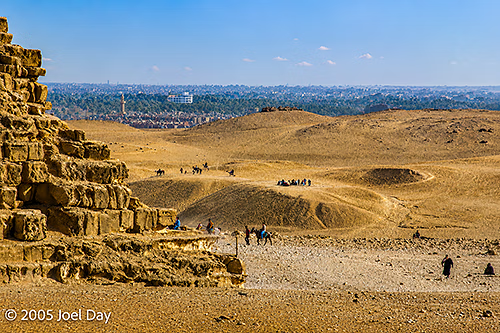
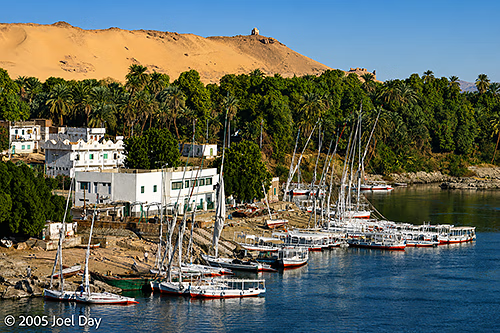
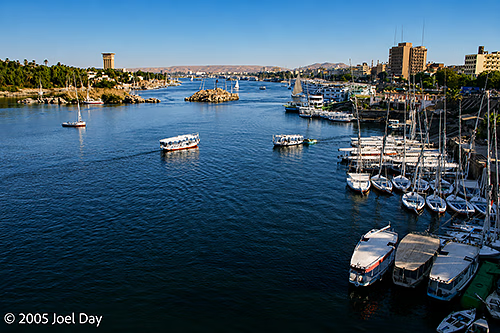
Every tourist I’ve spoken with seems to agree that the area around the Great Pyramids in Giza is the worst. It’s very hard to appreciate the significance of the pyramids when you’re being bugged every few minutes for a donkey, camel, or horse ride, or a tour guide. The other really bad places have been along the Nile in towns like Luxor and Aswan, where you are constantly being asked to take a Felucca (sailboat) ride, a horse and buggy, or a taxi. It’s nice to get inside a museum, temple, or tomb because you’ll usually find a temporary moment of peace and quiet.
Camels and Donkeys waiting for tourists at The Great Pyramids of the Giza Necropolis near Cairo, Egypt
Other annoying hustling happens when children run up and ask you for Euros or adults try to charge you a toll for walking through their scenic neighbourhoods. The worst place I found for this was in the beautiful Nubian villages on Elephantine Island in Aswan.
Feluccas waiting for tourists on Elephantine Island, Aswan, Egypt
Photography can be difficult because a lot of people will try to demand money if they know they will be in your shot. Market stall owners will try to charge money to let you photograph the front of their stalls. I’ve been trying to sneak telephoto shots as a result.
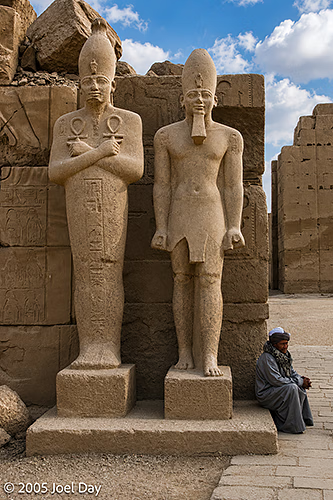
Tout waiting for tourists at the Ancient Karnak and Luxor Temples, Luxor, Egypt
It all gets a bit taxing, but as I said, I seem to be bothered by hustlers less and less the longer I hang around here. Either that or I’m just noticing it less.
After spending about ten days here, I thought I would give you some reflections on life in the Middle East.
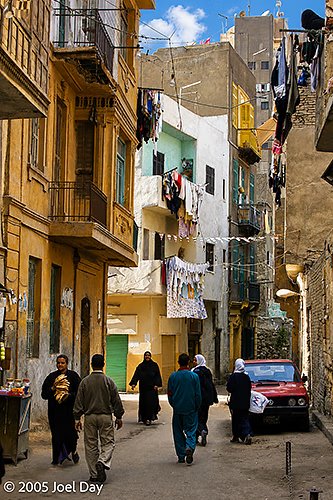
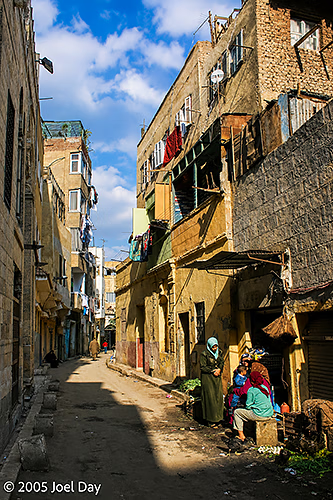
Neighbourhoods near Coptic Cairo, Old Cairo, Egypt
You can feel a slow cultural transition as you work your way across the country. The further north and east you get, the more Middle Eastern everything feels. The further south you go, the more African everything feels.
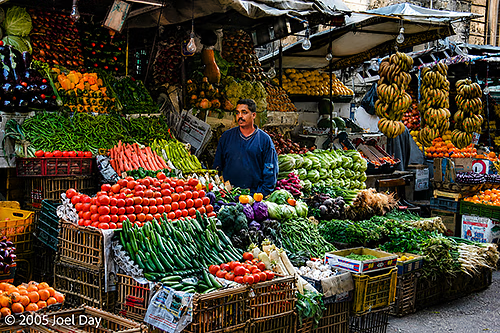
Fruit & Veg Street Market in Cairo, Egypt
One of the hardest things to get used to is Arabic script. Tourist places will usually have English translations, but you won’t find them in many areas. The most difficult thing is the numbers, which are unlike the numbering system you’ll find in the West or in Asia. They use a script that makes a “5” look like a “0” and a “0” look like a “-“, so “50” in English translates to “0-” in Arabic, among other things. Simple things like finding your train platform or an address on a street you can find on an English-language map are very difficult. The currency is printed in Arabic on one side and English on the other, so you have to keep flipping your money over to make sure you’re handing out the right amount.
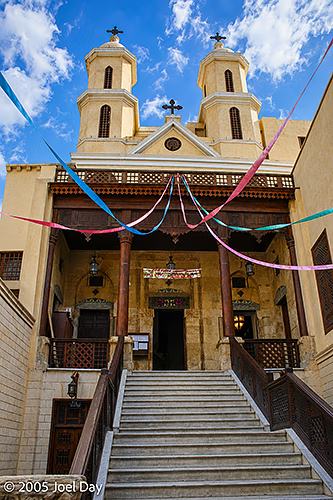
Church in Coptic Cairo, Old Cairo, Egypt
The country is predominantly Muslim, although there are a few old churches and synagogues about. While most Egyptians don’t seem to be devoted enough to drop to their knees every day, there are plenty that do. The mosques call out for prayers early in the morning (before sunrise), around 3 PM, and at sunset. Hearing all the mosques calling out is almost like hearing a multi-alarm fire going off at fire stations throughout your community. Except instead of a siren, you hear someone singing/wailing through a microphone. When travelling by train through country towns up and down the Nile, the mosques are all decorated with neon lights.
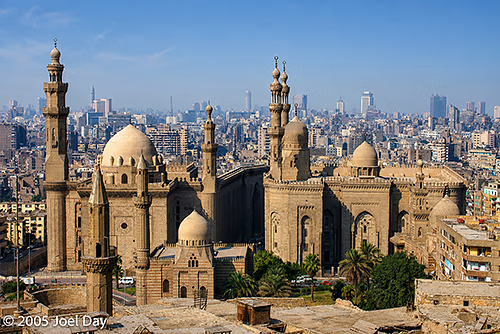
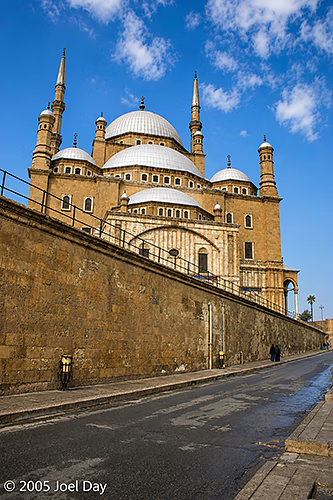
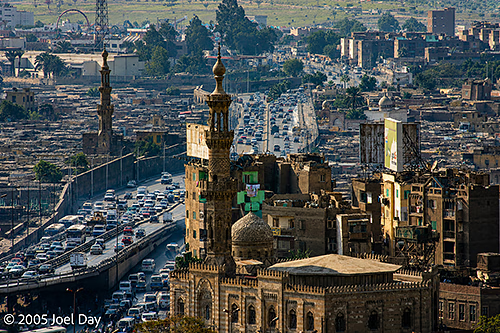
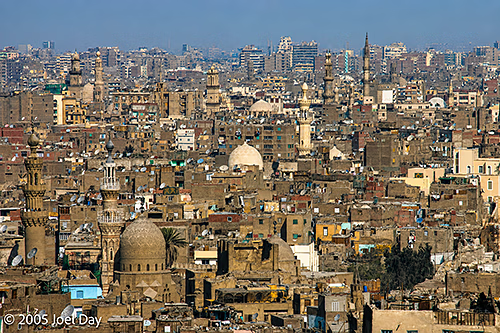
View of Old Cairo from the Citadel of Cairo, Cairo, EgyptCitadel of Cairo, Cairo, Egypt
Most women keep their heads covered, although some more than others. Some have everything but their eyes covered. Every time I have tried to speak with a woman in a head covering, she has attempted to communicate back in a friendly way, only to be snapped at in Arabic by a passing older man — forcing her to reel back somewhat. Many of the older men here dress in traditional clothing that resembles something along the lines of Libyan leader Omar Gaddafi’s getup.
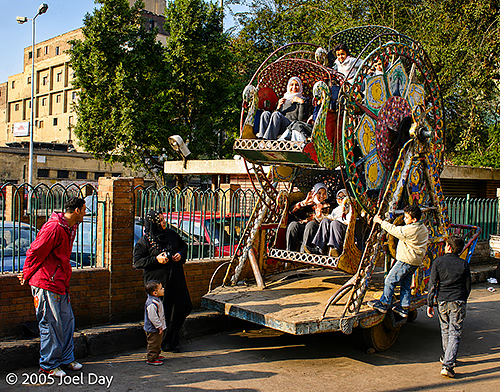
Ferris Wheel on streets of Cairo, Egypt
The younger population seems a bit more hip, listening to funky Middle Eastern music and Western rap. Many young kids seem to be learning English in school these days because they always seem eager to practice their English on you.
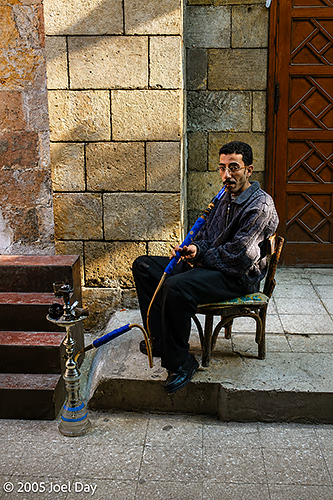
Egyptian man smoking hookah in Khan el-Khalili, a famous bazaar in the historic centre of Cairo, Egypt
That being said, virtually everyone I’ve interacted with has been very friendly and honest with their fellow Egyptians and me. It almost seems as though they’re all distantly related somehow (especially in more rural areas). They seem to know exactly how each person walking down the street fits into their huge extended family.
Neighbourhoods near Coptic Cairo, Old Cairo, Egypt
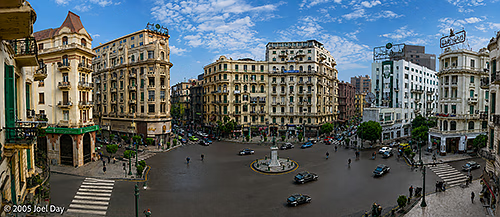
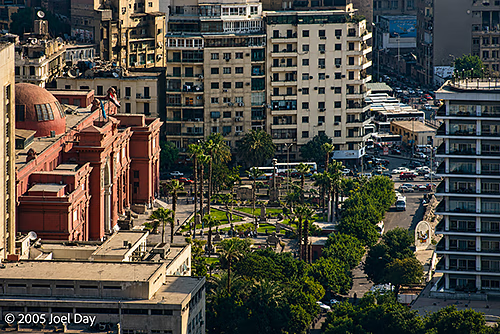
View from my Guesthouse of Talaat Harb Square in Cairo, Egypt
Just thought I would fill you in on some interesting characteristics of travelling around Egypt, now that I’m back in Cairo:
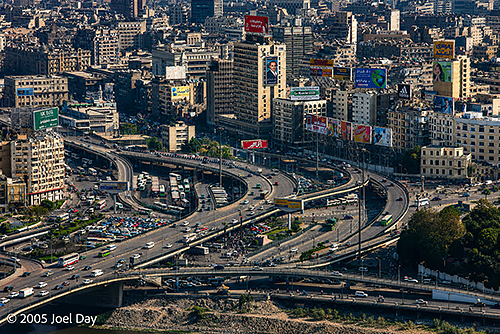
I mentioned before how crazy the drivers were in this city of 10 million. Nobody seems to pay any attention to lines in the road, traffic lights, or even police officers directing traffic. They may slow down a bit, but if they see a gap in cross traffic, they just surge straight through a red light. If police are out directing traffic, they’ll sneak behind them as soon as they turn their backs.
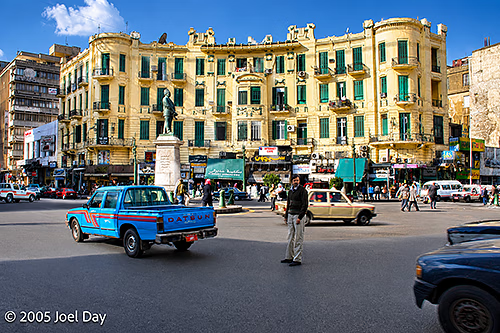
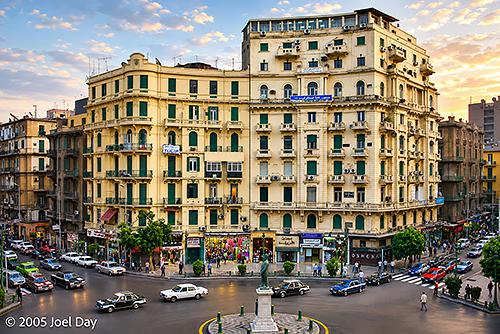
Talaat Harb Square in Cairo, Egypt
The biggest shock is their refusal to use headlights at night, for some reason. I asked one taxi driver why nobody liked to drive at night with their headlights on, and he told me they don’t use them if they can see without them. This applies to the country as well as the cities. Occasionally they’ll flash their headlights to warn someone who they think may not have seen them. It gets really dangerous on country roads because there are plenty of donkeys pulling carts without reflectors. That being said, I have yet to see an accident (although I have witnessed a few very close calls).
Talaat Harb Square in Cairo, Egypt
As you can imagine, this makes being a pedestrian very scary. I find myself continually heading down side streets where the traffic is narrow and lighter or heading for subway tunnels to get across some of the more congested parts of town.
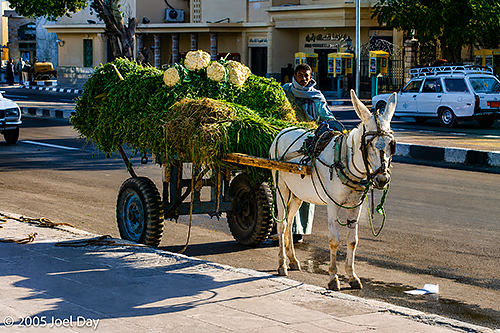
And speaking of donkeys, you’ve never seen anything as funny as someone riding on the back of a donkey. Unlike horses, they never seem to get off the ground. They just seem to roll along with little tiny bounces that resemble a dribbling basketball just before it starts to roll. It looks most uncomfortable for the riders.
Donkey Cart of Fresh Market Produce, Aswan, Egypt
Cairo happens to have a very nice subway system, although like everything else around here, it seems to be covered in a fine desert silt. Egypt is predominantly Muslim, so they reserve the first few cars of every subway train for women only. Every time I see those cars roll by, the women look like they’re having a great time without any men around. Women are allowed to sit anywhere on the trains; it’s just that men can’t sit in these first few cars.
Ferries cross the Nile River, flowing past Aswan, Egypt
Boats use much the same custom, especially as you head south. I made the mistake of sitting in the women’s section of a ferry boat in Aswan and was politely invited to sit back with another guy in the rear section of the boat. He was very nice about it, but explained that it was their custom.
Taxis don’t use meters here, so you have to barter a fare before you get in. You can often get them to cut their prices in half. The most annoying thing about them is that they insist on honking every time they see a tourist (inquiring whether they might want a taxi – just in case they hadn’t already thought of it on their own). It gets really annoying and makes a walking exploration of the city quite jarring and stressful.
Cairo Traffic, Egypt
When I was riding in a half-hour taxi ride around sunrise, the driver promptly pulled over at the first hint of daylight, got out of the cab, aligned himself with Mecca, put his prayer mat down, got down on his knees, kissed the earth, and prayed for about five minutes. No meter involved since we bartered, so it didn’t cost me anything extra.
The cheapest way of getting around is to jump on a public taxi van. They seem to use the same system here that they were using in Fiji. Usually for about US$0.15 you can hop on a van packed with locals and ride as long as you want in whatever direction they’re circulating. It gets a bit wild and crazy as they boom funky music and try to cram as many passengers as they can in back, but it’s lots of fun. They seem to get a kick out of having a tourist travelling with them.
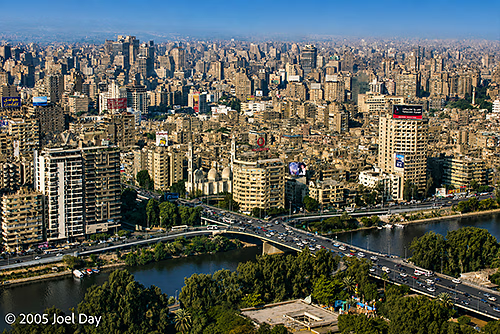
Central Cairo, Egypt
The overnight train here from Aswan was fine. They’re basically the same trains they use in Europe, and they tend to keep the tourists travelling separately from the general Egyptian population. I managed to get about five hours of sleep last night, which wasn’t too bad.
Central Cairo, Egypt
Security is pretty tight all over Egypt these days. There are armed guards with machine guns riding in the engine compartment of most trains. There are tourist police all over the popular tourist areas, and there are military checkpoints on many roads leading around the country. Most of these police seem very friendly and eager to practice their English on you. Sometimes they’ll try to bum a cigarette off you in the end since just about everyone is a chain smoker around here.
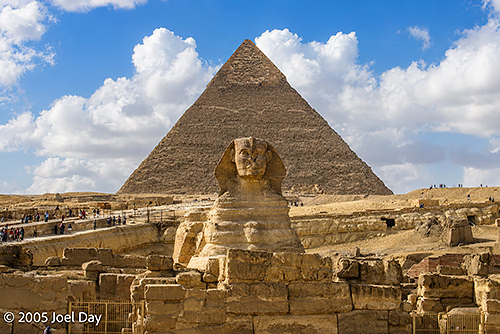
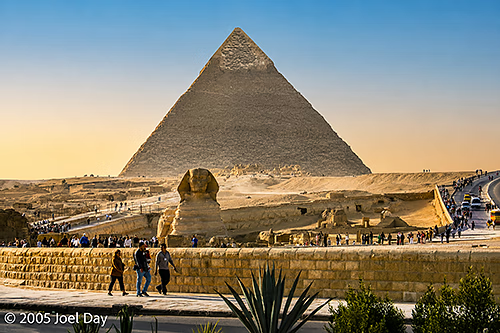
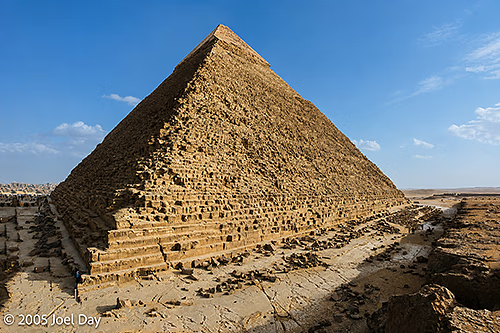
The Great Sphinx and the Pyramids of the Giza Necropolis near Cairo, Egypt
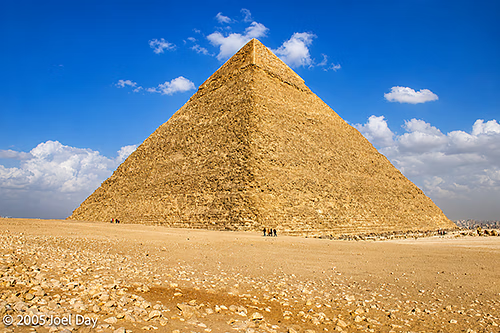
I spent my second afternoon hiking around the Great Pyramids of Giza, just outside of Cairo. I decided to take the interesting route and mix with the locals by hopping on the Cairo subway to Giza, followed by a public van transfer (which was for locals, not tourists). The van would pick up any passenger they could fit inside for 1 Egyptian Pound (about US$0.15) and drop them anywhere over a 10km stretch to the base of the pyramids. Every time the van emptied out, the driver would desperately try to woo new customers. By the end of our jaunt, we were riding down dirt lanes and competing with donkeys pulling carts. The locals were very friendly to me throughout the journey. I decided it was fun enough to return to my hostel the same way.
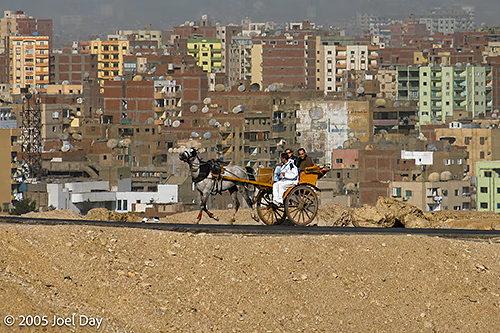
Horse pulling cart of tourists at the Giza Necropolis near Cairo, EgyptThe Great Pyramids of the Giza Necropolis near Cairo, EgyptThe Great Sphinx and the Pyramids of the Giza Necropolis near Cairo, EgyptThe Great Pyramids of the Giza Necropolis near Cairo, Egypt
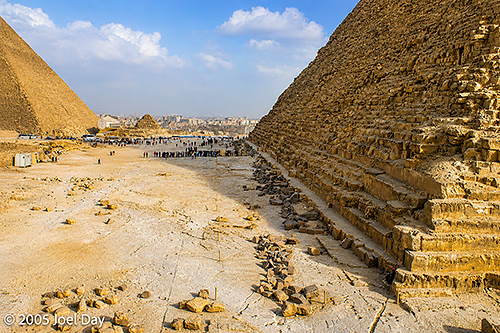
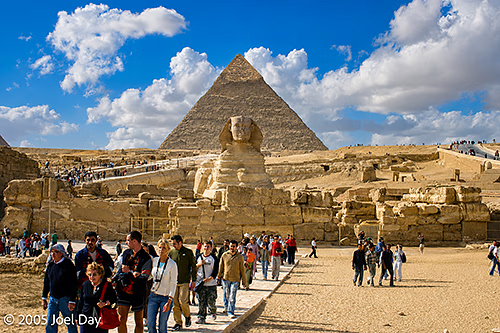
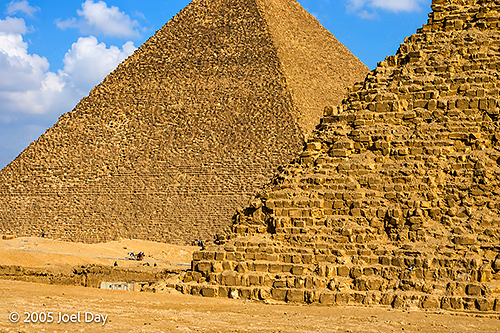
The Pyramids themselves were impressive, but hard to appreciate with all the touts trying to get every last cent out of your pocket. They were clearly on the edge of the desert with sand blowing in to dry out your eyes and mouth. Like the Egyptian Museum, they produce the artifacts, but offer very little additional information.
The Great Pyramids of the Giza Necropolis near Cairo, EgyptThe Great Pyramids of the Giza Necropolis near Cairo, EgyptThe Great Pyramids of the Giza Necropolis near Cairo, Egypt
The hustlers at the Pyramids were much worse than the ones I encountered in Cairo yesterday. I got really upset at one who pretended to work for the administrators of the Pyramids. He asked to see my ticket (as though he were some sort of official), and then directed me into some tombs with a guide. Of course, I knew they were up to something and vowed (to myself) not to fork over any baksheesh (tip). The guide who brought me deep into the tomb was a bit less pushy, so I was about to get out without any problem, but when I abruptly turned away from the “official” and headed off on my own, he started yelling about his tip. I just kept walking. I later saw tourist police chasing after these guys at every chance, but there just didn’t happen to be any police in the area at the time.
The Great Sphinx and the Pyramids of the Giza Necropolis near Cairo, EgyptThe Great Pyramids of the Giza Necropolis near Cairo, Egypt
I’ve booked a sleeper cabin on an overnight train along the Nile River to Luxor tomorrow. It’s supposed to be quite the experience, but we’ll see how touristy it is down there. The manager of my hostel is already trying to sell me on reservations for his hotels in Luxor, but I thought I’d better check them out first.
View of the Great Pyramids of the Giza Necropolis as seen from the top of Cairo Tower, Cairo, Egypt
After a long day (or two) of travel from Philadelphia to London to Cairo on New Year’s Eve, I was pleased to finally touch down in this very smoggy city just a couple of minutes into 2005. They say breathing the air in Cairo is as bad as smoking four packs of cigarettes a day.
Central Cairo, EgyptView of Old Cairo from the Citadel of Cairo, Cairo, Egypt
The flight over southern Europe was pretty cool on the big party night, with Athens, Greece, lit up in spectacular fashion. I was greatly relieved to find that the reservations I thought I had made were actually still being held for me at 1 AM in a nice clean hostel right on a busy square in the centre of Cairo. I felt the strong presence of the Middle East from the moment I landed — probably due to the Arabic writings and the fine desert silt that seemingly permeated everything I came in contact with. The drivers are the craziest I’ve ever come across, with no regard for traffic lights or even cops trying to direct traffic.
The Egyptian Museum (in red), Cairo, Egypt
I spent my first afternoon at the Egyptian Museum (just a few blocks away from my hostel), where I got to scrutinise all of King Tut’s relics. I also saw lots of famous mummies and endless other artifacts. The museum isn’t really very well presented. There is hardly any information available on what you’re looking at. Just the odd typewritten note taped inside a glass case.
One of the coolest rooms featured a series of miniature models from various tombs depicting everyday life thousands of years ago. There were scenes of things like butcher shops that really didn’t look much different from what you’d find in the developing world today. It’s one thing to do an archeological dig and come up with theories about how life was, but it’s another to find actual models available. It was pretty amazing.
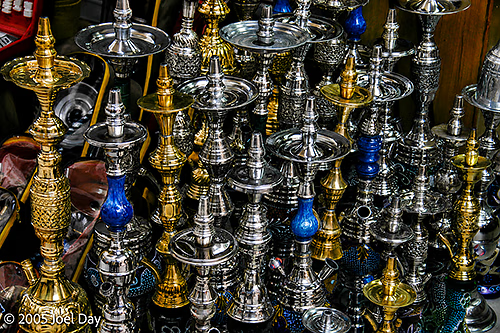
Egyptian Relics in Khan el-Khalili, a famous bazaar in the historic centre of Cairo, EgyptHookahs in Khan el-Khalili, a famous bazaar in the historic centre of Cairo, Egypt
I’ve read lots of warnings about touts (hustlers) surrounding the tourist areas here, lying through their teeth about anything — in hopes of getting you into their trinket shops. They always start out very nice and walk alongside of you on the street, striking up a casual conversation. It all sounds innocent enough, and you want to be nice to those who are nice to you — but the intermittent conversation always seems to start accelerating until you’re being given the hard sell on something. One guy outside the museum actually had me going for about a minute, pointing me to the wrong end of the museum (as the entrance) and telling me it was closed for prayers for an hour. He told me he worked in the museum on the second floor and sounded somewhat genuine. Of course, the second he tried to direct me across the street to a trinket store, I knew he was working for someone. He was not pleased when I finally caught on to him and turned tail back to the main entrance of the museum!
Horse pulling cart of tourists at the Giza Necropolis near Cairo, Egypt
You must be logged in to post a comment.