Back in Bangkok (after 4 previous visits while visiting the rest of Thailand 7-8 years ago), I had just enough time to swing through my favorite snacking neighborhoods and have a nice Thai massage.
On my first day I felt like a zombie due to hardly catching any sleep on the redeye from Colombo. Fortunately my hotel let me check in early so I could take a nap in the afternoon. On my second, rested day, I hopped the skytrain to the riverboat to cruise up northwest of the main temple region so I could stroll along the roads with countless food tables selling everything from fresh squeezed fruit juice, coconut flavored popcorn, fresh fruit, homemade candy, and every kind of Thai dish imaginable. My aim was to walk back through Chinatown to the main train station where there was access to the subway line.
Unfortunately, Bangkok is one of those cities with a road network that twists around and doubles back like a plate of spaghetti. I ended up getting very lost and walked much farther than I had to due to my disorientation.
I decided to recover by having a 2 hour Thai massage at my favorite place “Let’s Relax”. A proper Thai massage is actually quite painful and includes a lot of deep tissue work and elbowing, but you definitely feel very revitalized afterwards. At times it feels like they are trying to pry the meat off your bones, but it is definitely worth it. A 2 hour massage costs around $25. Cheap!
Otherwise, I spent most of my time running errands around town getting ready for being back in the 3rd world for the next few weeks. Bangkok has a population of about 14 million and is very modern compared to most Asian nations. It has excellent public transportation in the form of skytrains, subways, river boats, canal boats, and buses, taxis, and tuk tuks. It is also full of big modern shopping malls that the masses seem to enjoy hanging out in, probably to get out of the tropical heat.
I seemed to have some sort of stomach virus over my last few days in Bangkok. Either that or food poisoning. The thought of certain Thai foods still makes me want to run to the bathroom 🙂
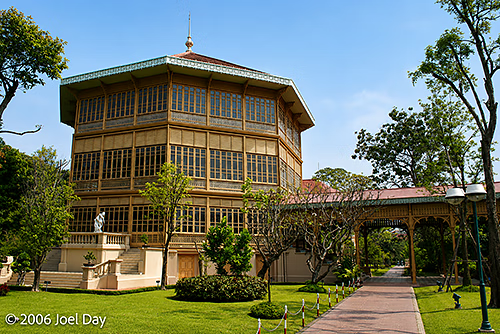
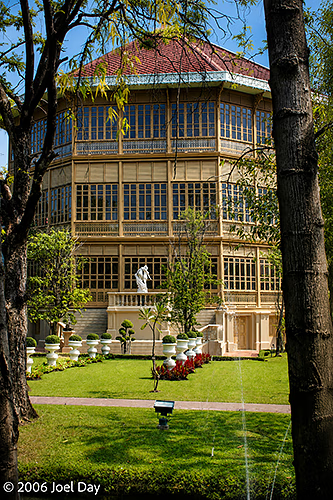
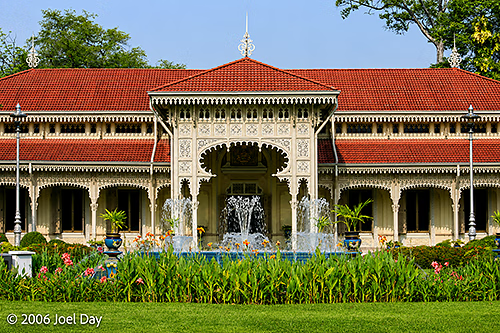
Vimanmek Teak Mansion, Bangkok, Thailand
While in a fairly weak state, I finally managed to get around and see the Vimanmek Teak Mansion — which is a bit hard to reach by public transportation, so I had been putting it off.
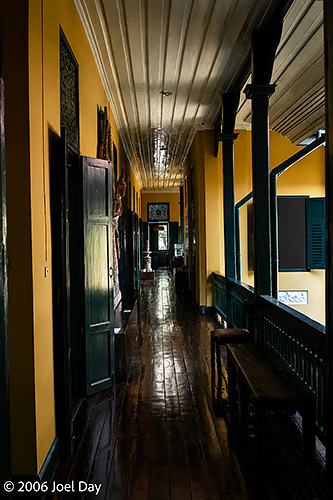
It seems that years ago, the King of Thailand visited Europe, where he met other heads of state and decided he, too, needed a royal palace (like they all had). It was very impressive, I must say. Built in the 1800’s, it’s the largest teak mansion of its kind in the world, with over 80 rooms. It was briefly used as the Thai White House (so to speak) and continues to be used to entertain foreign dignitaries. You need to walk barefoot to protect the flooring. All wood, everywhere.
There were plenty of other interesting little buildings to snoop around in the compound, most of which contained artwork or Thai crafts. It was a nice place to get away from the usual hustle and bustle of Bangkok. I had to keep taking sit-down breaks to regain my strength, however.
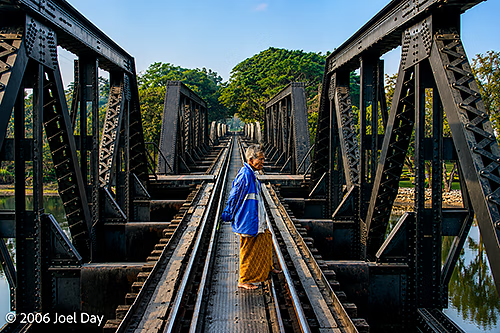
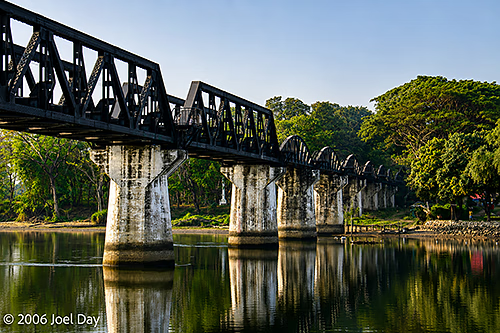
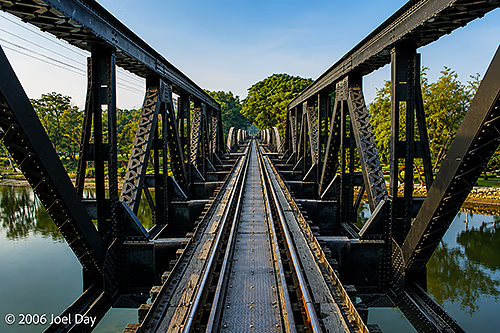
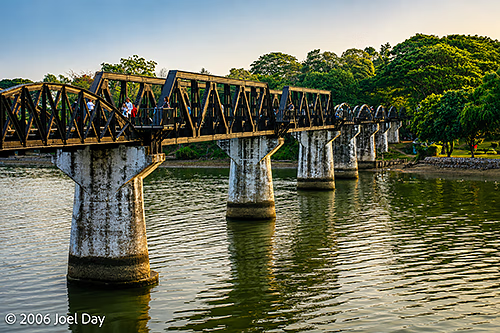
Bridge over the River Kwai, Kanchanaburi, Thailand
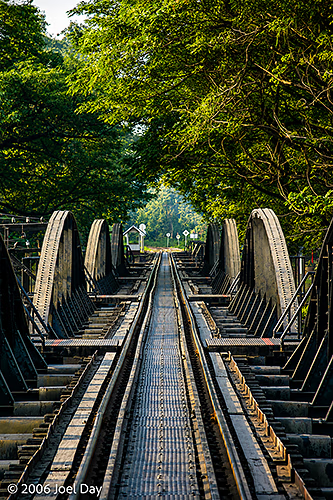
Well, I’m back in Bangkok, having taken the Death Railway here bright and early this morning. Fortunately, there were no unforeseen circumstances. I’m not sure who coined the phrase “Death Railway”, but I figure Rupert Murdoch must have had a hand in it. It sounds like a headline from one of his tabloids.
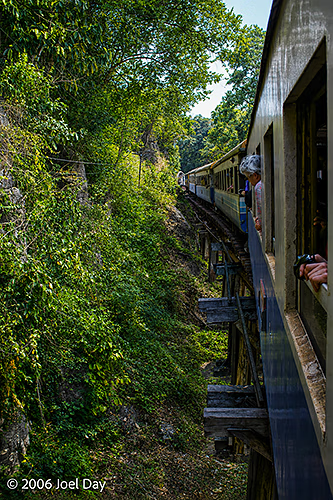
Death Railway Train Ride near Kanchanaburi, Thailand
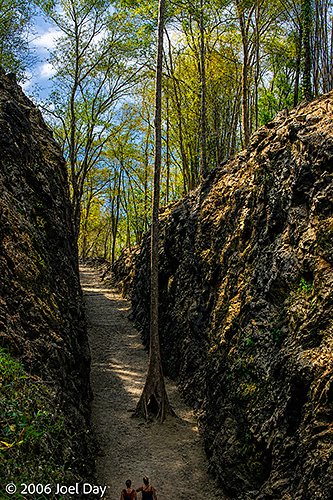
Actually, the “Death Railway” runs over the “Bridge Over the River Kwai” and was built under the direction of the Japanese during their occupation of Thailand during WWII. It was meant to provide Japan with an alternative supply route, allowing it to expand into India and Iran. The sad thing is that over 100,000 people died building it.
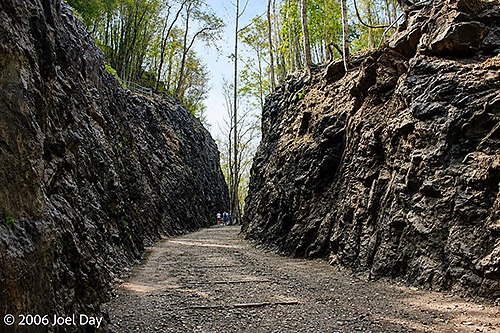
Hellfire Pass (Konyu Cutting), Thai-Burma Death Railway, Kanchanaburi Province, ThailandHellfire Pass (Konyu Cutting), Thai-Burma Death Railway, Kanchanaburi Province, Thailand
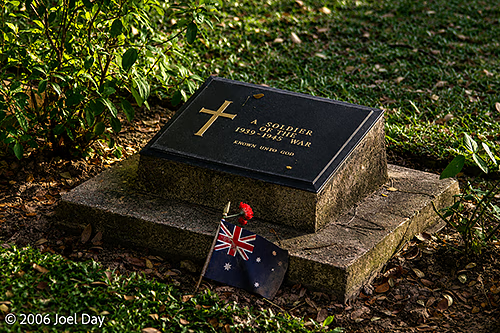
Most of them were Indian, Chinese, and Malay labourers, but thousands were Allied POWs. Most of the POWs were from Australia, Britain, and Holland, so I’m not sure Americans know much about it. The bridge was obviously targeted by the Allies to disrupt the route. The alternative was for the Japanese to use the sea, but that route was too easily attacked.
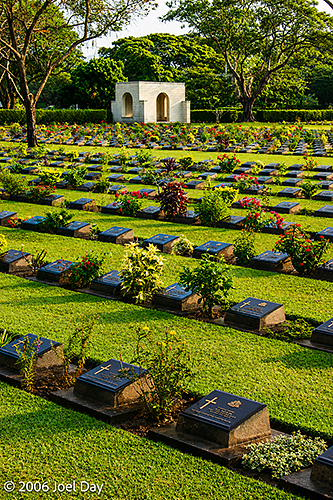
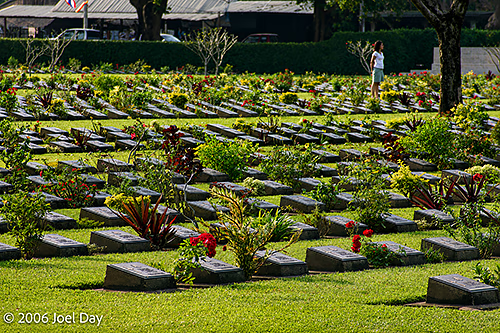
Australian POW Grave in Kanchanaburi, ThailandPrisoner of War Graves in Kanchanaburi, ThailandPrisoner of War Graves in Kanchanaburi, ThailandPrisoner of War Graves in Kanchanaburi, ThailandPrisoner of War Graves in Kanchanaburi, Thailand
Anyway, there are a number of really good museums on the whole thing. It’s a sobering thing to visit the area knowing about all the deaths, horrible conditions, and hardship that went into building it. Most of the railway was immediately dismantled after the end of WWII, but one leg of it remains back into Bangkok (which I rode this morning). There are big, well-manicured Allied cemeteries around the area. I was surprised to learn that those homemade radios hidden into broom handles on Hogan’s Heroes were actually based on fact! The museums had samples. Google “Death Railway”, “Hellfire Pass”, or “Bridge over the River Kwai” if you want to know more.
Bridge over the River Kwai, Kanchanaburi, ThailandBridge over the River Kwai, Kanchanaburi, ThailandBridge over the River Kwai, Kanchanaburi, Thailand
I have a couple of days here in old BKK before I hop on my flight back to Perth (Sunday). I’ve been hoping to do a bit of shopping before I return. Had ideas for cheap clothing, but I’ve noticed waist sizes only go up to “30” around here. I haven’t been THAT size since high school!
After an exciting week of ramming back and forth between eastern and western Thailand, I’ve decided to chill out in a sweet suite here in Kanchanaburi, just up the road from that famous “Bridge over the River Kwai”. It’s a lot touristier than Ubon, the place at the opposite end of the country where I just came from. I think I would have preferred something a bit in-between. At least there should be a lot to do here.
Bridge over the River Kwai, Kanchanaburi, Thailand
Although I managed to get the last sleeping berth on the train, it wasn’t quite as nice as the overnight train I took to Chiang Mai last year. I was stuck with an upper bunk, which has little headroom and little ventilation. I was sweating, lying in bed for hours before I could fall asleep. There was a vent up on my ceiling, but when I opened it up, a bunch of black, dusty crud fell down out of it and onto my nice, clean pillow. Yuck!
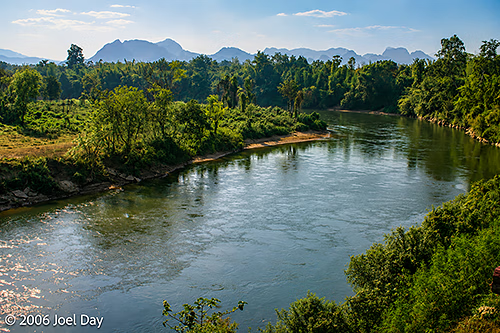
Mountainous terrain along the Thai-Burma border west of Kanchanaburi, Thailand
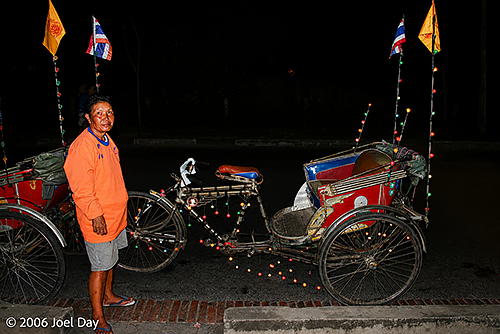
I did eventually get to sleep for about 4-5 hours, so it wasn’t so bad. Getting the bus out here to Kanchanaburi from Bangkok was a lot easier. I have to confess to being somewhat embarrassed when I arrived. After hopping off the bus, a man I thought was a taxi driver plugged his taxi service, even though there was no taxi in sight. I agreed to the price, and he escorted me to his bicycle rickshaw. I felt like such a colonialist in the back of that thing as he peddled a good mile or two out to my guesthouse. Poor guy. He was probably older than me. I made sure to give him a good tip.
Cycle Rickshaw, Thailand
This is a very popular weekend destination for Thais as well as Western backpackers. The weather is definitely more humid than in Ubon, but it isn’t nearly as hot as in Ayutthaya.
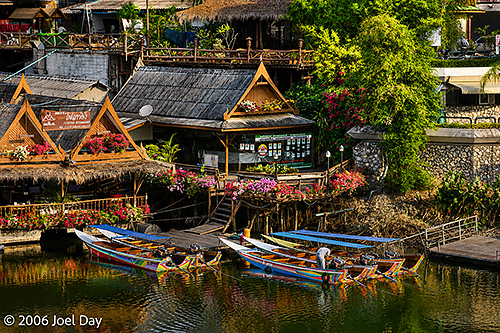
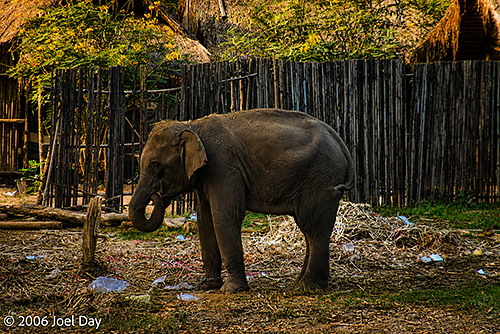
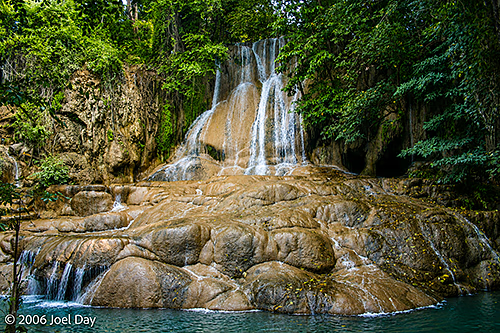
Kanchanaburi, ThailandElephant near Kanchanaburi, ThailandWaterfall in Erawan National Park, near Kanchanaburi, Thailand
Well, Ubon has turned out to be somewhat of a fizzle in my eyes. I have a feeling there is a bit of a push to promote this region of Thailand. Tourism here seems largely undeveloped, probably due to the fact that it was more or less off-limits to tourists for security reasons up through the late 1990’s with Khmer Rouge activity in the area.
Ubon Ratchathani National Museum, Ubon Ratchathani, ThailandUbon Ratchathani National Museum, Ubon Ratchathani, Thailand
Perhaps the feeling is that tourists need to come first before tourist businesses are worth setting up. There are a few things to see in town, including a decent historical museum, but I managed to get through most of what’s available in less than a day. The surrounding area is supposed to have some worthwhile excursions, but there aren’t any tours heading to them because, I was told by the Thailand tourism authority, “There aren’t enough tourists”. And while you could try to negotiate transportation with a local driver, it is hard to find anyone who understands what you want. Most businesses here, including my hotel, seem to treat me as more of a nuisance than anything else. I get the impression that most Westerners who visit here are only stopping on their way to or from Laos (which is just over the border).
Thung Si Mueang, Ubon Ratchathani, ThailandThung Si Mueang, Ubon Ratchathani, Thailand
Instead of spending the next five days here, milling about town and seeing shops like those in other parts of Thailand, I think I’m going to hop the overnight train to Bangkok and an early-morning bus to Kanchanaburi, clear over on the other side of Thailand near the border with Myanmar (aka Burma). Hopefully they still have sleeping berths available!
After a bit of debate about where to head next, I was enticed into riding the rails to Ubon at the end of the eastern train line. Not only was Lonely Planet hyping its “emerald triangle” status, but local Thai tour industry professionals also advised me it was worth a visit.
I enjoyed my stay in Pak Chong and found the small city to be quite nice to hang out in. It wasn’t too big, and it seemed very well groomed and cared for. It actually reminded me somewhat of a Thai version of small-town America. Even the night market there seemed exceptionally clean and diverse, with a wide range of luscious foods to try and things to buy. But my time had come to get back on the train and keep heading east.
I carefully scrutinised the train schedule to make sure I didn’t end up on another 3rd class-only train, but that is precisely where I ended up for the scheduled 7-hour journey to Ubon Ratchathani. This time the train wasn’t so crowded, but the comfort level was otherwise the same: hard wood bench seating and big open windows.
I managed to find a group of six bench seats to call my own and spread out over, which didn’t make it so bad. It’s nice to be able to gaze out the window without anything obstructing your view. There were endless fields of cassava (manioc, which we learned about in geography class years ago) and rice paddies, although not much rice growing this time of year (the dry season). There were also quite a few mysterious plantations of what appeared to be blue gum trees that reminded me somewhat of Australia. There were quite a few water buffalo wandering the fields and dunking themselves in ponds near the tracks. Occasionally, the train would have to stop until one of them got back on the tracks.
The most frustrating delay came at the Korat train station, where we just sat for 1.5 hours with no explanation. Or, at least, no explanation in English! I could not tell what was going on and couldn’t ask anyone else because I was the only Westerner on board. It was quite frustrating and uncomfortable to bake there in the heat of the day with no breeze, but eventually we got going again. It seemed there was some problem with the engine, which they eventually replaced. Throughout the ordeal, a nonstop barrage of food vendors would walk past the windows, shrieking in your ear as they tried to hawk their snacks and meals in Thai. I just had to point at what I wanted to get fed. They would trace the number of baht required for payment on the palm of their hand to tell me how much it cost.
Thung Si Mueang, Ubon Ratchathani, ThailandThung Si Mueang, Ubon Ratchathani, Thailand
Eventually, about 2 hours late, we arrived at the distant city of Ubon Ratchathani (or just Ubon, as they seem to like to call it). It was getting late, and I hadn’t eaten a decent meal all day, so I hit the streets after checking into my hotel and mimed my way into some food. Nobody seems to speak English here.
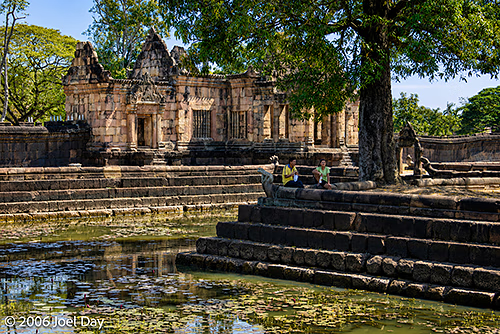
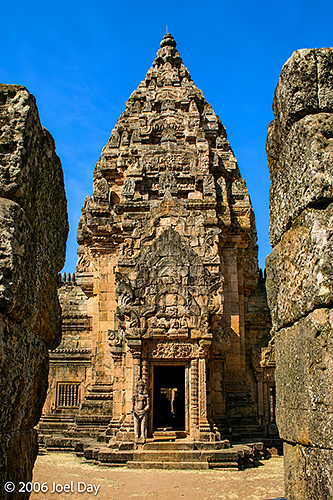
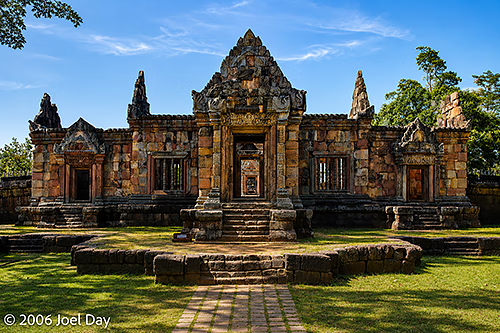
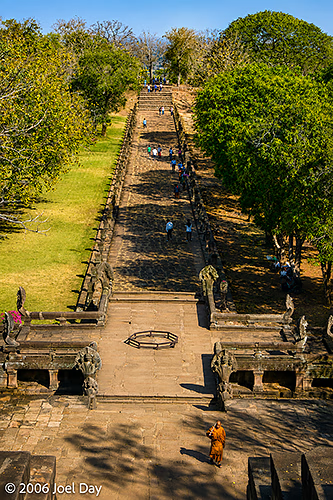
Prasat Hin Khao Phanom Rung Historical Park, Chaloem Phra Kiat District, Buri Ram, Thailand
I’ve spent close to seven weeks in Thailand over the past year, so I have been looking to visit areas that offer experiences different from those I’ve already had. The easiest places to visit seem to have well-worn tourist trails, plenty of English spoken, and group excursions available for reasonable prices. The problem with these areas is that you’ll often feel you’re not even overseas, being surrounded by too many people like yourself.
Prasat Hin Khao Phanom Rung Historical Park, Chaloem Phra Kiat District, Buri Ram, ThailandPrasat Hin Khao Phanom Rung Historical Park, Chaloem Phra Kiat District, Buri Ram, Thailand
The challenge is to find a region that doesn’t get so many tourists, but is still relatively easy to travel through. I find language differences to be the biggest obstacle, but the lack of group tours/transportation can also be frustrating and expensive. Visiting Khao Yai National Park was a nice departure from the kinds of things I had previously done in Thailand, but I did have the luxury of spending most of my time with fluent English speakers, Thais, and groups of people interested in seeing and doing the same things and sharing the costs.
Prasat Hin Khao Phanom Rung Historical Park, Chaloem Phra Kiat District, Buri Ram, ThailandPrasat Hin Khao Phanom Rung Historical Park, Chaloem Phra Kiat District, Buri Ram, Thailand
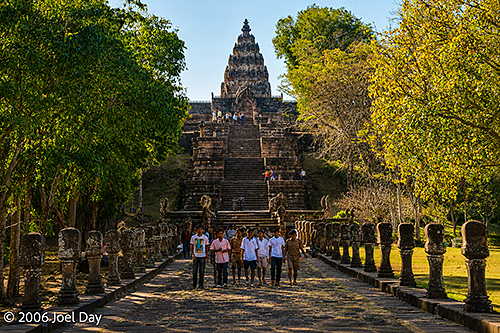
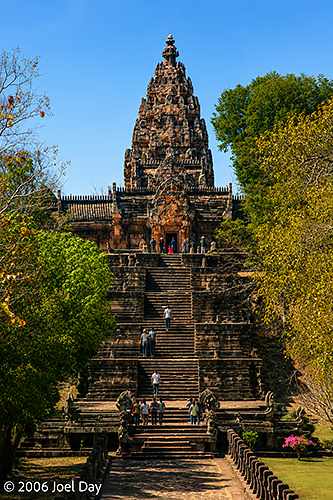
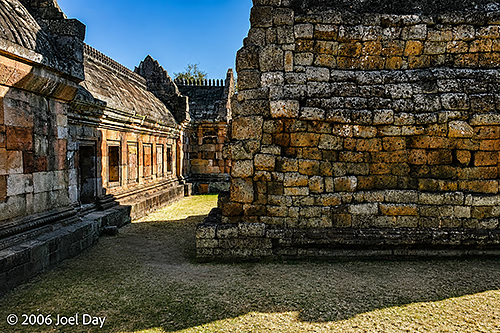
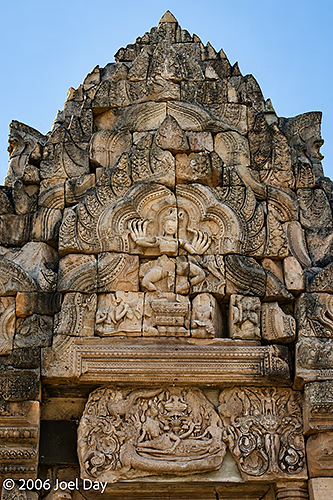
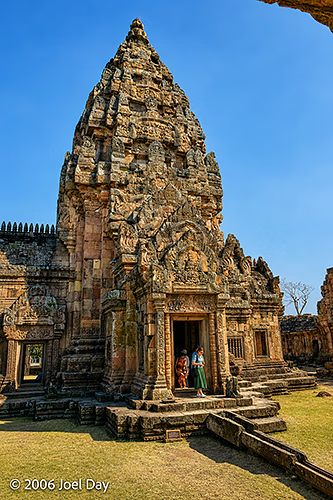
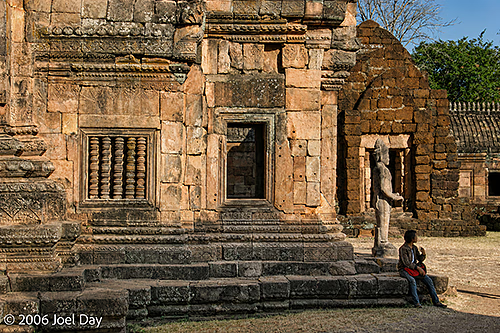
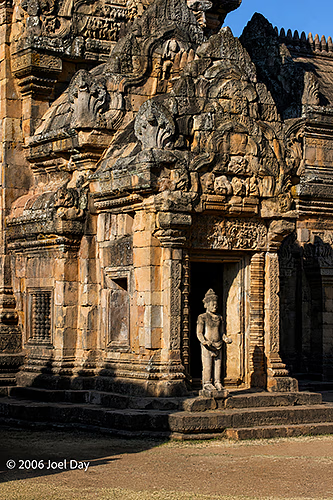
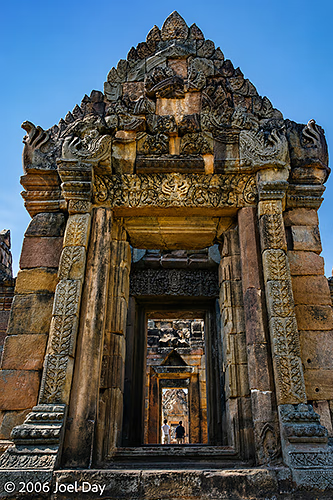
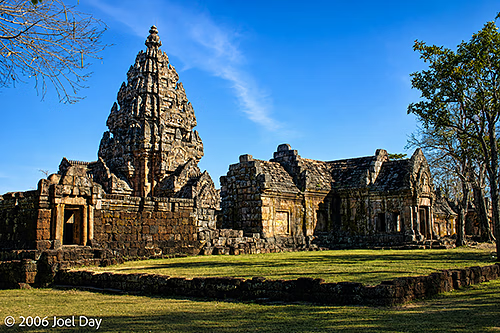
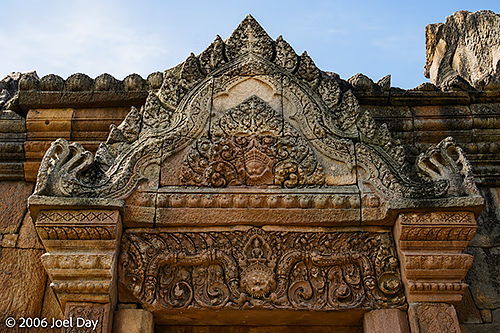
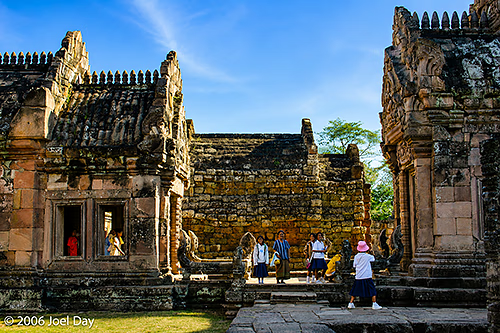
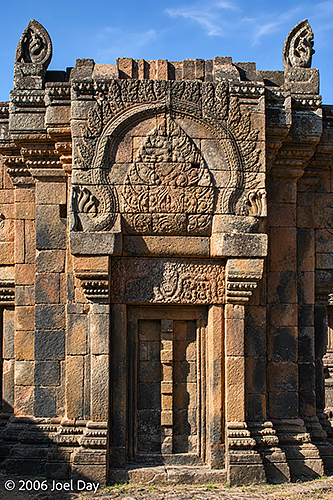
There was another historical park in Thailand that piqued my interest in the region I’ve been visiting, but it seemed difficult to find any group tour to it. The place is called Prasat Hin Khao Phanom Rung and is perched atop the summit of an old volcano, not far from the Cambodian border. It is actually related to Angkor Wat and designed in the same style—although it is much smaller. I guess you could say it’s the closest thing Thailand has to an Angkor Wat, and not really all that far away.
Prasat Hin Khao Phanom Rung Historical Park, Chaloem Phra Kiat District, Buri Ram, ThailandPrasat Hin Khao Phanom Rung Historical Park, Chaloem Phra Kiat District, Buri Ram, Thailand
Why not just go to Angkor Wat? Some day I would like to, but everyone I’ve ever met who has ventured there on land from Thailand warns against it. The road there is supposed to be horrendously bad (once you cross the border into Cambodia), and the child touts are supposed to be notorious for hassling. Of all the countries in Southeast Asia, Cambodia has the reputation for being the hardest to travel through.
Prasat Hin Khao Phanom Rung Historical Park, Chaloem Phra Kiat District, Buri Ram, ThailandPrasat Hin Khao Phanom Rung Historical Park, Chaloem Phra Kiat District, Buri Ram, Thailand
So a trip to Prasat Hin Khao Phanom Rung Historical Park would give me something of the same flavour of Angkor Wat without the hassle. The only problem was getting there. There are a series of trains, trucks, and tuk-tuks you can negotiate to get there — but if you don’t know Thai, it can also leave you lost.
Prasat Hin Khao Phanom Rung Historical Park, Chaloem Phra Kiat District, Buri Ram, ThailandPrasat Hin Khao Phanom Rung Historical Park, Chaloem Phra Kiat District, Buri Ram, Thailand
I ended up just negotiating a deal with the manager of the safari guesthouse I was staying in in Pak Chong to be my personal driver for the day. His English was fine, and for about $50 he was essentially my chauffeur for the day — throwing in a few extra sites on the way there and back and paying all travel expenses.
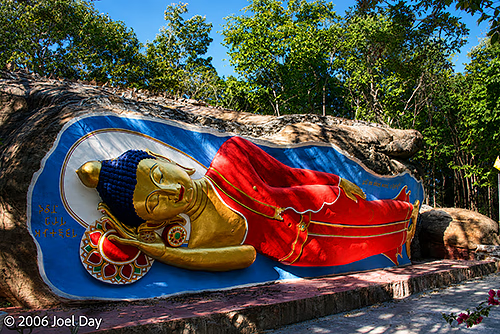
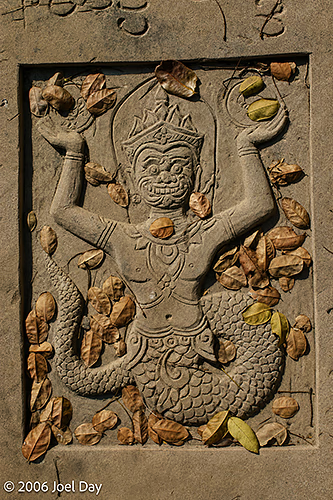
Carving from Four Buddha Footprints, Wat Khao Chan Ngam, Sikhio, Nakhon Ratchasima, ThailandReclining Buddha near Four Buddha Footprints, Wat Khao Chan Ngam, Sikhio, Nakhon Ratchasima, ThailandCarving from Four Buddha Footprints, Wat Khao Chan Ngam, Sikhio, Nakhon Ratchasima, Thailand
The negotiation session was actually pretty funny, because we kept going back and forth trying to nail down our exact expectations for the day. He originally charged me one price but wanted to return to Pak Chong early—even though it was a 3-hour drive away. I had no interest in investing the money, and I only had a little time there. I was far more interested in being there at sunset when the light was nice for photography. He could have just said no, but he clearly wanted to do the trip for some reason. As it turned out, after our safari tour guide got involved, it was disclosed that the guesthouse manager was hoping to do a bit of marketing for his business while we were there — so he was eager to close the deal for just a few extra dollars (which would give me a longer visit). I was sitting at a table where intense negotiations were taking place among various people associated with the safari business—all in Thai —leaving me with no idea what they were getting so fired up about. It was like a meeting of the chiefs.
Prasat Hin Khao Phanom Rung Historical Park, Chaloem Phra Kiat District, Buri Ram, ThailandPrasat Hin Khao Phanom Rung Historical Park, Chaloem Phra Kiat District, Buri Ram, Thailand
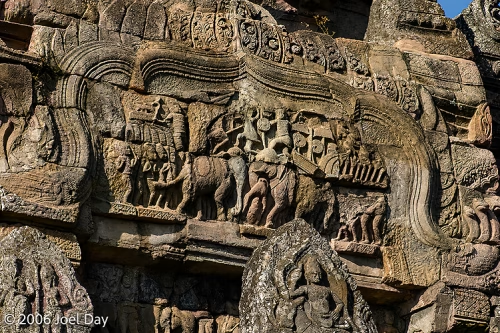
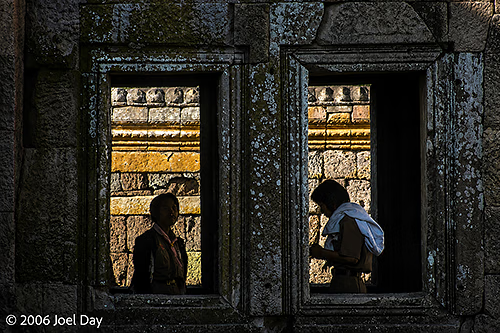
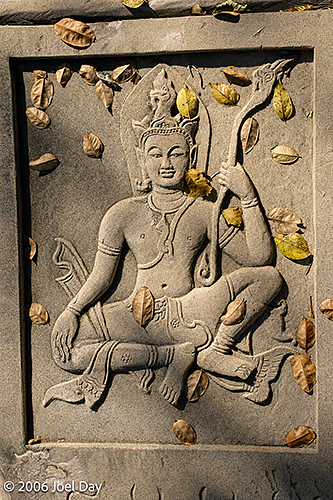
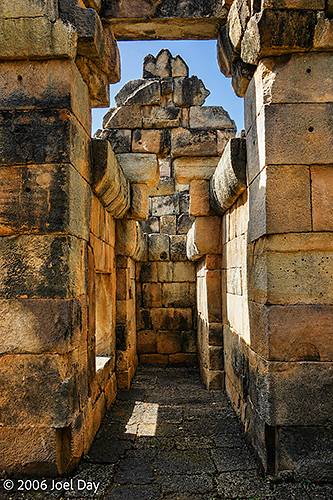
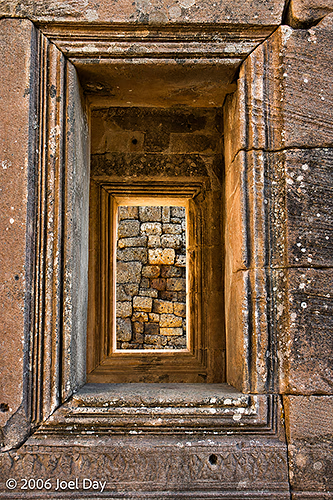
Of all the historical parks I’ve been to in Thailand, Prasat Hin Khao Phanom Rung Historical Park was by far the best restored. And its style was significantly different from that of Ayutthaya or Sukhothai. In fact, the style was much more in line with what I had seen around Delhi, India, last year. And there was a good reason for that: Ayutthaya and Sukhothai were predominantly Buddhist societies in their heyday, whereas Prasat Hin Khao Phanom Rung was originally Hindu (later Buddhist) when it was built between the 10th and 13th centuries. I think that’s right, anyway. While it was really interesting to snoop around Ayuthaya and Sukhothai and imagine what they were like when they served as Khmer capitals, Prasat Hin Khao Phanom Rung was much easier to appreciate because most of the structure had been fully restored. Another equally well-preserved historical park, Prasat Meuang Tam, was at the foot of the volcano and was also built in a similar Hindu style.
Prasat Hin Khao Phanom Rung Historical Park, Chaloem Phra Kiat District, Buri Ram, ThailandPrasat Hin Khao Phanom Rung Historical Park, Chaloem Phra Kiat District, Buri Ram, Thailand
I enjoyed the visit, but couldn’t help feeling somewhat guilty about leaving my driver in the car in the heat of the day, waiting around for me to return. I did try to get him to come in with me so he would at least have something to do, but he didn’t seem interested.
Prasat Hin Khao Phanom Rung Historical Park, Chaloem Phra Kiat District, Buri Ram, ThailandPrasat Hin Khao Phanom Rung Historical Park, Chaloem Phra Kiat District, Buri Ram, Thailand
Like most of Asia, driving on Thai roads can seem quite perilous (and probably is), but I’ve rarely seen accidents. I would have to say the drive back to Pak Chong afterwards at dusk was the second most terrifying of my life. I don’t mean for that to sound like a Get Smart joke. I can tell you the most terrifying was the drive back from seeing the Taj Mahal in Agra, India last year. At least Thais turn their lights on at night, unlike a lot of Indians! Some of the roads were safer than others, but the scariest were two-lane roads with heavy traffic, all travelling at different speeds, with the faster cars desperately trying to get past the slower ones. It was fairly common to find yourself in a double pass, where two cars pass a slower car at the same time — taking up both the oncoming lane and the oncoming shoulder, all the way over on the other side of the road.
Prasat Hin Khao Phanom Rung Historical Park, Chaloem Phra Kiat District, Buri Ram, ThailandPrasat Hin Khao Phanom Rung Historical Park, Chaloem Phra Kiat District, Buri Ram, ThailandPrasat Hin Khao Phanom Rung Historical Park, Chaloem Phra Kiat District, Buri Ram, ThailandPrasat Hin Khao Phanom Rung Historical Park, Chaloem Phra Kiat District, Buri Ram, Thailand
Our real safari took place over the course of a very long day entirely inside Thailand’s Khao Yai National Park. This was a really great experience. The national park was atop a large mountain (the name literally translates to “Big Hill or Mountain”) and was covered with thick jungle and rainforest. Among the wild animals found within the boundaries of the park were elephants, sambar and barking deer, macaques, gibbons, exotic birds (including the huge Great Hornbill), tigers, cobras, wild pigs, Malayan sun and Asiatic black bears, leopards, serows, loris, gaurs, and crocodiles.
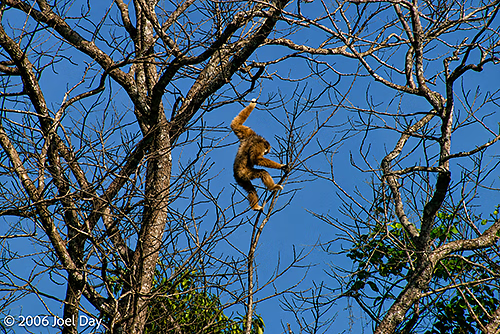
Gibbon swinging from tree in Khao Yai National Park, Thailand
A group of three German men, a French couple, myself, two guides, and a driver started early from our guesthouse and travelled way up the mountain into the thick jungle growth. The park was very well maintained and comfortable to travel through — with excellent roads and good facilities. Our Thai guides were quite passionate about wildlife and rode standing on the back of our songthaew (converted pickup truck), keeping their eyes out for anything of interest. The first thing they spotted was a Great Hornbill. They pulled the truck over, and we all piled out to check it out.
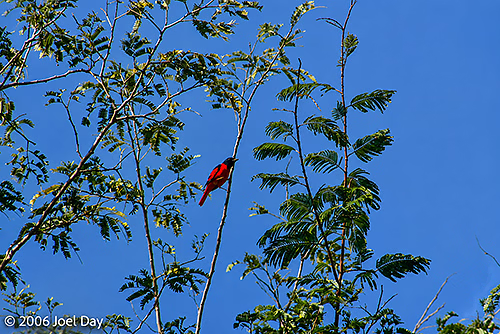
Scarlet Minivet (Pericrocotus speciosus) in Khao Yai National Park, Thailand
Once the engine was quiet, you could quickly appreciate the richness of the jungle. The sound of the wildlife up through the tall rainforest was unreal. It reminded me much of my experiences in the Karri forests of southwestern Australia or the wetlands of Kakadu National Park. It is almost as if you’re in a cathedral of some kind, with the sound of a loud choir in concert. The volume and exoticness of these really wild places are really quite amazing. You just want to stand there, scrutinising everything going on around you and every sound being made, and take it all in. Hearing all the loud and exotic wildlife was like music to my ears.
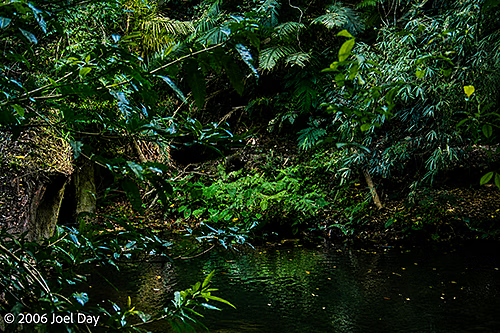
Jungle Growth in Khao Yai National Park, Thailand
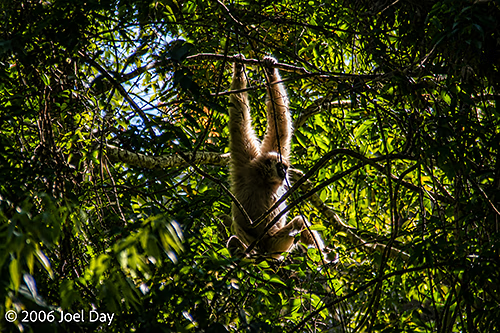
As our journey progressed through the park, we quickly saw other exotic birds, gibbons swinging through the canopy, barking deer, and macaques. After driving a while longer, we were dropped off at the crossroads of a jungle track, where we began a long hike through the wilderness. Most trails in the park are simply formed by wildlife movement, so we had to use compasses to orient ourselves. We donned our leech socks to protect ourselves from ticks and rapidly found the telephone-pole-sized tracks of a wild elephant. Our guide pointed out clay-spackled trees where the elephants had scratched their backs, and of course, the largest scat you’ve ever come across in the wilderness.
Gibbon swinging from tree in Khao Yai National Park, Thailand
You’d think following an elephant’s track would be well-trodden and pretty easy, but you’d be amazed at how rugged a terrain they can travel through. We were struggling to push branches out of our way and could only assume the elephants’ bodies were probably pushing the tree trunks of those branches out of their way. The elephants seemed fully capable of scaling up steep banks and walking along thin ridges. All the way, we were instructed to carefully follow in the footsteps of our guides. You wouldn’t want to step on a cobra underneath those leaves, you see. One bite from a cobra and our guides wouldn’t physically be able to get you to the hospital in time to save you. Fortunately, we were assured cobras were nocturnal and not likely to be up and about while we were there — but they had been seen on treks before.
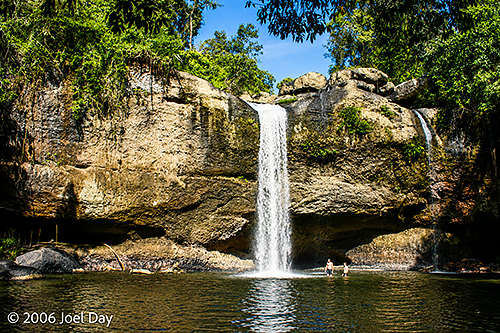
Haew Suwat Waterfall in Khao Yai National Park, Thailand
We finally found our way down to a very nice swimming hole next to a beautiful waterfall along a cold mountain stream. Since we had driven up to a fairly high elevation, this water was much colder than anything I have experienced in Thailand — but after hours of hiking through the jungle, it was extremely refreshing to dive in. We had a nice little break, ate a luscious banana-and-rice snack wrapped in banana leaves (picked up from a local shop on the way to the park), jumped off the waterfall cliff, and continued hiking up the river along the elephant track.
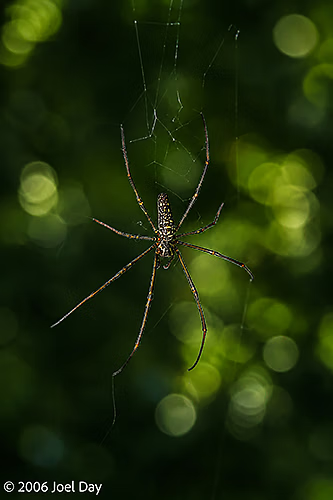
Golden Orb-Weaver (Trichonephila pilipes) in Khao Yai National Park, Thailand
At one point, we found ourselves along the river, surrounded by a cloud of beautifully coloured monarch butterflies in all types of styles and colours. We all just looked at each other in amazement as these thousands of differently colored butterflies gently floated around, swirling amongst us. It turned out to be just a typical jungle scene. It actually seemed very similar to walking through a butterfly house in a zoo, but I had always thought those places were too artificial an environment to be real. I guess they’re actually modelled after their natural jungle habitat.
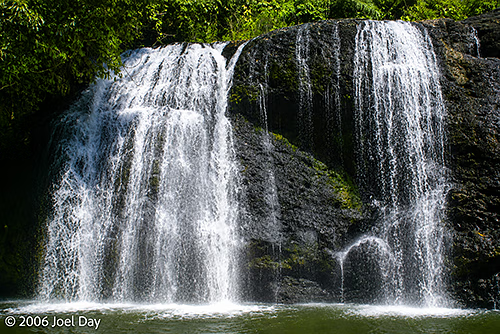
Haew Suwat Waterfall in Khao Yai National Park, Thailand
We continued hiking up past two more beautiful waterfalls and refreshing swimming holes, taking a break, some packed lunch, and a dip at each one. The third waterfall we came to happened to be featured in Leonardo DiCaprio’s movie “The Beach” and, as a result, attracted the luxury-coach brigade of overweight tourists. It was at that point our wilderness trek met up with the public again. Guess I’ll have to see “The Beach” sometime. At least on screen. I seem to have visited all the filming locations in various parts of Thailand in person.
One of our last little treks of the day, before nightfall, was along a crocodile-infested river. Or at least that’s what we were told. We didn’t actually see any crocodiles, but we did see plenty of macaques swooping through the trees overhead. Our guides claimed that crocodiles usually sank to the bottom of the river while the macaques were around because they found the monkeys too difficult to deal with.
We did watch the jungle food chain in action for a while along the banks of this river, with macaques feeding on fruit in the treetops and dropping nuts into the river. In the river, a school of fish were poised to attack and gobble up anything that fell in the water near them. The feeding frenzy was like watching piranhas in action. There were LOTS of fish. Which is where the crocodiles come in — although we never did actually see any.
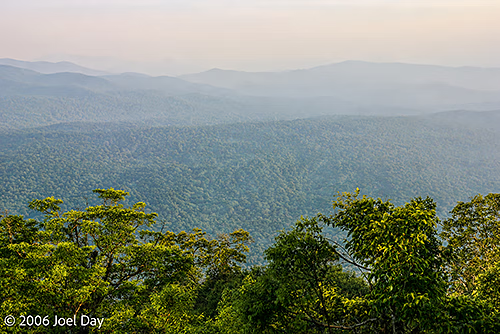
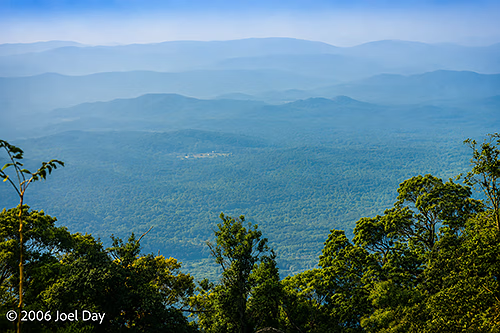
View from Khao Yai National Park, Thailand
After a bit more driving around the park to check out the mountain peaks and spectacular (but very hazy this time of year) views, we made a bit of an effort to spot some nocturnal wildlife. We were actually all quite cold and tired at this point of the day up on top of the mountain at that hour as we slowly made our way for the exit.
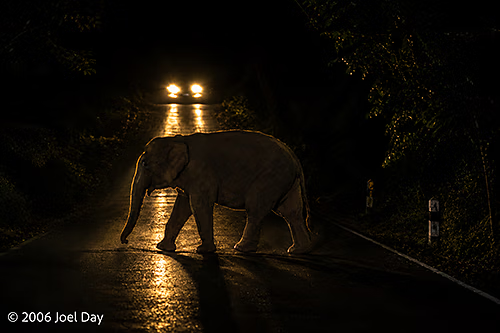
Elephant crossing road through Khao Yai National Park, Thailand
Fortunately, we had one last thrill before leaving the park. After our guides had more or less given up on seeing any more wildlife for the day, our driver slammed on his brakes in the middle of the blackened jungle. A group of huge elephants, some with full tusks, had taken over the road, illuminated by another stopped vehicle facing the opposite direction. Caught between the headlights, it sort of casually went about its business, lumbering back and forth across the road, grabbing vegetation with its trunk. Nobody dared to startle it or upset it in any way, so the traffic kept its distance and just started piling up at either end, patiently waiting for the huge creature to make up its mind as to where it wanted to go. Eventually it made its way back off the road and deep into the jungle growth.
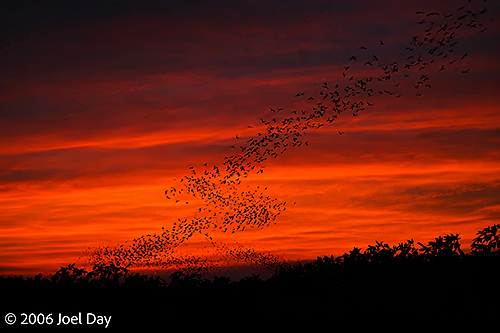
Millions of Bats flying out of Khao Luk Chang Bat Cave at dusk near Khao Yai National Park, Thailand
Khao Yai National Park was really a great place. They had plenty of camping and cabin accommodation there. I could have easily spent a few days there. Maybe I’ll go back sometime.
As for tigers? Well, I guess we sort of saw some, but didn’t really. You see, every time one of us would ask our guides about tigers, their eyes would get big and start darting around in an alarmed state. Then they would realise what you said and act annoyed, saying in their broken English, “I thought you said ‘Thai Girls'”. Of course, it worked the other way as well: When we were down by the last waterfall, and a couple of Thai women came down for a swim, they would mention “Thai Girl” to each other, and we would all jump up and get excited thinking they had spotted a tiger.
I was told by one guide that there were only about 15 tigers in the park. In the six years he’d been giving tours, he’d never seen one — but his associate, who had only been conducting tours for a few years, was fortunate enough to spot one once.
I finally had the chance to see how the other half lives on my train ride from Ayutthaya to Pak Chong. Ahhh… Second Class! The elderly woman who ran my guesthouse in Ayutthaya seemed so overly concerned that I would end up on the wrong, expensive train — but it was a nice excursion for me. And only about twice the price as 3rd Class (and still hardly anything by Western standards). It was about the same standard of service you’d expect from Amtrak with roomy, reclining seats and air-conditioned carriages. Unlike Amtrak, however, we also had cabin boys repeatedly sweeping and mopping below our feet. It was a nice way to spend a leisurely 3 hours riding up into the mountains of eastern central Thailand.
View from Khao Yai National Park, Thailand
My wildlife safari operators were waiting for me patiently at the train station, having come earlier thinking I was on another train. Our late-afternoon/evening tour was starting in only an hour after my arrival. They whisked me on to their guesthouse in the country outside of town, where I took the opportunity to grab what I needed for the first part of the safari.
The safari was split over two days. The first day’s tour actually took place outside of the park, but it was enjoyable nonetheless. There was a cool, refreshing mountain spring to swim in, a Buddhist temple to visit (there’s an original idea!), and most interestingly, bat caves to check out.
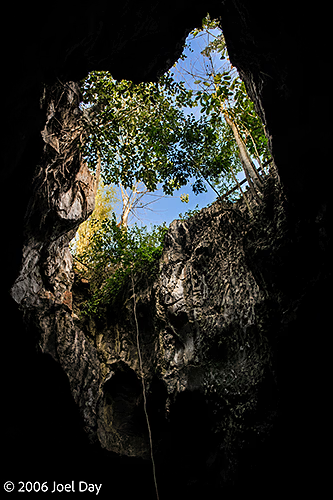
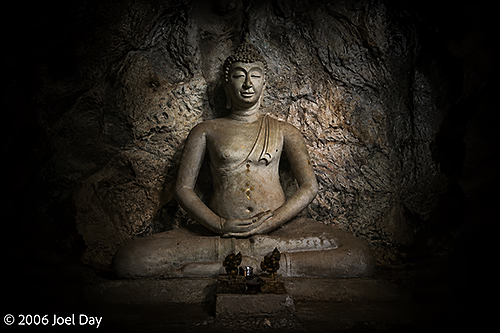
Cave near Khao Yai National Park, ThailandBuddhist Temple in Cave near Khao Yai National Park, Thailand
It seems Buddhist monks have taken over many of the easily accessible caves in Thailand for meditation. One such cave we visited near a Wat had a handful of small bats hanging from the ceiling, just up above the imported Buddhist shrines. But the really cool bat caves were a bit too remote for us to go inside.
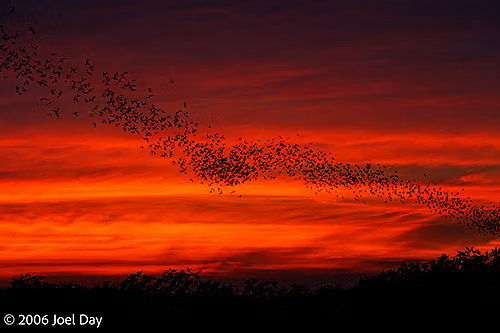
Millions of Bats flying out of Khao Luk Chang Bat Cave at dusk near Khao Yai National Park, Thailand
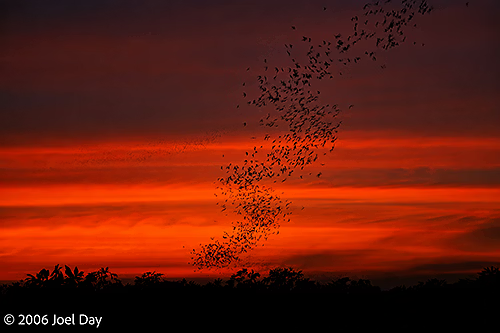
One particular cave atop a large, rugged hill was estimated to contain over a million bats. Just after sunset each night, the million bats would habitually file out in a huge cloud heading into the wind before dispersing in their hunt for the evening’s feed of flying insects. It was absolutely amazing to watch this seemingly endless cloud of bats swarm out of their cave and off into the sunset for a good half hour. We didn’t hang around much after dark, but we were told the stream lasted around a full ninety minutes.
Millions of Bats flying out of Khao Luk Chang Bat Cave at dusk near Khao Yai National Park, Thailand
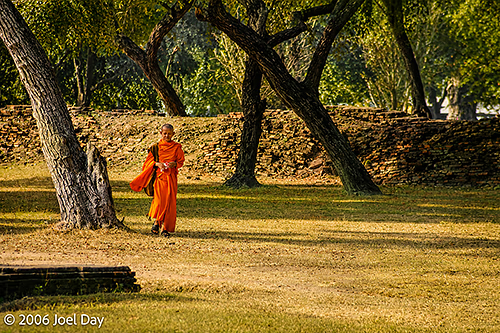
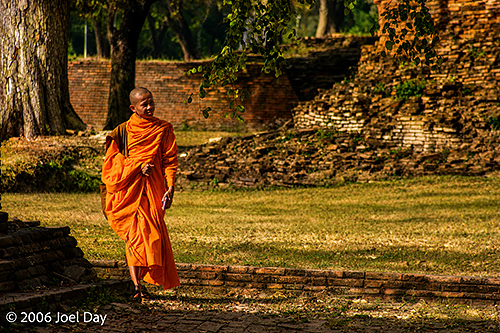
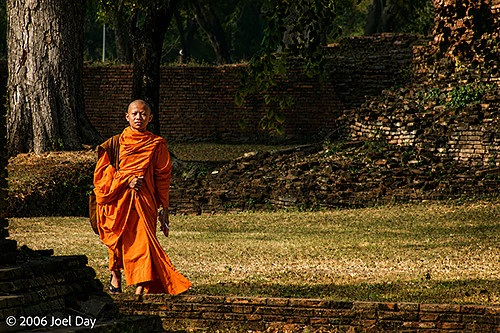
I was up early in the morning touring the ruins of Ayutthaya when I spotted a young Buddhist boy with a shaved head and a bright orange robe wandering the grounds. I tried to sneak a few photographs of him, but when he noticed me, he ran up to me with a big smile on his face. He asked whether he could practice his English on me. His English actually seemed pretty good, but I sat down with him to help him work out a few kinks in his communication skills. He had an English-Thai translation book handy.
Buddhist Monk, Ayutthaya, Thailand
I was quite surprised to learn that he was only seven years old (or possibly he mixed the number up with eleven). He had been a Buddhist for three years and was about to embark on a trip to Germany to study at an English-language monastery for five years—all by himself (without family)! He was actually on his way to Kuala Lumpur (Malaysia) to meet his girlfriend before flying off to Europe. She was also 7. He showed me a picture of her. She was Chinese and met him on a family vacation to his hometown in Thailand. He had written her a love letter and asked me to proofread it for him. I think he wanted help with pronouncing it because he had only known how to look up the written translation in his books.
Buddhist Monk, Ayutthaya, Thailand
He seemed quite keen on women for his age, asking me what I thought of Thai women and expressing a preference for lighter-skinned Chinese women. I asked him whether he liked German women (seeing as he was headed in that direction anyway) and he told me they were “too long”.
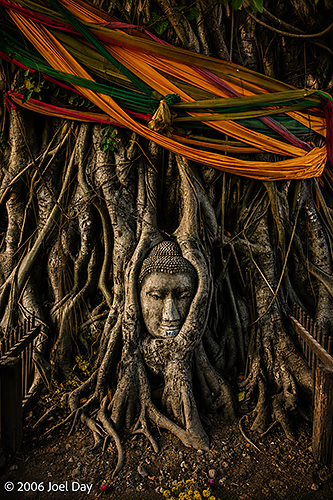
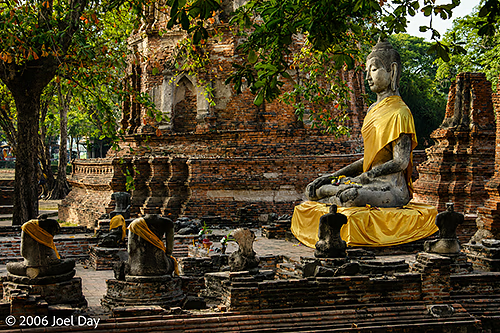
Buddha Head in Sacred Bodhi Tree, Ayutthaya Historical Park, Ayutthaya, Thailand
Talking with him confirmed what I had heard last year when I was here: that many Buddhist monks are practising only as a form of social support. In his case, he seemed to be practising to get support and a free education. He even told me he was planning to quit when he turned 19 (after high school). Buddhism seems to serve as the social safety net in these parts.
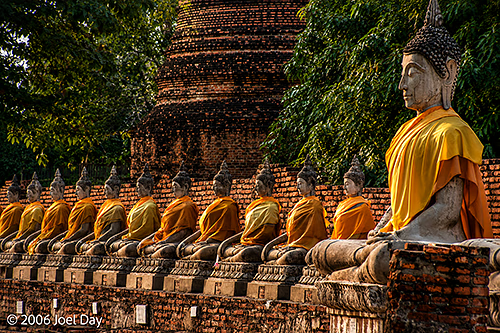
Ayutthaya Historical Park, Ayutthaya, Thailand
I spent a few hours talking with him. I felt kind of cool walking around with this guy most Thais seemed to have such high reverence for, bowing before him and expressing their personal thoughts to him in Thai. At one point, I think a security guard took advantage of him by telling him he wasn’t getting a lunch break and needed food. The 7-year-old monk promptly forked over all the food he had in his satchel. I felt kind of bad for him and took him out to lunch afterwards, even though he had already shown me his ATM card. Minutes later, a partially blind Thai woman would kneel before him, asking for a blessing or prayer. In exchange, she left him a Coke. He seemed kind of embarrassed about it in front of me, but I found it interesting to see how the exchange of food would probably work out between him and others in the end, after all.
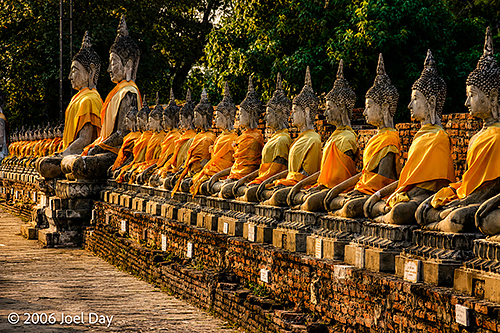
Ayutthaya Historical Park, Ayutthaya, Thailand
Needless to say, he was very mature for his age. I couldn’t believe it when he told me he was only seven. I think he was lonely travelling on his own and thought we were going to spend the whole day together, but I had to shake him loose after lunch. Interesting experience, anyway…
You must be logged in to post a comment.