Our real safari took place over the course of a very long day entirely inside Thailand’s Khao Yai National Park. This was a really great experience. The national park was atop a large mountain (the name literally translates to “Big Hill or Mountain”) and was covered with thick jungle and rainforest. Among the wild animals found within the boundaries of the park were elephants, sambar and barking deer, macaques, gibbons, exotic birds (including the huge Great Hornbill), tigers, cobras, wild pigs, Malayan sun and Asiatic black bears, leopards, serows, loris, gaurs, and crocodiles.
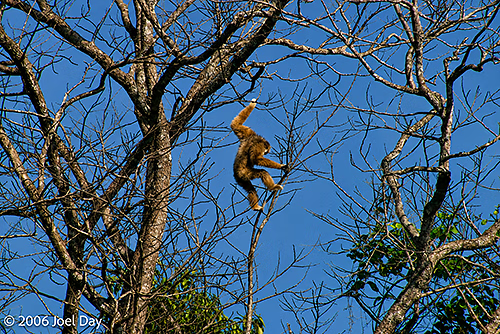
A group of three German men, a French couple, myself, two guides, and a driver started early from our guesthouse and travelled way up the mountain into the thick jungle growth. The park was very well maintained and comfortable to travel through — with excellent roads and good facilities. Our Thai guides were quite passionate about wildlife and rode standing on the back of our songthaew (converted pickup truck), keeping their eyes out for anything of interest. The first thing they spotted was a Great Hornbill. They pulled the truck over, and we all piled out to check it out.
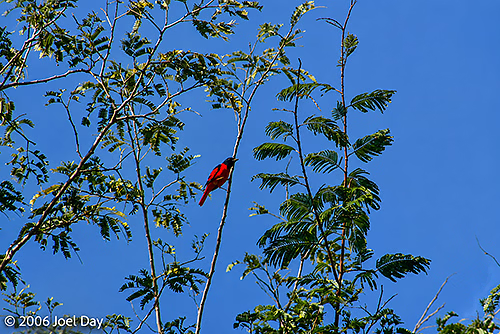
Once the engine was quiet, you could quickly appreciate the richness of the jungle. The sound of the wildlife up through the tall rainforest was unreal. It reminded me much of my experiences in the Karri forests of southwestern Australia or the wetlands of Kakadu National Park. It is almost as if you’re in a cathedral of some kind, with the sound of a loud choir in concert. The volume and exoticness of these really wild places are really quite amazing. You just want to stand there, scrutinising everything going on around you and every sound being made, and take it all in. Hearing all the loud and exotic wildlife was like music to my ears.
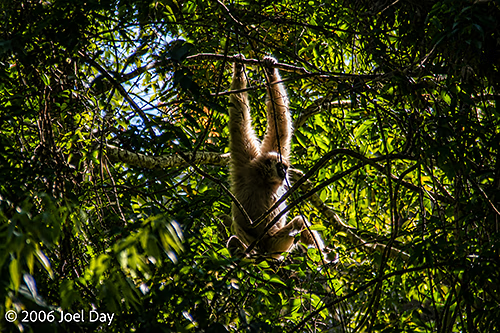
As our journey progressed through the park, we quickly saw other exotic birds, gibbons swinging through the canopy, barking deer, and macaques. After driving a while longer, we were dropped off at the crossroads of a jungle track, where we began a long hike through the wilderness. Most trails in the park are simply formed by wildlife movement, so we had to use compasses to orient ourselves. We donned our leech socks to protect ourselves from ticks and rapidly found the telephone-pole-sized tracks of a wild elephant. Our guide pointed out clay-spackled trees where the elephants had scratched their backs, and of course, the largest scat you’ve ever come across in the wilderness.
You’d think following an elephant’s track would be well-trodden and pretty easy, but you’d be amazed at how rugged a terrain they can travel through. We were struggling to push branches out of our way and could only assume the elephants’ bodies were probably pushing the tree trunks of those branches out of their way. The elephants seemed fully capable of scaling up steep banks and walking along thin ridges. All the way, we were instructed to carefully follow in the footsteps of our guides. You wouldn’t want to step on a cobra underneath those leaves, you see. One bite from a cobra and our guides wouldn’t physically be able to get you to the hospital in time to save you. Fortunately, we were assured cobras were nocturnal and not likely to be up and about while we were there — but they had been seen on treks before.
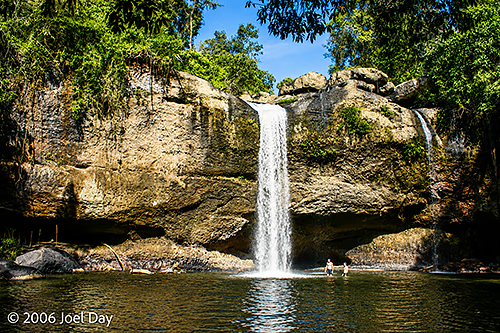
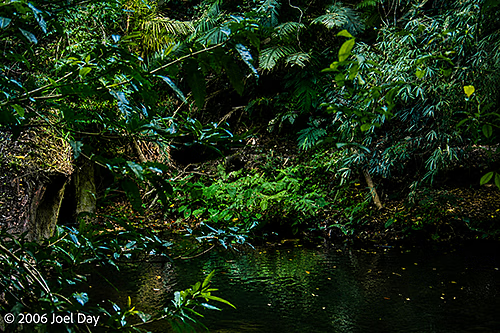
We finally found our way down to a very nice swimming hole next to a beautiful waterfall along a cold mountain stream. Since we had driven up to a fairly high elevation, this water was much colder than anything I have experienced in Thailand — but after hours of hiking through the jungle, it was extremely refreshing to dive in. We had a nice little break, ate a luscious banana-and-rice snack wrapped in banana leaves (picked up from a local shop on the way to the park), jumped off the waterfall cliff, and continued hiking up the river along the elephant track.
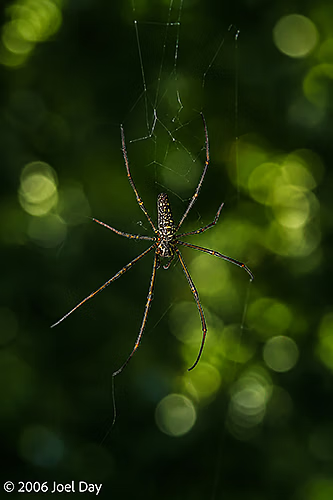
At one point, we found ourselves along the river, surrounded by a cloud of beautifully coloured monarch butterflies in all types of styles and colours. We all just looked at each other in amazement as these thousands of differently colored butterflies gently floated around, swirling amongst us. It turned out to be just a typical jungle scene. It actually seemed very similar to walking through a butterfly house in a zoo, but I had always thought those places were too artificial an environment to be real. I guess they’re actually modelled after their natural jungle habitat.
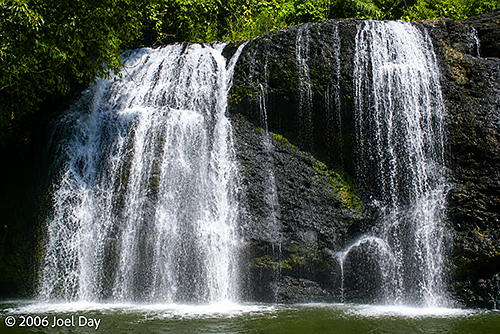
We continued hiking up past two more beautiful waterfalls and refreshing swimming holes, taking a break, some packed lunch, and a dip at each one. The third waterfall we came to happened to be featured in Leonardo DiCaprio’s movie “The Beach” and, as a result, attracted the luxury-coach brigade of overweight tourists. It was at that point our wilderness trek met up with the public again. Guess I’ll have to see “The Beach” sometime. At least on screen. I seem to have visited all the filming locations in various parts of Thailand in person.
One of our last little treks of the day, before nightfall, was along a crocodile-infested river. Or at least that’s what we were told. We didn’t actually see any crocodiles, but we did see plenty of macaques swooping through the trees overhead. Our guides claimed that crocodiles usually sank to the bottom of the river while the macaques were around because they found the monkeys too difficult to deal with.
We did watch the jungle food chain in action for a while along the banks of this river, with macaques feeding on fruit in the treetops and dropping nuts into the river. In the river, a school of fish were poised to attack and gobble up anything that fell in the water near them. The feeding frenzy was like watching piranhas in action. There were LOTS of fish. Which is where the crocodiles come in — although we never did actually see any.
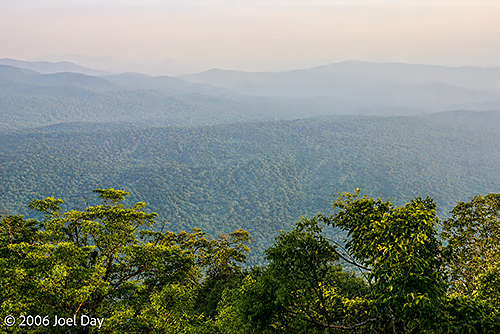
After a bit more driving around the park to check out the mountain peaks and spectacular (but very hazy this time of year) views, we made a bit of an effort to spot some nocturnal wildlife. We were actually all quite cold and tired at this point of the day up on top of the mountain at that hour as we slowly made our way for the exit.
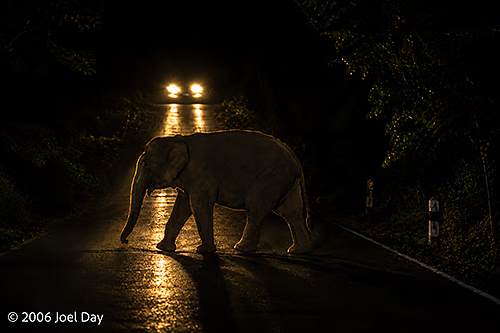
Fortunately, we had one last thrill before leaving the park. After our guides had more or less given up on seeing any more wildlife for the day, our driver slammed on his brakes in the middle of the blackened jungle. A group of huge elephants, some with full tusks, had taken over the road, illuminated by another stopped vehicle facing the opposite direction. Caught between the headlights, it sort of casually went about its business, lumbering back and forth across the road, grabbing vegetation with its trunk. Nobody dared to startle it or upset it in any way, so the traffic kept its distance and just started piling up at either end, patiently waiting for the huge creature to make up its mind as to where it wanted to go. Eventually it made its way back off the road and deep into the jungle growth.
Khao Yai National Park was really a great place. They had plenty of camping and cabin accommodation there. I could have easily spent a few days there. Maybe I’ll go back sometime.
As for tigers? Well, I guess we sort of saw some, but didn’t really. You see, every time one of us would ask our guides about tigers, their eyes would get big and start darting around in an alarmed state. Then they would realise what you said and act annoyed, saying in their broken English, “I thought you said ‘Thai Girls'”. Of course, it worked the other way as well: When we were down by the last waterfall, and a couple of Thai women came down for a swim, they would mention “Thai Girl” to each other, and we would all jump up and get excited thinking they had spotted a tiger.
I was told by one guide that there were only about 15 tigers in the park. In the six years he’d been giving tours, he’d never seen one — but his associate, who had only been conducting tours for a few years, was fortunate enough to spot one once.

I am looking forward to more pictures.