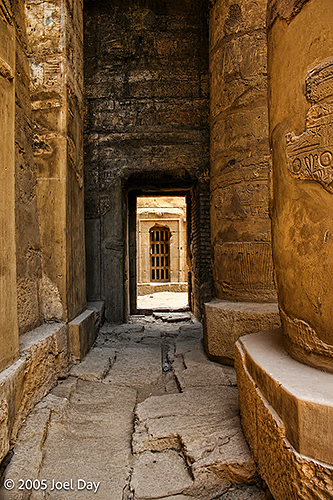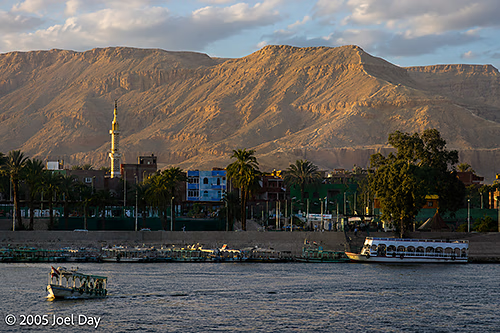
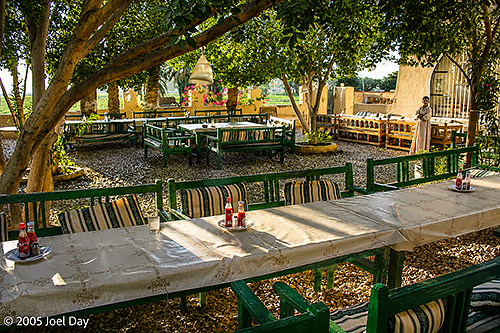
After a long (and mostly sleepless) overnight train ride from Cairo to Luxor (aka Thebes), I hopped into a taxi and made my way to a nice, quiet hotel on the west bank of the Nile River. The hotel was right in the middle of an area full of ancient Egyptian ruins and tombs and farm fields still in use today. Originally built by an archaeologist in the 1920’s, the hotel later became an artists’ retreat. Most people living around this very quiet area are still riding donkeys and working by hand in the fields.
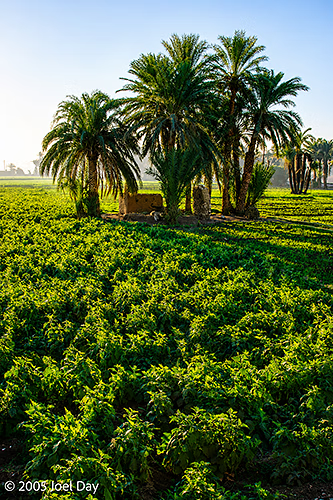
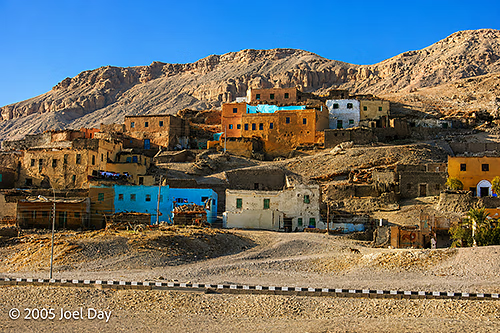
The location was perfect, as it was within walking distance of several famous temples and tombs. And it was so nice to breathe clean desert air again after all the smoking I was forced to do breathing the air in Cairo. It was really nice to be able to easily walk to Medinat Habu (an old temple built by Ramses III, Hatshepsut, and Tuthmosis III—each adding their own bits) and to places like the Valley of the Queens (where Nefertari, Amunherkhepshef, and Khaemwaset were entombed). It was also close to the Ramesseum and the Valley of the Kings (where many of Ramses, Tutankhamun, Tuthmosis III, and others were entombed).
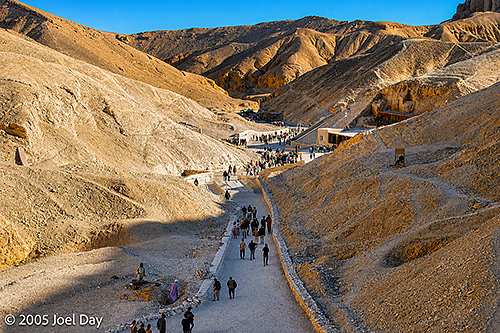
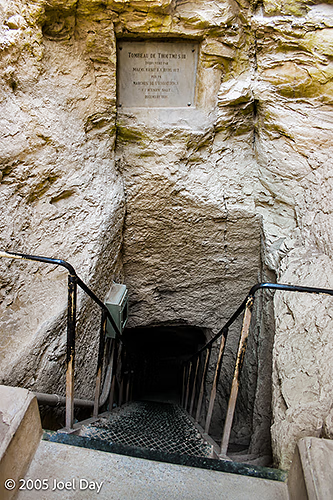
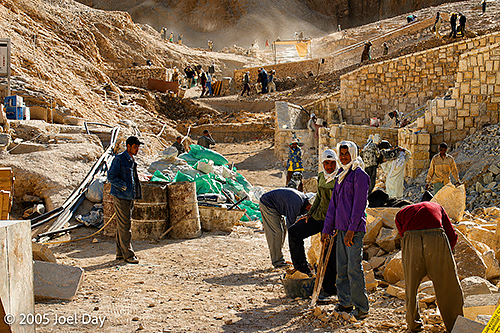
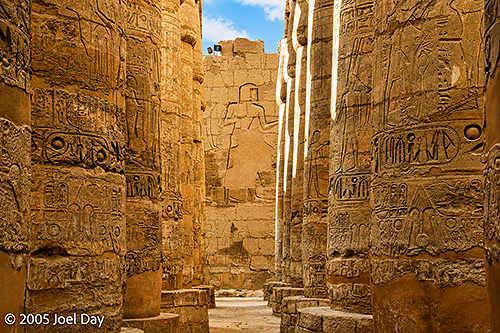
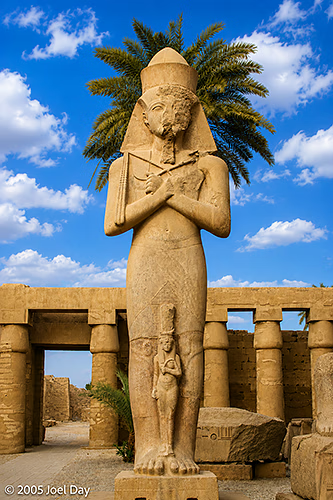
It was really amazing to walk around these old, largely reconstructed temples and through these excavated tombs, seeing the designs and thinking about what it might have been like thousands of years ago. Many of the temples were reconstructed from ruins and excavations, and most still had huge yards full of pieces they hadn’t figured out how to reassemble.
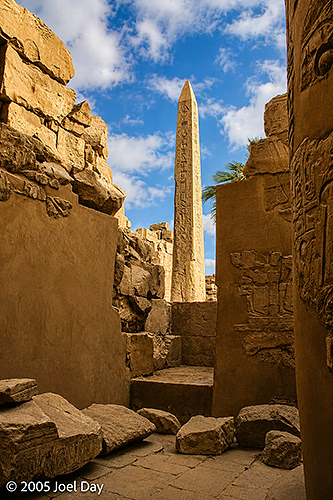
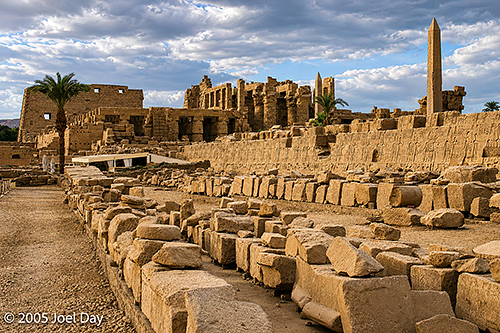
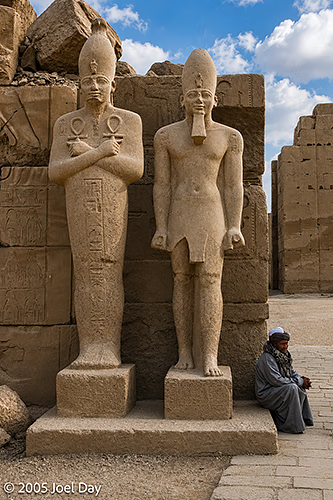
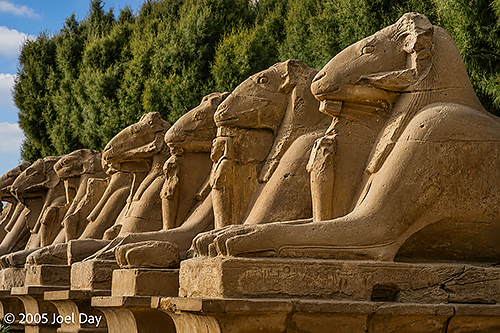
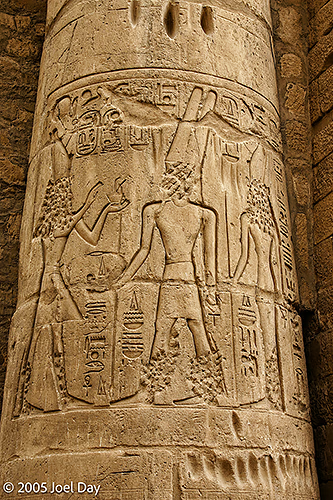
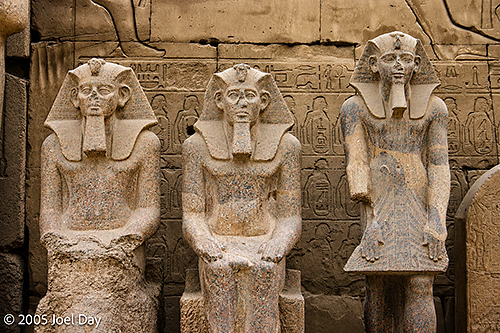
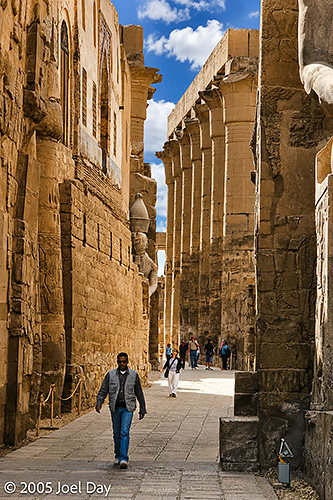
Some temples showed signs of ancient vandalism, in which one king would have the face of a predecessor chiselled out wherever it appeared throughout the temple. Many of the tombs were very well preserved, with bright colours still visible among the hieroglyphs. It was also interesting to try to decipher the message they were conveying through their pictures and symbols. The most amazing temple I toured was the massive Temples of Karnak, which spanned about 1 mile by 1/2 mile, just north of Luxor.