When I travel, I don’t like to be too organised with accommodation reservations. Part of the fun, for me, is letting myself drift to whatever areas interest me. This strategy works well during low-tourist seasons, but it can backfire when the crowds come in. This made travelling through some parts of New Zealand and Australia difficult.
Tourism on the Big Island of Hawaii seemed to be at its low point when I flew in, so I thought I would just wing it with accommodation as I made my way around the island. The only problem with Hawaii is that it doesn’t really cater for backpackers like many countries do, and finding cheap accommodation can get a bit difficult. One of the cheapest ways to spend a night is by camping in the numerous state and county (island) parks. The only problem with camping in Hawaii is that you are expected to know exactly which campsites you want to camp in and commit to specific dates as early as possible. Prices range from $3 for county parks to $5 for state parks.
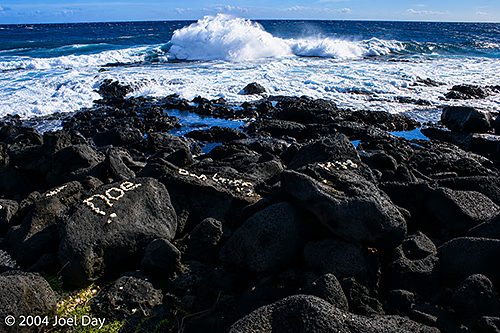
Before I left Hawaiian Volcanoes National Park (where camping was fabulous and free), I made an effort to organise my accommodation for the rest of my stay on the Big Island. This required that I make a trip back to Hilo to visit the state park system offices to make my reservations and pay my dues. I thought I was all squared away and continued on my journey from Hawaiian Volcanoes National Park down around the southern end of the island (where I popped down to see Ka Lae, the very southernmost point in the USA) before dropping off at Manuka State Wayside Park.
Much to my dismay, the Manuka State Wayside Park was a real dive. It was right along the main highway circling the island, and there was a constant stream of drunken locals dropping by to use the restrooms, and there were no other campers in sight. I couldn’t even find where I was supposed to camp in the first place.
A few hours before nightfall, I decided to see what other places I could spend the night at up the west coast (in the direction I was heading). There were very few options listed in my Lonely Planet Guide, and I had a lot of trouble finding them. Some were in seemingly unwelcome neighbourhoods with no one answering their doors; others were just too hard to find. After a long, frantic search, I finally ended up at a sister hostel to the one I stayed at on the east coast in Mountain View. This one was in the town of Captain Cook, which I thought was fitting for me since it’s where the Hawaiians killed the European founder of Australia.
I was expecting a nice hostel due to its association with the Mountain View hostel on the East Coast, but this place was really nothing special. The son of the eccentric woman running the East Coast hostel ran it, and you sure could see the family resemblance. Like many other former mainlanders I’ve met around here in their late fifties, the owner seemed to be an aging hippie who was bitter and cynical about a life spent too long in what was supposed to be paradise. Perhaps he lived there for decades, and his island life didn’t turn out as he had hoped. Nevertheless, I really had no option but to spend the night and avoid his proselytising friend (whom he warned me about when I checked in).
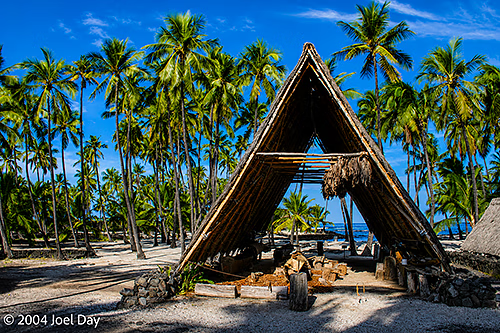
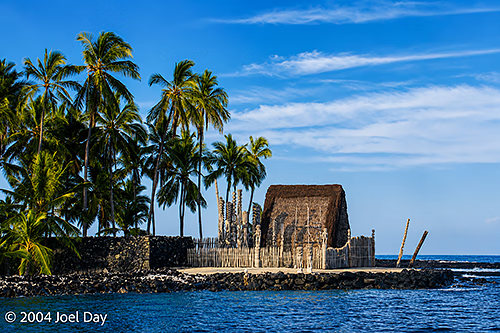
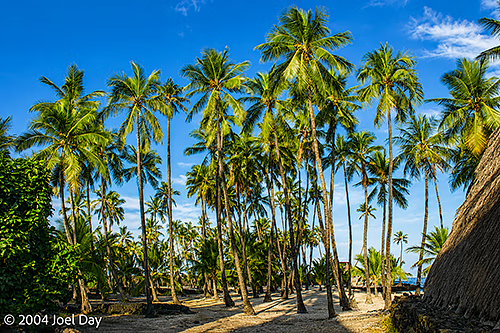
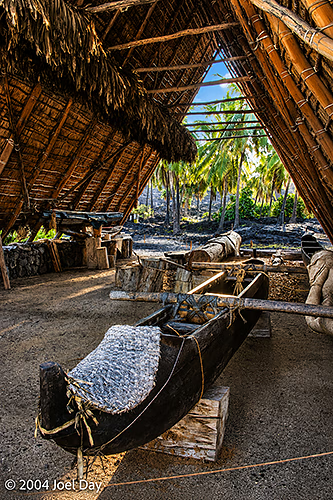
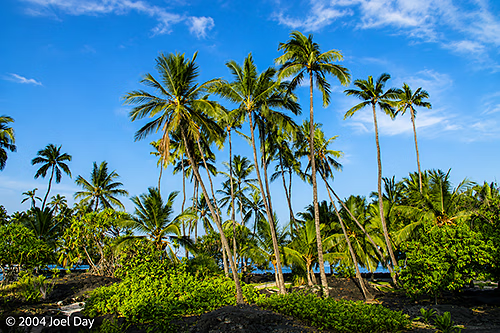
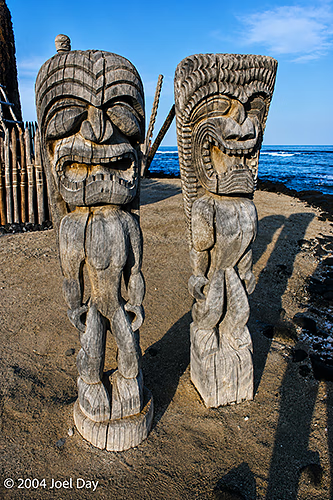
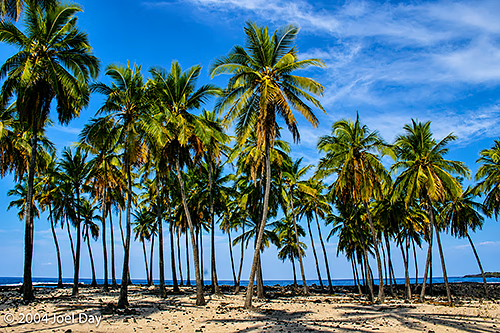
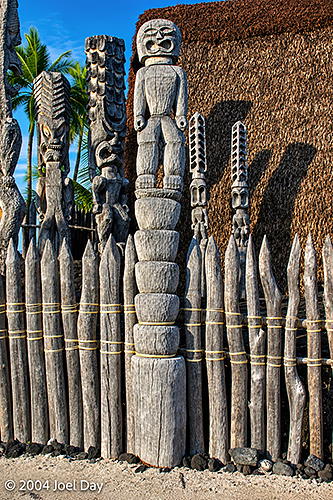
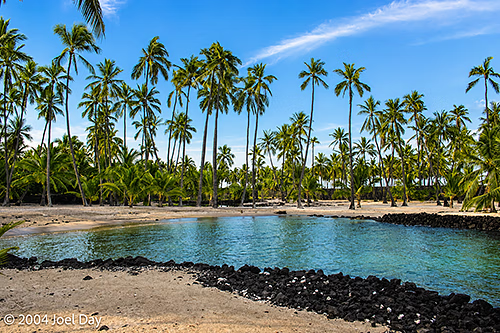
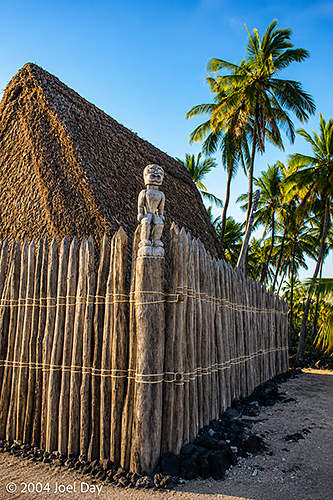
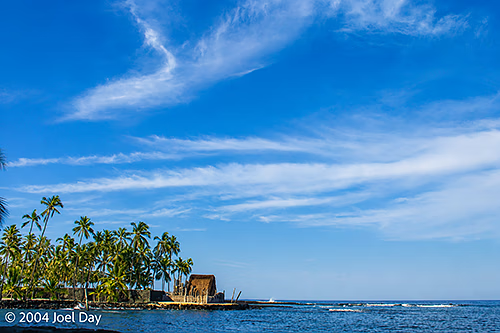
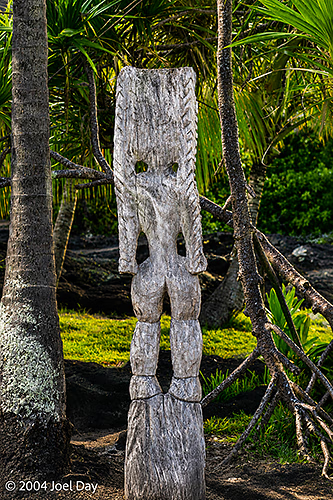
I ducked out early in the morning and headed down to a really cool and beautiful National Historical Park on Hōnaunau Point called Puʻuhonua o Hōnaunau. Like the other National Parks I came across in Hawaii, it was much nicer than the state and county parks. Historically, Puʻuhonua o Hōnaunau was a safe haven where Hawaiians could escape to avoid death sentences. It is also a place where many powerful chiefs of the Hawaiian Islands once lived. It’s yet another place around here that Mark Twain visited and wrote about. The views around Puʻuhonua o Hōnaunau were more along the lines of what people envision the paradise of Hawaii to be like, and less like what it really is.
After spending a few early hours around Puʻuhonua o Hōnaunau, I started to head up north to my next night’s destination: Hapuna Beach.
