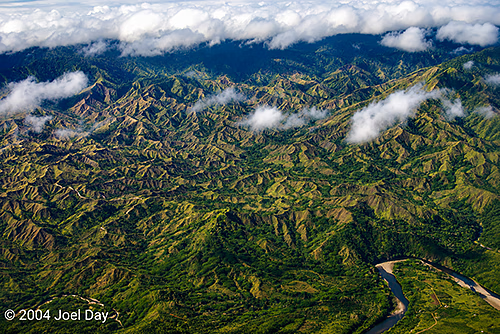
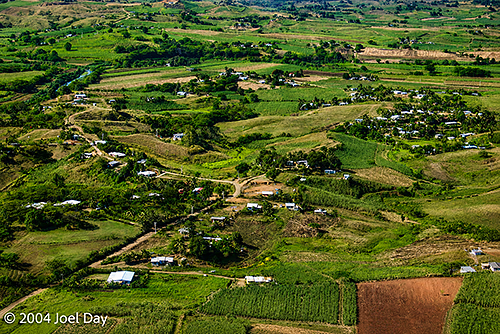
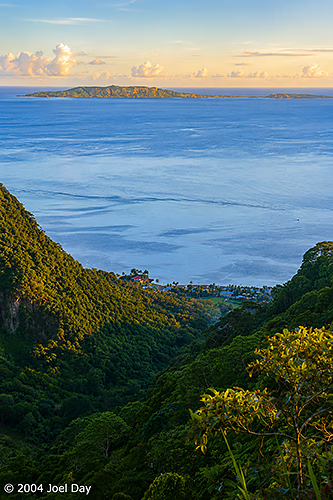
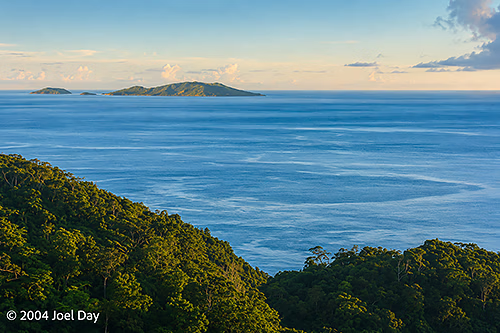
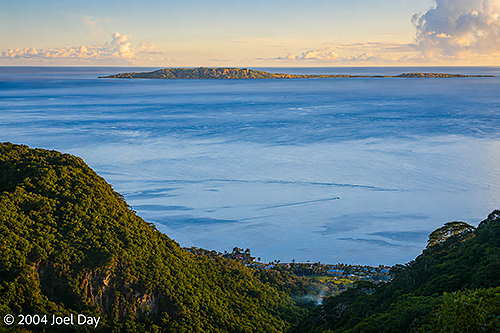
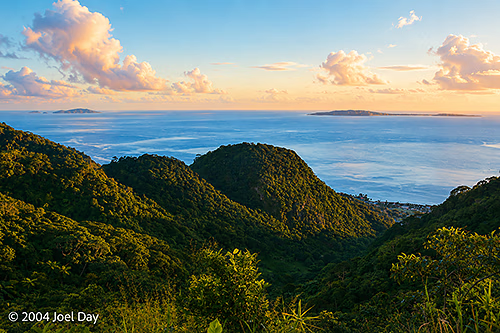
My final week in Fiji was spent in the historic former Fijian capital, Levuka, on the volcanic island of Ovalau, off the east coast of Viti Levu, the largest Fijian island.
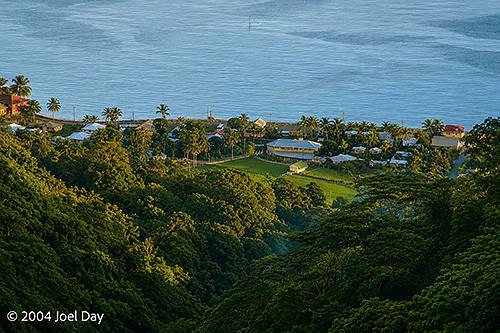
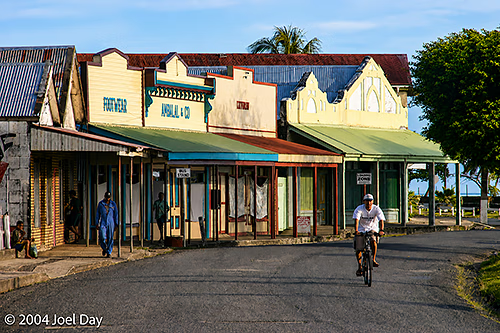
Levuka was the brief capital of Fiji for about 8 years in the 1800’s (just before it moved to Suva), and it continues to resemble a wild west town from that period — with many of the old colonial buildings still intact. Like most of Fiji, the locals were extremely friendly and hospitable, but very poor. It was nice to visit an area where you didn’t have the burden of merchants hawking their wares to you continually (like in Nadi). Nobody hassled you at all over there. Virtually everyone would just give you a big smile when they saw you and say “Bula!” (Fijian for “Cheers!”)
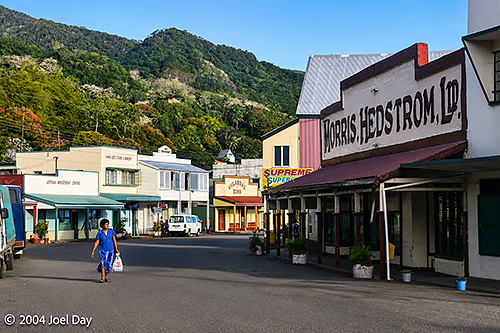
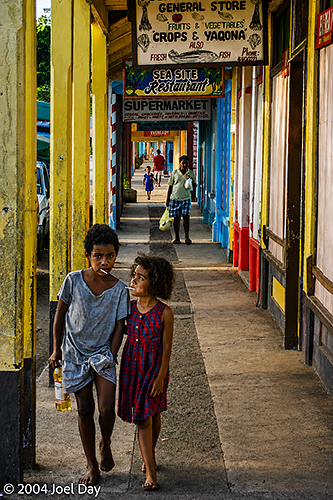
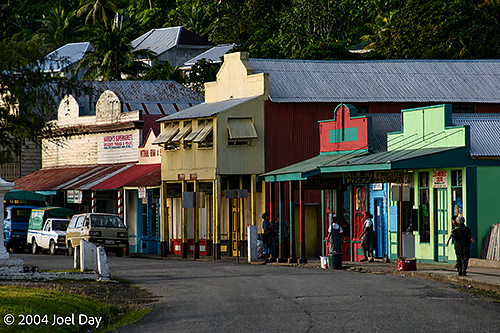
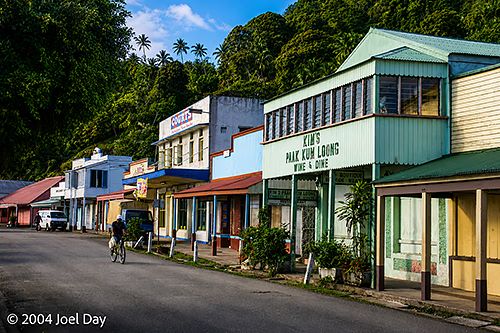
It was an interesting experience to go to the East Coast, away from most of the tourist sites. After spending a few days in a rain forest north of Suva (Fiji’s capital today), I opted to take the cheap route to Lavuka and ride the ferry with the locals to get out on the island. A mere 50-mile route became an arduous six-hour journey in a packed, cramped school-like bus, with everything imaginable sans livestock on board. All on a narrow, dangerous, bumpy road.
I was expecting to be on a ferry for most of the journey, but instead they bused us halfway up the coast for an agonising 3-hour ride to board a short ferry that runs out to the island (on the shortest stretch of sea). We had to wait an additional 2 hours for the ferry to arrive, empty, refuel, and fill up again, and then drive another hour after the ferry ride on a bumpy bus that took us around the perimeter of the island, stopping at each village along the way to drop off the odd passenger. I chose to fly back to Suva this morning to cut the aggravation, and it only took 12 minutes!
I stayed in the South Pacific’s oldest continually used hotel while in Lavuka. It was pretty well preserved from the colonial period in which it was built, and dirt cheap as well. I only paid FJ$20 a night (about US$12). Lavuka was a taste of the real Fiji, but it was also a bit frustrating as a short-term tourist. It was hard to do too many activities because of the lax attitude of many tourism businesses there (often run by Europeans who would just tell you to come back tomorrow).
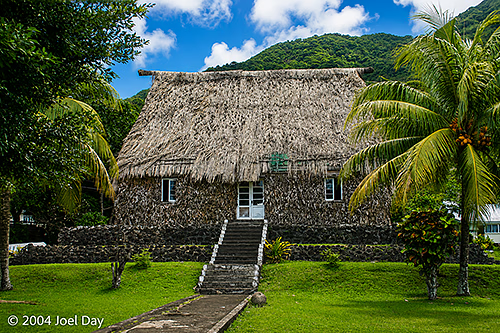
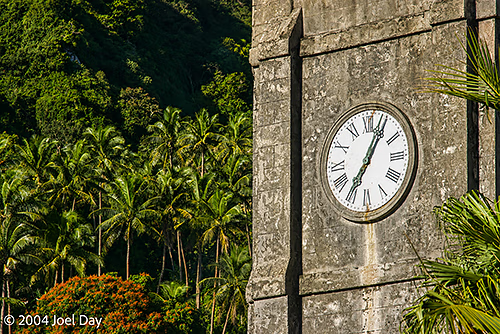
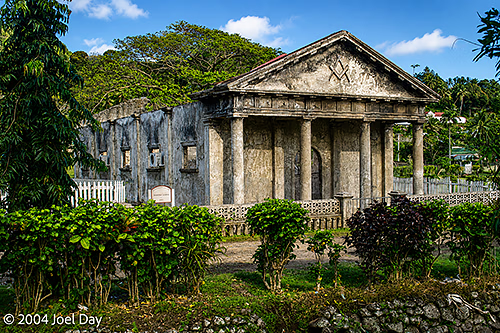
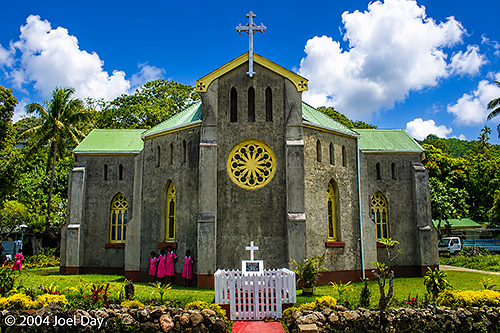
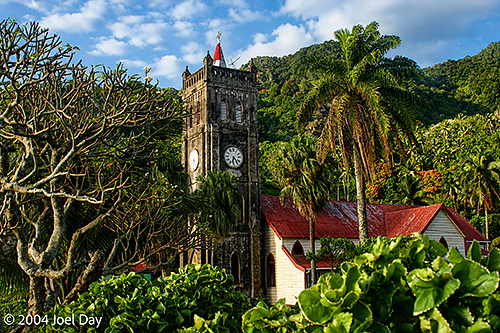
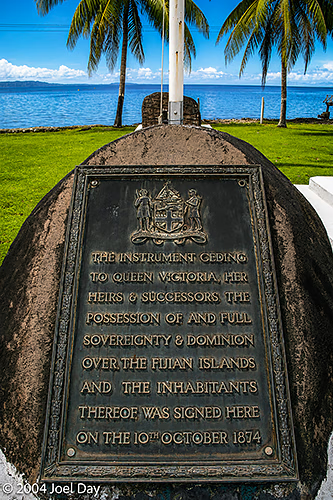
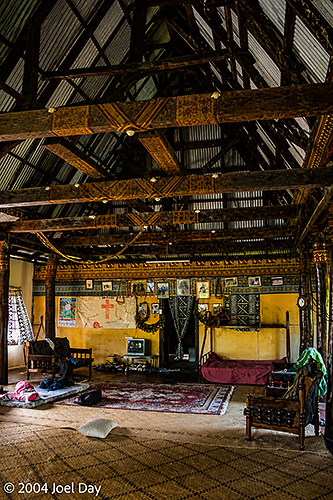
The most memorable excursion out there was probably the visit to the head village of Lovonie (in the centre of the crater in the middle of the island) and the treacherous hike back up over the crater rim and back down into the coastal town of Levuka. The journey was led by a local guide who’s been doing this tour for ten years and involved trekking through dense jungle on an overgrown track. Like every other hike I’ve had in Fiji, the guide had to rely on a machete to hack through overgrown jungle throughout the hike. There were only three of us doing the hike that day, and the guide explained to us that he usually cancels if there are fewer than four — but agreed to take us for the hike if we agreed to take public transportation (the back of a truck) to his village for the included traditional lunch and storytelling.
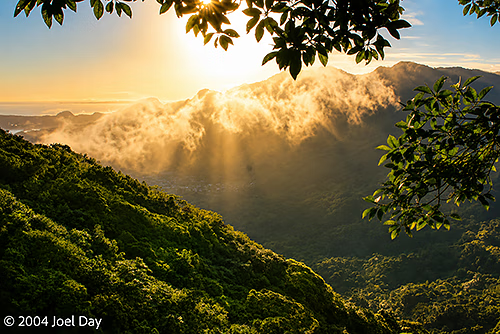
The only problem was that the delay caused by relying on public transportation forced us to start late. In addition, the three of us chose to do a more strenuous, longer trail that our guide hadn’t used in months. As it turned out, we reached the peak at sunset and ended up hiking down through the dense jungle in the pitch-black. The trail was quite treacherous (especially at night), and I was sure at times we were going to have to sleep out up there in the jungle that night — but our guide came through and built torches from dried banana leaves to illuminate our way through the pitch-black, dense vegetation. He was quite embarrassed about the whole affair and keen to sneak back into town without letting the locals know what had happened. He kept trying to buy us dinner and beer afterwards to make up for it.
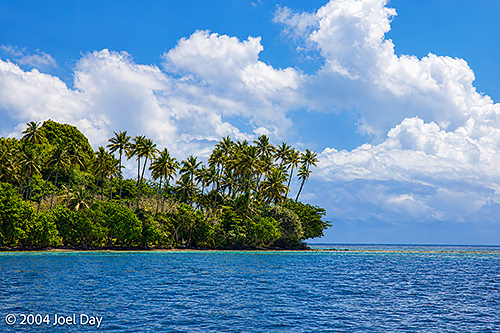
I also managed to get a bit of cycling around part of the island’s perimeter (where the only road runs) and do a bit of snorkelling off the coast. The snorkelling was quite good with lots of colourful tropical fish and coral — when you got away from the polluted villages. The locals seemed a bit baffled at what the tourists got up to: Snorkelling? Why would people do that? We use the ocean to fish, but otherwise just throw our trash in there. Adults on bicycles? A scene that makes the local children point and laugh.
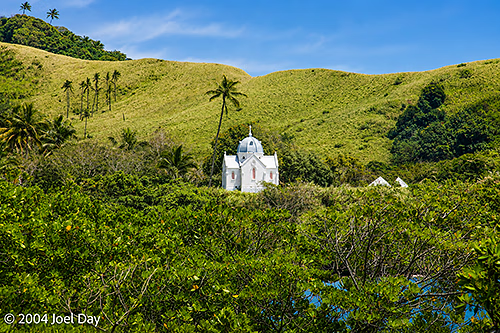
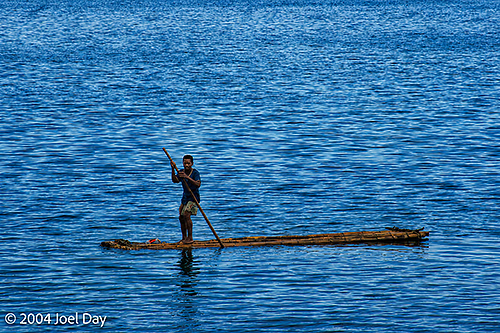
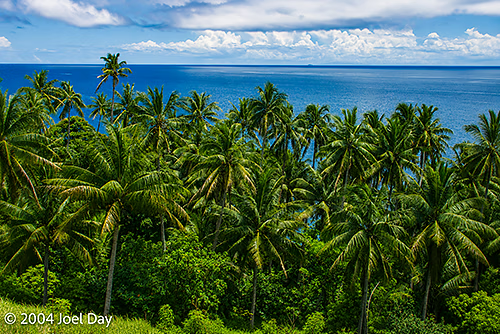
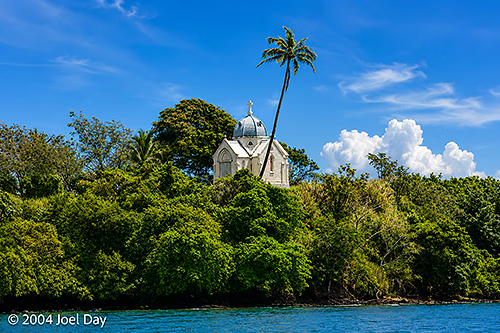
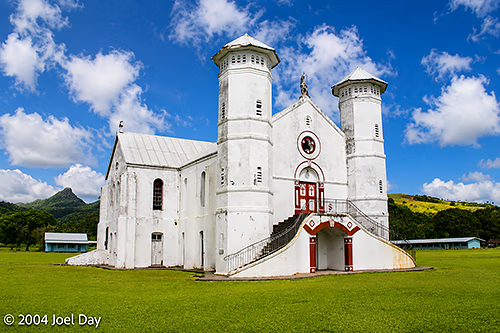
Fijians consider it rude to just rock up to a village without an invitation. You are supposed to ask to see the village chief when you arrive in a village and give them a gift, like Kava, in exchange for passage through the area. Needless to say, it gets a bit awkward trying to explore very far because you’re always stumbling across villages, and it’s time-consuming to continually have to meet with the chief to ask for permission. As I’ve said before, the people in the villages are very friendly, but very poor. Most homes are hot tin shacks with no furniture. Entertaining is done by sitting on woven mats on the floor. And despite this lack of wealth, they will offer you their food — which you are really expected to accept.
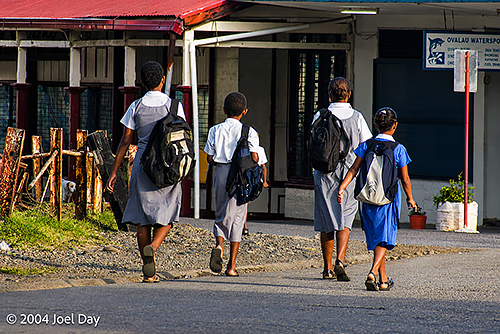
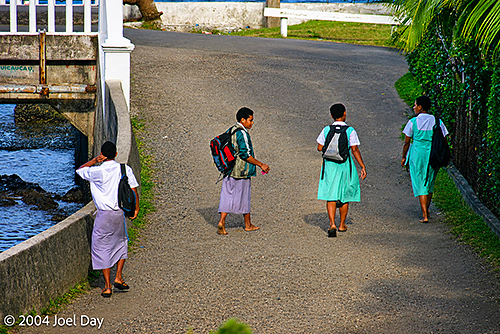
Unfortunately, many villages are not the most sanitary, so you really have to be careful with their generosity. While the water is safe in the resort areas and big cities of Suva and Nadi, it is not safe in these small villages. I had to keep pointing to my Fiji water bottle every time someone tried to offer me water while I cycled through their villages, to avoid drinking their local water (and getting sick).
It was quite distressing to see how the locals regarded their beautiful ocean and reefs. I can’t tell you how many times I saw Levukians bundle up big bags of trash and just throw them into the ocean. The coast along the villages and towns was littered with trash. There were also plenty of other serious health concerns around the area. I spent some time with a retired American public health worker who pointed out all kinds of problems to me, including lots of raw sewage draining untreated into the sea and half the kids running around with ringworm (which you can evidently see as a fungus growing on their forearms). I think the place’s sanitation caught up with me yesterday, when I came down with a bad bout of food poisoning and couldn’t get out of bed for most of the day.
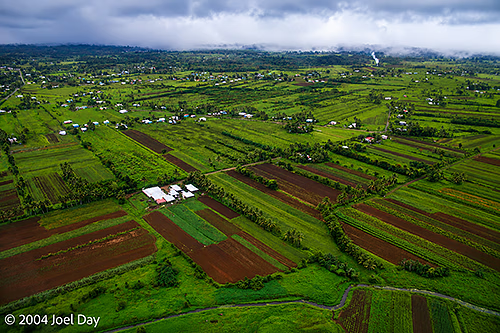
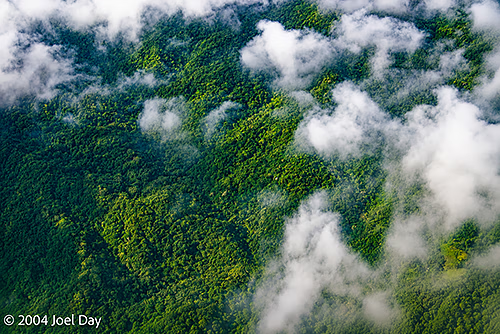
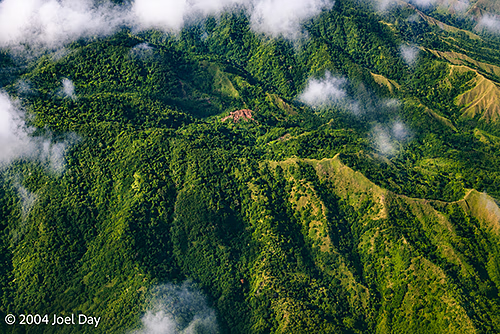
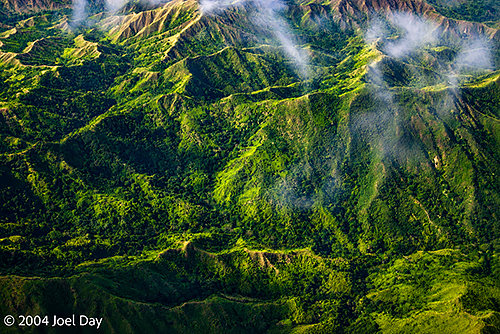
Here are some photos from the flights I took from a jungle mountain airstrip on Ovalau Island to Suva, and then on to Nadi: