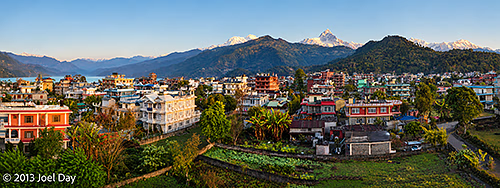
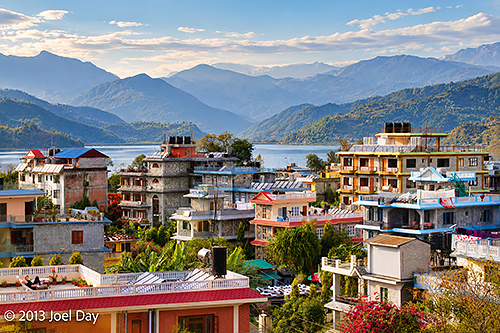
Early morning panoramic view across Pokhara, Nepal, showing colourful residential buildings, lush green gardens and surrounding forested hills, with the snow-capped Annapurna Himalaya visible in the distance
After an early morning rise, I started my five-day Annapurna Circuit trek with my guide/porter. He offered to carry my bag if I’d carry his much lighter one. Sounded good to me! We swap from time to time, but he seems happy to carry mine. He’s guessing it’s about 13 kilos, which really isn’t that bad – but his bag is only about 5 kilos.
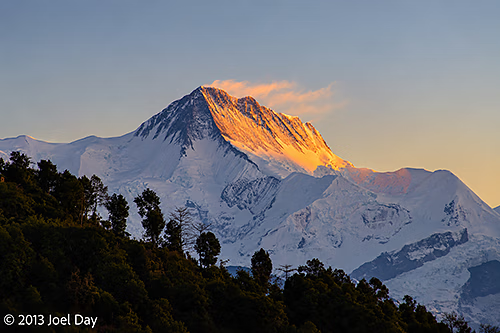
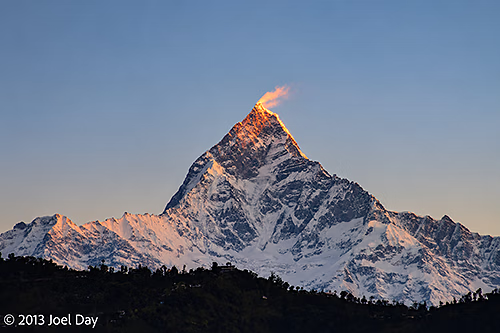
The first rays of the morning sun illuminate the snow-covered slopes of Annapurna South (7,219 m), Annapurna Himalaya, viewed from Pokhara, NepalThe first rays of the morning sun illuminating the summit of Machhapuchhre (Fishtail Mountain, 6,993 m), Annapurna Himalaya, viewed from Pokhara, Nepal
Today is the first really clear day I’ve seen in Nepal since I got here. Last night’s thunderstorms seemed to clear the skies. It was very nice to wake up this morning and see all the snow-capped mountains from my hotel room.
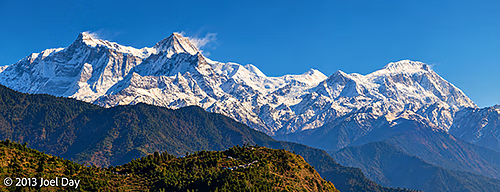
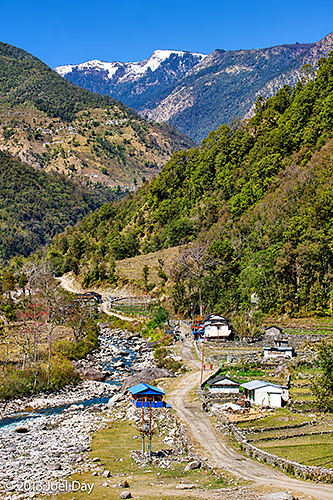
Early morning panoramic view of the snow-capped Annapurna massif, including Annapurna South (7,219 m) and Hiunchuli (6,441 m), rising above the forested Himalayan foothills near Pokhara, NepalA rocky mountain stream flows through a picturesque Himalayan valley, with a winding dirt road, scattered rural buildings and terraced farmland along the beginning of the Annapurna Circuit trekking route, Nepal
So far, the hike has involved a lot of climbing, but it’s been very tolerable with someone carrying my pack. The trail started as a dirt road, but became more of a mule track as we gained elevation. There are nice guesthouses all along the trail with comfortable mattresses, squat toilets, hot showers, meals, and electricity. So far, we have passed mostly terraced farm plots used for rice in summer and other crops like wheat and vegetables at other times of the year.
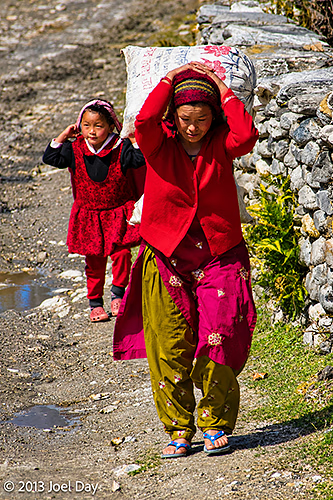
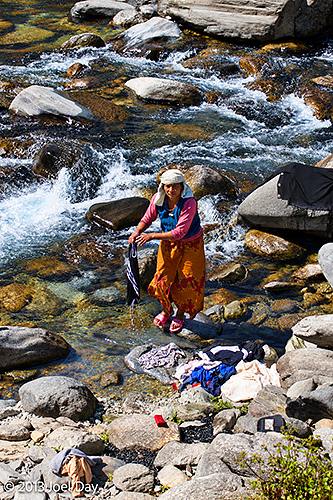
A Nepalese woman carries a heavy sack on her head along a rocky village path, followed by a young girl, near the beginning of the Annapurna Circuit trekking route, NepalA Nepalese woman washes clothes in the clear, fast-flowing waters of a rocky mountain stream near the beginning of the Annapurna Circuit trekking route, Nepal
My guide has been very nice, bright, and a good English speaker. He is from the country where his parents still live, but now lives in Kathmandu with his own family. He guides people regularly on the circuit I’m on, as well as on a more difficult, higher-altitude trek to Everest Base Camp. Today we climbed from about 800 meters to 1550 meters, taking the first few kilometres by taxi out of Pokhara and up to the Annapurna trailhead.
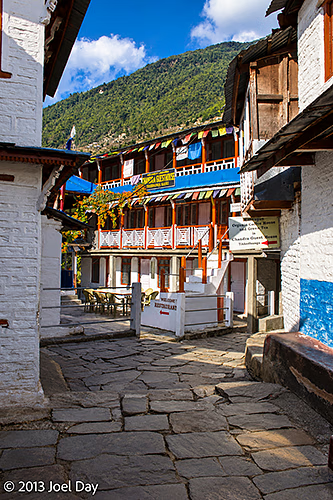
22Traditional Nepalese guesthouses with colourful wooden balconies surrounding a stone-paved courtyard in a Himalayan village along the Annapurna Circuit trekking route, Nepal
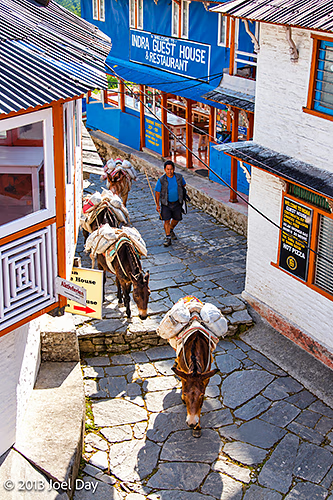
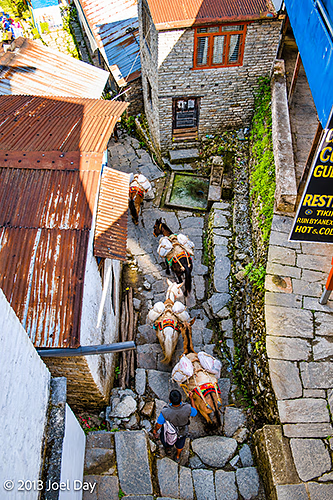
My guide resting amongst traditional Nepalese guesthouses with colourful wooden balconies surrounding a stone-paved courtyard in a Himalayan village along the Annapurna Circuit trekking route, NepalA caravan of pack mules carrying supplies along a narrow, stone-paved street lined with traditional guesthouses in a Himalayan village on the Annapurna Circuit trekking route, Nepal
Day 1 Hike of the Annapurna Circuit
Map of the route “Annapurna Trek Day 1”: 10,576 m, 585 m of climbing and 112 m of descent, elevation between 1,026 m and 1,531 m, time 03:44:54. It starts at 28.29621, 83.76791 and ends at 28.34913, 83.74099 (latitude, longitude).
In the evening, the guides got together for a private dinner, but only after making sure their clients received their dinners, had all their questions answered, and had their needs addressed. I ended up eating and talking with a young American engineer from Minneapolis, working in India for six months, and his travelling companion from the UK, who met for the first time in Kathmandu a few days earlier.
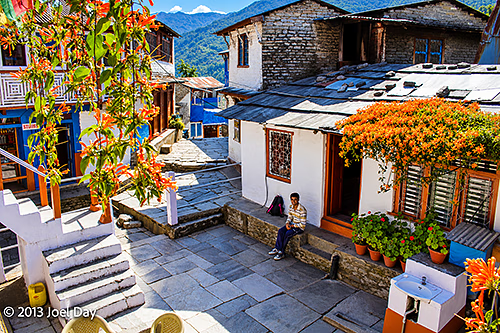
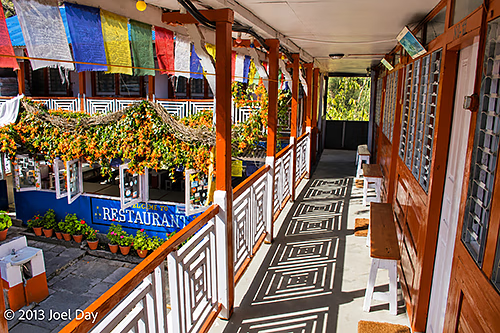
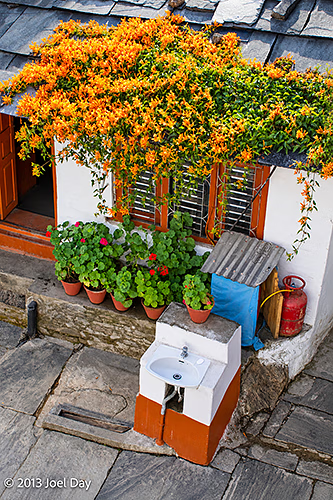
A caravan of pack mules carrying supplies along a narrow, stone-paved street lined with traditional guesthouses in a Himalayan village on the Annapurna Circuit trekking route, NepalColourful Buddhist prayer flags hang above the sunlit wooden balcony of a traditional guesthouse overlooking a restaurant courtyard along the Annapurna Circuit trekking route, NepalA colourful flowering vine cascades over the windows of a traditional stone-roofed guesthouse, with potted geraniums and an outdoor washbasin in the courtyard along the Annapurna Circuit trekking route, Nepal
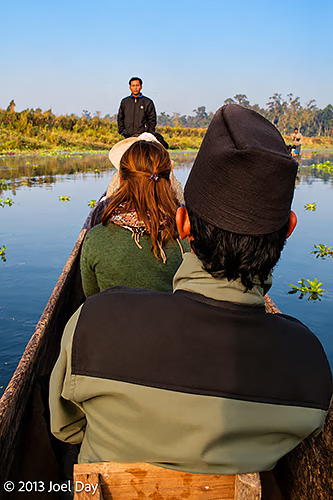
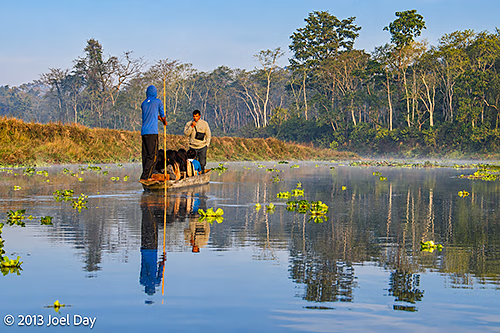
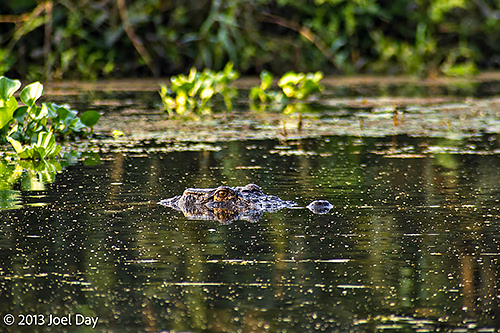
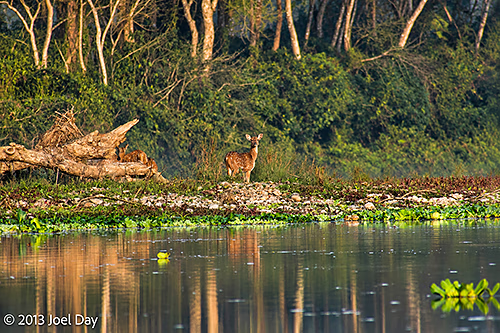
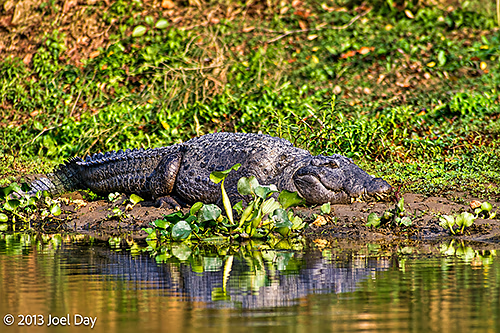
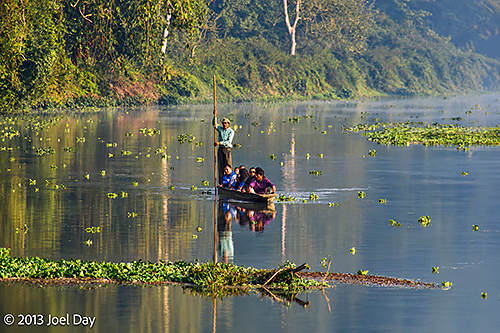
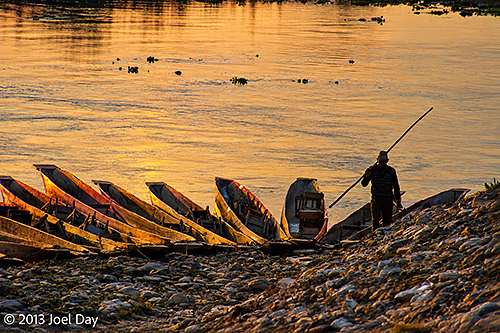
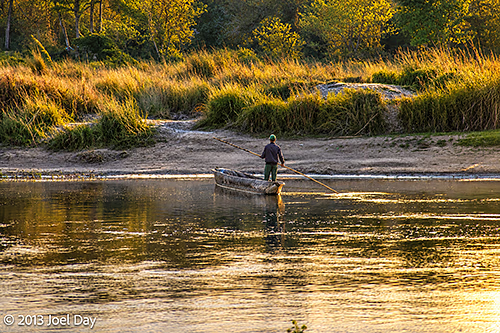
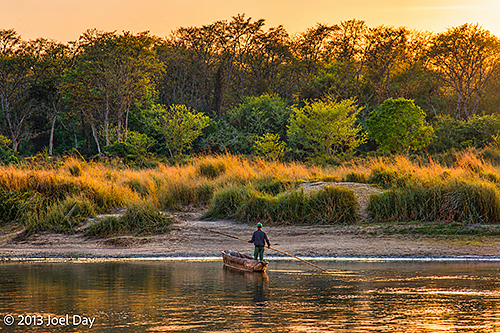
On my last morning near Chitwan National Park, my hotel had me up extra early for a sunrise dugout-canoe cruise on a crocodile-infested river. How charming! Actually, it was incredibly beautiful, and we passed about 5-6 crocodiles along the way, lurking just below the surface or sunning themselves along the banks. Yes, they were dangerous, but no tourists have ever been bitten. We also saw quite a few deer down by the river for an early-morning drink. It wasn’t hard work. We just sat there while a man with a pole, Venice-style, guided our boat down the river’s proper channels.
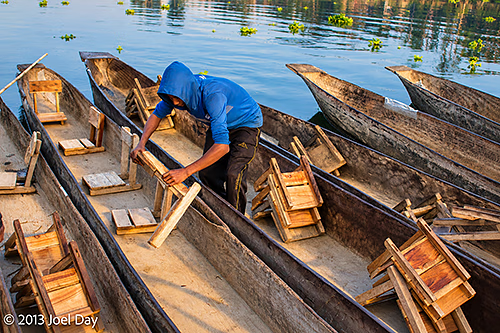
Arranging the Deck Chairs on the Titanic, or at least a Traditional Dugout Canoe on the Ladhari River – Near Chitwan National Park, NepalTraditional Dugout Canoe on the Ladhari River – Near Chitwan National Park, NepalTraditional Dugout Canoe on the Ladhari River – Near Chitwan National Park, Nepal
Canoeing with Crocodiles Safari
Map of the route “Canoeing with Crocodiles”: 5,629 m, 30 m of climbing and 37 m of descent, elevation between 238 m and 248 m, time 02:07:31. It starts at 27.59464, 84.48093 and ends at 27.58347, 84.46653 (latitude, longitude).
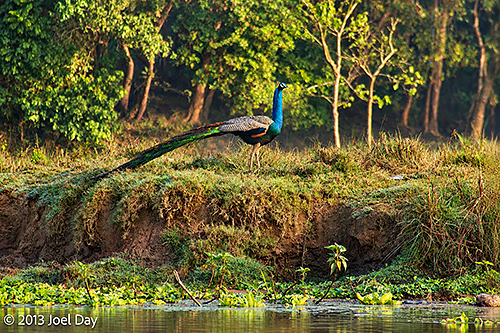
Mugger Crocodile (Crocodylus palustris) Partially Submerged in the Ladhari River, near Chitwan National Park, NepalMale Indian Peafowl (Pavo cristatus) Walking Along the Banks of the Ladhari River, near Chitwan National Park, NepalSpotted Deer (Axis axis) Standing on the Banks of the Ladhari River, near Chitwan National Park, NepalMugger Crocodile (Crocodylus palustris) Resting on the Banks of the Ladhari River, near Chitwan National Park, Nepal
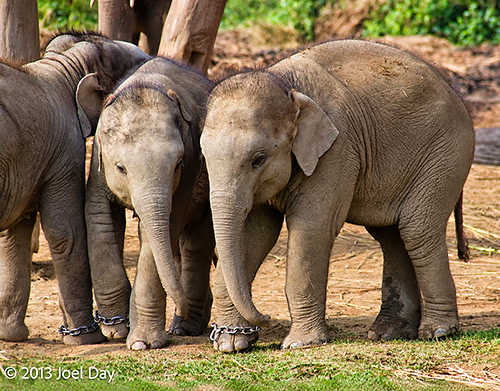
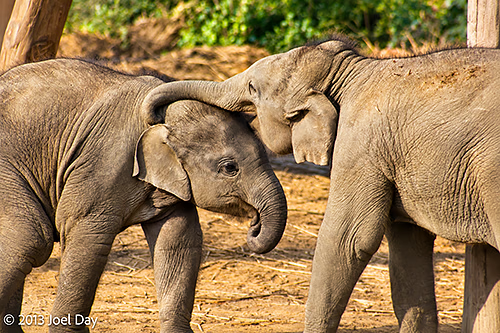
Afterwards, we ended up at an elephant breeding centre…
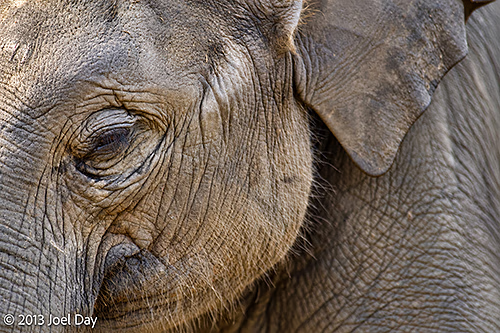
Young Asian Elephant (Elephas maximus) at the Khorsor Elephant Breeding Centre, near Sauraha, next to Chitwan National Park, Nepal.Young Asian Elephants (Elephas maximus) at the Khorsor Elephant Breeding Centre, near Sauraha, next to Chitwan National Park, Nepal.Young Asian Elephants (Elephas maximus) at the Khorsor Elephant Breeding Centre, near Sauraha, next to Chitwan National Park, Nepal.
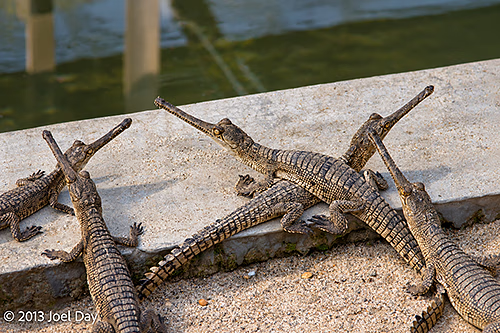
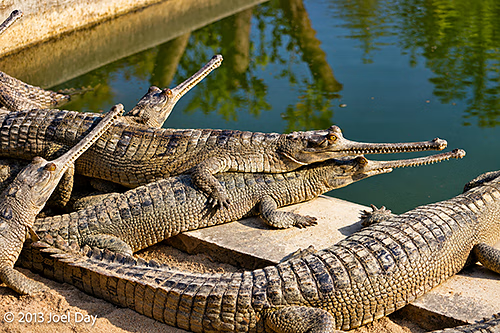
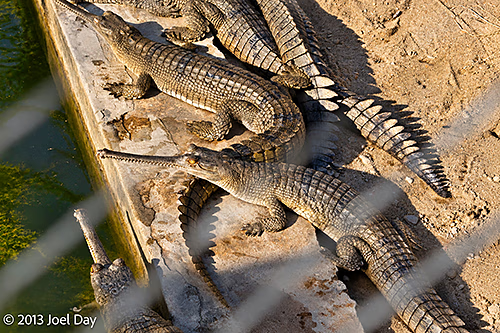
…much like the crocodile breeding centre we visited a day earlier on our jeep safari.
Juvenile Gharials (Gavialis gangeticus) at a Crocodile Breeding Centre near Chitwan National Park, NepalJuvenile Gharials (Gavialis gangeticus) at a Crocodile Breeding Centre near Chitwan National Park, NepalJuvenile Gharials (Gavialis gangeticus) at a Crocodile Breeding Centre near Chitwan National Park, Nepal
I enjoyed my stay in Chitwan, and I appreciated the red-carpet treatment from all the staff at my desperate hotel, but I was looking forward to getting away from all the attention. I was also getting sick of being overstuffed with food three times a day, as if I had to eat it all so as not to insult my hosts. They seemed to serve me the same thing every day, just in slightly different variations. I had chicken for every meal (except breakfast), and I suspect they bought one for me and carved a little off for each meal, mixing it with the same ingredients in different ways. The meals also seemed to get a little more westernised as we went, with chips thrown in, which wasn’t their forte and wasn’t what I wanted.
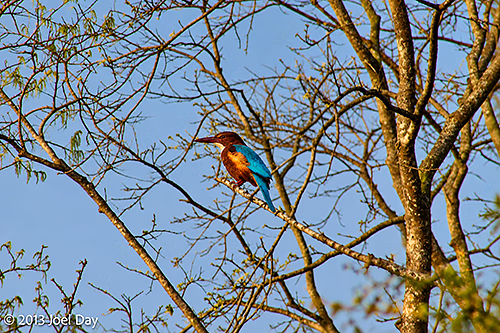
White-throated Kingfisher (Halcyon smyrnensis) Perched in a Tree Along the Ladhari River, near Chitwan National Park, Nepal
I also grew a bit wary of nighttime mosquito attacks. For the life of me, I couldn’t figure out how they were getting into my room, but they were constantly buzzing my ears to keep me away. It is malaria country, I was told back in Perth by my travel doctor, so I have been taking my expensive medication – but there are also other nasty illnesses that come from mosquitoes that I would rather not have anything to do with. I put up a mosquito net one night, but it wasn’t set up correctly without a hook in the ceiling, and the bed was too big for it, so I couldn’t be bothered to mess around with it the second night.
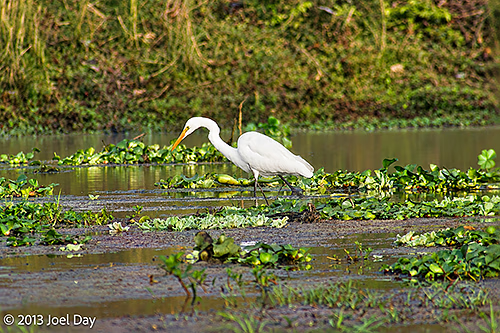
Great Egret (Ardea alba) Wading Among Aquatic Vegetation Along the Ladhari River, near Chitwan National Park, Nepal
Speaking of food, I’ve grown fond of one particular Nepali delicacy: Masala Tea. It is a blend of tea, cinnamon, and a few other spices (coriander?) blended with milk and sugar. I’ll have to figure out how they make it.
Traditional Dugout Canoe on the Ladhari River – Near Chitwan National Park, Nepal
After my crocodile canoeing, my driver dutifully showed up to take me on another wild drive up to my next destination (seen below). This time to the central Nepali city of Pokhara. Pokhara is a backpacker’s haven and gateway to countless outdoor adventures in the middle of the country – including my trek along part of the Annapurna Circuit.
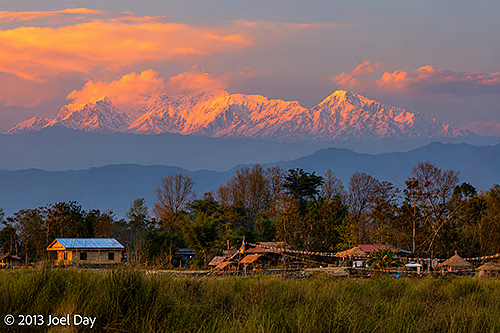
Sunset over the Snow-Capped Himalayas – Viewed from Chitwan National Park area in Nepal
It was a crazy drive, and my driver seemed a bit more aggressive than he was on the drive he did for me a few days ago. It was probably my fault for pushing back our departure time so I could go canoeing in the morning. I think it messed up his plans to get back to Kathmandu before dark.
Fortunately, when I arrived safe and sound in Pokhara at the sister guesthouse to my Kathmandu stay, they gave me their very best room on the top floor, with spectacular views over the city and lake district, and huge mountains looming in the background. It is probably the highest hotel in town, so it looks down on everything else. Hopefully they will have a similar room waiting for me when I get back from my hike!
Room overlooking Pokhara, Nepal
The Drive from Chitwan National Park to Pokhara, Nepal
Map of the route “Canoeing with Crocodiles”: 138,841 m, 1,466 m of climbing and 851 m of descent, elevation between 186 m and 834 m, time 03:37:37. It starts at 27.58219, 84.49425 and ends at 28.20901, 83.96011 (latitude, longitude).
Poke Around Pokhara
Map of the route “Canoeing with Crocodiles”: 753 m, 10 m of climbing and 5 m of descent, elevation between 886 m and 890 m, time 00:10:27. It is a loop that starts and ends at 28.20928, 83.95774 (latitude, longitude).
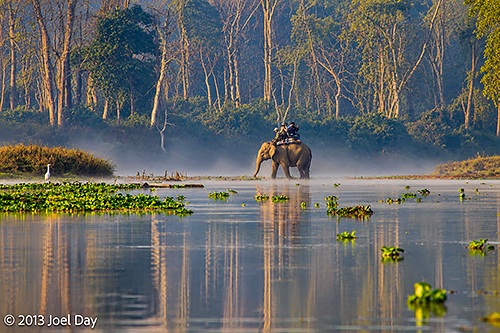
Asian Elephant (Elephas maximus) Carrying Riders Across the Ladhari River – Near Chitwan National Park, Nepal
Woke this morning to the smell of a burning spliff drifting from a nearby farmer’s field. Perhaps he was just burning off a crop in the cool, damp early morning hours. Today was safari day, and first up after breakfast was the safari-on-an-elephant’s-back safari. I have been on the back of an elephant’s back before and know two things:
It’s not the most comfortable experience, continually rocking back and forth and side to side, and
It is not very ideal for trying to take pictures and change lenses with big, bulky cameras.
I reluctantly agreed to do the elephant ride as long as I could also do a jeep ride when I negotiated my tour with my Kathmandu hotel manager.
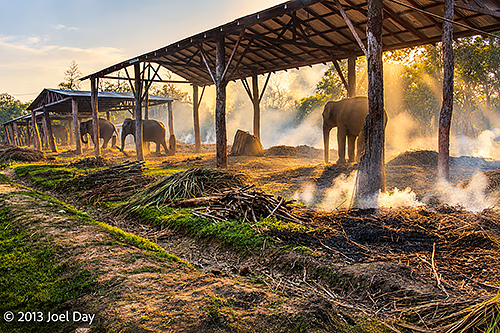
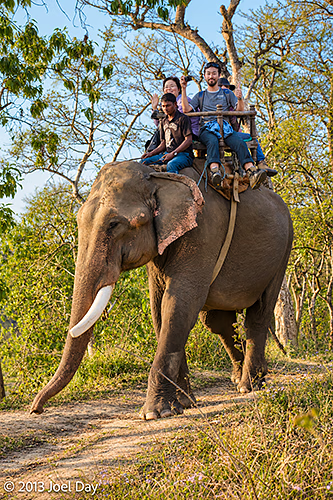
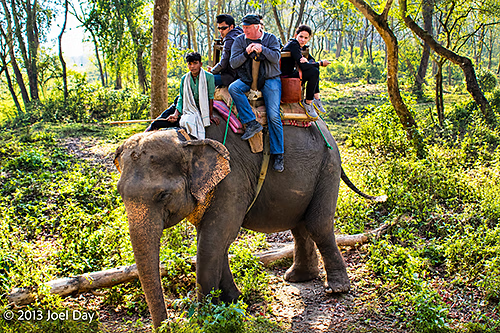
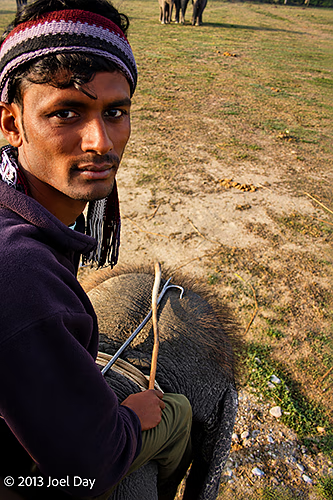
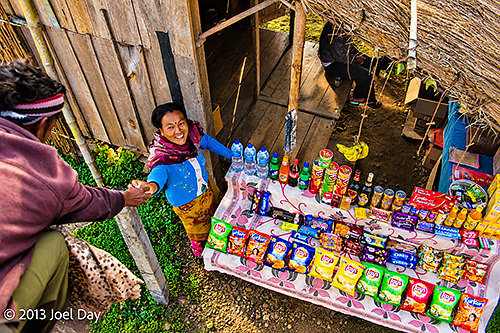
Elephant Stables at Sunset – Near Sauraha, Chitwan, NepalElephant Safari on a Male Asian Elephant – Near Sauraha, Chitwan, NepalElephant Safari on a Male Asian Elephant – Near Sauraha, Chitwan, NepalElephant Mahout Riding an Asian Elephant (Elephas maximus) – Near Chitwan National Park, NepalElephant Safari Snack Shop from the back of a male Asian Elephant – Near Sauraha, Chitwan, Nepal
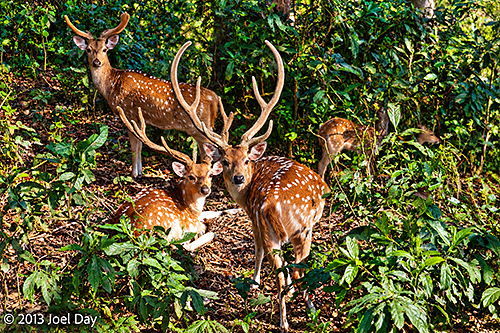
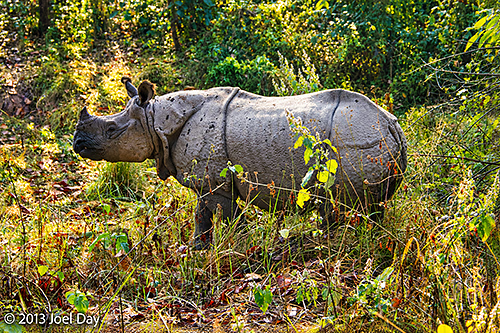
As it turned out, it was actually a really good way to see the wildlife. We weren’t permitted inside the national park, but we could explore trails in the surrounding buffer zone. Because elephants are native to the area, the other wildlife didn’t seem to flinch when we approached. I’m not even sure they knew humans were on the elephants’ backs! I got very close to a wide range of native wild animals, including a big adult rhino and lots of deer, just chilling out in the shelter of the forest.
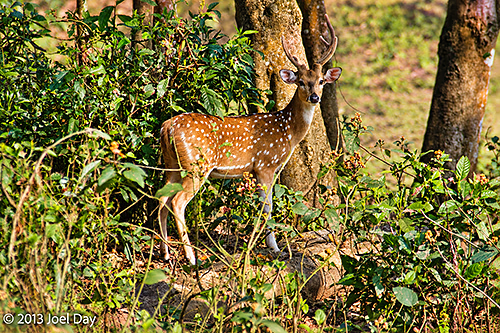
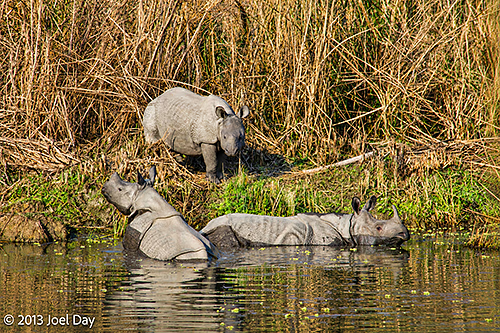
Spotted Deer (Chital, Axis axis) – Chitwan National Park, NepalGreater One-Horned Rhinoceros (Rhinoceros unicornis) – Chitwan National Park, Nepal
Elephant Safari Walk
Map of the route “Safari City”: 3,185 m, 18 m of climbing and 23 m of descent, elevation between 180 m and 187 m, time 01:33:13. It is a loop that starts and ends at 27.59412, 84.48109 (latitude, longitude).
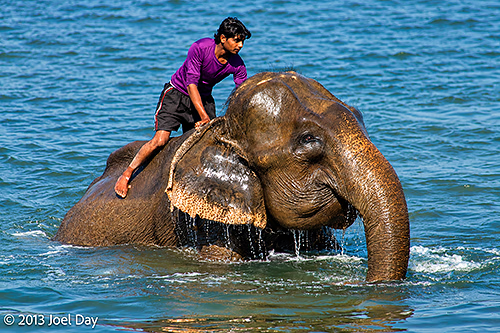
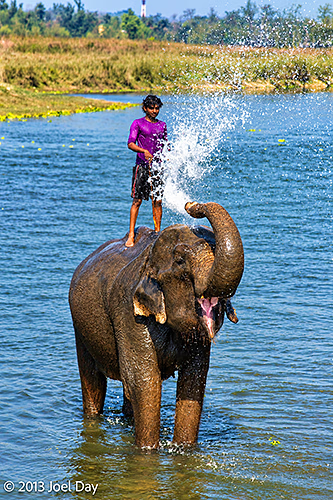
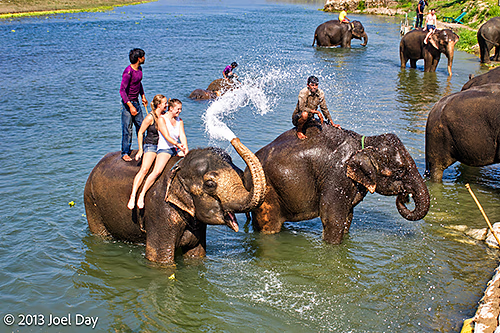
Afterwards, I was taken to where the elephants are rewarded for slugging 5 people around on their backs for 2 hours: a bath. They love water, so they walk them down to the river to drink countless gallons, spray, and submerge themselves to cool off and clean up. They let tourists stand on the elephants’ backs for the experience of getting a good-luck nostril spray, but I declined, not knowing how clean or sanitary the river was, or how sanitary it was to have elephant snot fired at you.
Asian Elephant (Elephas maximus) Being Bathed by a Mahout – Rapti River, Near Chitwan National Park, NepalAsian Elephant (Elephas maximus) Spraying Water During Bathing – Rapti River, Near Chitwan National Park, NepalAsian Elephant (Elephas maximus) Spraying Water During Bathing – Rapti River, Near Chitwan National Park, Nepal
In the afternoon, I headed out for a jeep-based safari that actually went into the national park for four hours. The safari required us to paddle across a river in dugout canoes to reach the cheap Indian Tata vehicles.
Traditional Dugout Canoes on the Rapti River at Sunset – Near Sauraha, Chitwan, NepalTraditional Dugout Canoe on the Rapti River at Sunset – Near Sauraha, Chitwan, Nepal
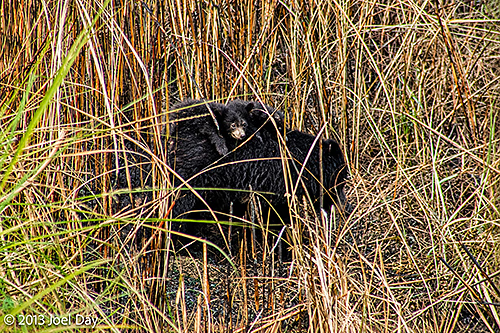
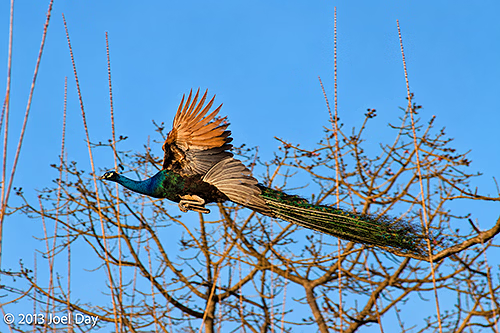
Unlike my solo safari in Sri Lanka, I shared the vehicle with six others, though they were all very nice and as interested as I was. British, New Zealanders, and Germans were on board. At first we weren’t having much luck, possibly because it was a warmer-than-average mid-February day, but as we headed back and things cooled off, we saw all kinds of great things. There were several rhinos, an Asian bison, an Asian bear with two cubs on her back, countless deer, wild boars, numerous peacocks, lots of crocodiles, several monkeys, but no tigers! The tigers are supposed to be pretty rare, but just over the border in India, there are quite a few. All in all, I’d say it was a very good day.
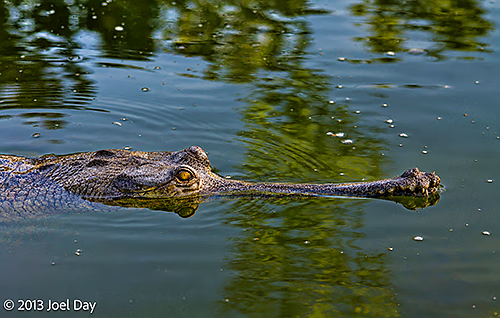
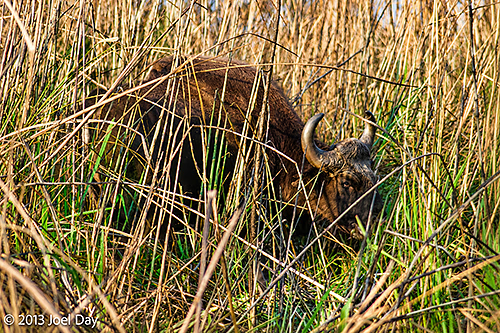
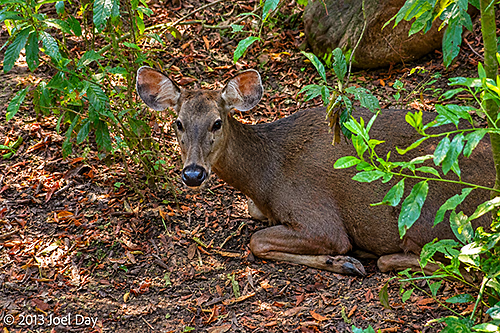
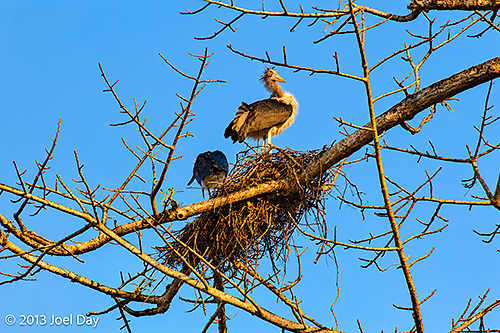
Spotted Deer (Chital, Axis axis) – Chitwan National Park, NepalGharial (Gavialis gangeticus) lurking under the surface of a river in Chitwan National Park, NepalGreater One-Horned Rhinoceros (Rhinoceros unicornis) – Chitwan National Park, NepalWild Water Buffalo (Bubalus arnee) in Tall Grass – Chitwan National Park, NepalSambar Deer (Rusa unicolor) Resting in Forest Undergrowth – in Chitwan National Park, NepalSloth Bear (Melursus ursinus) with cubs on her back, in Tall Grass – Chitwan National Park, NepalAsian Openbill Storks (Anastomus oscitans) Nesting in a Tree – Chitwan National Park, NepalIndian Peafowl (Pavo cristatus), or Peacock, flying out of a tree – Chitwan National Park, Nepal
Chitwan National Park Jeep Safari
Map of the route “Safari City”: 46,147 m, 230 m of climbing and 199 m of descent, elevation between 174 m and 209 m, time 05:28:40. It is a loop that starts and ends at 27.58234, 84.49435 (latitude, longitude).
I woke up early in the chilly Kathmandu air to wolf down breakfast and meet my driver so we could head to Sauraha, near Chitwan National Park in south-central Nepal, close to the Indian border. It was about a 4-hour drive on mainly switchback mountain roads, descending about 1200 meters back to the warm, sunny plains. Although the traffic didn’t seem quite as crazy as in Sri Lanka, there were some horrible-looking accidents and many broken-down trucks and buses left in the middle of the narrow road for everyone to try to navigate around. At times, landslides made road conditions atrocious, likely due to the summer monsoon season. Lots of dried, muddy stretches with massive potholes. As it turns out, the road is the main drag between Kathmandu and India.
The Drive from Kathmandu to Chitwan National Park
Map of the route “Pothead and Peacock Central”: 149,761 m, 947 m of climbing and 2,061 m of descent, elevation between 193 m and 1,466 m, time 04:57:19. It starts at 27.71242, 85.31145 and ends at 27.58223, 84.49427 (latitude, longitude).
I arrived at a compound behind a gate with staff members dressed like Gurkha soldiers. Probably not a coincidence, since Gurkha is a town just up the road. The gate rolled open and about five guys descended on me with juice on a tray and help with my bags. The manager greeted me in the reception area. He proceeded to sit down with me and go over, point-by-point, my schedule (with military precision) for the two days that I’m there. I will be woken early in the morning for safaris, canoe trips, elephant rides, etc. All meals will be provided during my stay at precise times.
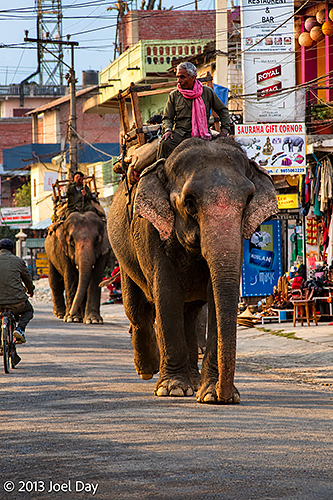
Mahouts Riding Asian Elephants Through the Streets of Sauraha – Chitwan, Nepal
Oddly, while it is a moderately sized compound, I didn’t see any other tourists staying here. I have all these staff members at my beck and call, but it looks like they have no one else to serve. They seem very eager to please! Perhaps it’s a new hotel, and they are keen to establish their reputation.
The hotel room itself is like many I have come across in my travels through Sri Lanka and Nepal. On the surface, it looks modern and well presented, but you soon notice many broken and unfinished things. The TV doesn’t work, the air conditioning doesn’t work, you sit on the bed, and a large slat falls to the floor beneath you, there is barely any water pressure, the sink fixtures aren’t secured to the counter, etc. You simply pretend not to notice and, when asked, say you think everything is great!
Traditional Dugout Canoe on the Rapti River at Sunset – Near Sauraha, Chitwan, Nepal
By the time my late afternoon tour rolled around, it became apparent that I was, in fact, their only guest. It is a little weird to have an army of staff constantly standing around watching me eat and asking individually whether everything was okay. One guy in particular seems to take me on a tour every day. He is very nice and quite passionate about the local culture here in the flatlands and the area’s wildlife, which is always nice. He’s not from the area, so he sees things as an outsider, too.
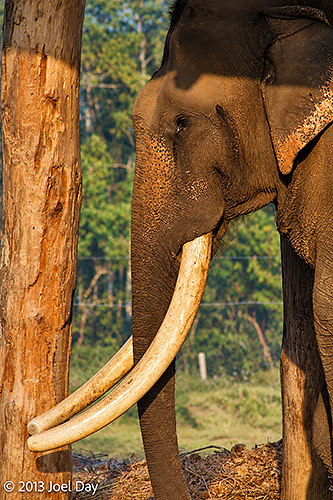
Male Asian Elephant with Long Tusks – Near Sauraha, Chitwan, Nepal
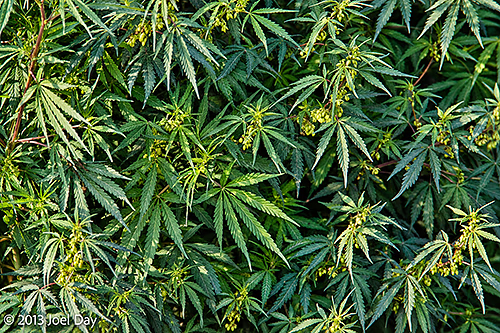
Among the interesting aspects of the neighbourhood are patches of marijuana freely growing everywhere. The locals were harvesting bunches to sell on to India and Kathmandu – even though it is still illegal here. They didn’t even mind me taking pictures of them working their crop, stopping to smile proudly next to their piles of freshly cut weed.
Cannabis (Cannabis sativa) Growing near Sauraha, Chitwan District, NepalCannabis (Cannabis sativa) Harvest near Sauraha, Chitwan District, Nepal
Chitwan National Park is another UNESCO World Heritage Site. Evidently, Nepal has more UNESCO World Heritage Sites than any other country in the world, so much so that it is not permitted to have any more. The park is supposed to have elephants, rhinos, tigers, deer, peacocks, and plenty of other exotic birds. I will see what I can find tomorrow.
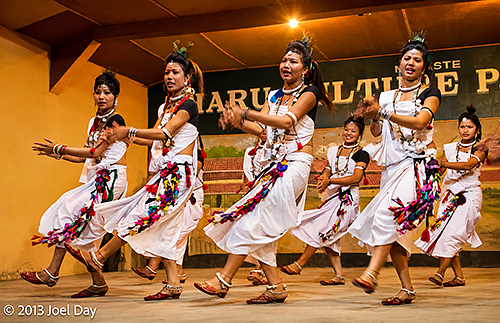
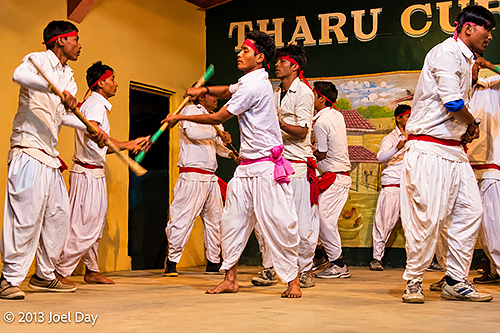
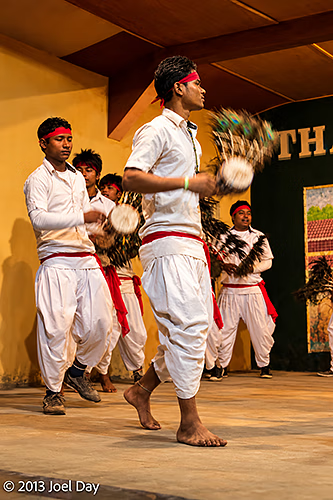
Tharu Cultural Dance Performance – Sauraha, Chitwan, Nepal
In the evening, they took me to a town hall where locals performed traditional dances for tourists. Most of the dances required tight coordination because sticks flew around, smacking into each other, each held by a different dancer. One wrong move and someone’s head was going to get split open. Fortunately, that didn’t happen!
Tharu Cultural Dance Performance – Sauraha, Chitwan, NepalTharu Cultural Dance Performance – Sauraha, Chitwan, Nepal
Short Tour around Sauraha, Nepal
Map of the route “Pothead and Peacock Central”: 3,631 m, 32 m of climbing and 32 m of descent, elevation between 173 m and 179 m, time 01:58:16. It starts at 27.57710, 84.49511 and ends at 27.58218, 84.49397 (latitude, longitude).
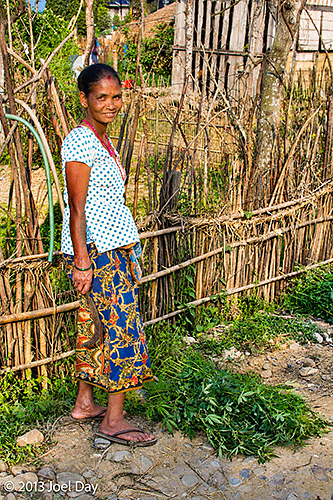
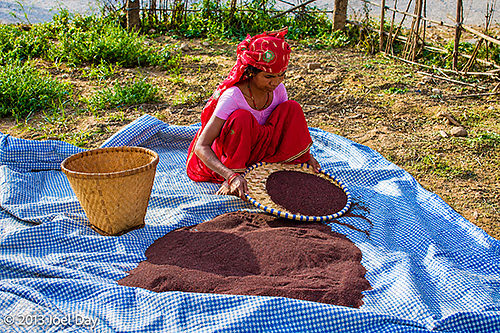
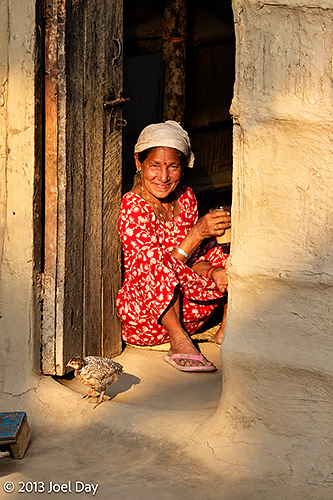
Tharu Woman Winnowing Grain Using a Traditional Bamboo Sieve – Near Sauraha, Chitwan, NepalElderly Woman at the Doorway of a Traditional Village Home – Near Sauraha, Chitwan, Nepal
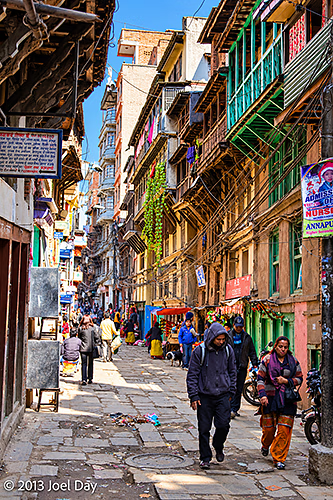
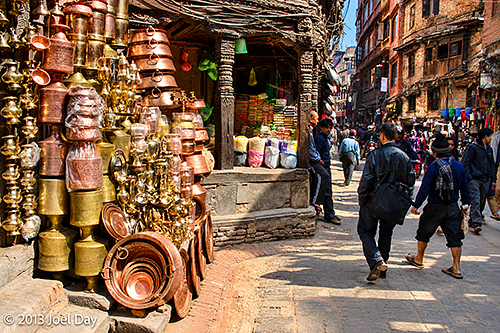
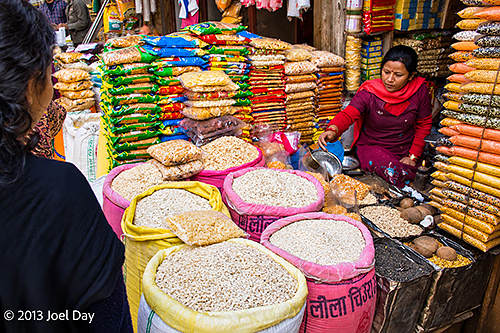
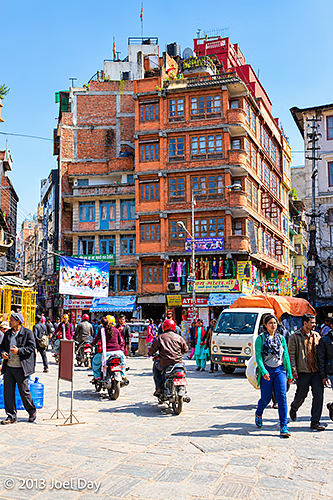
The walk to and from Durbar Square was really cool, with shops selling butchered meat, produce, cloth, metalwork, grains, and other local staples. Retailers still relied on balancing scales with weights to determine pricing. Very crowded, narrow lanes were packed with people, motorcycles, bikes, and the occasional car. After seeing the raw flesh lying out in front of the butchers without any refrigeration for hours, I think I will probably return to being a vegetarian again while I’m here!
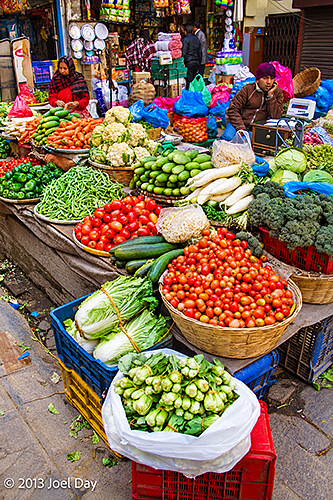
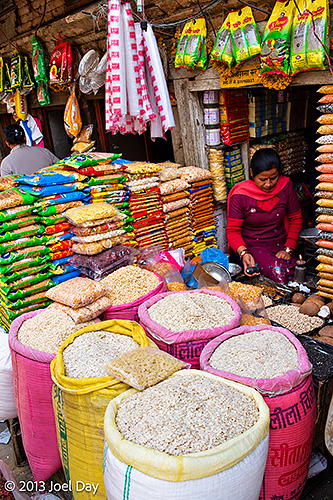
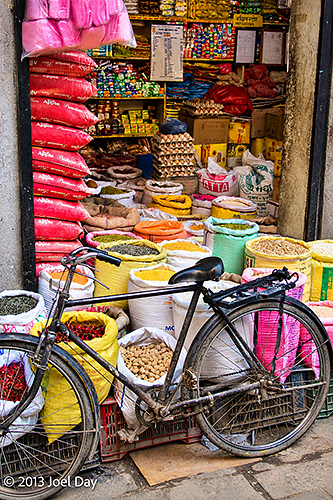
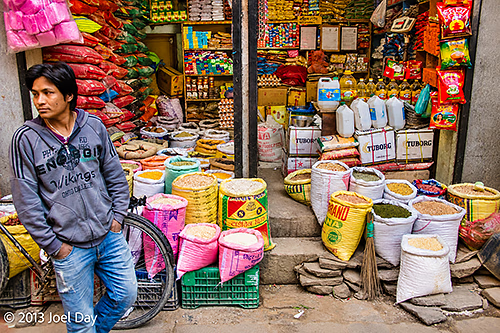
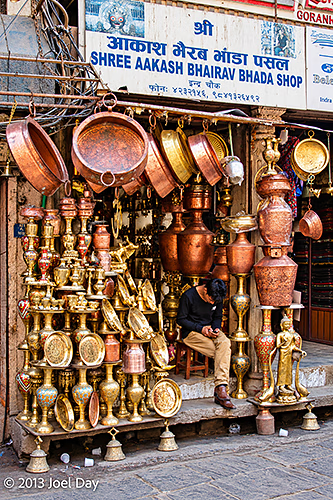
Everyday Street Life Among Traditional Brick Buildings in Kathmandu – NepalTraditional Brass and Copperware Shop on a Busy Street – Kathmandu, NepalStreet Vendors Selling Fresh Vegetables at a Traditional Market – Kathmandu, NepalEveryday Street Life Outside a Traditional Grocery and Dry Goods Market – Kathmandu, NepalWoman Selling Grains and Pulses at a Traditional Market – Kathmandu, Nepal
Walking the Back Alleys and Markets of Kathmandu, Nepal
Map of the route “The Back Streets of Kathmandu”: 4,876 m, 47 m of climbing and 58 m of descent, elevation between 1,290 m and 1,320 m, time 03:04:50. It is a loop that starts and ends at 27.71297, 85.31171 (latitude, longitude).
Afterwards, I had my momo dumplings for lunch. Made sure they were meat-free. They were very nice and came with a tangy dipping sauce. I hear I will be eating them quite regularly in the mountains.
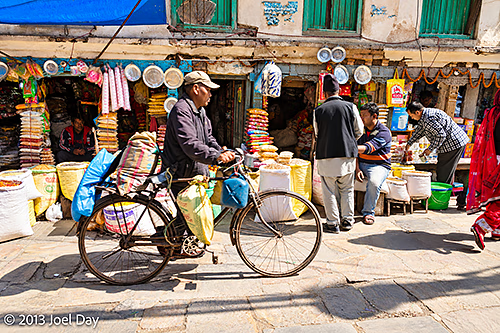
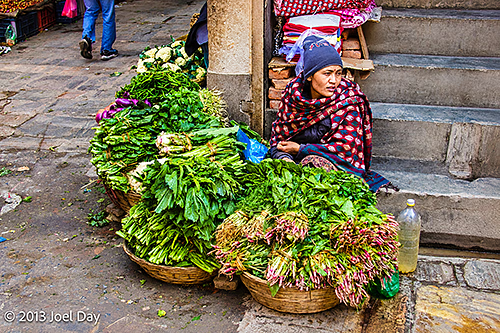
Woman Selling Fresh Greens from Woven Baskets on a Kathmandu Street – NepalTraditional Grocery Shop with Bicycle – Kathmandu, NepalTraditional Grocery and Dry Goods Shop – Kathmandu, NepalTraditional Brass and Copperware Shop on a Busy Street – Kathmandu, Nepal
Kathmandu is known for its horrendous air pollution from old cars, low-quality fuel, and surrounding mountains (which you often can’t even see through the smog). Lonely Planet actually advises you to bring a face mask and tells you that you’re likely to have a throat infection after a few days. One of the characteristics of Nepalese men that I noticed in the men’s toilets back at the Bangkok airport is that they like to hack and spit, which is disgusting, but possibly related to living in such a polluted environment. They do it constantly in the streets of Kathmandu. Fortunately, Pokhara is supposed to be much cleaner, so I’m looking forward to my travels onward tomorrow.
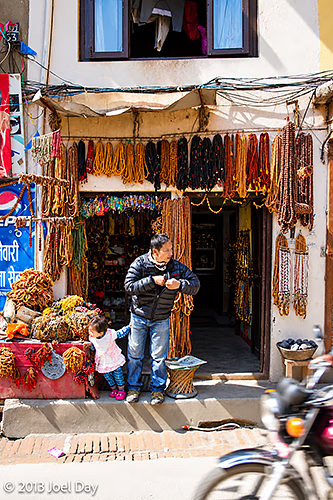
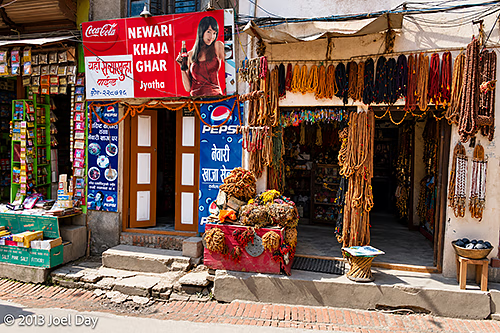
Traditional Bead and Garland Shop – Kathmandu, Nepal
After my usual rooftop breakfast, part of my accommodation deal and a bit chilly first thing in the morning, I planned to visit Durbar Square. Durbar Square is a UNESCO World Heritage Site (one of many in Nepal) and renowned for its architectural styles. It is a compound of Hindu and Buddhist temples built between the 12th and 18th centuries. I didn’t think Nepal was too bad on the hustling front until I visited this place; then I found them everywhere! Hustling you for tours, trinkets, donations – you name it. Then they try to give you the guilt trip when you turn them down.
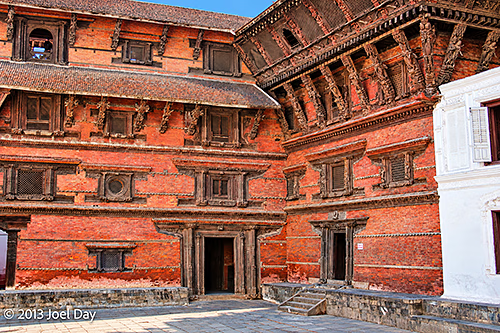
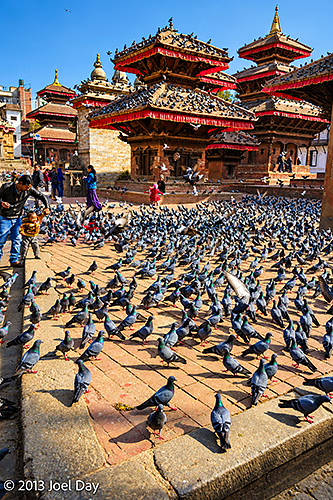
Hanuman Dhoka Royal Palace and Gaddi Baithak, Kathmandu Durbar Square, NepalNasal Chowk Courtyard and Traditional Palace Architecture, Hanuman Dhoka Royal Palace, Kathmandu Durbar Square, NepalPanch Mukhi Hanuman Temple and Royal Palace Courtyard, Hanuman Dhoka, Kathmandu Durbar Square, Nepal
Inside the complex, it was nice and peaceful because the hustlers weren’t allowed in. Some of the wood carvings on the building facades were quite amazing. Inside was a museum with endless photos and relics from the last Nepalese king, who died in 2001.
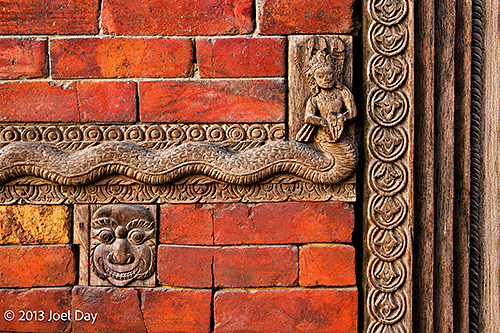
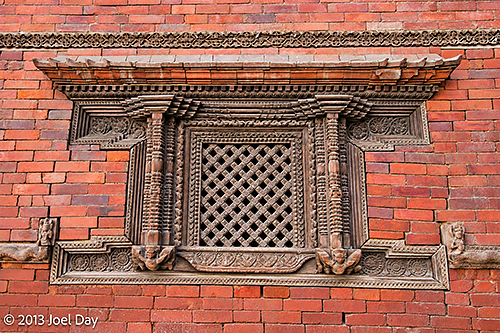
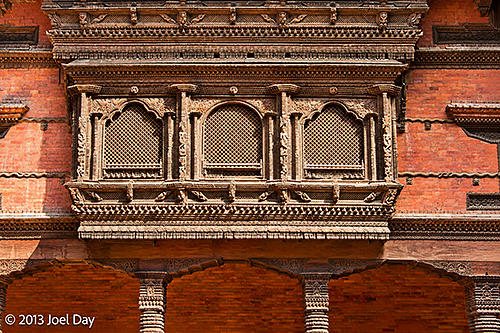
Intricate Newari Woodcarvings and Decorative Brickwork, Hanuman Dhoka Royal Palace, Kathmandu Durbar Square, NepalIntricate Newari Woodcarvings and Decorative Brickwork, Hanuman Dhoka Royal Palace, Kathmandu Durbar Square, Nepal
Part of the fun of visiting the square was walking through the marketplaces to get there. After getting lost in Bangkok and going way off course, I started entering coordinates into my GPS watch so I always knew I was heading in the right direction. It is a little bit of a pain to set up, but very nice to use when you need it. It requires me to track down the exact coordinates for where I want to go (which can be tricky on an iPad, but major landmarks have their coordinates published on Wikipedia). I then need to convert them to the format my watch wants (there are 3, and Wikipedia publishes only 2), which means visiting a GPS calculator site I know and tediously entering the correct numbers on my watch. Once the coordinates are in, the watch can easily display an arrow pointing me in the direction I want to go. Getting back is easy because it is much easier to have it direct you to a place you have already been through its waypoint recording feature.
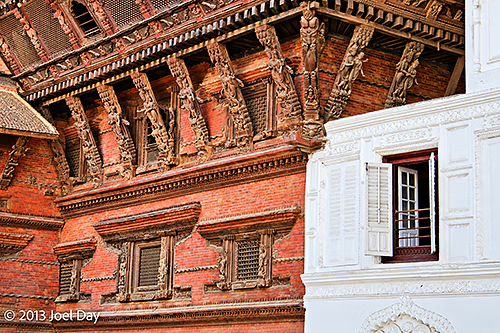
Traditional Red-Brick Palace Architecture, Hanuman Dhoka Royal Palace, Kathmandu Durbar Square, NepalIntricate Newari Woodcarvings and Decorative Brickwork, Hanuman Dhoka Royal Palace, Kathmandu Durbar Square, NepalIntricate Newari Woodcarvings and Decorative Brickwork, Hanuman Dhoka Royal Palace, Kathmandu Durbar Square, Nepal
Anyway, I’m sure glad I used it this morning because I set off in the completely opposite direction, convinced it was the right way. I thought something was wrong with my watch when I suddenly realised I was totally disoriented. It doesn’t give turn-by-turn directions, but you can guess what streets to go down by keeping an eye on the arrow.
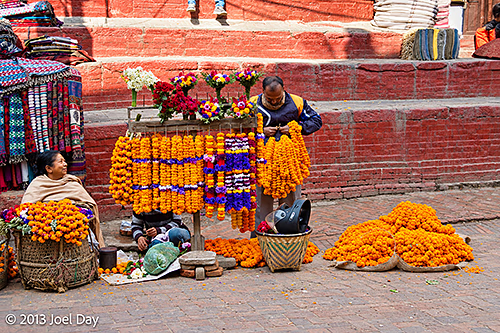
Street Vendors Selling Colourful Marigold Garlands and Flowers in Kathmandu, Nepal
A nationwide strike is in effect all day today. This has forced all shops to close and most traffic to quietly disappear. People are still walking the streets, possibly with nowhere to go, and some marches with people chanting took place earlier this morning. I also heard a low-flying police/military helicopter buzz overhead around lunchtime. My hotel advised me not to leave the immediate neighbourhood, so I snuck out for lunch nearby but will likely stay indoors for the rest of the day. The strike seems to be about an upcoming June election that some people don’t think should go ahead.
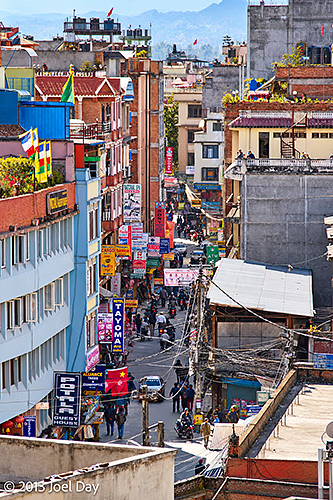
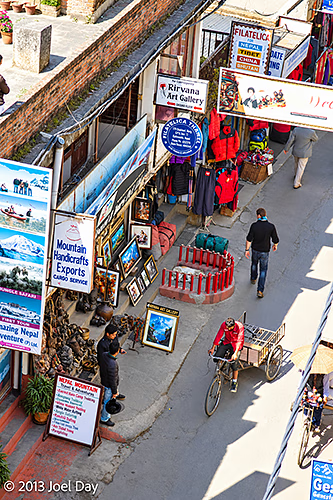
Elevated View of a Busy Street in Thamel, Kathmandu, Nepal, with the Himalayan Foothills in the Distance
So far, I’ve been eating local food, which has been great and similar to Indian or Sri Lankan food. The menu has a few other local delicacies, like momos, little dumplings, that I hope to try soon. The Nepalese people have been very friendly, with little hustling, other than a few odd drug dealers and mysterious dance-club herders on the streets, targeting the few tourists they can find this time of year.
Woman Selling Grains and Pulses at a Traditional Market – Kathmandu, Nepal
Fortunately, I worked out a plan for my visit with my hotel. Instead of throwing all my eggs in the Everest Base Camp hike basket everyone has been prodding me to do (which would have taken all my Nepalese time, lots of money, and been extra cold and snowy to do this time of year, climbing to 5000+ meters), I’ve opted for a bit more variety.
Everyday Street Life Among Traditional Brick Buildings in Kathmandu – Nepal
I’ve decided to head to Chitwan National Park with another personal driver and another safari (both in a 4WD and on an elephant’s back). Afterwards, my driver will take me to the scenic city of Pokhara, by a big lake and surrounded by huge mountains. In Pokhara, I will do a nearby 5-day trek along some of the nicest sections of the famous Annapurna Circuit, which normally takes an entire month to complete. Trekking in Nepal consists of hiking from teahouse to teahouse for meals and comfortable accommodation, so minimal gear should need to be carried. I will have a personal guide for the trek, but I probably won’t need a sherpa. Afterwards, I will stay in Pokhara for several more days, hopefully getting some mountain biking in, before flying back to Kathmandu for a few days and then flying out to Korea.
Colourful Bead and Jewellery Shops in Old Kathmandu – Nepal
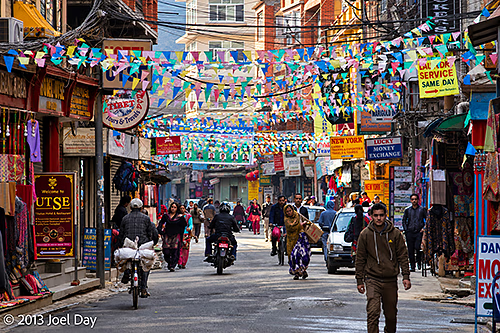
By the evening, the strike appeared to have ended, and the shops began to open again. It is quite an amazing little neighbourhood here in Thamel. All the streets are like little alleyways, lined on either side with countless shops selling crafts, counterfeit outdoor gear, maps, books, and food. The lane-ways are decorated above with strings of little flags that crisscross back and forth. There are absolutely no franchise stores anywhere, except for an oddly placed Baskin Robbins stand and countless fake The North Face stores.
Elevated View of a Busy Street in Thamel, Kathmandu, Nepal
For dinner, I had the pleasure of eating at a little restaurant across the lane, run by a few Japanese guys training up some local Nepalese. The place was packed, and they forced me to eat at a breakfast bar in their kitchen. It was interesting to watch them cook my meal in front of me and see how frantic they were, trying to keep up with everyone else’s orders. Lots of fried garlic smoke to choke on, but lots of fun.
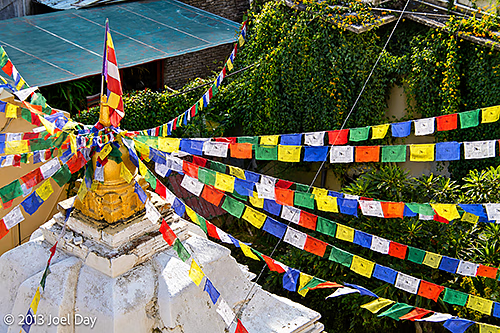
Colourful Buddhist Prayer Flags Draped Around a Stupa, Kathmandu, Nepal
Had to get up early to catch my flight to Kathmandu. Not that the plane was leaving that early, but getting to the gate always takes hours. At the last moment, I realised I was probably a bit short on Thai Baht for a taxi from my hotel, so I decided to hoof it to the nearest Skytrain to see if I could get to the airport by public transport. Even though I had to hike a bit with all my luggage and make 3 train transfers, it worked out pretty smoothly in the end.
Colourful Flags Above a Busy Street in Thamel, Kathmandu, Nepal
The pack I’m using has been lying dormant since my last big trip, but I really appreciate its versatility and flexibility. It is canvas, which is a bit heavy for hiking, but durable enough for baggage handlers. The shoulder straps tuck away behind a zipper flap so they don’t get caught in airport luggage machinery, but when you need them for hiking distances and jockeying between trains, they’re nice to have.
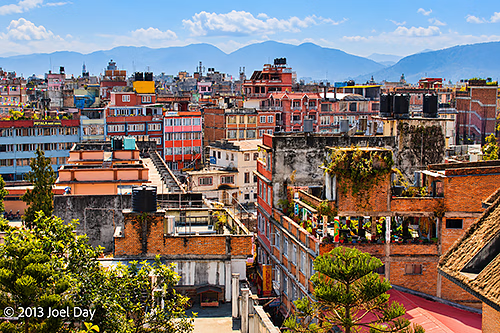
Panoramic View of Kathmandu’s Colourful Urban Rooftops with the Himalayan Foothills in the Distance, Nepal
Just a short flight from Bangkok to Kathmandu. Relatively speaking, anyway: 4 hours. The plane was deserted. A 777 with 9 seats across and only one other person in my row! Not exactly peak season for visiting Nepal. The flight in was quite spectacular because it flies over flat India, and you notice the hills starting to climb as you cross into Nepal. Soon enough, you are flying just above some pretty spectacular mountains as the plane starts to descend. Of course you think, “Where are they going to land this thing with this terrain?” but then the hills level off as you enter the Kathmandu valley, and you can see the big flat runway on the plain.
Flight from Bangkok into Kathmandu
Map of the route “Dog man can but cat man do”: 2,341,768 m, 2,619 m of climbing and 1,130 m of descent, elevation between 8 m and 2,293 m, time 03:35:42. It starts at 13.69025, 100.74381 and ends at 27.69878, 85.35799 (latitude, longitude).
Since Kathmandu is down in a valley, it isn’t as cold as you would expect in February. But at 1500 meters, it certainly is a lot cooler than what I’ve been travelling through over the past 2.5 months. No more hot, sweaty tropics for a while, which is a bit of a relief. Kathmandu seems like a crazy place, with Sri Lankan-style traffic chaos and even worse roads. Some of the city streets look like mud. I would hate to see what they’re like in the monsoon season.
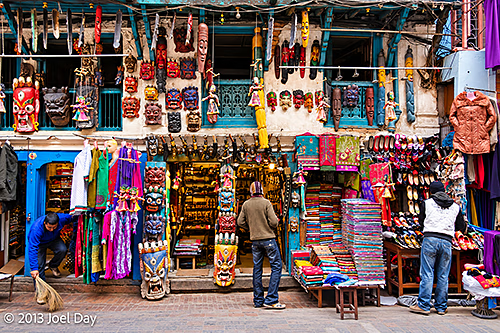
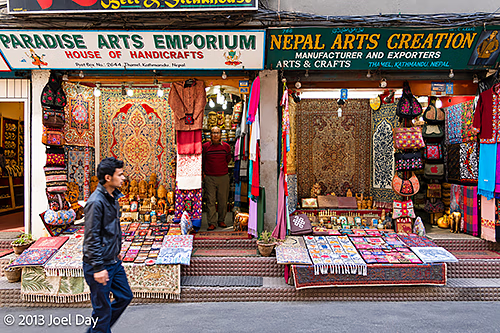
Traditional Nepalese Masks, Handicrafts and Colourful Textiles at a Street Market in Kathmandu, Nepal
I had arranged for my hotel to have a driver meet me at the airport. He took me to this groovy little section of town, with skinny little alleys running everywhere, full of craft shops and backpacker guest houses. I’m one of very few guests in my hotel at the moment. Peak season is October, November, and December, but this is supposed to be the second-best time to be here.
Traditional Nepalese Handicraft and Souvenir Shops Displaying Carpets, Textiles and Artwork in Kathmandu, Nepal
A few facts of life in Kathmandu have already made appearances here. Rolling blackouts happen every day of the week. About 8 hours on and 8 hours off. The streets go dark, but most hotels and shops run on generated or stored solar power, so things go on as usual. Also, there are frequent strikes here, and you are advised not to leave your hotel. My guest house manager told me one is planned for tomorrow, but I haven’t been able to confirm it online, so I guess I’ll have to play it by ear.
You must be logged in to post a comment.