Krabi Province, Thailand

Another lazy day around the islands off Thailand

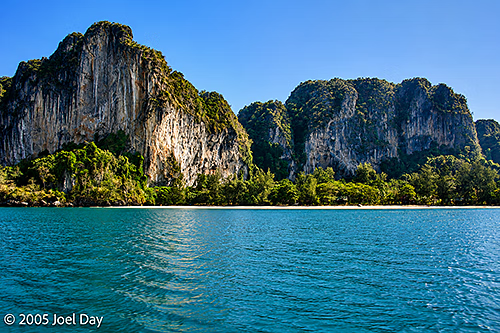
Andaman Sea Coastal Beaches near Krabi Province, Thailand

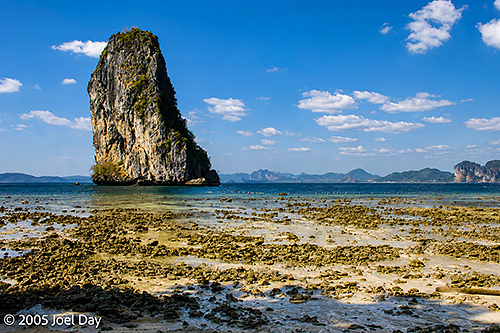
My gruelling kayak trip turned out to be about as laid-back as any of the other adventures I’ve signed up for this past week. We basically kayaked around a fairly small island, then just chilled out on a few beaches for the rest of the day. Our tour guides even insisted on doing most of the paddling.
Andaman Sea Coastal Beaches near Krabi Province, Thailand

The sad thing about the tour was the lack of tourists. This region is so hard up for tourists right now (in what should be their peak tourist season) that they insisted on running this trip with only two customers. The two of us had a big 45-passenger boat (to get us to our kayaking area) and seven crew members at our disposal. We only paid about US$33 for the all-day tour (including lunch). It was really quite ridiculous.
Andaman Sea Coastal Beaches near Krabi Province, Thailand

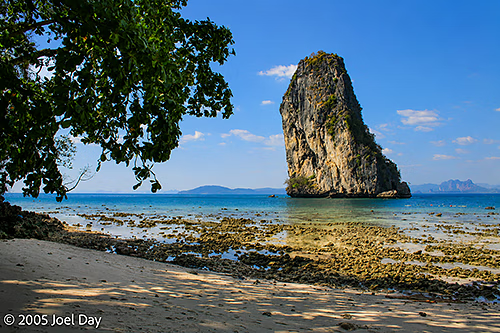
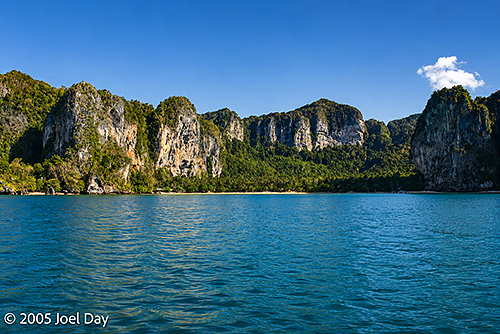
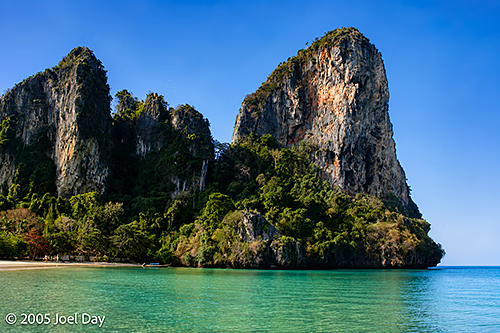
The trip around the island in the kayaks was quite interesting. The island consisted of huge limestone cliffs that fell straight down to ocean waters or skinny little beaches. There were a number of caves around the island that were being harvested for swallow bird nests. The nests are a delicacy in China, where they are the main ingredient in “bird nest soup” and worth about US$750 a kilo. Needless to say, the caves were off limits to us, and the harvesters working in them required special permits from the Thai government.
Andaman Sea Coastal Beaches near Krabi Province, Thailand

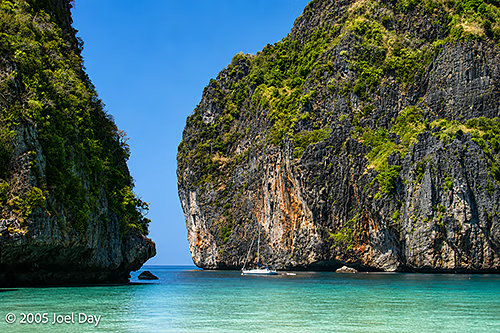
In the middle of the island lay a fabulous secret lagoon with a narrow entrance passage between two cliff faces. Actually, I can’t say it was secret because there was an endless entourage of motorised tour boats zipping in and out of it. At least those of us in kayaks could venture deep into the mangrove section of it to explore the shallow waters.
Andaman Sea Coastal Beaches near Krabi Province, Thailand

Our tour guides seemed to have the usual happy-go-lucky attitude you find in Thais. They were very friendly and liked to clown around. They insisted on doubling up on our kayaks so they could do most of the work and run a fishing line off the back to catch squid. They mentioned that Thailand was having trouble selling its seafood lately because so many people around the world falsely believed the fish Thais were catching had fed off the corpses of the dead from the tsunami.
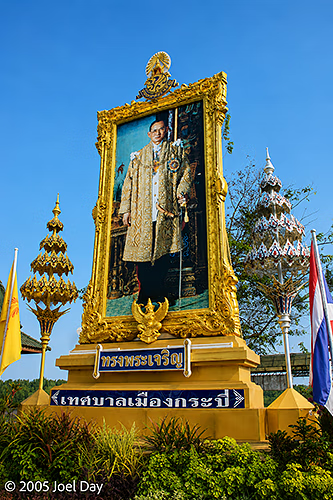
Portrait of the King of Thailand

On the way back into port, we passed one of the gleaming palaces of the king of Thailand, up on a hill overlooking the sea. The royal family here also has another retreat on top of the mountain I cycled down outside of Chiang Mai. Thais hold their king in very high regard. In fact, the King and I (and the movie Anna and the King) have been banned here for years because they find it deeply offensive. I did come across a reference to Anna in the National Museum in Bangkok, so she did exist as an English teacher. She just never romanced the king…
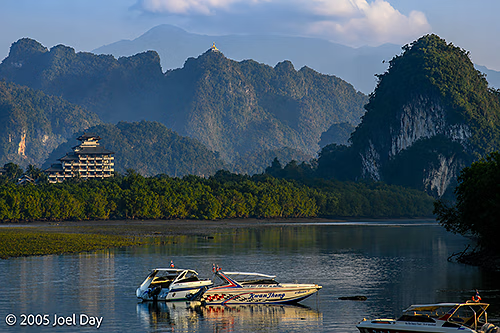
Krabi Province, Thailand

I just have a few days left before I fly back up to Bangkok, so I thought I would enrol in one of the many cooking classes they offer in Thailand. I know several people who have done them, and they said they were great. We’ll see how it goes.
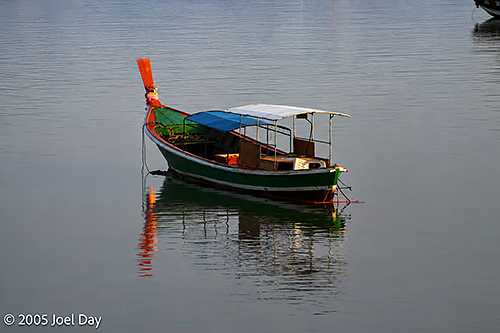
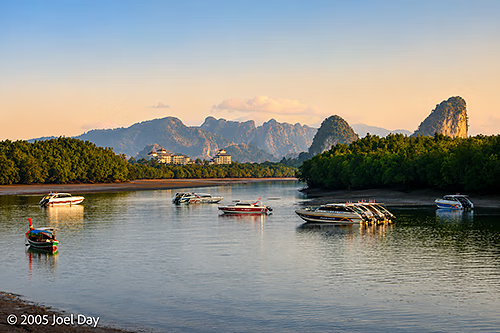
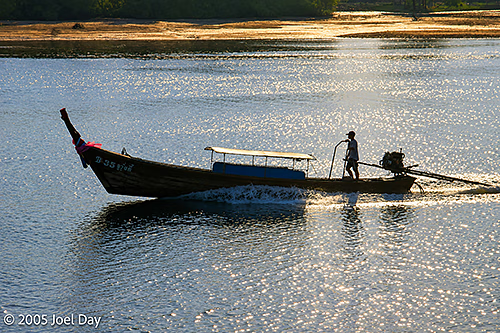
Longtail Boat in Krabi Province, Thailand
Krabi Province, Thailand

The Krabi Life

Krabi Province, Thailand

I’ve spent the past few days trying to squeeze in as much as possible in my rapidly dwindling days of leave. I signed up for three tours in the area, including speedboat trips to beautiful islands, hot-spring soaks, sea-kayaking excursions, snorkelling, swimming, beach time, and a visit to a forest temple.

Longtail Boat on river in Krabi Province, Thailand

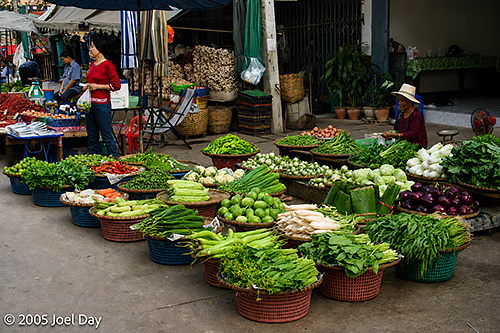
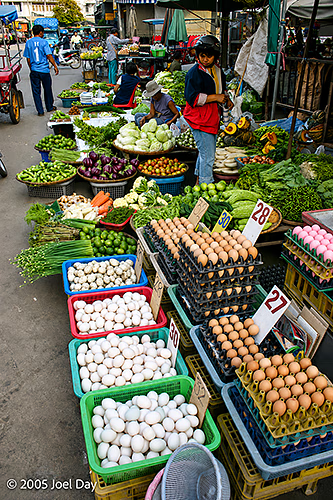
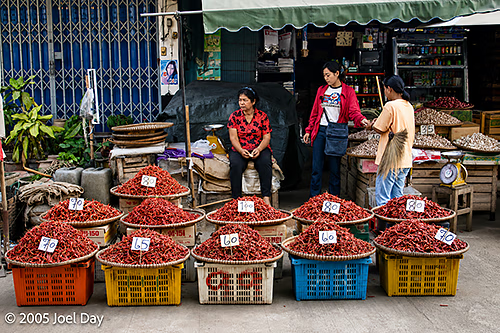
I’ve decided that the town of Krabi, where I’ve based myself for the week, is probably better and cheaper than most of the alternatives. Unlike the ugly, sterile resort towns I’ve come across in the area, Krabi retains much of its pre-tourist flavour and has lots of great street-side food stalls and markets to snoop around in the evenings.
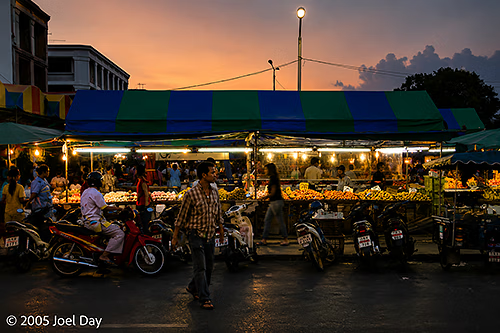
Fresh Produce in Night Market in Krabi, Thailand
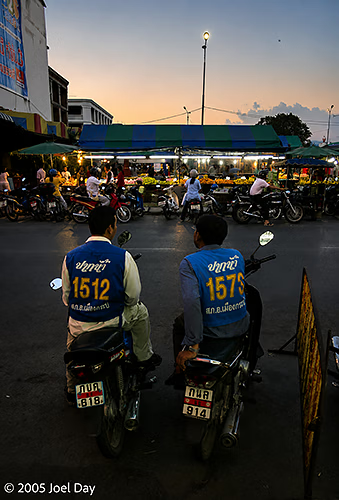
Motorcycle Taxi Drivers waiting to give rides at Night Markets in Krabi, Thailand
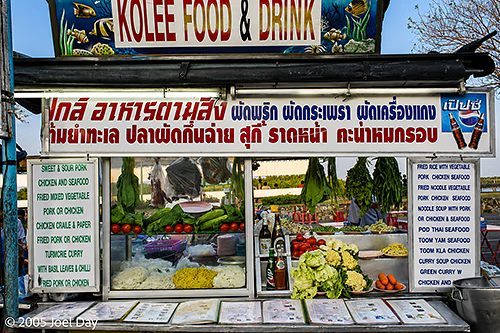
Thai Food Stall in Night Market in Krabi, Thailand

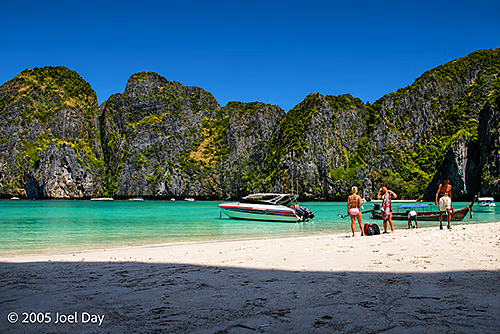
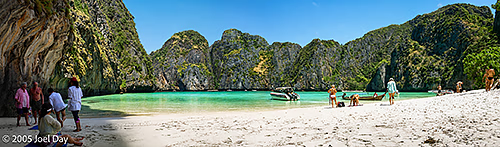
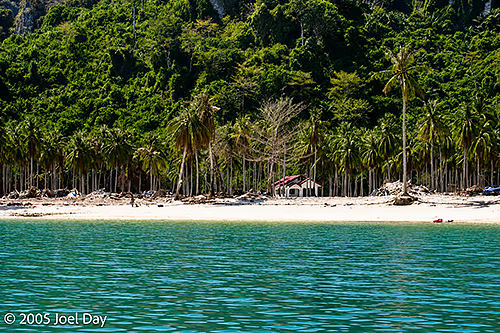
I took my first tour yesterday, where a local company whisks tourists out on a speedboat to famous beaches and snorkelling spots around islands in the area. It used an itinerary that had been in place for several years, but modifications have been necessary since the tsunami hit here on December 26th. Most of the deserted beaches (including “The Beach” beach) and superb snorkelling spots we visited are probably the same as they were before. They all have crystal-clear water, long, white, sandy beaches, and spectacularly huge karst limestone cliffs that rise from the water and line the coastlines.
Maya Bay on the uninhabited island of Ko Phi Phi Le in Thailand

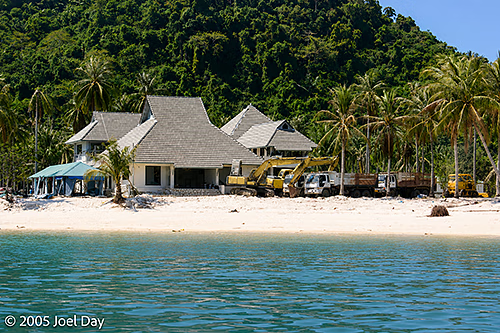
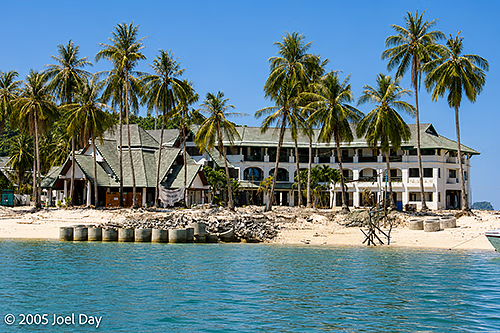
On the other hand, the coastline was clearly lined with a demolished seawall, and some of the islands with developments we were supposed to visit remained closed to visitors because they were so devastated.

Ko Phi Phi Island cleaning up from the December 26th Boxing Day Tsunami, Thailand

On Ko Phi Phi Island, where we were originally scheduled to have lunch, we now just cruised the boat up close to gawk at the destruction. It is estimated that between 750 and 6000 people died there alone. All that’s left is a long line of demolished beach shacks and lots of demolition taking place — with backhoes loading the debris onto ocean barges.
Ko Phi Phi Island cleaning up from the December 26th Boxing Day Tsunami, Thailand

It seems as though everyone around here has a story to tell about the tsunami. Our tour group leader was on one of the beaches we visited where he held onto a palm tree with one arm and his wife with the other to prevent being swept out to sea. They said there were three waves that came in. The first was small and kind of cool, but the second and third were the large, devastating ones. Fortunately, the initial small wave scared many people into seeking safer, higher ground.
Ko Phi Phi Island cleaning up from the December 26th Boxing Day Tsunami, Thailand

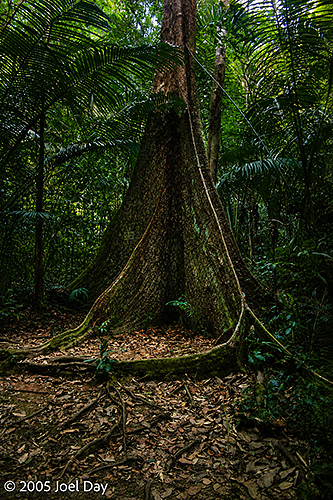
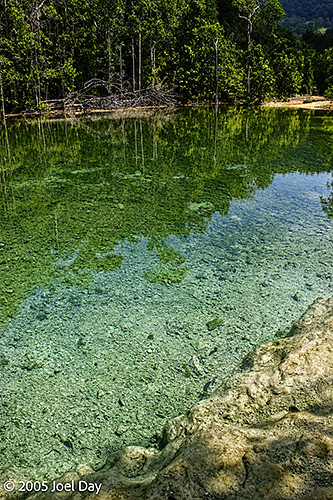
Today I did a tour that I thought was going to be a jungle trek that circled by some hot springs, cool crystal-clear pools, and a famous forest temple. Unfortunately, we just seemed to drive from one destination to the next, so I didn’t get the workout I’d been hoping for. I guess the tour company is trying to maximise its potential client base by opening its trips to anyone (including the chronically inactive).

Jungle walk near the Tiger Cave Temple (Wat Tham Suea), Krabi Province, Thailand
Crystal Clear Pool near the Tiger Cave Temple (Wat Tham Suea), Krabi Province, Thailand

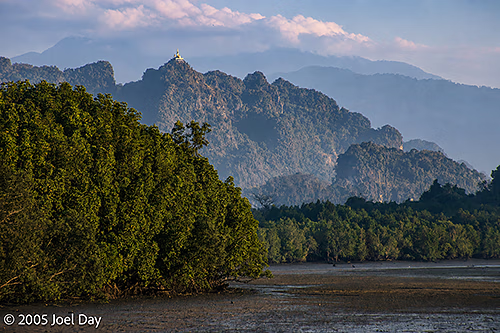
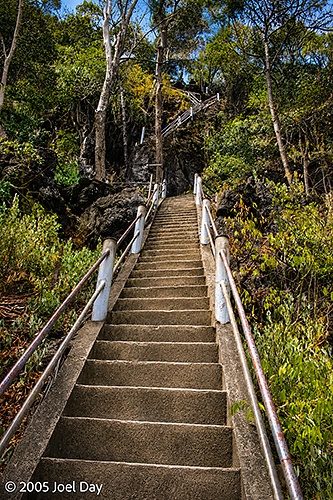
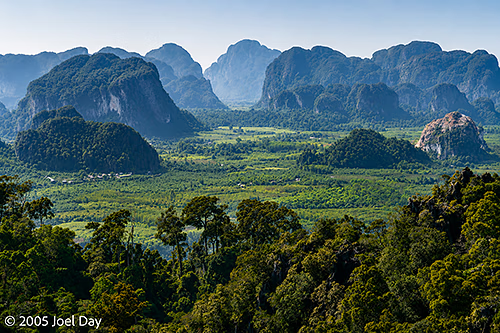
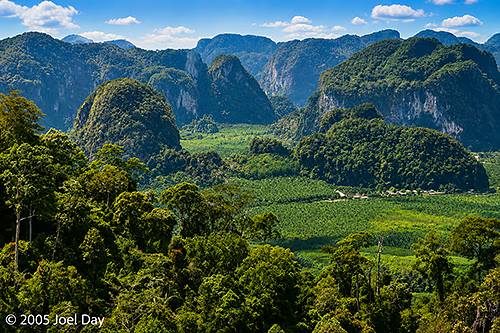
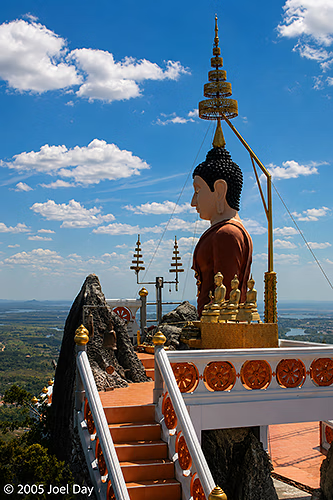
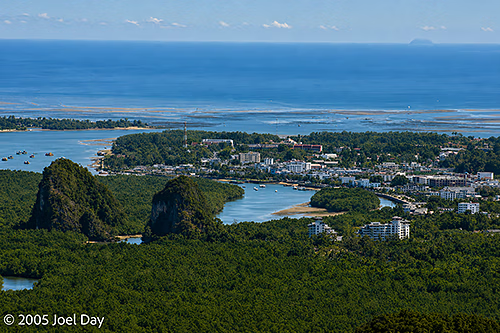
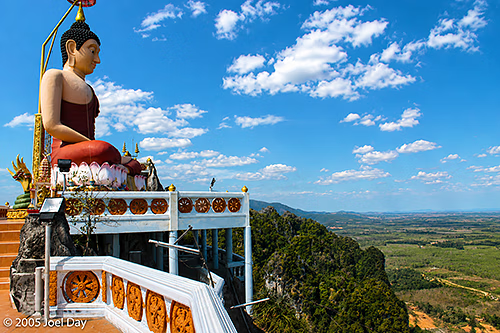
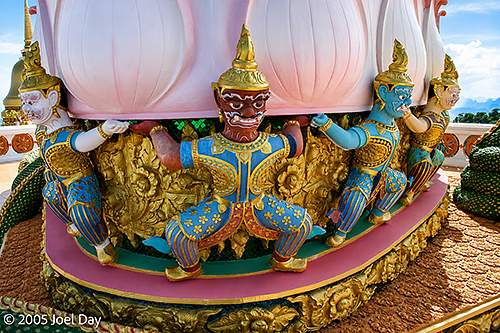
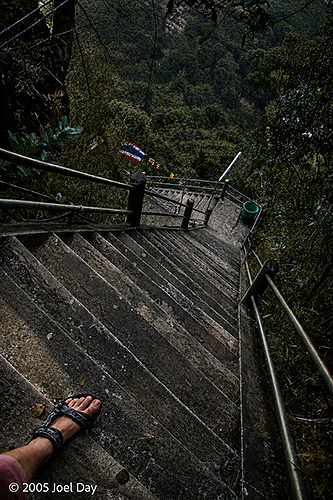
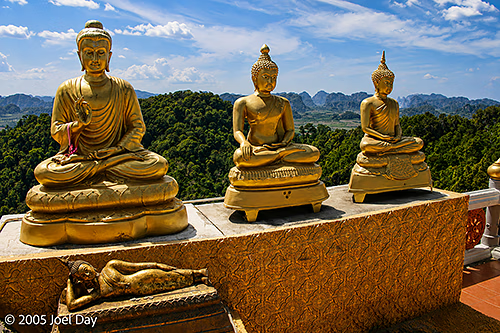
The forest temple was really pretty cool. I actually visited the place a few days beforehand to scale up the 1237 (!) steps to the top of one of these huge limestone cliffs you find all over the place around here. It was really gruelling, as you can imagine, but the views from the top were really quite amazing.

Tiger Cave Temple (Wat Tham Suea) perched on top of cliff, Krabi Province, Thailand
1,237 steps up to the Tiger Cave Temple (Wat Tham Suea), Krabi Province, Thailand
View from Tiger Cave Temple (Wat Tham Suea), Krabi Province, Thailand
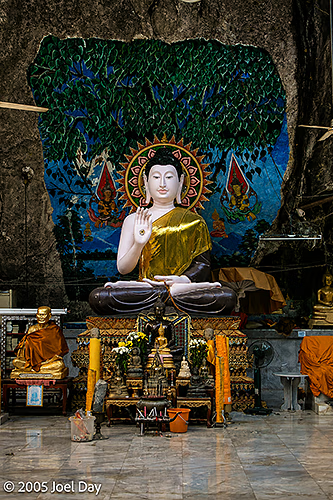
The Tiger Cave Temple (Wat Tham Suea), Krabi Province, Thailand
View from Tiger Cave Temple (Wat Tham Suea), Krabi Province, Thailand
The Tiger Cave Temple (Wat Tham Suea), Krabi Province, Thailand
View of Krabi as seen from the Tiger Cave Temple (Wat Tham Suea), Krabi Province, Thailand
The Tiger Cave Temple (Wat Tham Suea), Krabi Province, Thailand

The Buddhists seem to like to position temples on top of high hills, but this had to be one of the highest I’ve come across. It was almost as difficult walking back down again, using different muscles. My legs were complete rubber by the time I got back down to the ground. I spent a few hours up there, just relaxing, recuperating, and enjoying the views. Other visitors seemed to act as if they sprinted up there every day.

The Tiger Cave Temple (Wat Tham Suea), Krabi Province, Thailand
1,237 steps down from the Tiger Cave Temple (Wat Tham Suea), Krabi Province, Thailand
The Tiger Cave Temple (Wat Tham Suea), Krabi Province, Thailand

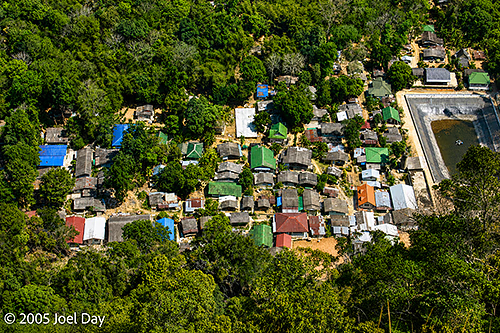
When we visited this temple today, we didn’t bother scaling the steps on our inactive tour. Instead, we visited some other interesting parts of the temple, including a secret valley positioned between several of the cliffs. Monks were living in shacks and caves all over the grounds. It’s a pretty neat place to explore.

View of settlement as seen from Tiger Cave Temple (Wat Tham Suea), Krabi Province, Thailand

Tomorrow I’m heading off on a kayak trip around a local island, where I will also have time for more snorkelling, swimming, and beach time. I think I will finally get the active day I’ve been looking for.

Krabi Province, Thailand

Another Election Day

Ah yes, another country, another election. Today is Thailand’s big election day, which I think only comes up every four or five years. Alcohol sales have been banned since 6 PM last night. Sounds like Pennsylvania!

Krabi Waterfront, Thailand

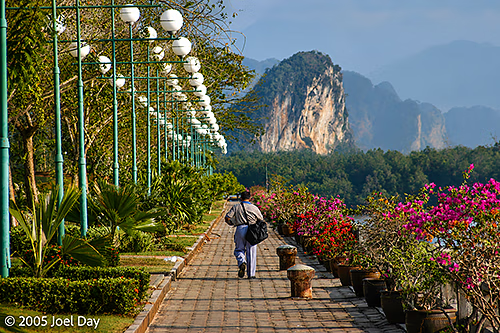
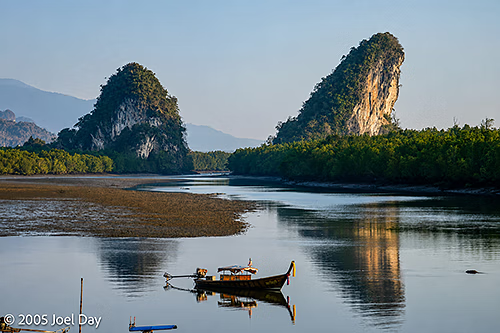
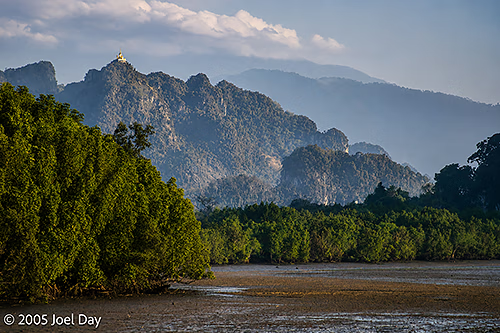
I’m now in Krabi, which isn’t all that far from Phuket and the December tsunami-hit areas. I just flew down here from Sukhothai and Bangkok last night. My first impression is that it really is a beautiful area. The air seems much cleaner than it was up north, and there are huge karst limestone rock formations jutting out of the land and sea.

Krabi Province, Thailand

Like the rest of Thailand, the people here seem very relaxed and friendly. Thai people cause minimal hassle—especially compared to the hustlers I encountered in India and Egypt. Thailand is proving to be a great place to just cool your heels and hang out.

Krabi Province, Thailand

I will spend my day running some personal errands and looking for some adventurous excursions. It seems tourism is still reeling from the tsunami’s aftermath, and occupancy levels are very low around here.

Thais running errands around Krabi, Thailand
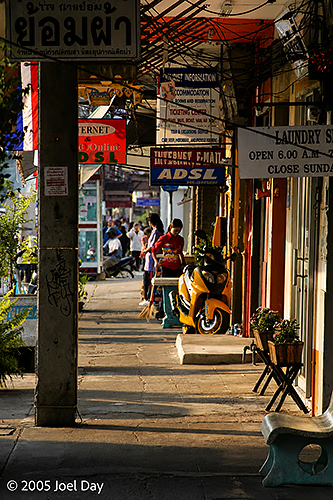
City Street in Krabi, Thailand
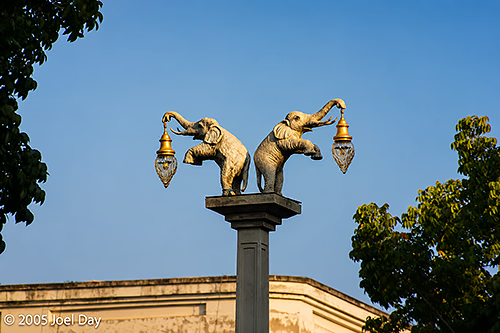
Elephant Streetlights in Krabi, Thailand
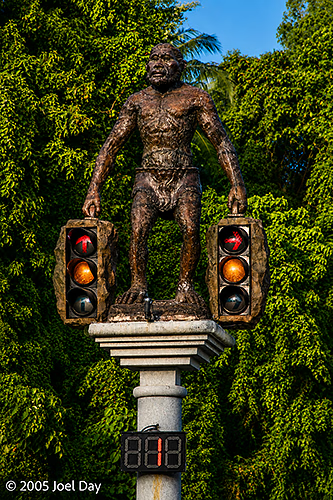
Gorilla Traffic Lights in Krabi, Thailand
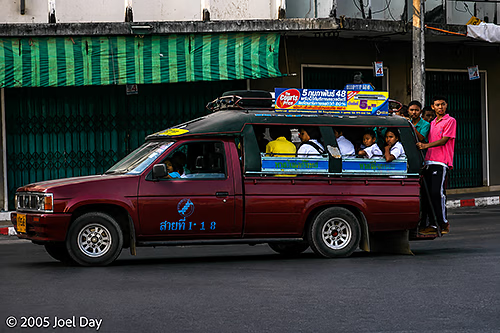
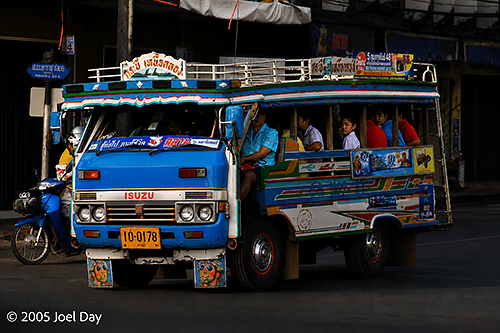
Commuters in Krabi, Thailand

I have the nicest hotel room here on my trip. For the first time since I left the U.S., I actually have a shower that is not on the wall above the toilet. In fact, I even have a shower curtain! And a colour TV so I can try to watch the Philadelphia Eagles play in the Super Bowl tomorrow morning (if I can find it on here).

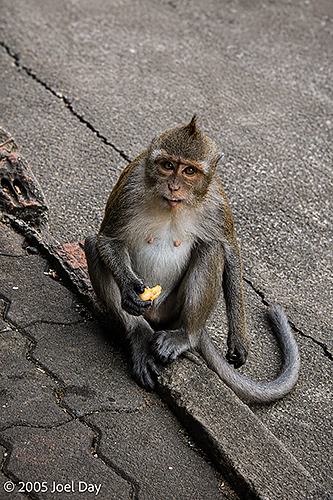
Macaque Monkey with snack in Krabi Province, Thailand
Sukhothai Province, Thailand

Buddhism by Bicycle

Sukhothai has proved to be a great place for bicycling. I must not be the only one who feels that way because the streets are lined with many bike shops. I spent a few days in the town, and on both days I ended up pedalling all over the place.

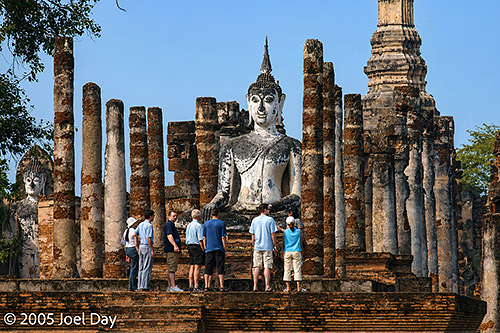
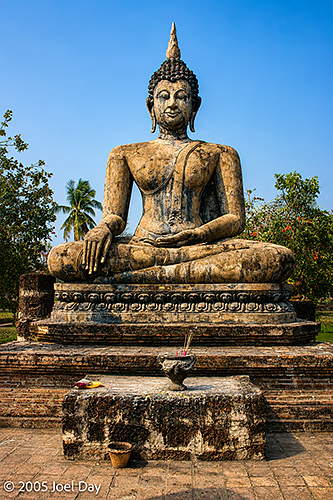
Sukhothai Temple ruins, former capital of the Sukhothai Kingdom (also known as the Kingdom of Siam), Sukhothai, Thailand
German Tourists in Sukhothai Temple ruins, former capital of the Sukhothai Kingdom (also known as the Kingdom of Siam), Sukhothai, Thailand

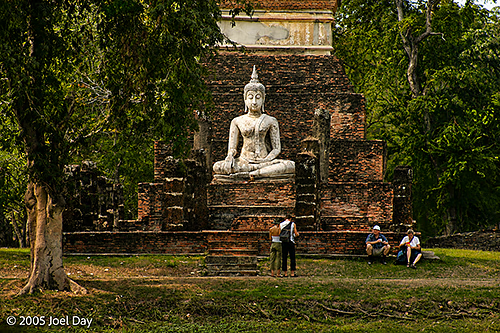
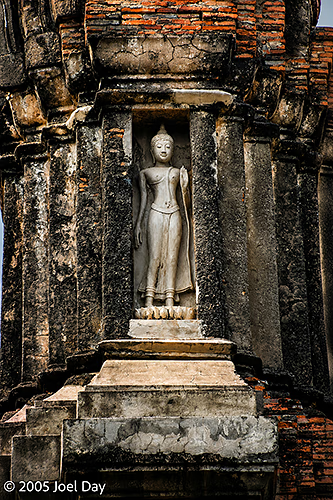
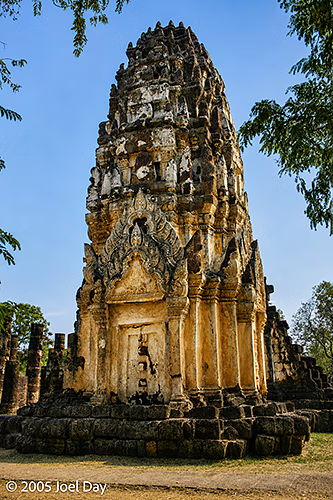
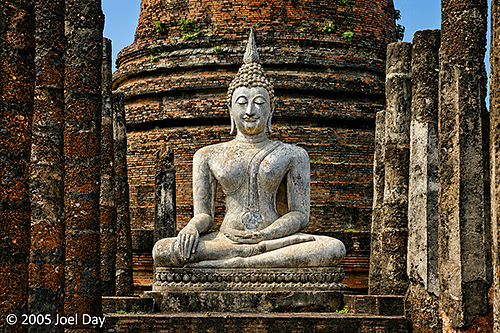
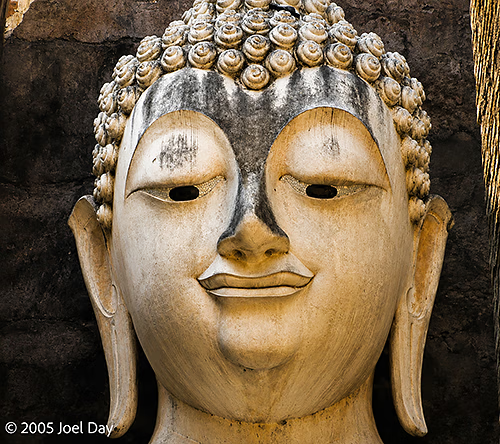
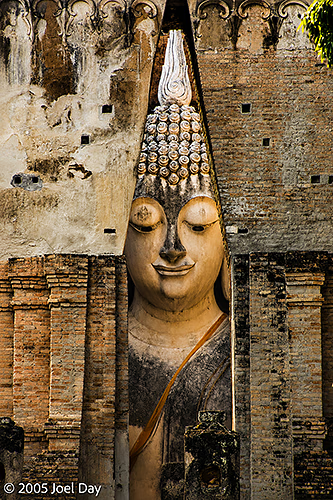
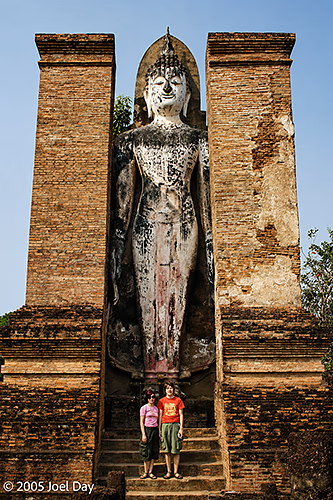
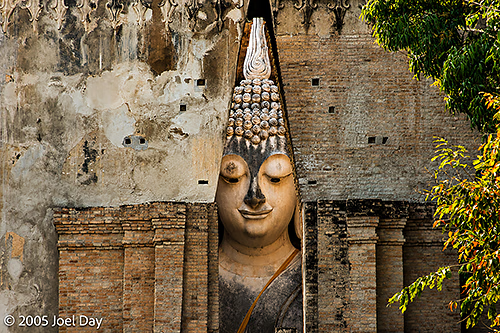
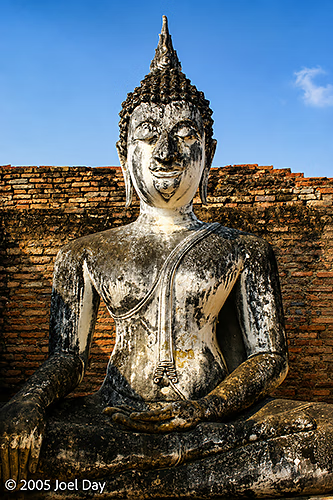
On my first day, I headed for “Old Sukhothai” on a minibus with some German rock star friends (whom I met on my 3-day trek along the Burma border). Old Sukhothai is an old Khmer city, built in the 13th and 14th centuries when it served as the capital of the Kingdom of Siam. The city is completely closed off to cars, so it is really nice to rent a bike and cycle around to see the many temple ruins. Usually, a large Buddha figure would be all that was restored in the middle of each temple ruin. It was a beautiful, laid-back place to spend a relaxing day casually cycling about and shooting lots of pictures.

Sukhothai Temple ruins, former capital of the Sukhothai Kingdom (also known as the Kingdom of Siam), Sukhothai, Thailand

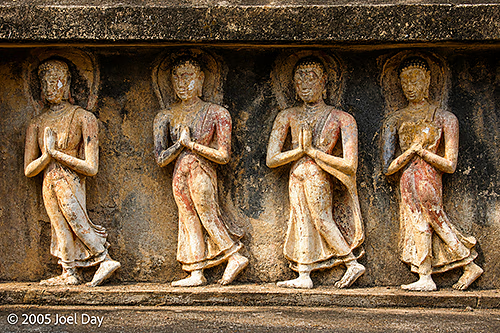
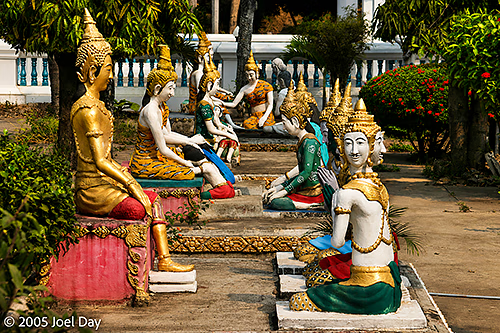
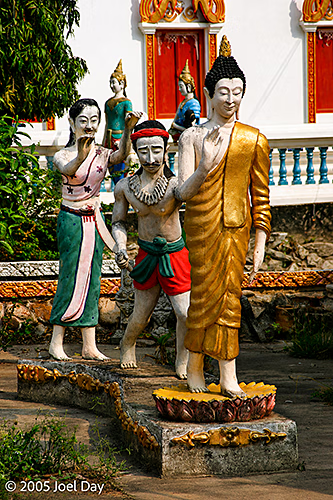
On the second day, we all did a 2-hour bike trip up along the top of a river levee through thick bamboo forests and farms (full of tobacco and sweet corn) to see another Buddhist temple that is famous for its sculptures depicting the history of Buddhism. Our trip was part of a tour conducted by the owner of my German friends’ guesthouse (which I couldn’t get into because it was full). He took us through the grounds, showed us all the sculptures, and explained the history of Buddhism.

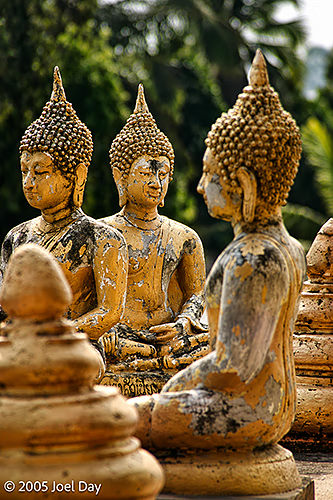
History of Buddhism Sculptures, Sukhothai, Thailand

I think it is interesting to note that our tour guide, a European expat, did not consider himself to be a Buddhist (only an admirer). But then again, I haven’t found anyone around here who will call themselves Buddhist, even though this is a predominantly Buddhist country. I guess the monks probably might. I just haven’t gotten around to asking them yet. Most Thai people seem to quickly distance themselves from the religion as a way of showing they are not nearly devout enough to be considered true Buddhists. It’s funny to think about that when so many Westerners seem quick to proclaim themselves Buddhist.

Sukhothai Temple ruins, former capital of the Sukhothai Kingdom (also known as the Kingdom of Siam), Sukhothai, Thailand

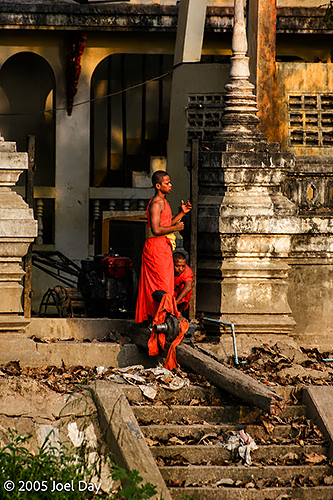
According to our European tour guide, even the majority of monks you see did not really become monks to pursue their religious convictions. Many are just taking refuge from the outside world because they’re either too poor and know the temples will support them, or they want support with room and board while they pursue personal projects. The artist who created the sculptures we looked at, for example, served as a monk at the time, much to the temple’s dismay. It was also disclosed that a Chinese/Thai masseur who tagged along on our trip also served as a monk for ten years, but his real aim was to study the art of traditional Chinese and Thai massage, psychology, meditation, and a few other things. Other examples were also given as well. It seems that Thailand’s whole system for supporting monks also serves as the country’s social safety net.

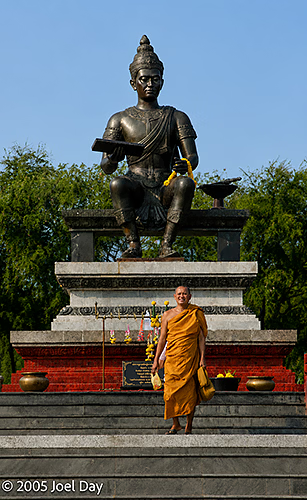
Buddhist Monks, Sukhothai, Thailand
Sukhothai Province, Thailand

From the mountains to the sea

I’ve decided to continue on with my tour of Thailand by heading south from the mountains north of Chiang Mai (aka the foothills of the Himalayas).

Sukhothai Airport, Thailand

I found some pretty good deals on domestic airline tickets, so I’ve flown to Sukhothai for a few days and will continue flying down to Krabi (well south of Bangkok) for my final week in Thailand. Word’s out among travellers that many areas hit by the tsunami are recovering fast.

Sukhothai Temple ruins, former capital of the Sukhothai Kingdom (also known as the Kingdom of Siam), Sukhothai, Thailand

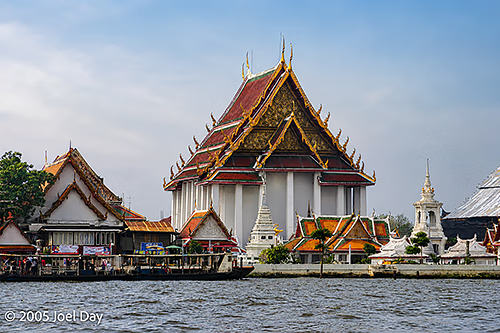
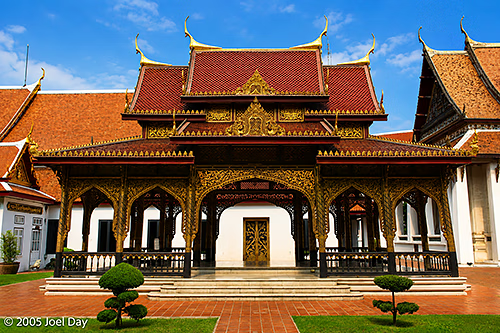
Sukhothai is a UNESCO World Heritage Site, one of Thailand’s former capitals and is rich in history. I will be visiting the old moated and walled historic sites in the next few days.

Sukhothai Markets, Sukhothai, Thailand
Chiang Mai Province, Thailand

My first big mountain biking experience

My big mountain biking experience seemed to go pretty well. I’ve done a lot of road biking, but mountain biking felt like a whole different experience.

I had a variety of routes to choose from, and the easiest would have been to be dropped on top of a 5200 foot mountain (where all the routes started) so I could just glide to the bottom. Instead, I took a route that included some rollercoaster climbs uphill as well. The problem is, riding uphill on a mountain bike is much tougher than riding uphill on a paved road. First, we had to dress up like gladiators to ensure our safety. The bikes themselves contained massive shock absorbers. The paths we took were very rough with large rocks and deep ruts, and although the bikes were designed to handle these huge obstacles, they were prone to wheelie when riding over any sizable debris uphill. I’m sure if I had the experience, I could have handled it better. That being said, I survived just fine.

We rode the bikes about 3000+ feet down very steep hills in beautiful terrain through farms and coffee plantations. One of which we stopped by for some fresh home-grown coffee.

The tour company was run by a couple of expat Americans who seemed to be on to a good thing, with lots of solid business.

Chiang Mai Province, Thailand

Up on the elephants back…

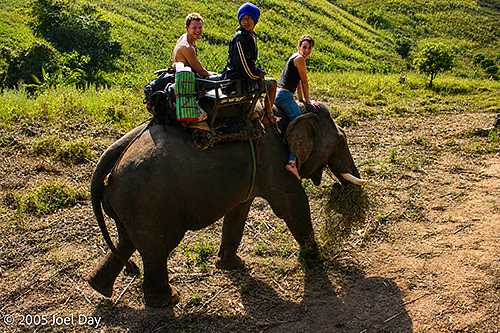
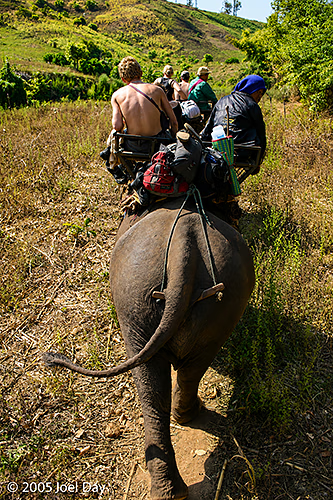
Elephant Transport near the Thai-Burma Border, Chiang Mai Province, Thailand

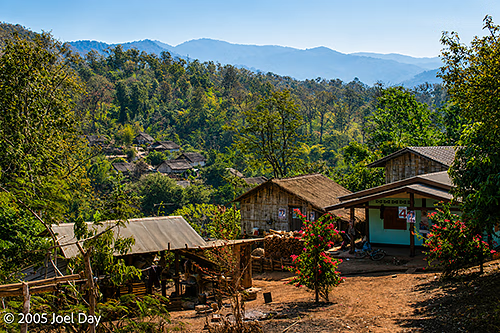
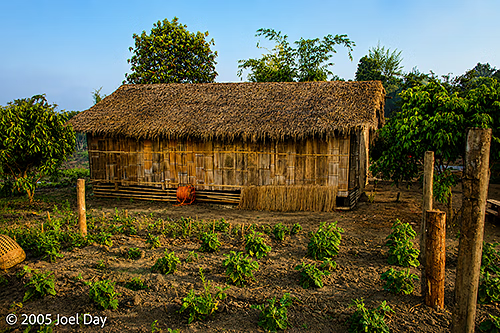
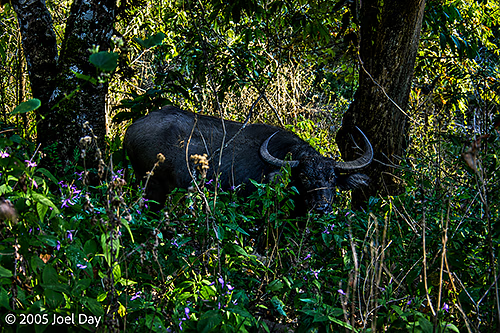
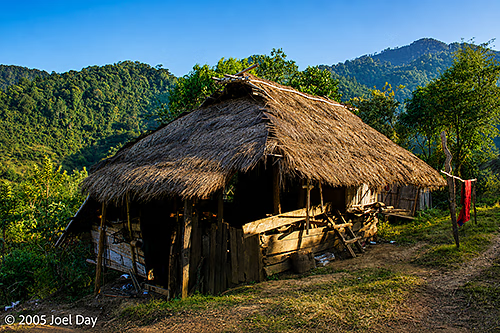
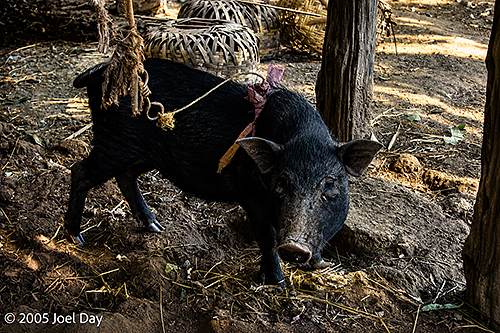
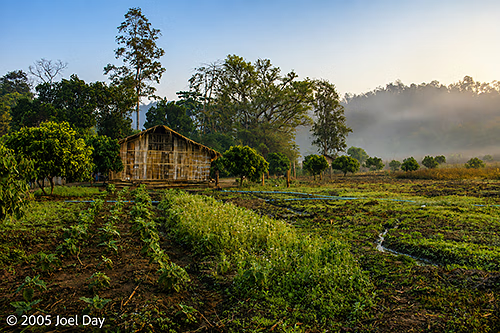
Well, it turned out to be ten people instead of six — but we all had a great time on our trek. In all, we hiked about 35 km over three days up and down beautiful mountains running along the Myanmar (Burma) border. We camped in isolated huts on top of some of the mountains with no power or plumbing and saw nobody but hill tribe people the entire time. We never saw or even heard a car or any roads until the end of our third day. Although it was technically a jungle, it was quite dry this time of year. It was nothing like the jungles I hiked through when I was in Fiji or Hawaii (which required a machete).

Mountain Village Huts near the Thai-Burma Border, Chiang Mai Province, Thailand
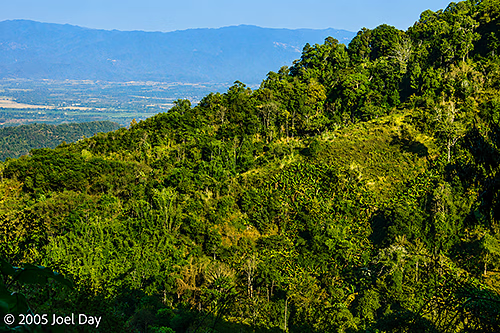
Mountain Jungle Terrain near the Thai-Burma Border, Chiang Mai Province, Thailand
Mountain Village Huts near the Thai-Burma Border, Chiang Mai Province, Thailand
Water Buffalo near the Thai-Burma Border, Chiang Mai Province, Thailand
Mountain Village Huts near the Thai-Burma Border, Chiang Mai Province, Thailand
Mountain Village Pigs near the Thai-Burma Border, Chiang Mai Province, Thailand
Mountain Village Huts near the Thai-Burma Border, Chiang Mai Province, Thailand

The elephant ride we took for part of the journey on our second day was very interesting, historically speaking. Thailand has a long tradition of using elephants to haul heavy goods and fight in wars (where they have been used to ram down the doors of forts, among other things). Although the ride was a bit rough in the seats provided on the elephant’s back, the ride was much more comfortable when you sat on the elephant’s neck. Occasionally they would stop at streams to fill up their trunks and shower themselves down in the heat. Of course, this is a whole different experience when you are sitting on top of them.

Elephant Transport near the Thai-Burma Border, Chiang Mai Province, Thailand

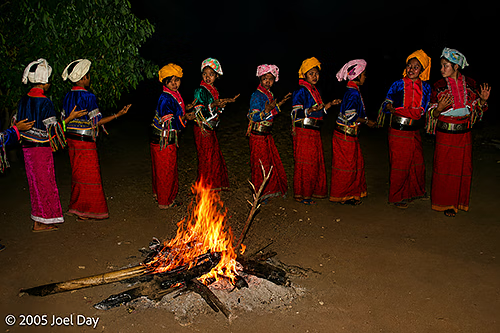
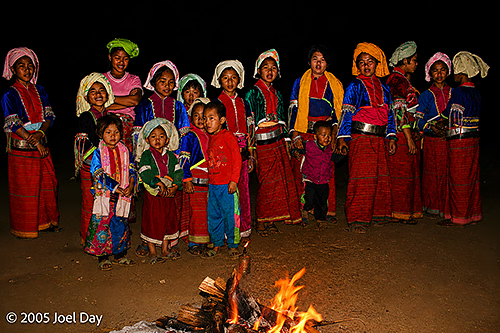
The traditional Thai food was fabulous throughout the trip, and the local guide and the people who came along, from Germany, Canada, and the U.K., were enthusiastic and fun to spend time with. The Canadians (from the Yukon) brought along a pet squirrel they picked up in a local market, which proved to be fascinating to the village kids. In the evening, the villagers entertained us with traditional dances around a bonfire.

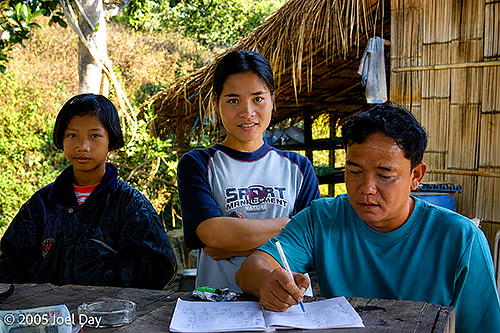
Highland Community Members, probably Karenni/Kayaw, Chiang Mai Province, Thailand
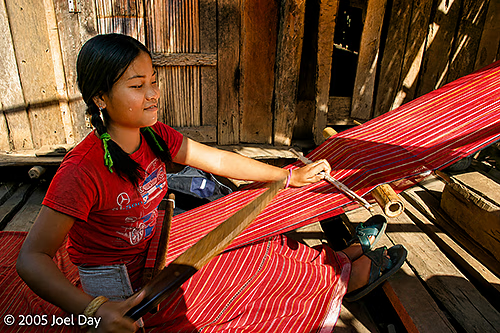
Highland Community Weaver, probably Karenni/Kayaw, Chiang Mai Province, Thailand
Highland Community Performers, probably Karenni/Kayaw, Chiang Mai Province, Thailand
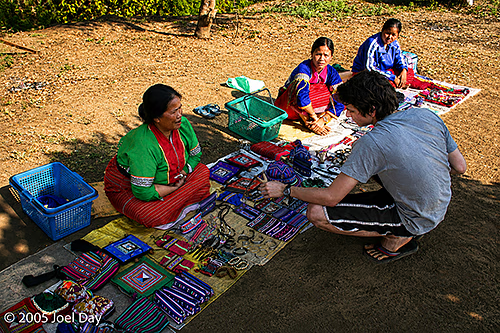
Highland Community Artisans, probably Karenni/Kayaw, Chiang Mai Province, Thailand

For the last leg of our journey, where we cruised down a river on bamboo rafts, we had a lot of fun trying to sabotage each other’s boats — causing most of the rafts to fall apart on the way downstream. As it turned out, they dismantled them to ship them back upstream, where they rebuilt them anyway, so we didn’t have to feel guilty on the ride back home to Chiang Mai.

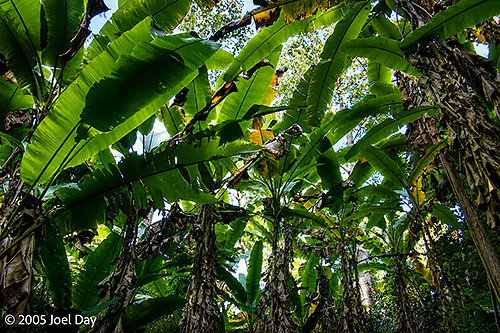
Jungle Canopy near the Thai-Burma Border, Chiang Mai Province, Thailand
Jungle Waterfall near the Thai-Burma Border, Chiang Mai Province, Thailand

I decided to extend my stay here a few days so I can go on a mountain biking trip over more mountains tomorrow.

Chiang Mai Province, Thailand

Meanwhile, back in the jungle…

Buddhist Monk with stray dogs in front of temple in Chiang Mai, Thailand

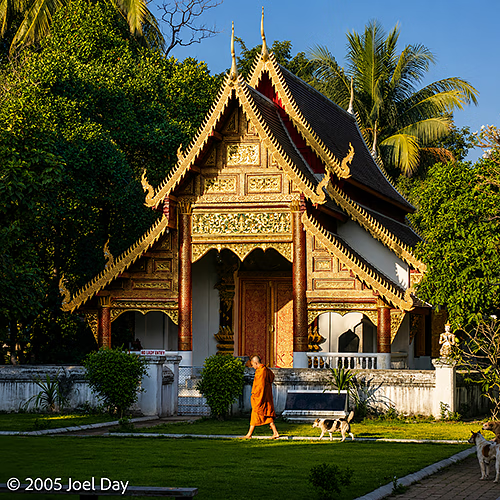
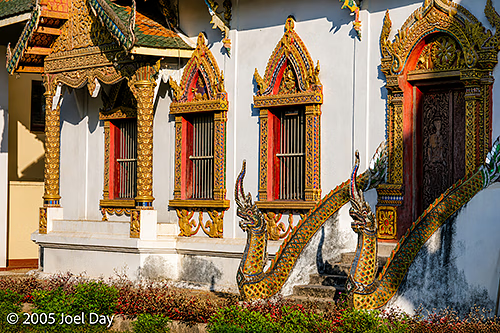
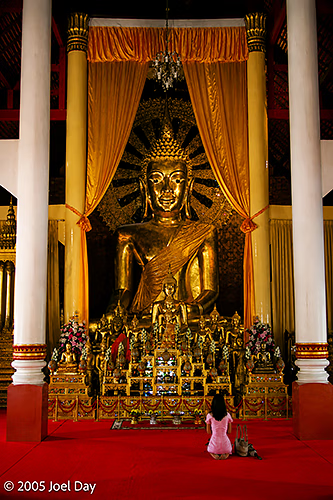
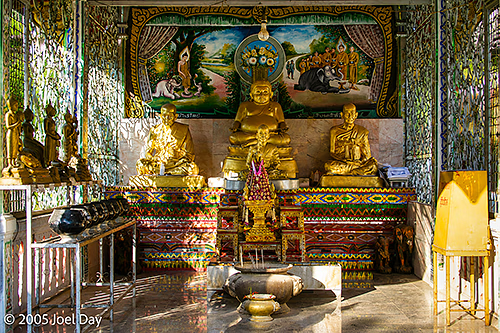
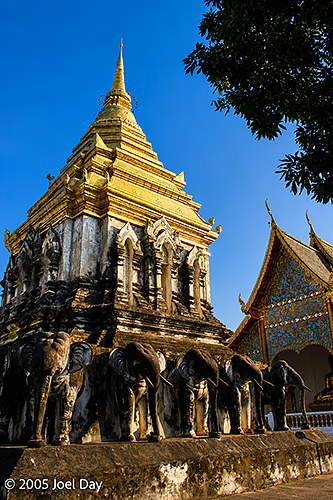
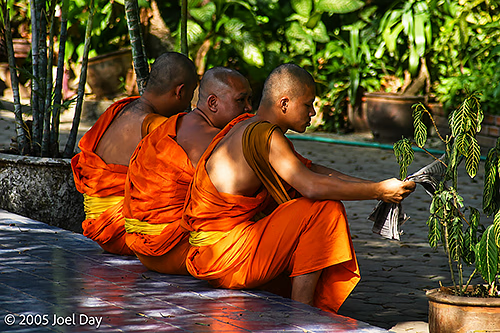
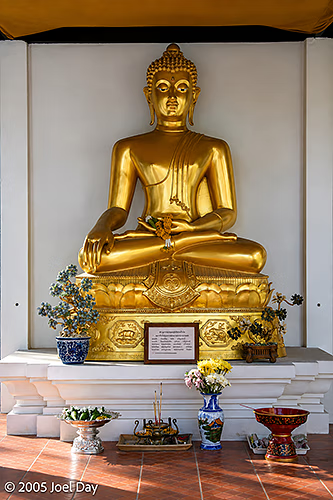
I’ve been hanging out in the northern city of Chiang Mai over the past few days. It’s the second-largest city in Thailand, but it still has a very small-town feel. Chiang Mai seems best known for its many Buddhist temples and the monks running around. It’s also considered a good base for exploring the northern reaches of Thailand, near the Myanmar (Burma) and Laos borders.

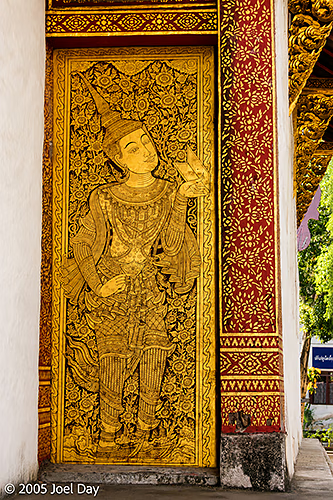
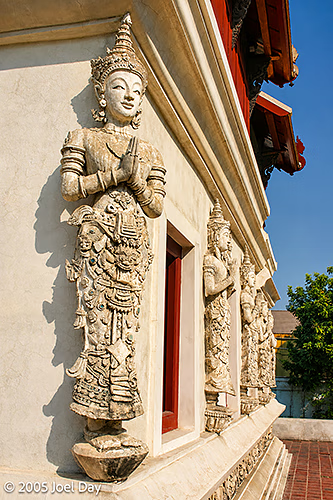
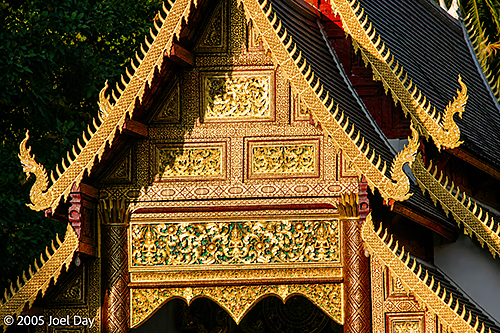
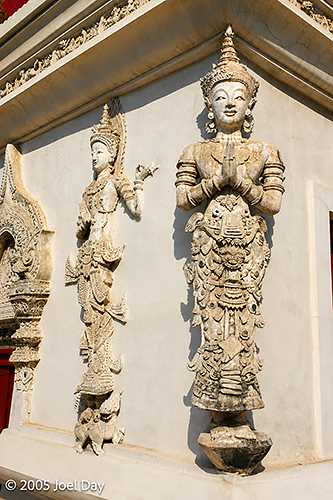
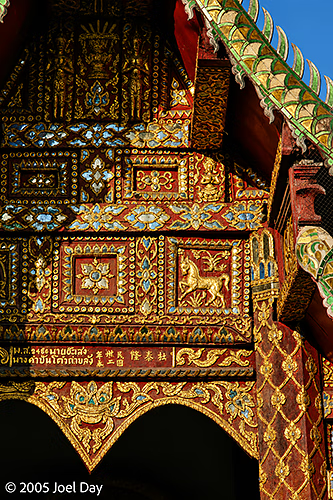
Buddhist temple design in Chiang Mai, Thailand
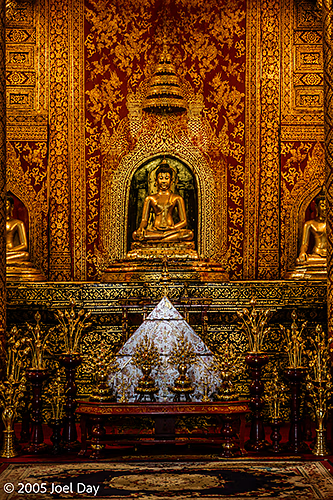
Thai Buddhist Shrine in Chiang Mai, Thailand
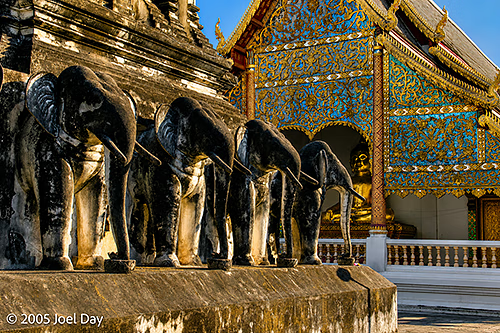
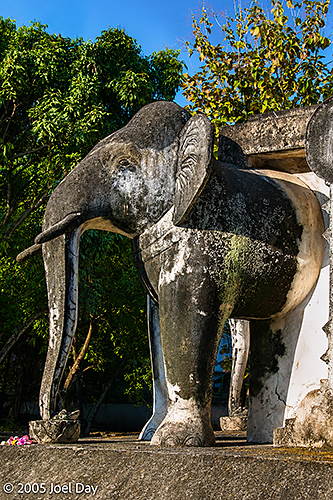
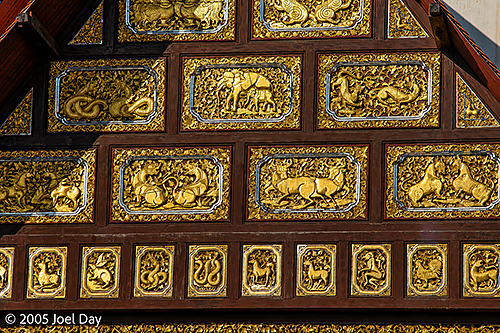
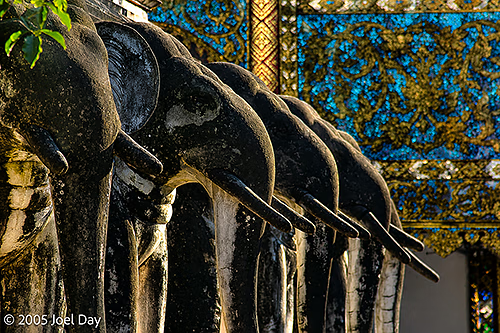
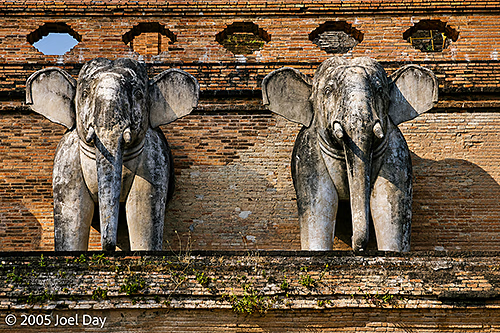
Elephants in Buddhist temple design in Chiang Mai, Thailand
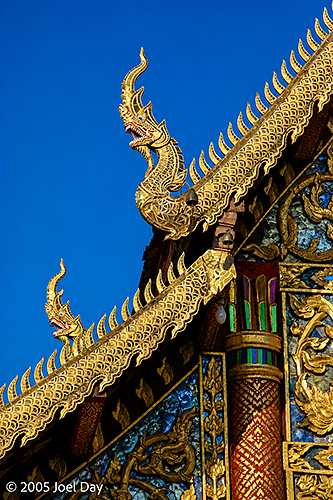
Buddhist temple design in Chiang Mai, Thailand
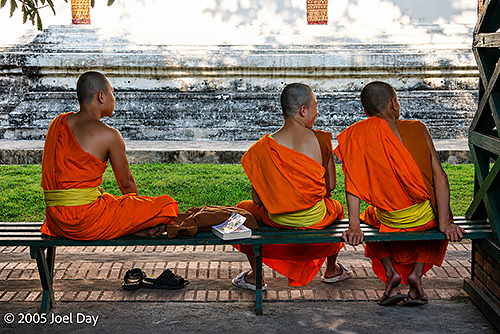
Buddhist Monks relaxing in Chiang Mai, Thailand
Buddhist temple design in Chiang Mai, Thailand
Thai Buddhist Shrine in Chiang Mai, Thailand
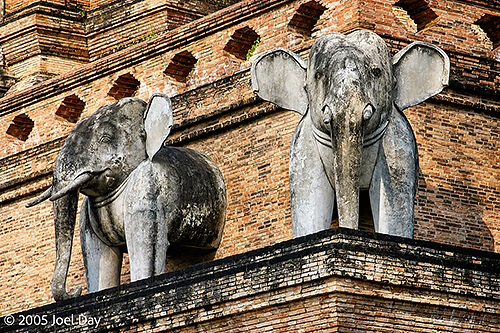
Elephants in Buddhist temple design in Chiang Mai, Thailand

Tomorrow I’m setting off on a three-day jungle adventure with a half dozen other people from my guesthouse. It will include a bit of hiking, a bit of swimming, some bamboo rafting, and, of course, elephant riding (as one does in Thailand). We’ll be sleeping in traditional huts in hill tribe villages (with those people with the elongated necks from wearing too many necklaces) up in the mountains.

Buddhist Monks reading newspapers in Chiang Mai, Thailand
Thai Buddhist Shrine in Chiang Mai, Thailand
Buddhist temple design in Chiang Mai, Thailand
Elephants in Buddhist temple design in Chiang Mai, Thailand
Buddhist temple design in Chiang Mai, Thailand
Thai Buddhist Shrine in Chiang Mai, Thailand
Elephants in Buddhist temple design in Chiang Mai, Thailand
Buddhist temple design in Chiang Mai, Thailand
Elephants in Buddhist temple design in Chiang Mai, Thailand
Buddhist temple design in Chiang Mai, Thailand
Elephants in Buddhist temple design in Chiang Mai, Thailand
Buddhist temple design in Chiang Mai, Thailand
Bangkok, Thailand

A Culinary Paradise

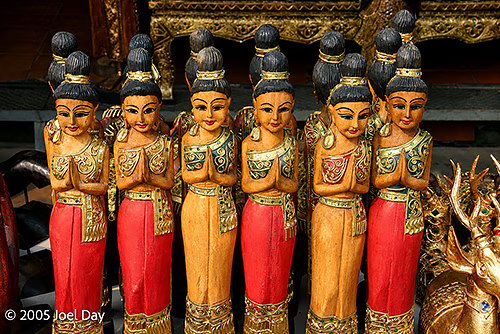
Golden Thai Wai Statues in a market stall, Bangkok, Thailand

I’ve been spending a few days wandering the back streets and neighbourhoods of Bangkok. There are lots of Buddhist temples and some monks about. They also have a Chinatown and Little India, like many Southeast Asian cities. The people are very nice, and hardly anybody hassles you about anything.

Buddhist Temple, Bangkok, Thailand

One of the nicest features of this place is the fabulous food. There seem to be endless places to eat with all kinds of food from around the world, but mostly Thai (of course). I love Thai food and have been having a wonderful time sampling many of the street-side stalls. As per the advice I’ve received, I make sure the food is kept cold and then cooked up fresh in front of my eyes. They seem to know exactly what ingredients to add to make everything taste special.

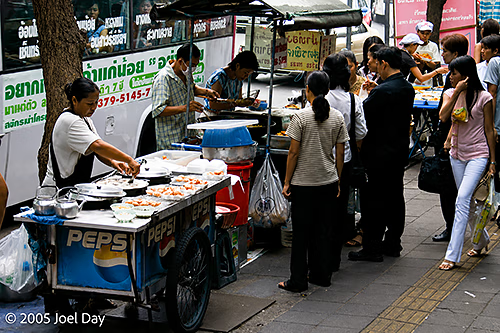
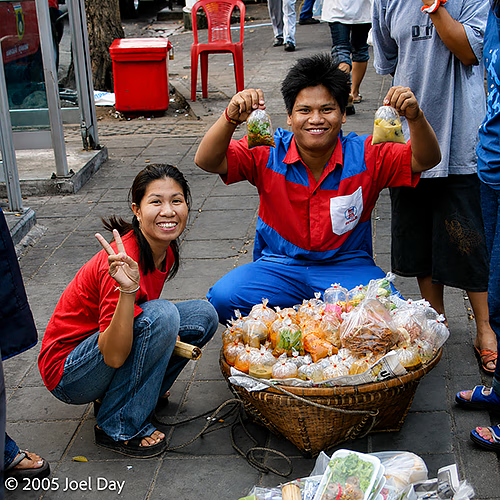
Selling meals on the streets of Bangkok, Thailand
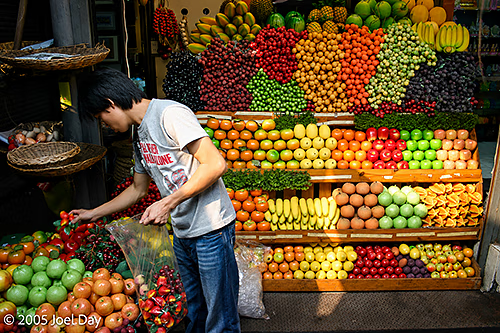
Fruit Stall, Bangkok, Thailand

The street-side cooks usually don’t know too much English, so you just have to point at what you want. I usually point at just about everything and shrug my shoulders. They’ll throw in all kinds of exotic spices and fresh herbs and come up with something great. Even when I ordered popcorn from a streetside vendor, it was flavoured with a sweet coconut milk concoction. You can often get very cheap, fabulously tasting meals for around A$1 (US$0.75). And to think most Thais don’t seem to have an ounce of fat on them! I guess it just must be healthy eating.

Selling meals on the streets of Bangkok, Thailand

I found a great guesthouse on a back street in a nice quiet area in the centre of town, but next to some of the big shopping areas. Bangkok seems a bit more modern than I expected. Probably a mix of Singapore and Kuala Lumpur. Unfortunately, the public transportation system is a bit of a mess. They have a nice skytrain (monorail) that doesn’t seem to go enough places, a brand new subway that has just been shut down due to an accident, boats that cruise up and down the main river, and lots of heavy traffic everywhere else.

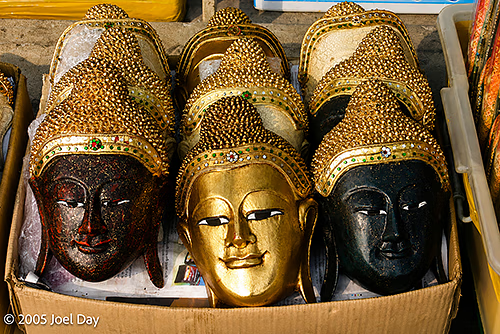
Ornate Buddha Heads in a Market Box, Bangkok, Thailand

I’ve booked a trip on the overnight train to Chiang Mai tomorrow night to see some of the sights in the northern part of the country. From there I will probably slowly work my way back down to Bangkok, and possibly into southern Thailand (if the post-tsunami problems improve) or east into Cambodia and/or Vietnam. I will have to see. I’ll be here for close to four weeks.

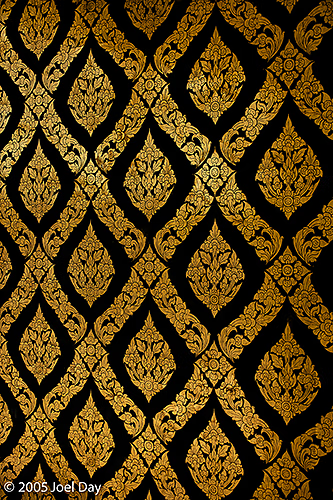
Thai Floral Lattice Pattern, Bangkok, Thailand
China, Hong Kong

A billion here, a billion there

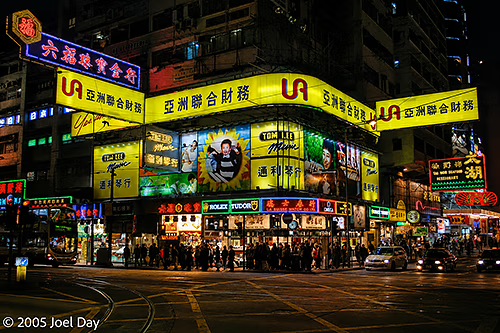
From one future world power to the next, I find myself chillin’ out in Hong Kong for a few days. What a relief it is to be here! What a contrast Hong Kong is to Delhi and Cairo.

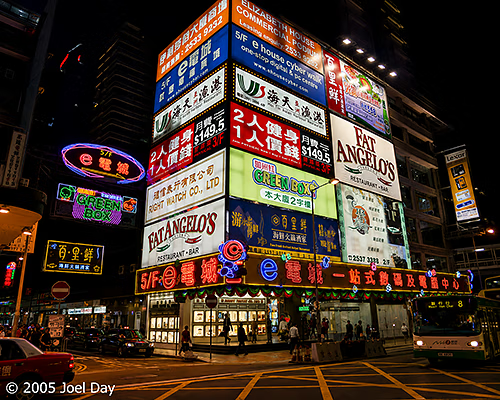
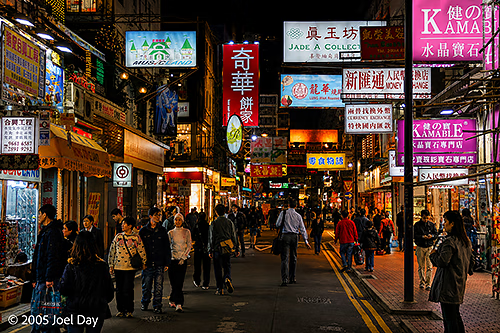
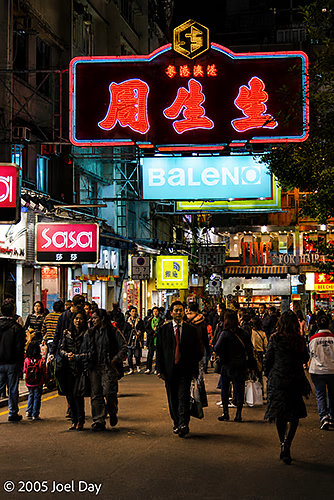
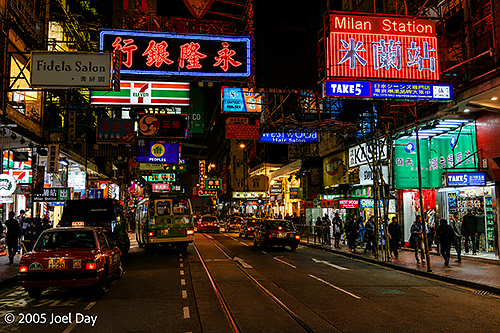
Evening Shopping in Causeway Bay, Hong Kong, China
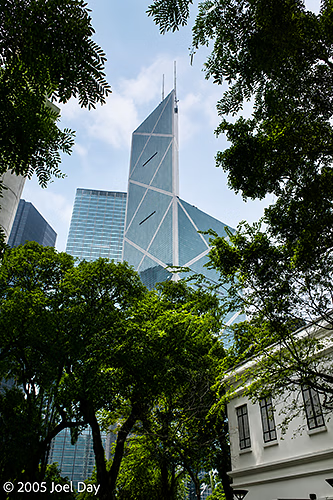
Skyscrapers of Hong Kong, China
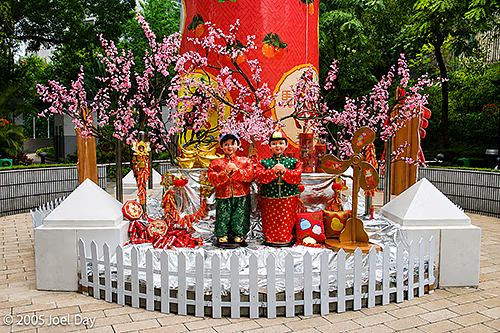
Chinese New Year display, Hong Kong, China

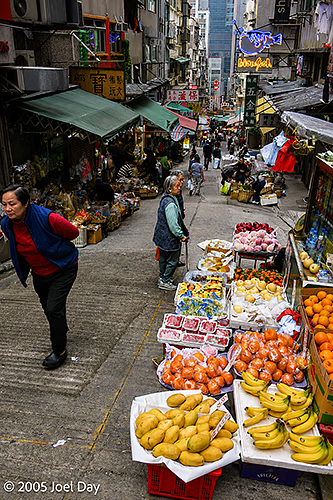
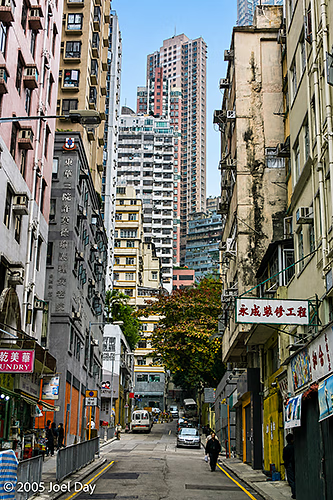
It’s nice to go from constantly watching where to step (avoiding hocked phlegm and pools of urine on the pavement) to surfing the spotless, state-of-the-art subways and trekking the spectacularly steep hills of relatively clean Hong Kong. This is certainly one of the world’s great cities.

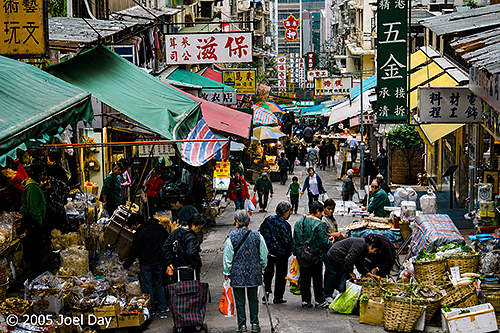
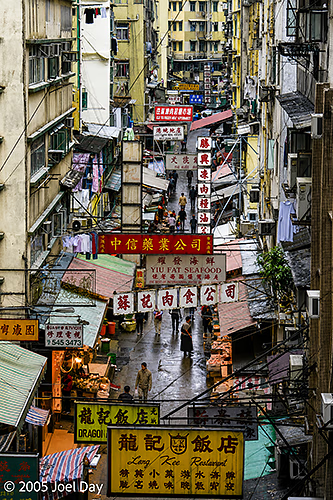
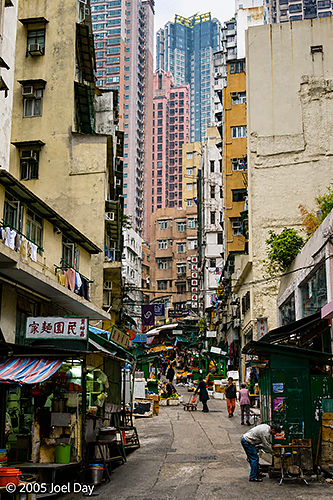
Busy street market in hilly Hong Kong, China
City Streets of Hong Kong, China
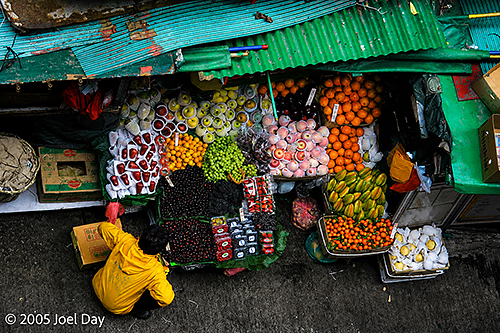
Fruit market in hilly street in Hong Kong, China
Busy street market in Hong Kong, China
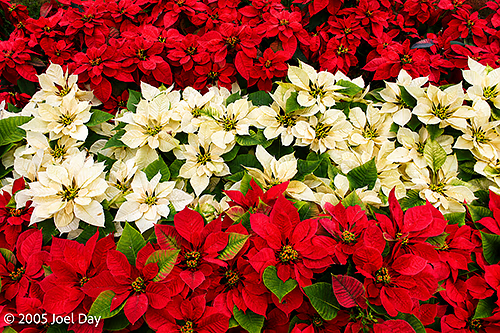
Christmas displays of poinsettias in Hong Kong, China

Hong Kong probably has the nicest airport I’ve ever come across. It’s huge, and we landed at one of its most distant gates, but I was able to get from the plane into my hostel room (over 25km away) in less than an hour. I don’t think I waited more than two minutes for anything, hopping on moving sidewalks, airport shuttles, escalators, getting my temperature taken to make sure I didn’t have SARS, on through customs, through the baggage claim, onto a high speed train (that is so fast and smooth it feels like it’s levitating) into the city, onto a free hotel shuttle bus, and a then quick 1/2 block jaunt down to my cheap accommodation. The temperature taking, incidentally, consists of walking briskly past a heat-sensitive camera with everyone else. On large flat-panel screens you see an alien view of everyone, colour-coded to reflect each body temperature. If someone had a fever, I suppose they would appear a different colour and get yanked by security to the side. To get back to the airport, you actually check in with your bags in the city at a sleek train station, and they take care of the rest. It is probably the most distant check-in from your plane you’ll ever find.

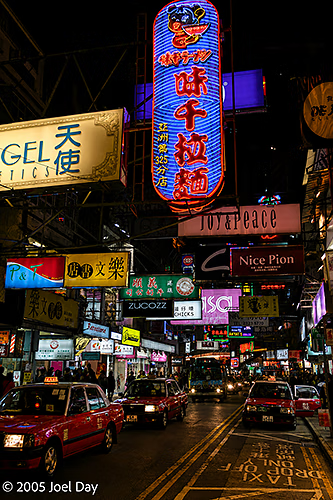
Evening Shopping in Causeway Bay, Hong Kong, China

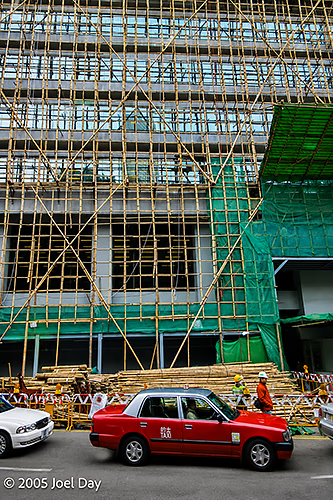
Hong Kong is very high tech in many ways. The whole city is wired for broadband. There is free Internet access in many subway stations and at the airport. I’m writing this blog at the central library, which has 500 such free terminals available on its many different floors. There are also mysterious containers whizzing over my head on the ceiling and into walls at either end of the building. I can only assume they’re full of books being sorted. On the other hand, many high-rise buildings are still built using bamboo scaffolding! There is certainly a mix of the old and new worlds in places.

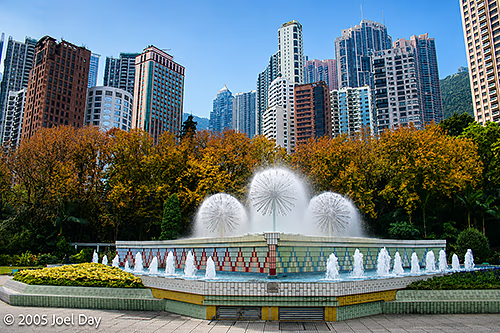
City park surrounded by skyscrapers, Hong Kong, China
Bamboo scaffolding around high-rise in Hong Kong, China
Chinese Herbal Medicine Wholesaler, Hong Kong, China

The public transportation system here is fabulous, with probably the best subway system I’ve ever been on. There are illuminated maps on the walls of each rail car with flashing lights that show you exactly what station you’re at, which direction you’re going, which door you’ll need to exit from, and what connections you can make from the next station. In each of the underground stations, there are very clear maps showing all the subway exits and where they surface so you can plot the best one for where you’re headed. They’re all assigned letters and have signs everywhere pointing the way.

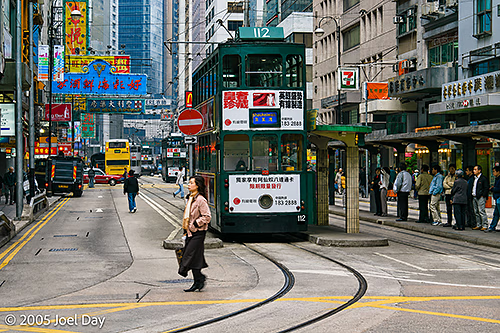
Iconic double-decker tram on streets of Hong Kong, China
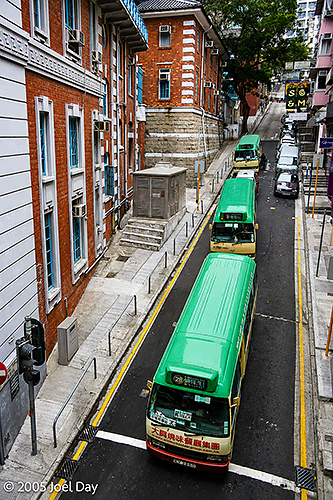
Busses on streets of Hong Kong, China

Much of Hong Kong runs on smart cards these days. These are credit card-sized cards that contain a computer chip you can store information on. You can use them here to purchase all kinds of things, from subway trips to bus trips to parking meters to restaurants to stores, etc. You just juice them up with cash at an automated terminal from time to time. The best thing about them is that you don’t even need to remove them from your wallet to use them. You just wave your wallet within close proximity of a smart card reader, and it automatically registers where you’re coming from or going to or deducts whatever payment you’re trying to make. You never have to worry about fumbling for change.

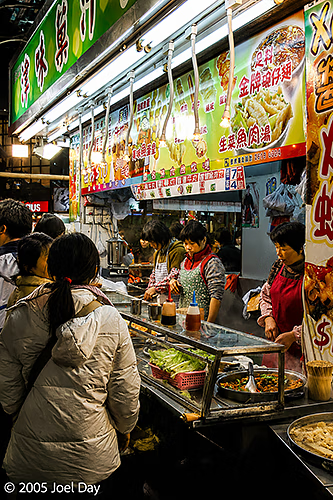
Food stall on the streets of Hong Kong, China
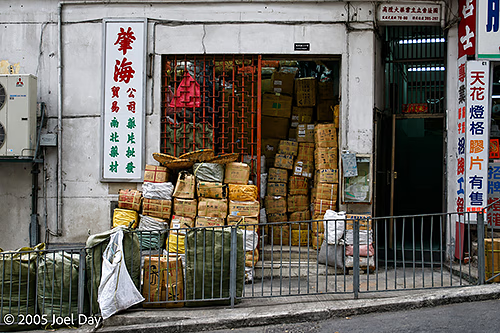
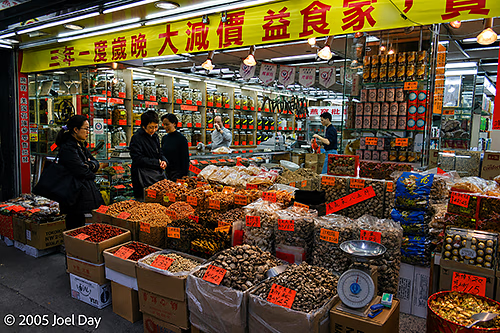
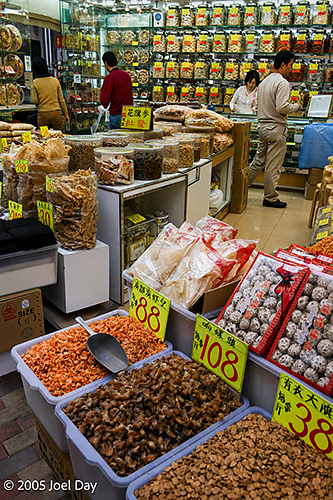
Chinese dried-food and traditional ingredients shop, Hong Kong, China

Hong Kong is also very safe, and you can wander pretty much wherever you want, day or night. The neighbourhood I’m in seems to be busy with shoppers every day up until midnight. Nobody seems to notice a Westerner like myself wandering around. This is especially nice after visiting India and Egypt, where touts were continually trying to herd you into their stores (honestly or deceitfully), never taking “no” for an answer.

Evening Shopping in Causeway Bay, Hong Kong, China

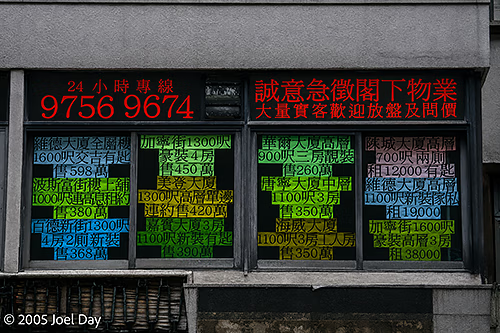
Probably the worst thing about Hong Kong is the cost of living here. I’ve been here on business a few times before, and most of the people I met had to commute an hour to find reasonably priced real estate. And that’s before and after working 12-hour days and on Saturday mornings (which seem to be the standard office hours here). The cost of food and accommodation is quite high too—which is part of the reason I’m only stopping here for a few days.

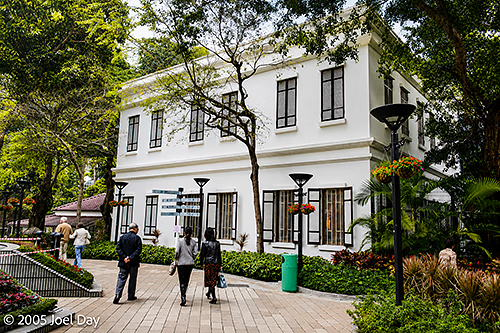
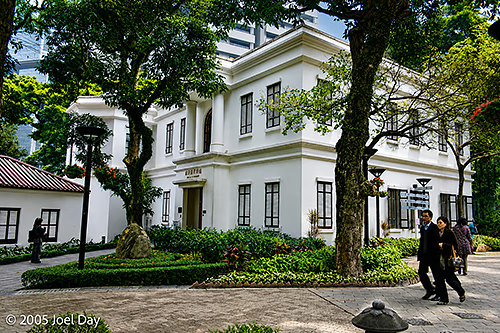
Rawlinson House in Hong Kong Park, part of the surviving Victoria Barracks complex in Central Hong Kong, built during British colonial rule.
City Streets of Hong Kong, China
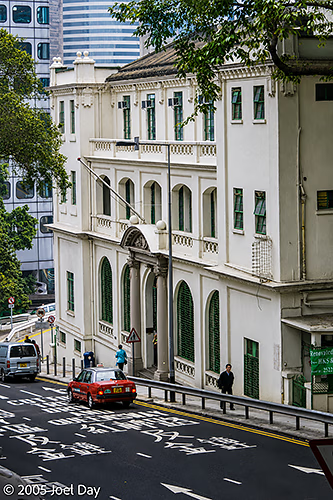
Cassels Block, part of the surviving Victoria Barracks complex in Central Hong Kong, built during British colonial rule.
Flagstaff House in Hong Kong Park, built on the former site of the British Army's Victoria Barracks in 1846.
Flagstaff House in Hong Kong Park, built on the former site of the British Army’s Victoria Barracks in 1846.
Real estate listings on the window of a realtor in Hong Kong, China