Australia, South Australia

Adelaide, South Australia

After another long boring drive through the desert, I decided to make a pit stop in Adelaide — even though it is actually about 600 kilometers out of my way. The desert I had to drive through in northern South Australia (if that makes any sense) was largely in a government protected military area titled “Woomera” and famous locally for housing boat people in camps (indefinitely).

The South Australian desert has two distinctive characteristics in Australia. They seem to have a lot more flies than anywhere else I’ve been. Flies in Australia are not like the flies they have in the U.S. They seem preoccupied with trying to fly into every orifice on your body. Your nose, your ears, your mouth. Whatever they can find open. It’s very annoying. In the U.S. they just seem interested in your food. In Australia they seem to love the heat. In the U.S. they seem to like hanging out in cool places like your garage.

The other distinctive characteristic of the South Australian desert is the amount of road kill. When I pulled back on to the Stuart Highway from Uluru and started heading south, I was taken by the number of dead kangaroos lying by the side of the road that looked like they had only been hit in the past day or two. I even saw one with blood draining out of it into the middle of the road, but that may have had more to do with the vulture picking at its flesh than having just been hit. The odd thing was that I couldn’t seem to find any dead kangaroos that looked like they had been lying there for more than just a day or two. It was like some mass slaughter had just taken place.

Then after hundreds of kilometers of driving, I saw a truck pull over ahead of me and turn on some flashing orange lights. A man jumped out from his cab with a huge meat hook and swiped in down towards one of the fresh dead kangaroos. I just managed to pass him before the impact, but I did notice some sort of odd grinder on a trailor attached to the back of his truck. Ugh! Their kangaroo problem, I figured, must be so bad that they have to send this guy out to collect them every day. That’s why there wasn’t any older skeleton road meat like you find on most Australian highways.
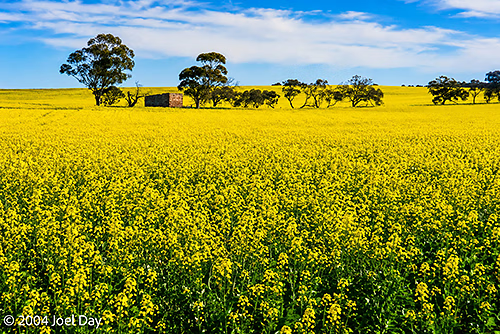
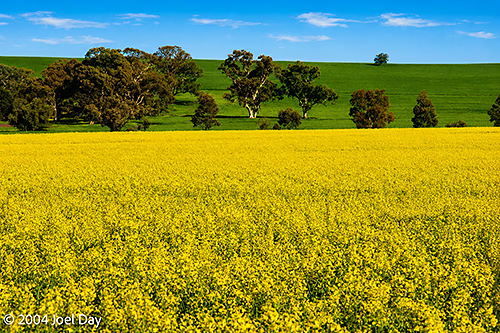
Canola field in South Australia

Southern South Australia turned out to be completely different. Except for the flies. The boring desert turned into rolling green and yellow flowering hills and distant mountain ranges. It became absolutely beautiful as I headed into Port Augusta. I was a bit stunned when I arrived in Port Augusta, because I pulled over to take a break at a park and found the sea lapping up at my feet. It suddenly dawned on me that I had just driven entirely across a continent from sea to sea (Timor Sea to the Spencer Gulf).
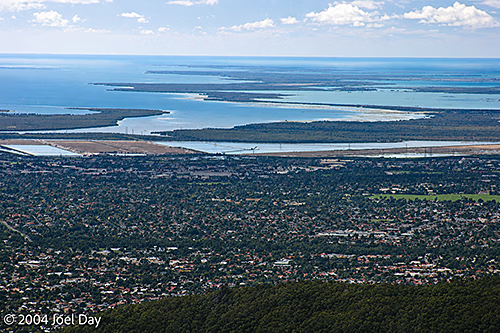
Saint Vincent Gulf near Adelaide, South Australia

I continued driving south to Adelaide, Australia’s next largest city after Perth, through beautiful countryside for another three hours. I managed to find a camping spot in a caravan park right next to the beach. Only problem was that it wasn’t warm like it was up north. It was that freezing damp cold I knew too well from living in Melbourne for six months back in 1992. I ended up spending a few nights and a full day in Adelaide before starting my trek back west to Perth.
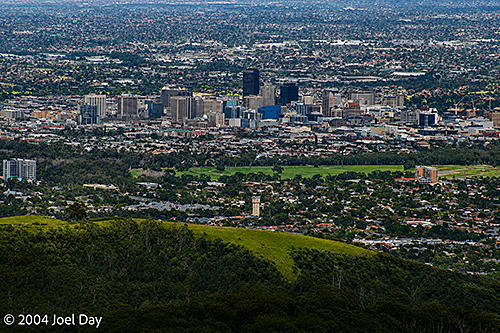
Adelaide, South Australia

Adelaide was nice, but the longer I spent there, the more it just seemed like just another big city with the same shops and attractions as any other big Australian city. The one thing Adelaide had that Perth doesn’t (besides being very green and shady and wet) was their Central Market. I started my day there and it was really great. Very much like Reading Terminal Market in Philadelphia. Just about the same size, too. And very well supported by the locals. Lots of fresh produce, fresh meats, fabulous looking deserts and other gourmet foods, surrounded my nice cafes.

After a few days of freezing nights in damp cold, I decided I should start to make my way back to Perth in time to catch my flight to New Zealand.
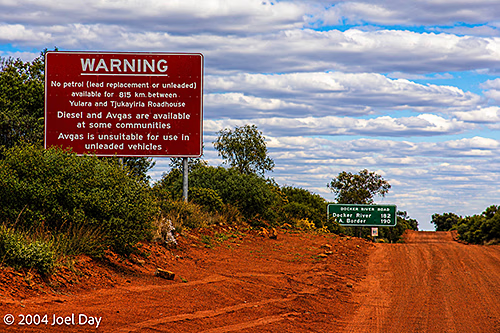
Australia, South Australia

I slept in a mine shaft…

I’ve now reached the point where I really have to start making some progress in getting back to Perth. One interesting thing about visiting Uluru and The Olga’s was a little shortcut from there to Perth. It’s known as “The Great Central Road”. The problem with it is that it’s all dirt. Not only does it require a 4-wheel drive, but it also requires that you have a special permit to use it. And on some stretches of the road, I’ve been told that you are not allowed to travel along it unless you are part of a 4-wheel drive convoy. Hmmm…. sounds exciting!

Start of Great Central Road from Uluru, Northern Territory to Perth, Western Australia

So instead, I’ve found myself having to travel hundreds (if not thousands) of kilometres out of the way to make it back to Perth on sealed (paved) roads in my little two-wheel drive car. This paved route takes me down to Adelaide first (to the southeast) and then back west across the Nullabor Plain to Perth.

I’ve already had to backtrack 100s of kilometres to get out to the main “Stuart Highway” from Uluru and Kings Canyon today. I’m hoping to make it to Adelaide for a few days of battery recharging by tomorrow, but I’ve had to make an evening stop in Coober Pedy for the night.

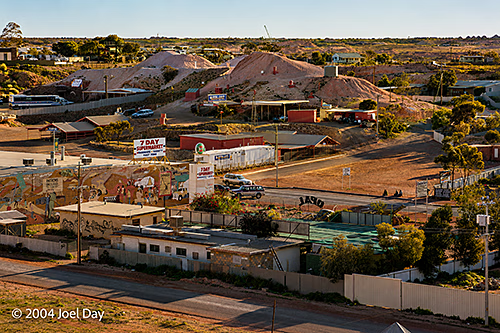
Coober Pedy, South Australia

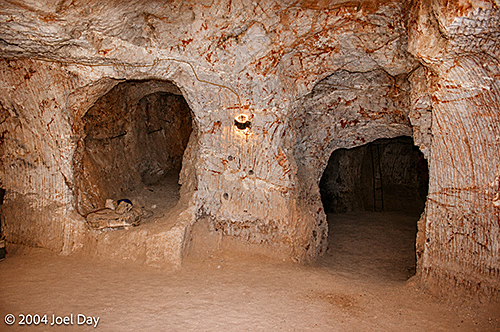
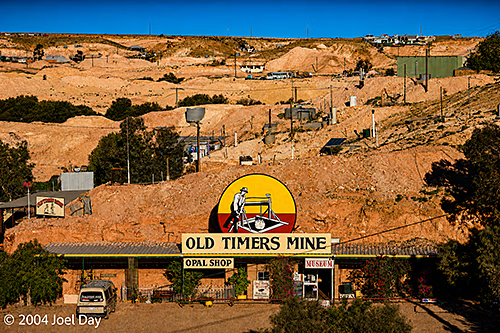
Coober Pedy turned out to be really cool. It is famous for opal mining and has a lot of dwellings in former mines to give locals refuge from the summer heat and cold winter nights.

Opal mine pits in Coober Pedy, South Australia

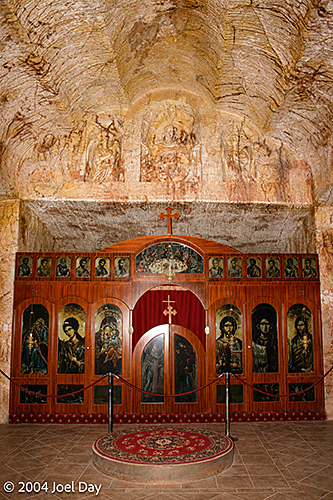
Even the churches, shops, hotels, and hostels (where I’m typing this entry) have made use of the leftover mine shafts.

Coober Pedy, South Australia
Underground church in Coober Pedy, South Australia

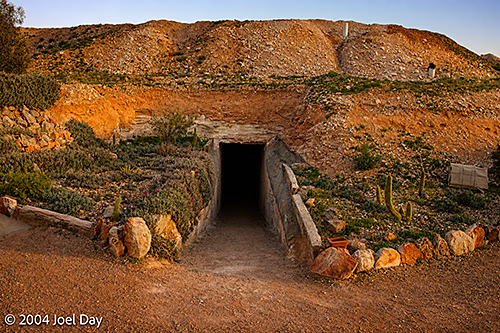
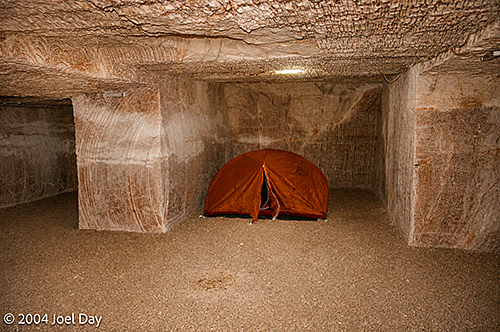
I was even able to find an underground campsite, so I pitched my tent in a mine shaft for the evening. The campsite included a free tour of a former mine.

Disused opal mine entrance to underground campsite in Opal mine in Coober Pedy, South Australia

The tour was conducted by an eccentric mine owner. Eccentricity seems to be standard in these family tour operations I come across. I guess that’s part of what you’re paying for. It was mostly interesting information about how they go about finding where the opals are and what procedure they use to get to them (part voodoo).

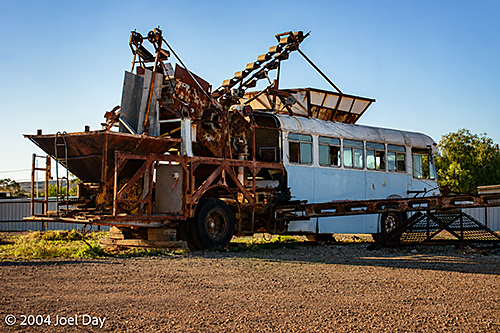
A movie titled Pobby and Dingan was due to begin filming in the same deserted mine the week after I was there. It won’t be the first. The town was littered with artifacts from other famous movies that were filmed in the area, including Mad Max.

Old Mad Max movie prop in Coober Pedy, South Australia

The best part about sleeping underground was that I didn’t have to worry about insects or the cold night because the temperature underground always stays the same. The worst part about it was a family of four who set up next to me and snored all night. Oh well. They were very nice, actually. Did the tour with me.

Disused opal mine underground campsite in Opal mine in Coober Pedy, South Australia

The stars in Coober Pedy were probably the best I’ve seen around Australia, probably due to its very dry desert environment. The Milky Way has been a regular feature in the skies for me over the past three weeks.

Australia, Northern Territory

Earth’s Other Moon

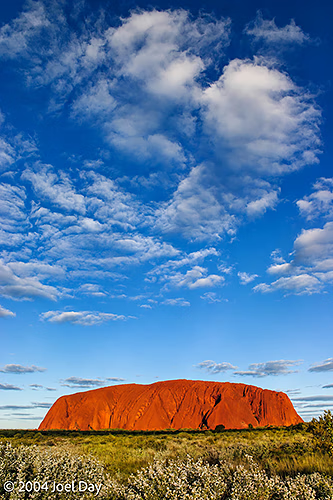
So yes, I’ve now made the pilgrimage to Uluṟu (aka Ayers Rock), and I can tell you that it is absolutely amazing. I wasn’t really expecting it to be, of course. You tend to develop a bit of cynicism about these tourist attractions after driving hundreds of kilometres. But Uluṟu has certainly been worth the trip. Just think of a rock almost the height of the old World Trade Center towers encompassing an area around the size of lower Manhattan. I’m pretty sure, anyway. It’s a six-mile / 10-kilometre hike around the thing. It dwarfs everything around it, and you can’t see the top of it from the hiking trail.

The east side of Uluṟu, Northern Territory
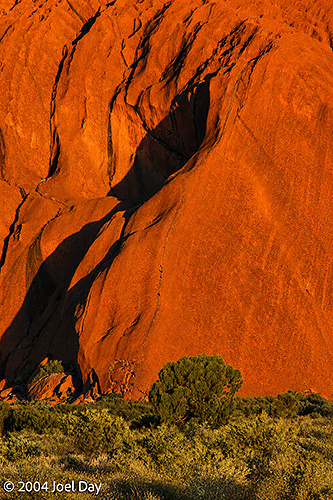
Side of Uluṟu, Northern Territory
The east side of Uluṟu at sunrise, Northern Territory

There are black stains running off it where rivers of water flow when it rains (since rocks can’t absorb water). It actually struck me as being like the moon, because you can’t get away from it. It is so big, iconic, and prominent that it seems to follow you wherever you go — just like a really large full moon skirting along the horizon as you’re driving down the highway, keeping its same position as everything else scoots by you: No matter how fast you go or how many trees or buildings you pass, it’s always in the same position just looking back at you.

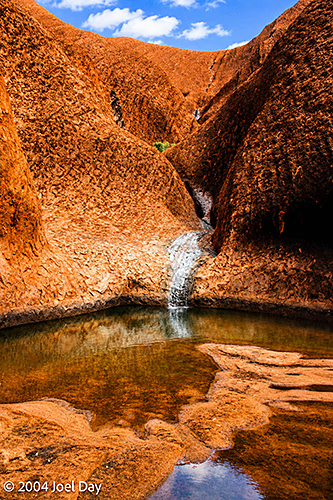
Water flowing off Uluṟu
Uluṟu, Northern Territory

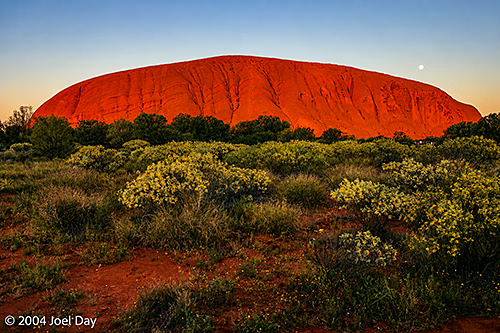
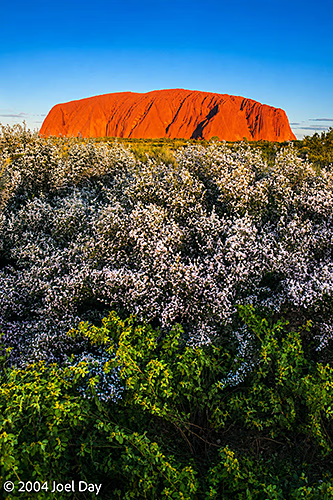
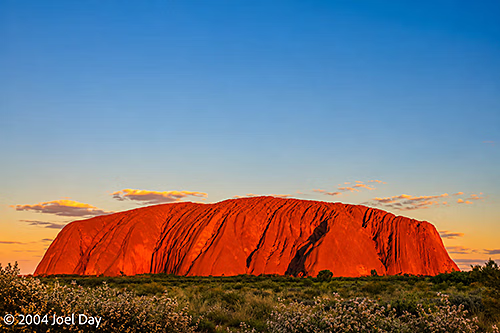
Driving right up to Uluṟu is one of the most awe-inspiring experiences. Of course, the big show comes when the sun goes down, and it lights up bright orange. That’s when everybody whips out their cameras. As tacky as this might sound, it’s lots of fun to hang around in the designated positions waiting for the right moment. It seems everyone there has a story to tell about how they got there. Being in the middle of Australia, in the middle of nowhere, it’s a big trip for everyone. There is a real pilgrimage feel to the experience. Many are people who’ve spent their entire lives in Australia and were just making their first visit.

The west side of Uluṟu at sunset, Northern Territory
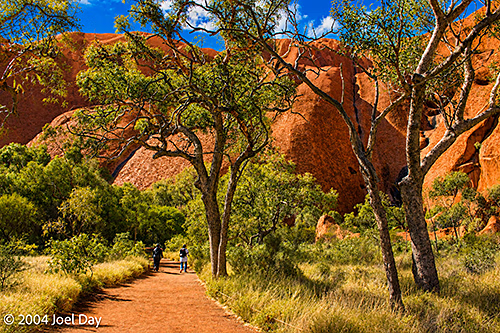
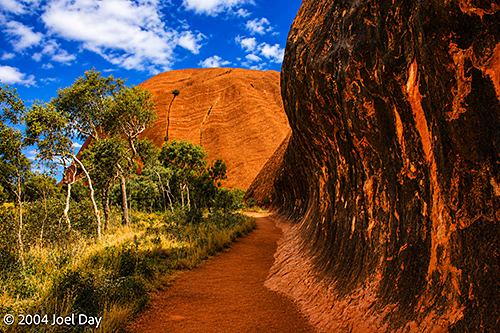
Uluṟu base walk
Uluṟu base walk
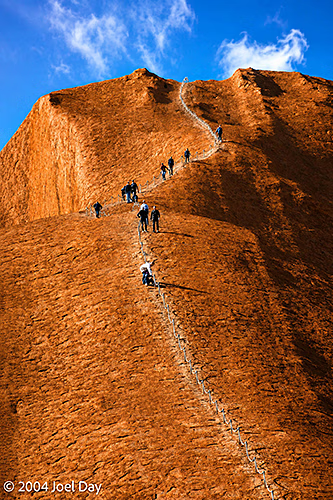
Climbers on Uluṟu, Northern Territory
Uluṟu base walk
Uluṟu base walk
Uluṟu at sunset, Northern Territory
The west side of Uluṟu at sunset, Northern Territory
Uluṟu at sunset, Northern Territory
The west side of Uluṟu at sunset, Northern Territory

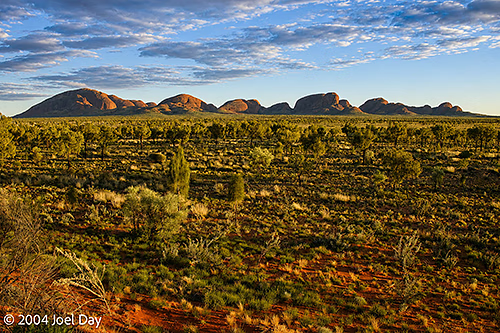
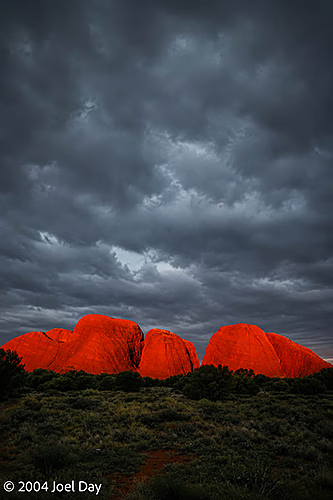
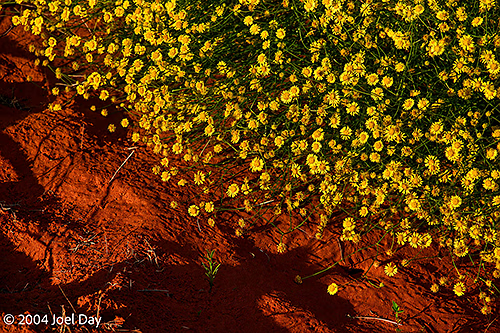
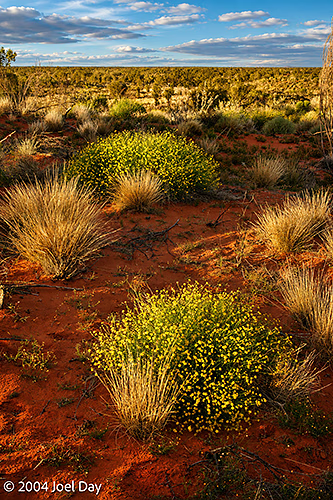
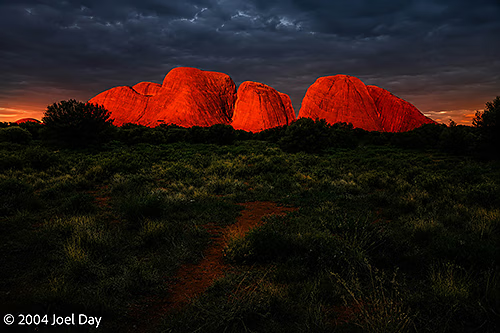
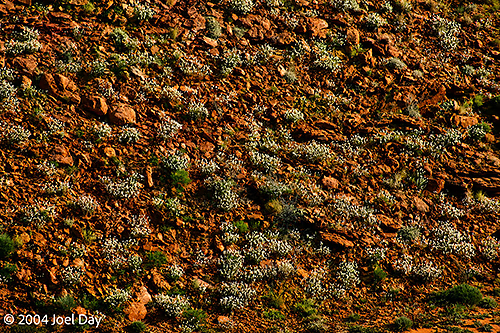
To be honest, there is another rock formation in the same national park that is even more impressive: Kata Tjuṯa (aka The Olgas). Kata Tjuṯa may not be as iconic or symmetrical as Uluṟu, but they are actually much larger and more interesting to wander around. There is a nice 3-4 hour hike around them that is really beautiful with the red sand and wildflowers in bloom at the moment.

Uluṟu-Kata Tjuṯa National Park, Northern Territory
Kata Tjuṯa at sunset, Northern Territory
Uluṟu-Kata Tjuṯa National Park, Northern Territory
Kata Tjuṯa at sunset, Northern Territory

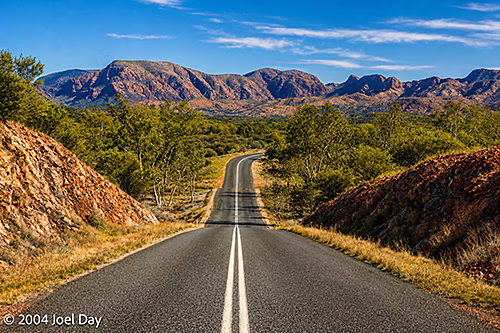
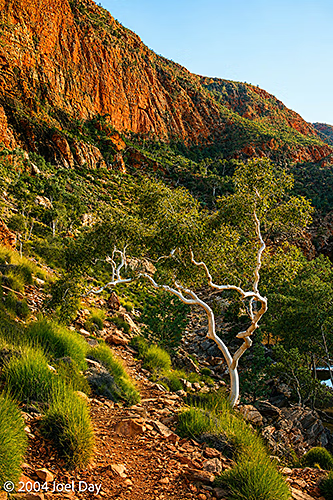
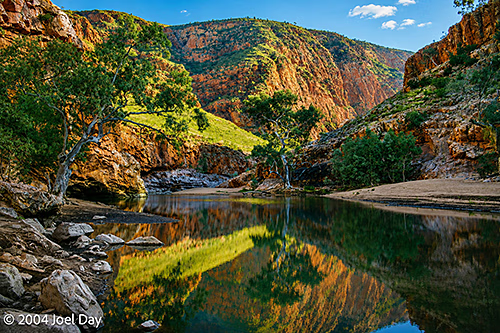
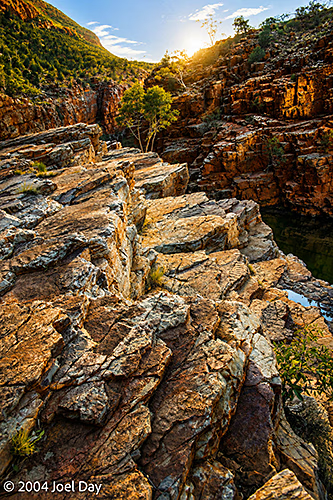
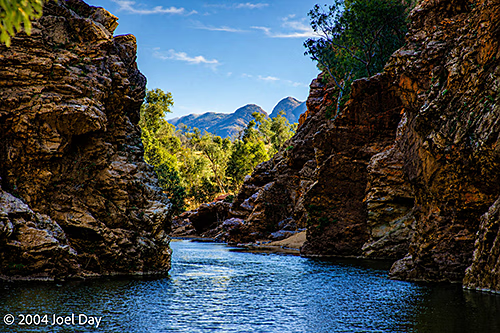
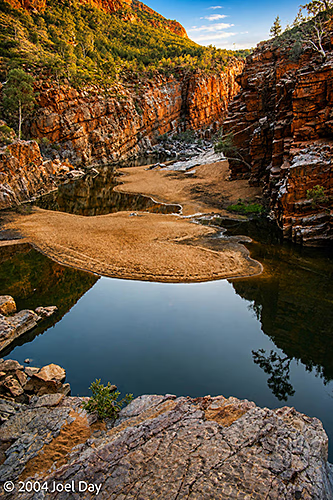
In addition to these attractions, there is also a beautiful range of mountains running east and west of Alice Springs (a bit of a drive to the north) called the MacDonnell Ranges that are full of gorges and canyons. I spent one night camping at a beautiful gorge in the West MacDonnells before going to Uluṟu for a few nights, and another night camping at King’s Canyon (which I believe is Australia’s biggest canyon) afterwards.

Tjoritja / West MacDonnell National Park, west of Alice Springs, Northern Territory
Ochre Pits in Tjoritja / West MacDonnell National Park, west of Alice Springs, Northern Territory
Tjoritja / West MacDonnell National Park, west of Alice Springs, Northern Territory

The entire area has been freezing for camping, but I’ve been surviving just fine. I know the temperature dropped to at least 0 Celsius (32F) the first night I camped at Uluṟu, but it is an area that is known to drop down to -5C in winter. It’s funny because I had one last balmy night camping at Wycliffe Wells, and then the next night I was freezing in the MacDonnell Ranges.

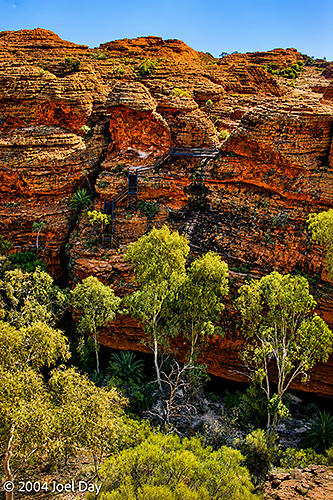
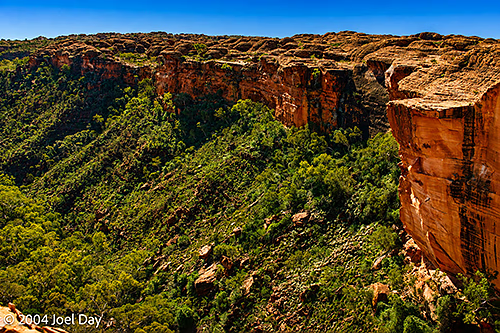
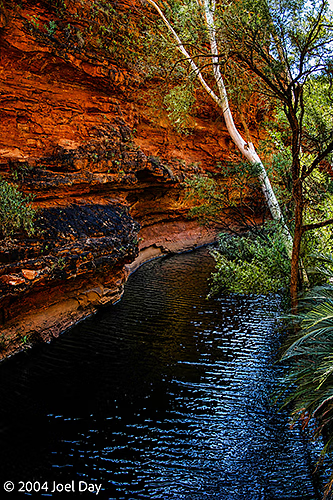
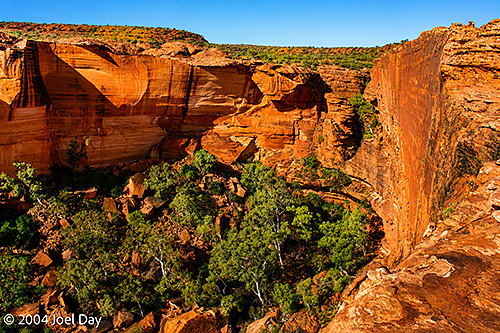
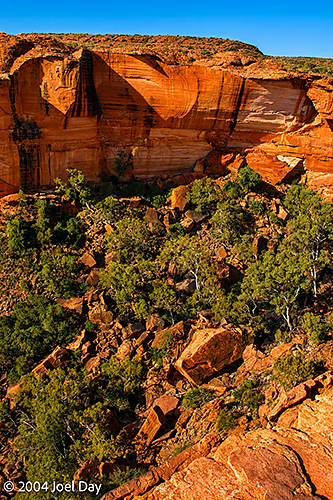
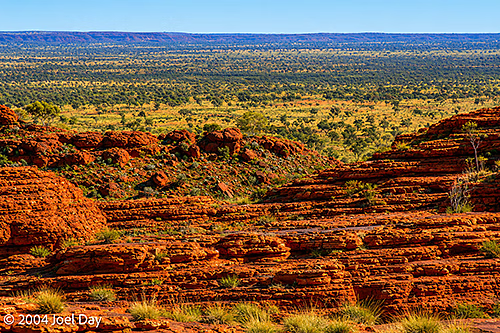
Kings Canyon in Watarrka National Park, Northern Territory

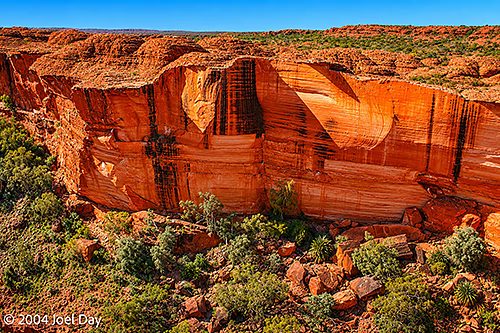
Kings Canyon was quite spectacular, but no Grand Canyon (of course). There was a 3-4 hour rim hike that was quite interesting and gruelling. Unlike the Grand Canyon, where you hike down into it and then back out, the King’s Canyon had to be climbed first and then climbed down. I think the movie Priscilla, Queen of the Desert ended up there, but I’m not absolutely sure.

Kings Canyon in Watarrka National Park, Northern Territory
Watarrka National Park, Northern Territory

The coolest part of King’s Canyon was the little oases tucked into some of the rock crevices. They said there were plants there that used to grow more widely in the area 100s of millions of years ago when the climate was vastly different in the region — but those plants have managed to survive in these pockets of water the canyon catches.

Kings Canyon oasis in Watarrka National Park, Northern Territory
Australia, Northern Territory

Out of the Tropics again…

Greetings from the center of Australia: Alice Springs (aka “The Alice”). I’m having to deal with rain for the first time in 3 weeks. A bit of a shock, but kind of nice. I’m just not looking forward to camping in it.

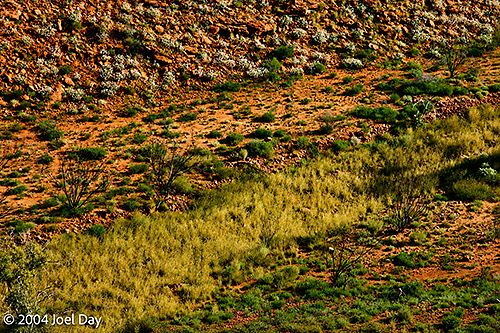
I’ve been doing mostly driving since I last wrote, but I have had some fun along the way. Many sections of the drive were quite beautiful with bright red soil and wildflowers.

Northern edge of Darwin, Northern Territory
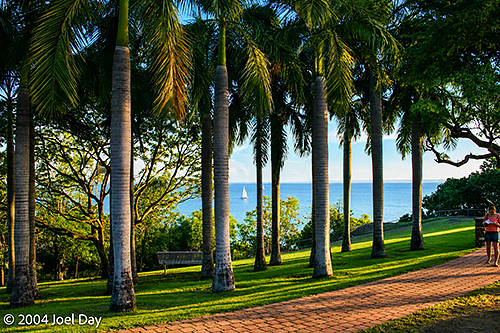
Bicentennial Park in Darwin, Northern Territory

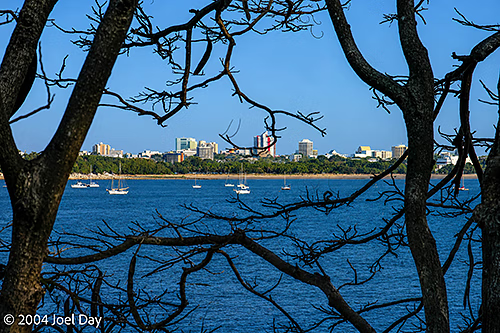
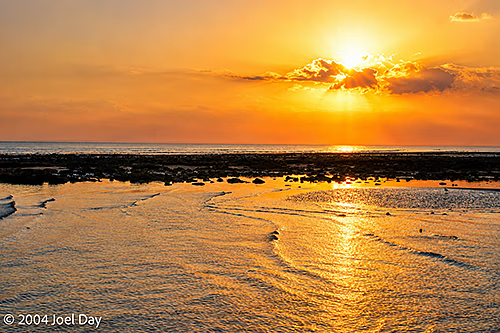
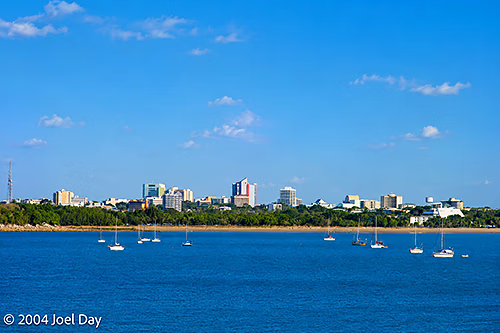
Darwin turned out to be a pretty nice place to hang out in afterall. It has a very modern and cosmopolitan feel to it with plenty of nice restaurants and beautiful tropical gardens overlooking the bay. On Sunday and Thursday nights they have a big international food festival on the beach which includes lots of fabulous eats from around the world. It seems to be the place everyone decends to for a nice dinner while they watch the sun set over the Timor Sea.

Dudley Point Lookout view of Darwin, Northern Territory
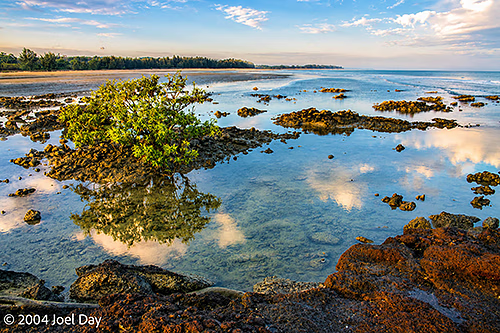
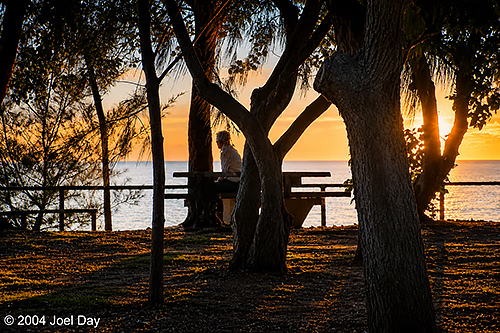
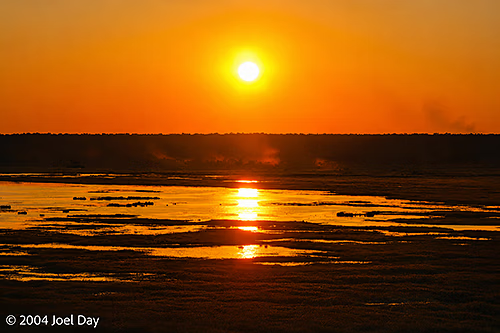
Sunset over the Timor Sea near Darwin, Northern Territory

The thing I disliked most about Darwin was the camping. Like most of the tropics, it’s always very hot and very humid. You lie in your tent sweating into your pillow in the evening waiting for the temperature to cool. And then in the morning you wake up cool, but drenched from the heavy tropical dew.

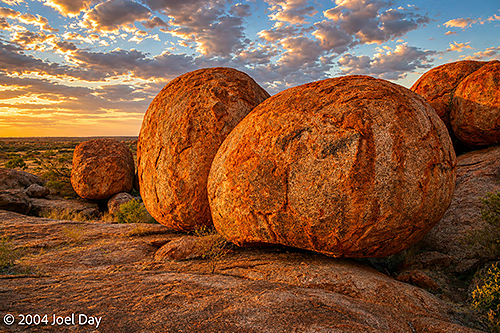
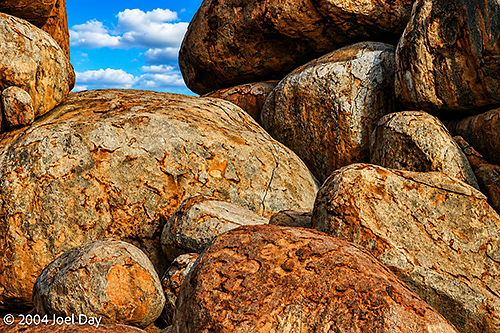
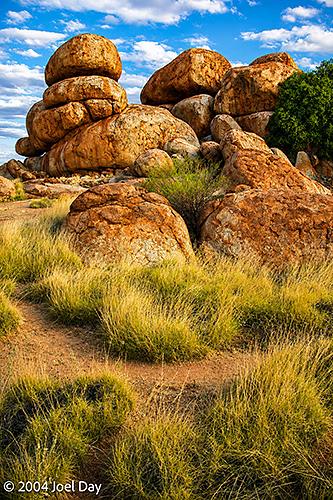
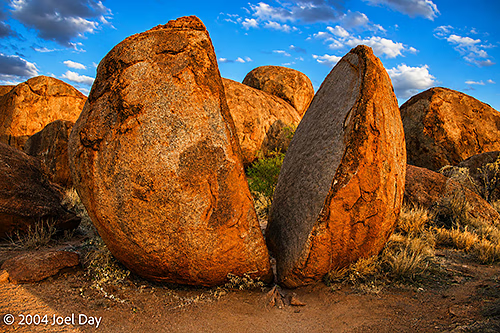
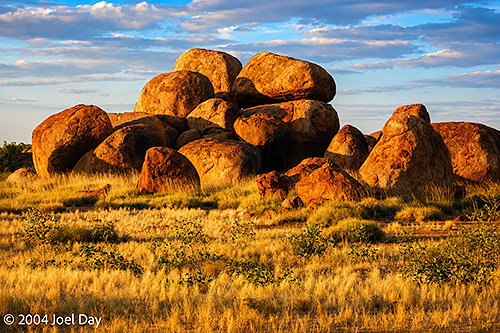
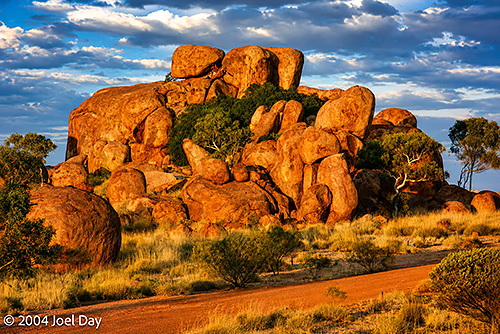
From Darwin I cruised down to Elsey National Park, a nice little spot with hot springs and plenty of places to swim with freshies. I camped there for the night before heading down to “Devil’s Marbles,” an unusual formation of giant marble-like red rocks.

Devils Marbles (Karlu Karlu), north of Alice Springs, Northern Territory

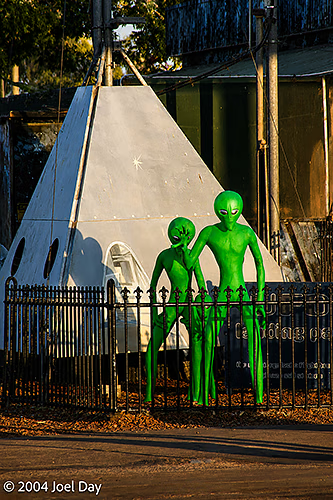
While visiting the area, I camped in nearby Wycliffe Well — a spot that claims to be the UFO reporting capital of Australia. The owner of the caravan park there was quite eccentric with lots of half completed projects he was hoping would attract hoards of people to his middle-of-nowhere — including a lake (still being filled), a zoo of animals (including kangaroos, emus, camels, rabbits, birds, etc), and a 300 seat dinner theater (which looked vacant on a Saturday night). The one little project that seems to have garnered him attention was all the UFO murals and figurines around the place. Otherwise it was a pretty nice place. The only problem with sleeping behind roadhouses is having to deal with the noise of 54 meter (4 trailer) long road trains racing by in the middle of the night. They sound like airplanes trying to land on your tent.

UFO Centre of Australia, Wycliffe Well, Northern Territory

I am now going to head west into the Western MacDonnell Ranges for a few nights of camping before heading south to Uluru.

Australia

Answers to your Frequently Asked Questions…

I’m chillin’ out in hot sweaty Darwin for the rest of the day, so I thought I would take some time to answer those questions that have been piling up.:

Dana asked: “So what exactly is a tent slum?”

I’ve been camping for 3 weeks now, in a variety of places. The very best spots have seemed private, with the most amount of space between other campers and me. The very worst spots have had me cramped in between an endless sea of tents on an open lawn with no shade. That’s what I call a tent slum.

Nancy asked: “Where do [the campers] come from?”

Most campers I’ve met seem to come from Europe and Australia. Lots of Germans, Italians, some French, and a fair number of Canadians. I haven’t seen many Americans at all. Of course, Australians love their country, so there are plenty of them.

Nancy asked: “How do you eat between stops?”

I usually gut a live animal or fry up some road kill to meet my protein needs.

Okay, maybe not… As for food, I eat lots of instant noodles, rice, pasta, sardines, baked beans, chilli, and other creative meals that either come in a can or come in a packet that just needs water. I have a great little lightweight cooker I use. I also try to pack lots of fruit (fresh and dried) and nuts. Sometimes I buy salads if they sell them pre-made in the towns I pass through. I also have granola bars and / or museli for breakfast. UHT (Ultra High Temperature) Milk is big in Oz, and the best kind you can find comes in single serve containers. You don’t need to refridgerate it, so it’s great for tea or cereal.

Nancy asked: “Is this the main road [you are talking about] or is there [an] alternative?”

There are usually no alternatives for sealed roads around Australia. In fact, there are only two sealed (paved) roads into and out of Western Australia, which is about the size of Alaska. There is only one road at the top, and one at the bottom. On the other hand, there are plenty of dirt tracks crossing in diagonal directions, but my car wouldn’t be able to cope on them.

Andrew asked: “Is there any chance of you posting photos at some point?”

I’ve been shooting lots of pictures, but they are hard to get online while I’m on the road. I have been burning them on CDs for safekeeping and mailing them back to my P.O. Box in North Fremantle. At some point when I’m settled somewhere I will add them to this blog.

Nancy asked: “Broome sounds interesting. How large a city is it?”

Broome was probably more tourists than residents. I don’t think more than a few thousand people live there year-round. Downtown Broome consisted of a single main intersection with one block of shop in each direction. It was very small. Oddly, the airport was just a few blocks away. Planes would come sheiking in over the tiny town to land on a runway that you could literally look down on from the center intersection.

Nancy asked: “Wonder how long you’d wait for help if you had car trouble.”

Australians actually have a very good reputation for helping each other out in remote stretches. I don’t think I would have to wait too long for someone to come along and either offer assistance to go seek it down the road for me. In addition I belong to RAC (like AAA), have lots of spare fuel, lots of spare water, a tow rope, and know never to stay from my car in an emergency (which is easier to spot from a plane than I would be in a worse case scenario).

Leah commented: “I don’t think I even really realized that kangeroos ate grass…I don’t know what I thought but now they seem very deer like to me.”

Yes, kangaroos have always struck me to me the hopping equivalent to deer. The seems to have all the same behavioural patterns besides their mobility. And how they bear their joeys…

Australia, Northern Territory

Magic Kakadu

After a few days of hiking and kayaking up and down Katherine Gorge, I headed a bit north to spend a few days in Kakadu National Park. Kakadu is a UNESCO World Heritage Site, as is Shark Bay (around Denham and Monkey Mia in Western Australia) and Uluru (or Ayers Rock, where I will be heading next). I have to say that I was a bit cynical about the place when I first arrived, but it has turned out to be one of the coolest national parks I’ve ever been to. It is absolutely brimming with wildlife.

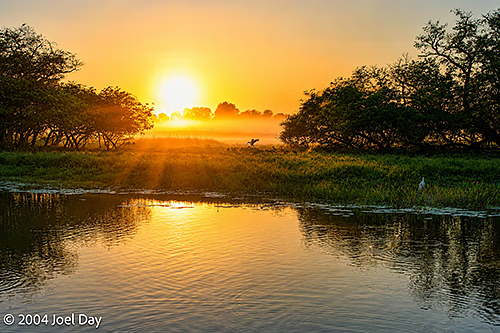
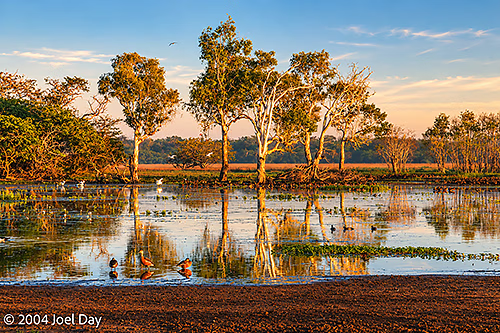
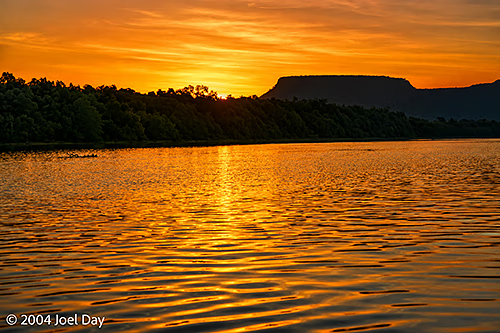
Sunrise over Yellow Water Billabong in Kakadu National Park, Northern Territory

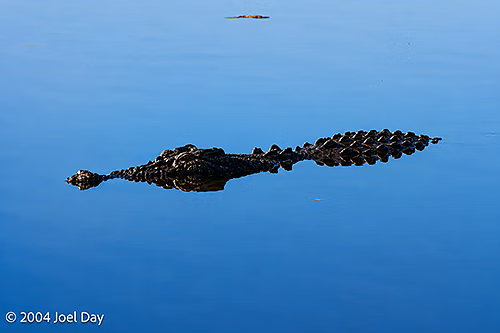
Visiting Kakadu was like taking a step back in time, thousands of years, long before humans infested the planet. I hesitantly did another crocodile tour through a wetlands area at a leprechaun-like ranger’s insistence at the gate. This time I did the cruise at dawn (whereas before I did it at dusk), and it was an absolutely magical experience.

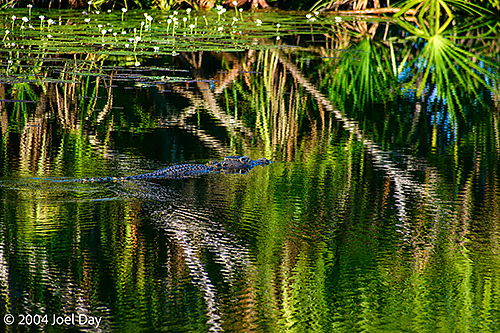
Saltwater crocodile in Yellow Water Billabong, Kakadu National Park, Northern Territory

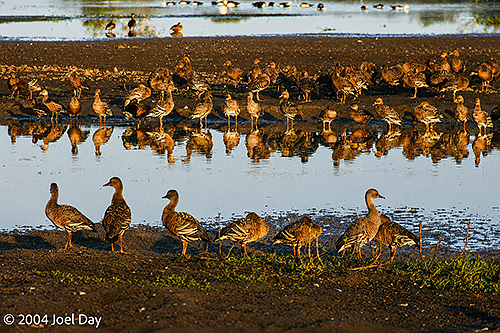
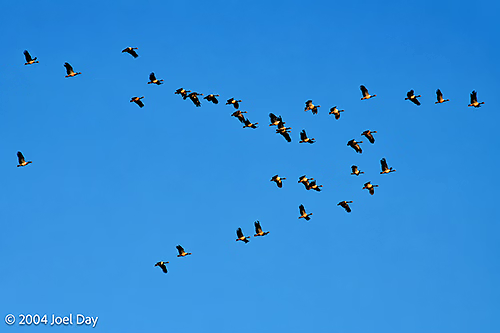
There were thousands of very active exotic birds singing and flying all over the place in flocks.

Magpie Geese on the Yellow Water Billabong in Kakadu National Park, Northern Territory
Magpie Geese fly over the Yellow Water Billabong in Kakadu National Park, Northern Territory

We saw about five crocodiles lurking just below the surface of the water, keeping warm in the cool morning air.

Saltwater crocodile in Yellow Water Billabong, Kakadu National Park, Northern Territory

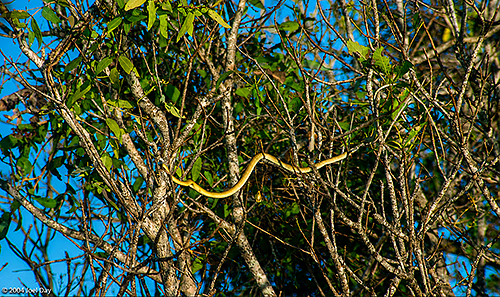
There were beautiful (and harmless) snakes hanging off of trees.

Australian Tree Snake (Dendrelaphis punctulatus) slithering through trees next to Yellow Water Billabong in Kakadu National Park, Northern Territory

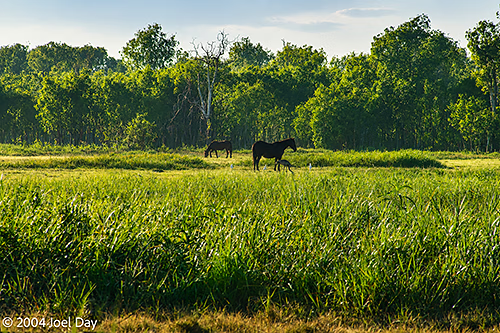
There were jumping fish, wild horses (brumbies) and water buffalo in the distance, and much more. All this could be seen within meters of leaving the dock.

Brumbies (wild horses) near Yellow Water Billabong in Kakadu National Park, Northern Territory

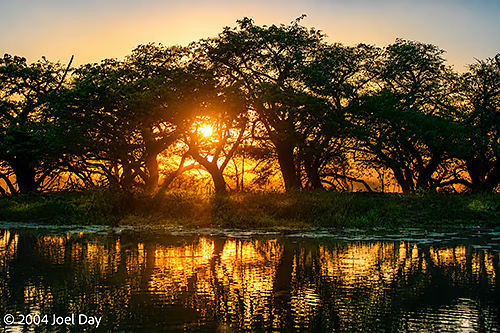
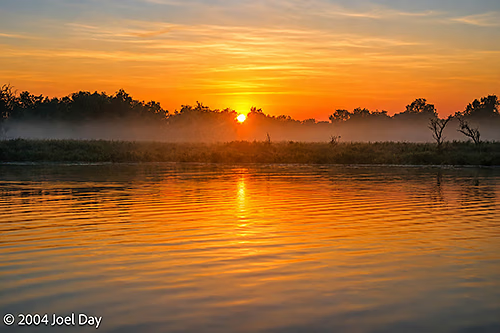
It was especially beautiful with the thick morning fog lingering over the open water areas. I’ve never seen anything like it in my life.

Sunrise over Yellow Water Billabong in Kakadu National Park, Northern Territory
Morning at Yellow Water Billabong in Kakadu National Park, Northern Territory
Sunrise over Yellow Water Billabong in Kakadu National Park, Northern Territory
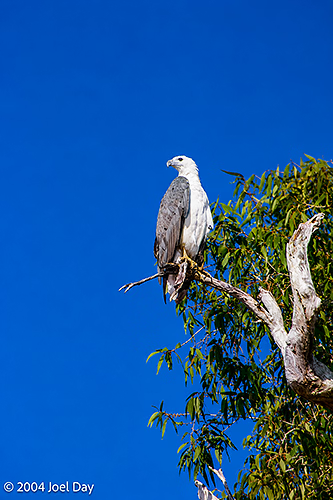
White-bellied Sea Eagle near Yellow Water Billabong in Kakadu National Park, Northern Territory
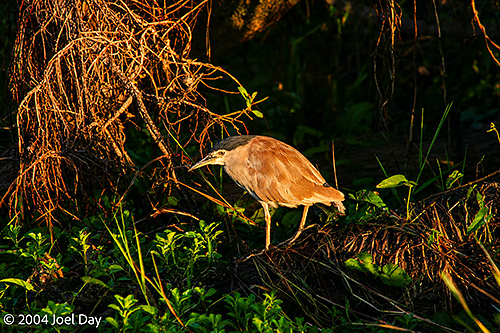
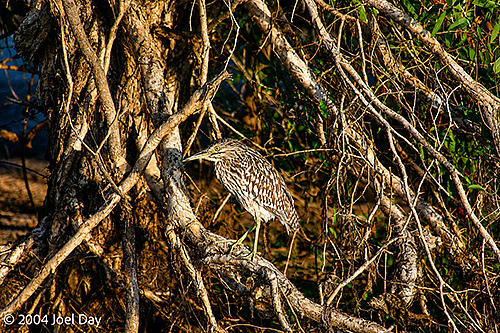
Nankeen Night Heron near Yellow Water Billabong in Kakadu National Park, Northern Territory
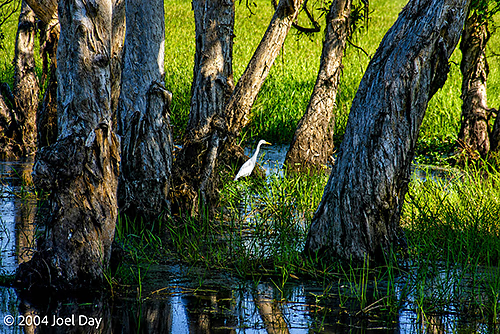
Great Egret along the Yellow Water Billabong in Kakadu National Park, Northern Territory

What you saw looked like one of those natural history museum depictions showing every kind of wild animal illustrated together from a specific environment, altogether in one painting, purely for informational purposes. But this was the real thing and it was all taking place before your very eyes.

Morning at Yellow Water Billabong in Kakadu National Park, Northern Territory

This morning I did a walk through a rainforest area way up north (about as far north as you can drive in Australia on paved roads). I saw hundreds more bats, or “flying foxes” as they call them here, and also plenty more exotic birds and rock wallabies. I also stopped at another wetland area on the way out of the park this morning, and I felt I could have just sat there all day watching all the activity. There were continual flocks of birds hunting and flying back and forth. It’s amazing to think that it was only the 80’s when we stopped calling them “swamps” and filling them in.

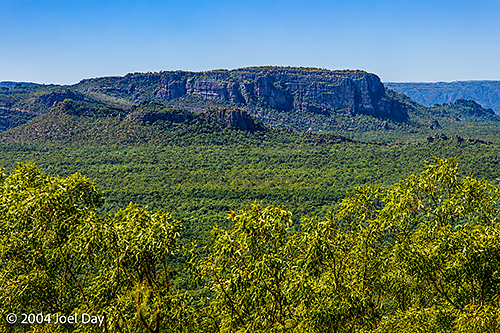
Sunset at Nawurlandja lookout over Anbangbang Billabong to Burrungkuy (Nourlangie) and the Arnhem Land escarpment.
Nawurlandja lookout view over Anbangbang Billabong to Burrungkuy (Nourlangie) and the Arnhem Land escarpment.

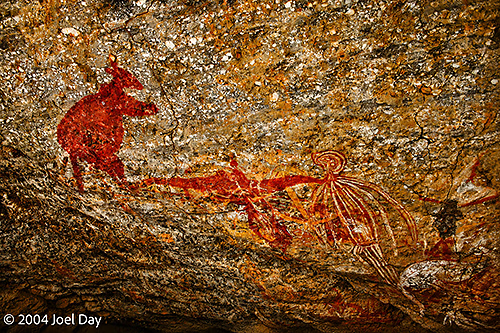
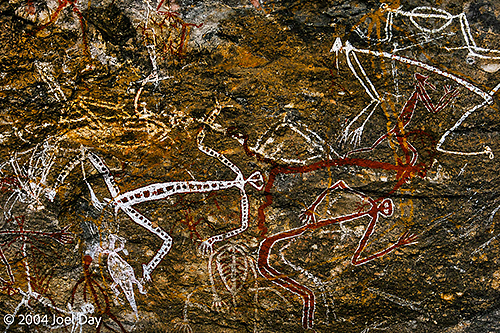
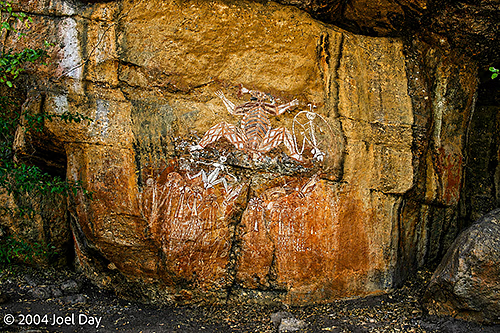
In addition to all the wildlife, the whole area is very rich in Aboriginal culture. In fact, the whole park borders an “Arnhem Land” area to its north that is off-limits to non-Aboriginal people without special permission. There was a wide range of Aboriginal rock paintings in caves around Kakadu National Park that were believed to be thousands of years old (as some of the paintings depict long-extinct animals).

Aboriginal cave drawings in Kakadu National Park, Northern Territory

The camping was great, with really nice personalised sites and access to hot showers. It’s a bit post-peak at the moment, so there was plenty of space to spread out in. The only problem with the area was the heat and bugs (flies all day, mosquitoes all night). It was very hot and dry there, but every river you came across was accompanied by large crocodile warning signs.

Overall, I feel like I’ve really been rushing this trip. I can see why most people take six months to do it. I could have easily spent at least a week in Kakadu and more time in places like Kununurra and Gregory National Park.

I’ve now arrived in Darwin, which ain’t much to write home about. It’s probably the size of Allentown or Lancaster, PA. At least I was able to get myself a nice Chinese meal this evening. It is their “dry” season here at the moment, but it sure feels hot and humid to me this time of year. It monsoons up here at “The Top End” all summer long. It is a bit cooler and breezier than Kakadu National Park was, anyway. Darwin is surrounded by beautiful ocean, but I’ve been advised not to swim in it because of saltwater crocodiles and killer box-jellyfish (even though this is their off-season). It seems crazy with the heat. People up here say, “I won’t swim in it unless it smells like chlorine.” It does seem as though everyone has a pool.

Dudley Point Lookout view of Darwin, Northern Territory

Darwin was practically obliterated on a few occasions — once due to Japanese bombing in World War II, and another time due to a big nasty cyclone in the seventies. I will probably check out all that historic stuff tomorrow. I will stay here two nights before making a beeline for Uluru (about 2 or 3 days drive south of here) cause my time is running out.

Australia, Northern Territory

Kakadu & Darwin Bound…

So I’m off into the wilderness again. Kakadu National Park, anyway. For a few nights of camping. Then I will check out Darwin and have to start peddling home to Perth as fast as I can.

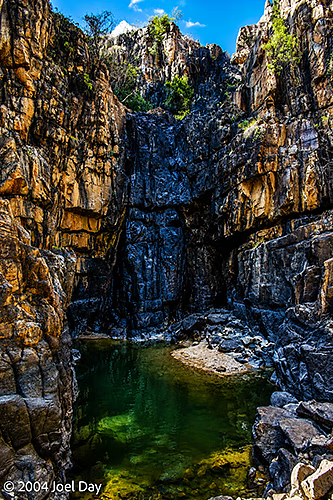
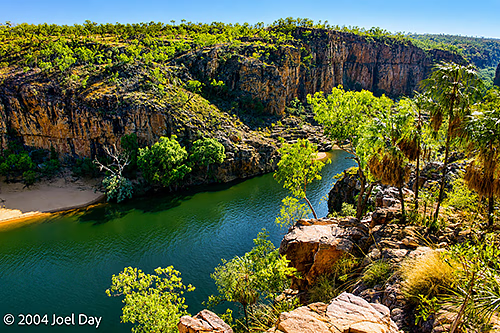
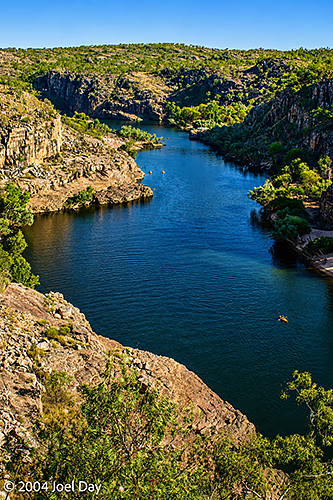
Katherine Gorge, Northern Territory

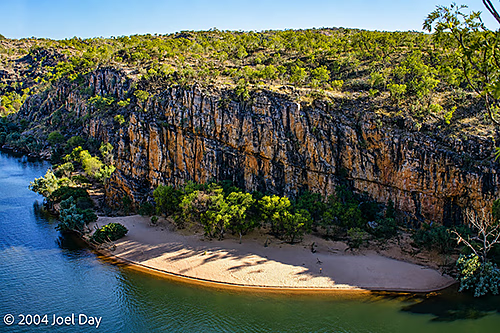
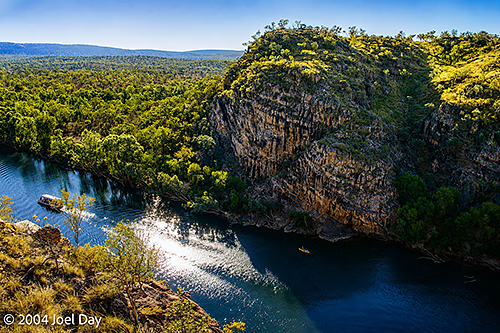
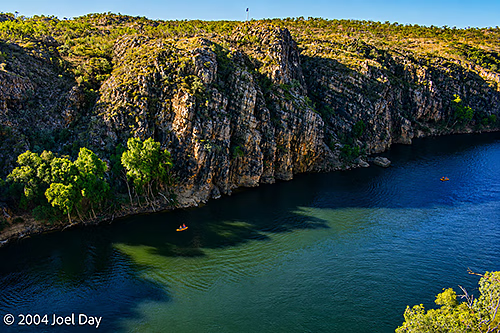
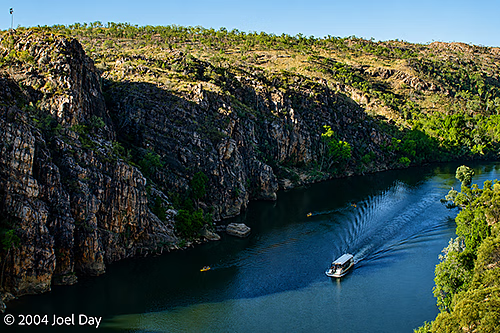
The Katherine Gorge was lots of fun. There were some rough hikes down steep drops into the gorge, but you always had the option of a refreshing swim when you got there. Even though there were crocs around, the National Park people said it was safe for swimming if you followed a few guidelines and stayed clear of a few areas. Freshies, you see. I spent this morning kayaking up and down the river and taking lots of swims. It’s very hot, and the sky is a very deep blue (like Perth in January)

Katherine Gorge, Northern Territory
Katherine Gorge
Katherine Gorge

As for wildlife, the wallabies at this place were all over the place. And way too tame. There are so many wallabies here that have been fed, unfortunately, by tourists, that they actually come and harass you at your campsite. They come right up to you and beg for food while you are eating. At least they appeared to be, but maybe that had something to do with their normal stance as wallabies. The rangers warn you not to feed them, but they can get very aggressive. I was eating a banana at one point and threw the peel on the ground with the intention of picking it up when I was finished. A few wallabies in the area started twitching their noses when they caught a whiff of the fruit, and slowly started hopping towards me. I immediately put my foot with my big hiking boot on top of the peel, but one of the wallabies grabbed at a scrap of it that I failed to cover. He started angrily pulling on it in a tug-of-war with me until I finally gave up and just let him have it. He sat there stripping off thin little slices of the peel, eating it slowly while I sat just a few feet from him.

Katherine Gorge snack seeker

And then last night I could have sworn I saw a bunch of bats flying around. Sure enough, this morning I found hundreds of fruit bats hanging off a big tree in our campground, making a lot of noise and grooming themselves. It was an amazing sight.

Australia, Northern Territory

from Katherine, Northern Territory…

I’ve now made my way to Katherine, Northern Territory, where I scored a sweet little camping spot in the Nitmiluk National Park (which is home to the famous Katherine Gorge). I will probably stay here a few nights and then start making my way up to Darwin via Kakadu National Park.

Sunset on the banks of the Victoria River, Northern Territory

The drive from Halls Creek in Western Australia up through Kununurra (where I camped for a few nights) and into Katherine has been really spectacular. I did a wildlife cruise 43 kms down the Victoria River from Timber Creek, Northern Territory last night before camping in town. I will fill you in on the details in my Wildlife post.

Australia, Northern Territory

The Wildlife…

Travelling around Australia has been very interesting because of the continual and gradual transitions in the wildlife. Not only do you notice the obvious changes in vegetation as you move from one climatic zone to another, but the animals also continually change as well.

Northern Territory birdlife

One of the coolest changes I always notice is the birds singing before sunrise every morning. Every time you drive for 3-4 hours and camp somewhere new, you notice that there are always new birds in the area singing different tunes. Some of them are really beautiful and sing complicated arrangements that vary, but always seem to return to a common refrain. I think the birds singing in the morning were one of the first things that hit me when I first visited Australia in 1986. That first morning, you really knew you were somewhere completely different from home.

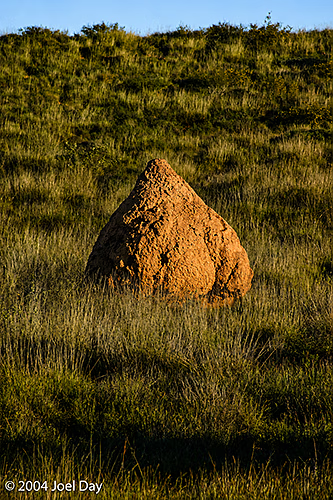
Termite mound near Carnarvon, Western Australia

Other transitions you notice are with things like massive termite mounds that are all over the place up here. I started noticing them around Coral Bay, but they’ve been everywhere ever since.

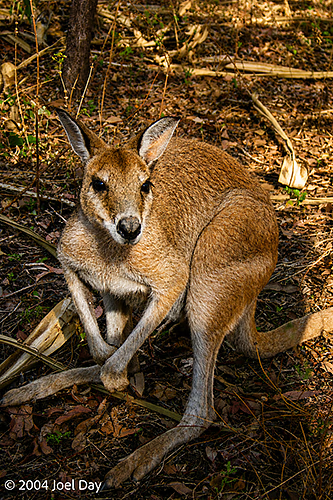
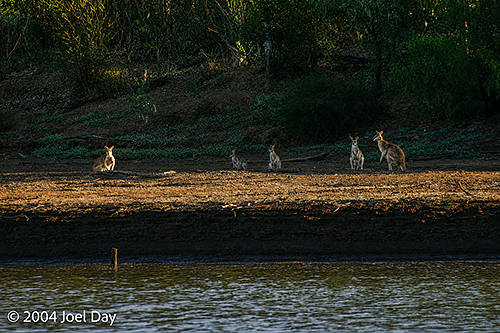
Wallabies on bank of Victoria River, Northern Territory

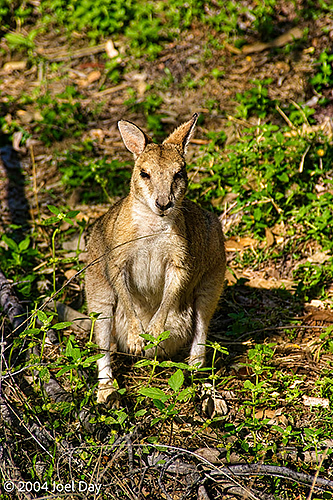
The Kangaroos vary as well. There is a smaller version known as a wallaby that you find up here in the north, but they are also much more plentiful. I’ve seen hundreds of Kangaroos and wallabies from around the time I left Port Hedland.
Northern Territory wallaby

One of my coolest experiences with wallabies was camping next to Mirima National Park in Western Australia (outside Kununurra) a few nights ago. Around 1:30 in the morning, I was awoken by something that sounded like they were munching on the grass next to my tent. Being in the new area, I wasn’t quite sure whether it was a lizard or what, but I was soon able to peek out of a crack in the screen of my tent that showed 3-4 little 2 ft high wallabies nibbling on the grass just outside of my tent, only a few feet away. They were there for about an hour. I thought it was pretty cool. I must have plunked my tent down right in their favourite grazing patch under a gum tree.

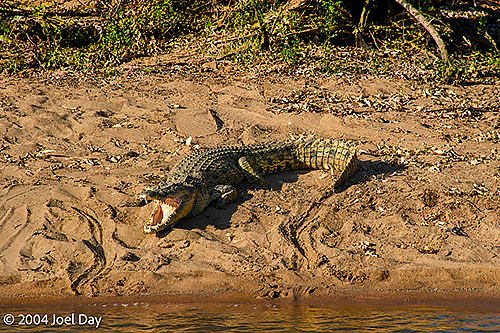
Saltwater Crocodile on the banks of the Victoria River, Northern Territory

When I was in Karijini National Park, I didn’t get that kind of interaction with any wildlife, but I was warned to watch out for dingos. I was told they had a fetish for shoes and that I should be careful not to leave my shoes outside of the tent at night.

Gregory National Park, Northern Territory

Well, I never saw any Dingos at Karijini, but I did see one for the first time today as I was driving from Timber Creek to Katherine here in the Northern Territory. I was driving through the Gregory National Park when one came running out of the tall grass to start chasing my car — just like a dog. I immediately slowed down to a stop to try and get its picture, but it ran off across the road.
Gregory National Park, Northern Territory

Last night was especially interesting on the wildlife front. I was getting a bit sick of driving and arrived in Timber Creek, the only town between Kununurra, W.A. and Katherine, N.T. About the only thing to do in Timber Creek was take a wildlife cruise down the Victoria River 45 km towards the Joseph Bonaparte Gulf. It was supposed to be chock-full of crocs, with an estimated 500 in the 45 km of pure wilderness. I thought it sounded much more interesting than the numerous enclosed crocodile parks you stumble across, where you only see them in captivity and can watch them eat slabs of chicken.
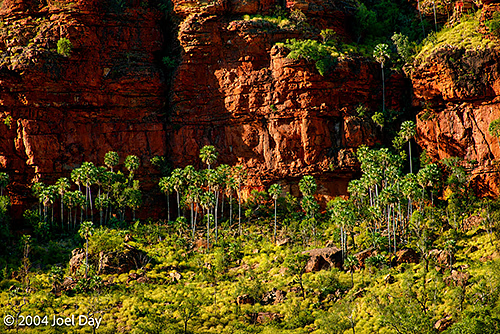
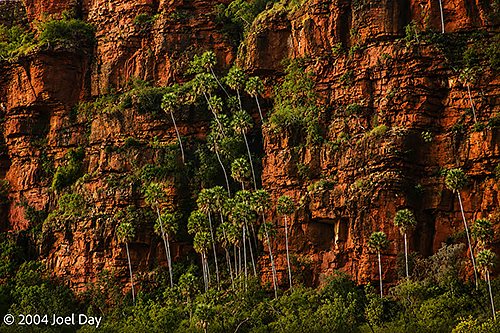
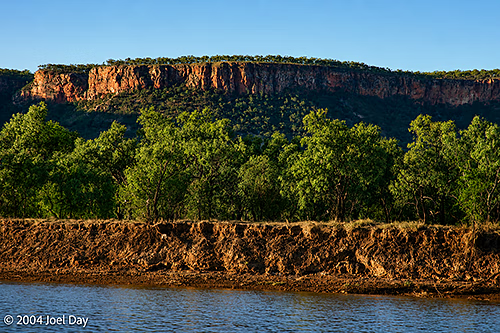
The banks of the Victoria River, Northern Territory

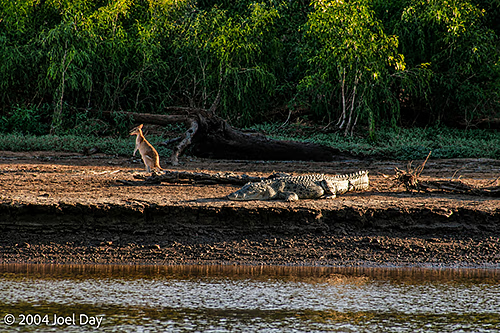
The cruise was quite good, spanning about four hours at sunset — which made for nice picture taking. We ended up seeing lots of eagles, jumping fish, kangaroos, and about four crocodiles sunning themselves on the banks of the river. They eat mostly fish and kangaroos that come down to the river for an evening drink, we were told. The boat operator told us the kangaroos are very inquisitive and will get closer and closer to the crocs until it’s a bit too late for them to escape.
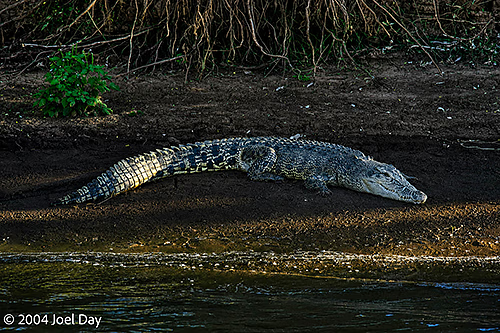
Close encounter between wallaby and crocodile on banks of Victoria River, Northern Territory
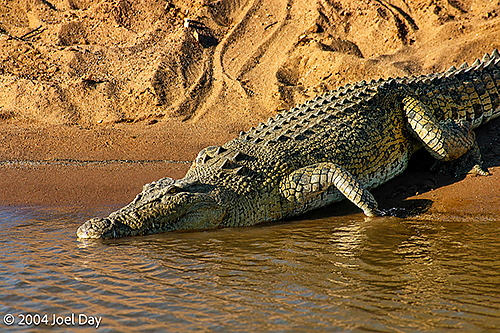
Saltwater Crocodile slipping into the Victoria River

None of them was eaten while we were there because although the crocs were somewhat blase about us being there, the kangaroos would get scared of our boat and hop back into the bush.

Saltwater Crocodile on the banks of the Victoria River, Northern Territory
Australia, Western Australia

Kununurra: last exit before the Northern Territory…

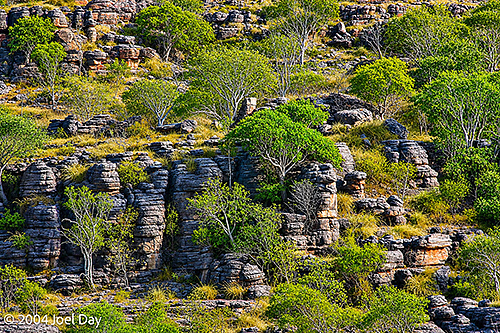
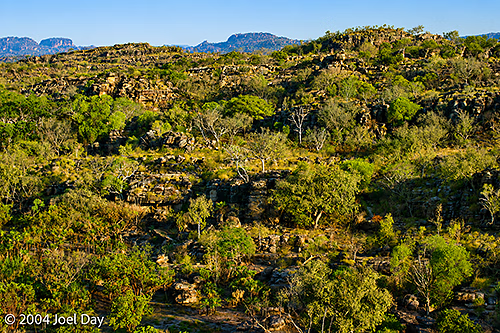
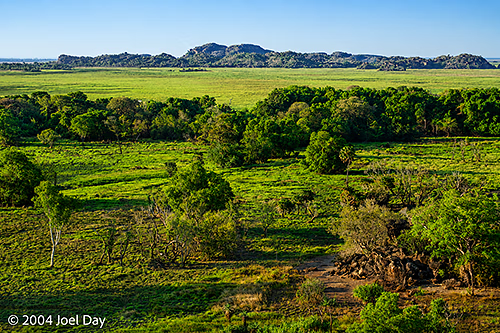
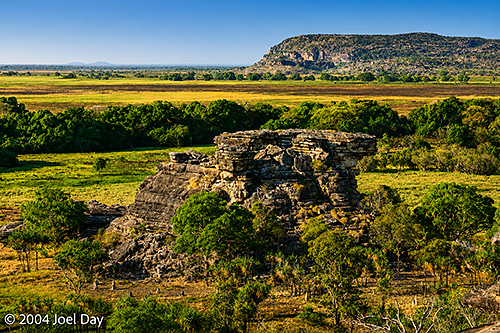
Well, after a very long day of treacherous driving on skinny winding roads with no lines (a Western Australian specialty) through spectacular scenery with huge arid mountains, I’ve found myself in Kununurra — where I will probably hang out for a few days. Not that there wasn’t anything to see between Fitzroy Crossing and here, but you did need a Four Wheel Drive for just about all of it. It’s unfortunate to have missed out on the Bungle Bungles, on the one hand, but there is still plenty left to see around here that I will barely have time for, anyway.

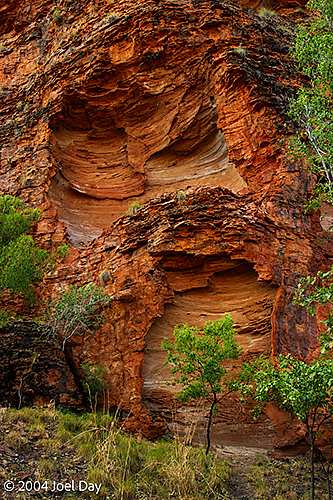
Hidden Valley in Mirima National Park

I did drive past the world’s largest diamond mine on the way here today. It was a bit odd because it is pretty well known in Australia and listed on all the maps as “Argyle Diamond Mine”, but when you drive past it, there is just a little sign saying “The Argyle Project.” I hope they can’t possibly think that would make it more secure. Not that there was much to see from the road, anyway. It’s an open-pit mine, and you could see a bit of dust being kicked up from the highway.

Hidden Valley in Mirima National Park

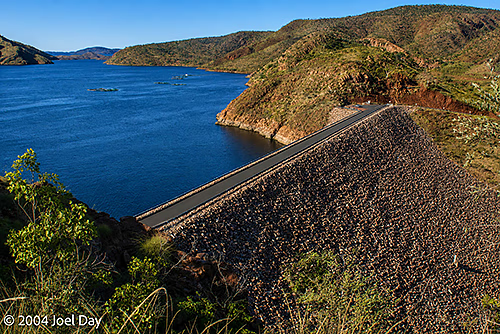
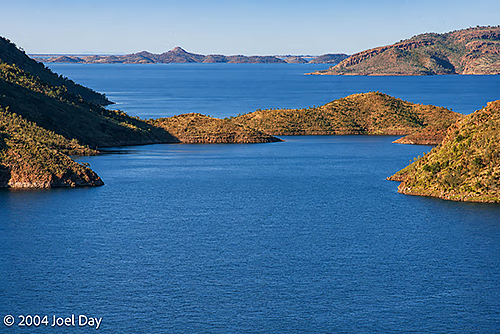
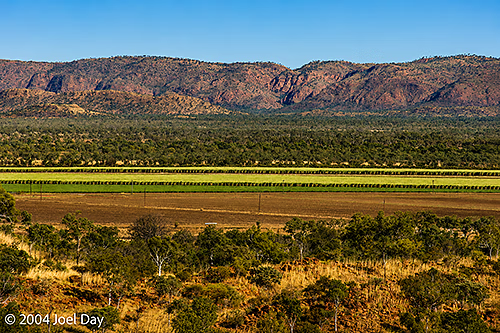
Kununurra is the last town before the Northern Territory border on one of only two paved roads heading into and out of this giant state (the other being across the Nullarbor Plain on the south side). It’s the most north-eastern town in Western Australia, built in the 1960’s to support a massive dam that is used to irrigate large agricultural areas up here (making use of the summer rainy season).

Ord River Dam, Lake Argyle, Western Australia
Lake Argyle, Western Australia

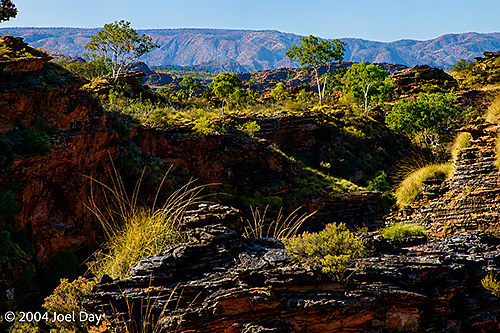
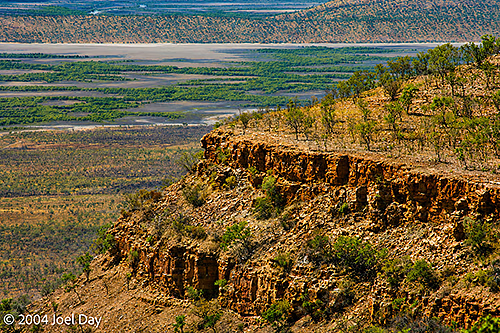
It’s actually quite beautiful around here. I’m camped next to in a place called “Hidden Valley”. There are lots of spectacular mountains around with big rocky outcrops and many shady trees (which are always a relief to find in sunbaked Australia). But it is HOT. It is like Perth in January right now, but it’s the dead of winter.

Hidden Valley in Mirima National Park

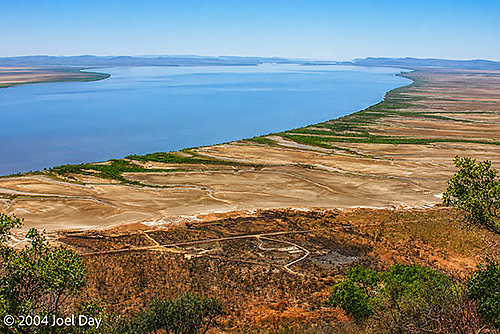
A short drive north of here towards the coast will take you through huge agricultural regions that resemble California’s San Joaquin Valley with huge fields of sunflowers and other crops. To the west of here is Wyndham, which is a pretty tiny place, but with some really spectacular views out over the Cambridge Gulf and Joseph Bonaparte Gulf in the Timor Sea.

Ord River Irrigation Scheme agricultural lands
Five Rivers Lookout near Wyndham, Western Australia

Another problem with this place is its time zone. It’s actually in the same time zone as Perth. The problem is that it is about 3200 kilometres northeast of Perth. I find that it is getting dark at 5 PM, and I’m trying to get to sleep by 6 PM – lying there in my hot, sweaty tent in these humid tropics. Ugh! I would hate to think what this place is like in the summer. Like the other hot states in Australia, Western Australia doesn’t use Daylight Saving Time. The result is very early sunrises and very early sunsets in summer. Not only would this place be even hotter, but the sun would probably start coming up around 2 AM or 3 AM (since it seems to start getting light in Perth around 4 AM in December). I’m looking forward to getting across the Northern Territory border for the time zone change as much as anything!

Five Rivers Lookout near Wyndham, Western Australia