Hawaii, Hawaii: The Big Island, United States

The Wet Side of Hawaii…

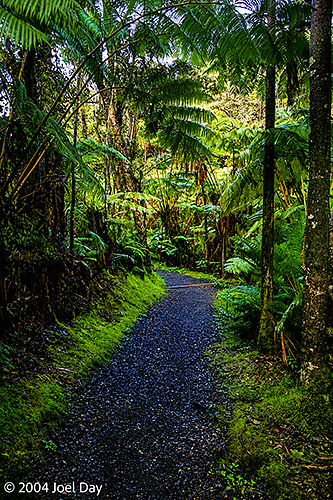
After a few days in overpopulated Oahu (which is the home of Honolulu), I hopped on my long-planned flight to Hilo (pronounced Heel-o) on the island of Hawaii. As in New York State, people have to make the distinction between the state and the island, so they refer to the island of Hawaii as “The Big Island” (as opposed to the State of Hawaii — of which it’s part). Hilo holds the distinction of being America’s wettest city, getting about 6 meters of rain a year. Fortunately, the Big Island, roughly the size of Connecticut, is large enough that different parts of the state have distinct climates.

I spent my first couple of days roaming around the tiny city of Hilo (albeit the biggest on this island) just trying to get supplies. Hilo is probably not much bigger than Lititz or Manheim, PA (50,000?). And unfortunately, they have a Walmart. This means the city isn’t big enough to support both Walmart and small-shop owners, who are far more likely to be experts in their fields. The minimum wage paid to Walmart staff, as usual, meant they didn’t know anything about what they were selling. I also ran into this problem with K-Mart in some small Australian cities.

Getting used to shopping in American supermarkets again was another headache. Healthy food was awfully hard to find, with double-sugar here and triple-sized items there. Needless to say, this severely complicated my ability to get healthy, non-perishable camping food, camping fuel (I had to figure out what Australian “Methylated Spirits” translates to around here), and to get some basic, easy photo needs met (which were over the heads of Walmart employees).

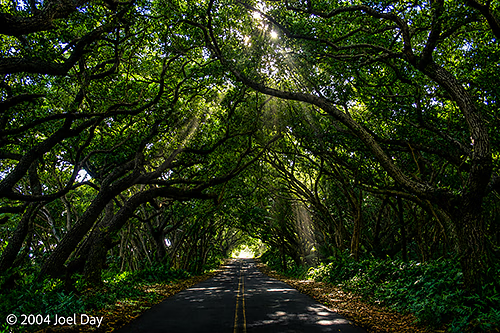
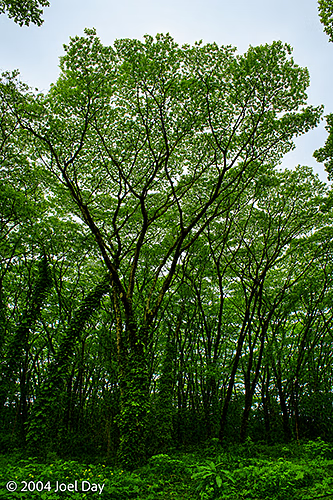
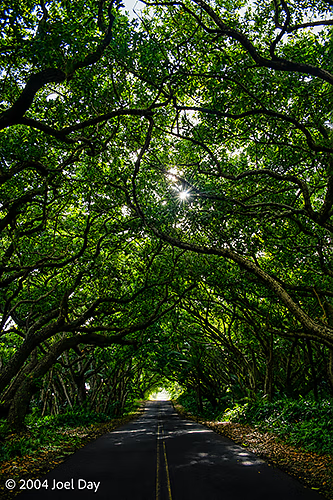
Monkeypod or Rain Trees (Samanea saman) along road south of Hilo, Hawai'i
Monkeypod or Rain Trees (Samanea saman) along road south of Hilo, Hawai’i

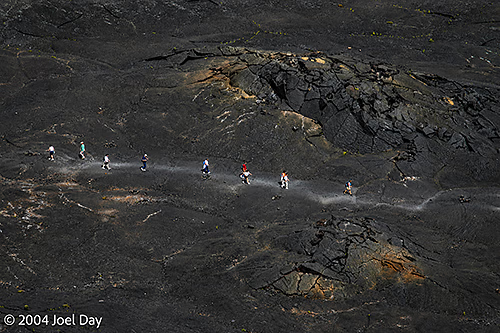
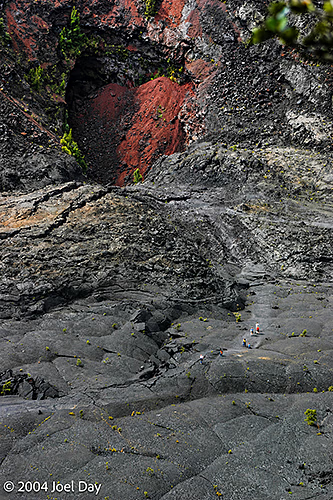
After about 24 hours of aggravation, I finally got out of Hilo and started heading down the west coast. The area, known as Puna, is famous for its hippies (or ferals, as we call them in Australia), rainforests, spectacular coasts, and volcanic remnants (including cool casts of trees caught in the lava). I found a hostel in the area with a very eccentric manager and lots of empty rooms. This seems like a really good time to visit Hawaii!

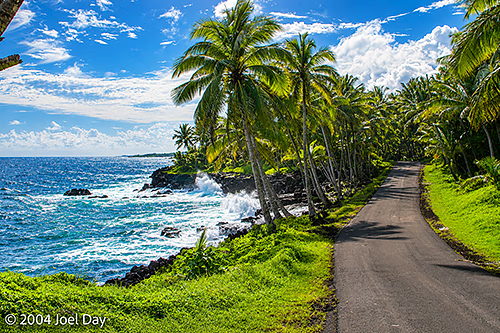
Palm Trees along coastal road south of Hilo, Hawai'i
Palm Trees along coastal road south of Hilo, Hawai’i
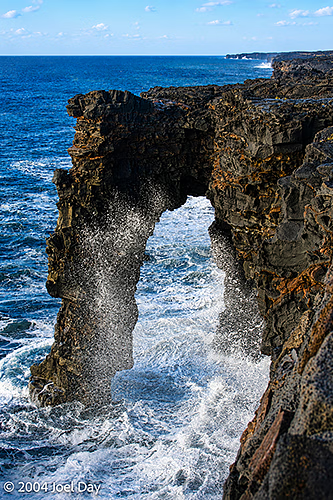
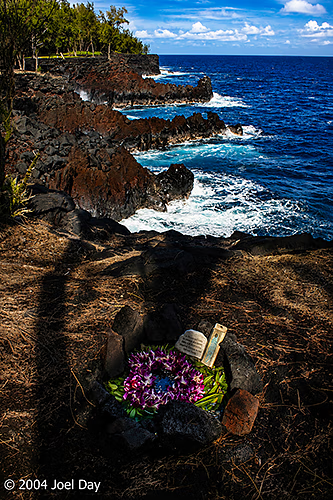
Coast south of Hilo, Hawai'i
Coast south of Hilo, Hawai’i
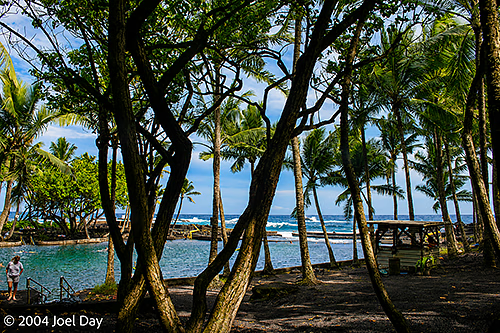
Hot springs along coast south of Hilo, Hawai'i
Hot springs along coast south of Hilo, Hawai’i
Monkeypod or Rain Trees (Samanea saman) along road south of Hilo, Hawai'i
Monkeypod or Rain Trees (Samanea saman) along road south of Hilo, Hawai’i
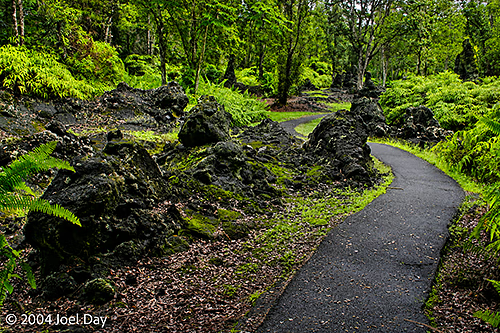
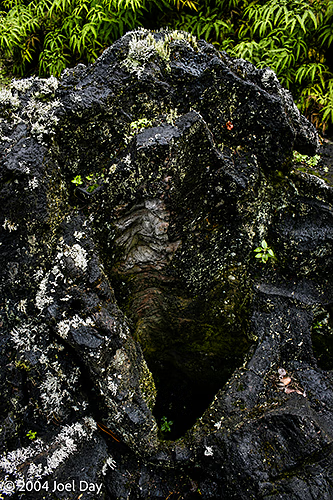
Lava Tree State Monument, south of Hilo, Hawai'i
Lava Tree State Monument, south of Hilo, Hawai’i
Lava Tree State Monument, south of Hilo, Hawai'i
Lava Tree State Monument, south of Hilo, Hawai’i
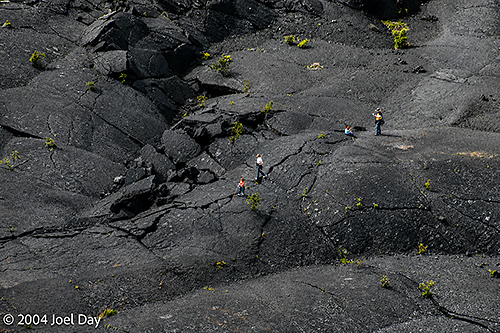
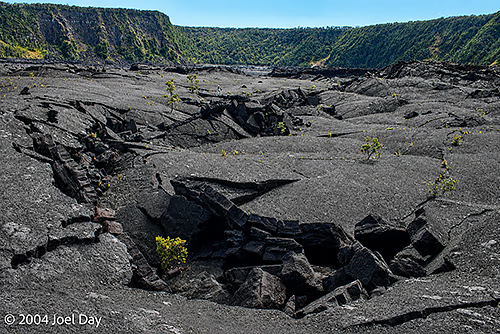
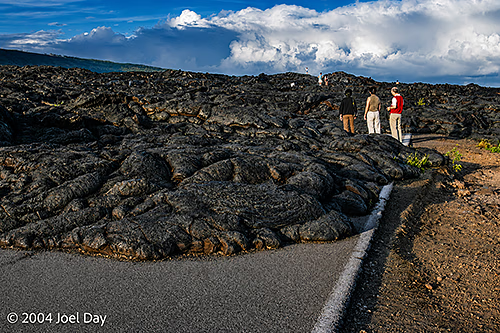
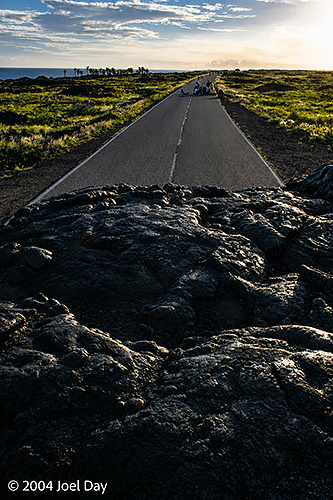
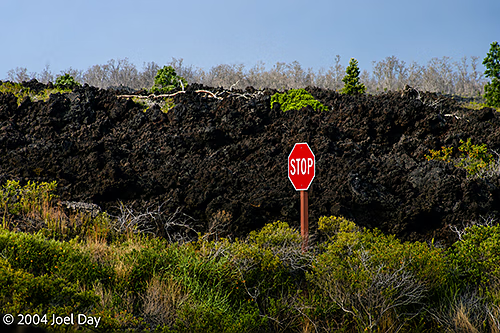
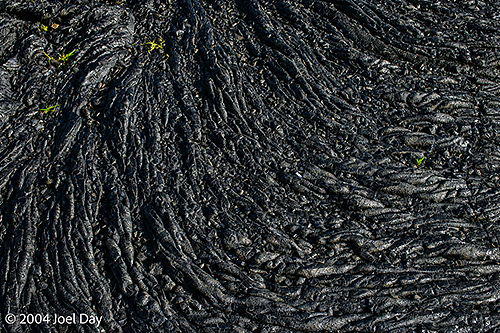
Volcanic terrain with green shoots south of Hilo, Hawai'i
Volcanic terrain with green shoots south of Hilo, Hawai’i
Monkeypod or Rain Trees (Samanea saman) along road south of Hilo, Hawai'i
Monkeypod or Rain Trees (Samanea saman) along road south of Hilo, Hawai’i
Hawaii, Oahu

Hawai-eh (as they like to pronounce it)

After the longest day in my life, I found myself in Honolulu for a few days to recharge my batteries. I considered it my longest day because it started in Levuka, Fiji, when I flew back to Suva and then on to Nadi, where I had to wait for my departing flight to Honolulu at 11 PM. Of course, due to the International Dateline, I arrived in Hawaii at 7 AM the same day — giving me the opportunity to live through October 22nd twice — and in two different countries.

I checked into a hostel near the university where I found two roommates waiting for me in my dorm room. Oddly enough, one was from Perth, Australia, and the other was from Philadelphia, Pennsylvania. Talk about weird! It was funny to see the contrast in people between the two places I’ve spent most of my life. The Philadelphian, who was probably 15 years older than me, seemed to be primarily interested in pegging where I was on the class hierarchy that plays such a prominent role in the eastern U.S. by asking me lots of probing questions about what neighbourhoods I lived in and what schools I attended. The Australian guy, who was about 15 years younger than me, just seemed to want to be friends (not seeming to care anything about me other than the fact that I was from Perth). I didn’t feel I had a whole lot in common with either of them, but ended up spending most of my time with the Perth guy.

We visited the Pearl Harbor Memorial one day, which stuck me as a previous generation’s World Trade Center, and we did the popular hike to the top of Diamond Head the next morning. The Pearl Harbor Memorial was very interesting and a bit sobering. There was about a 2-hour wait to get out of the memorial, which is positioned on top of the sunken U.S.S. Arizona — which still contains the bodies of the sailors who died in the attack and still visibly leaks oil to this day. While you waited for the boat ride, there were exhibits you could go through.

Diamond Head is a non-active volcano which housed a defence fort for Honolulu (which was active during the Pearl Harbour attack), and it also happens to have a spectacular view of Waikiki from its top. It’s a pretty gruelling climb, but that didn’t seem to stop too many out-of-shape people.

Afterwards we visited the Waikiki Aquarium, which was full of beautiful tropical fish (just like I’ve been viewing by snorkelling in Fiji and Australia) and lots of cool hard and soft coral. Then we had a nice lunch in a cafe with a nice view to watch the world go by.