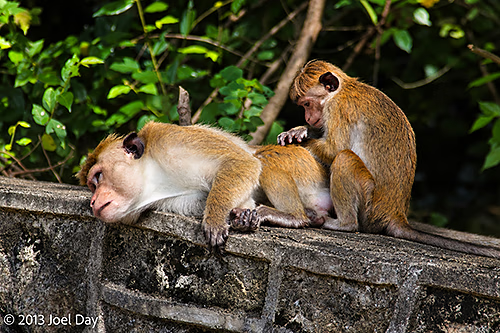
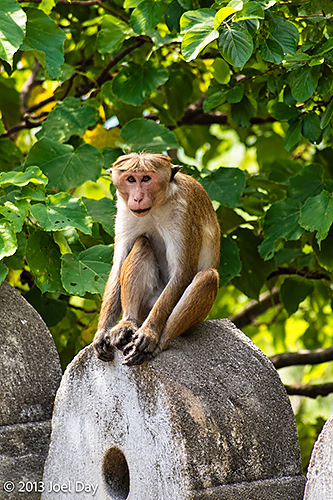
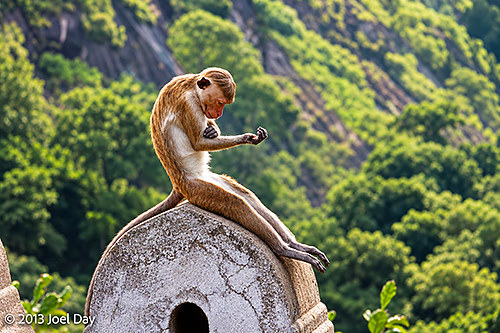
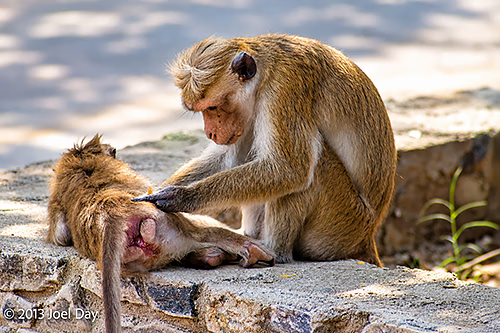
You often find quite a few Toque Macaques hanging out around the temples and shrines in Sri Lanka. They seem to enjoy the natural surroundings, but they also seem happy to snatch and eat whatever offerings pilgrims have left behind, whether flowers or food.
Toque Macaques (Macaca sinica) Grooming at the Dambulla Royal Cave Temple, Sri LankaToque Macaque (Macaca sinica) at the Dambulla Royal Cave Temple, Sri LankaToque Macaque (Macaca sinica) Flexing at the Dambulla Royal Cave Temple, Sri Lanka
I also stopped by a herb garden on our travels today. I knew it was going to be a sales pitch the moment I hopped out of the car and a personal tour guide greeted me. He showed me all kinds of things growing, including vanilla, cocoa, coconut, nutmeg, turmeric, almonds, and lots more. He also discussed how each was used for medicinal purposes in traditional Sri Lankan Ayurveda alternative medicine. Of course, by the end he was pitching products from their pharmacy. I politely declined, and he graciously backed off, but then he prodded me for a tip. On the way out, my driver slipped me a free bottle of potion, so I suspect there was some incentive for him to bring me there. I had a similar experience at a ‘gem museum’ yesterday, which was really a showroom to buy Sri Lankan gems from, but they also politely backed off when I told them I wasn’t interested in buying any.
The Drive from Dambulla Royal Cave Temple to Kandy
Map of the route “Monkey Business”: 69,542 m, 731 m of climbing and 380 m of descent, elevation between 162 m and 575 m, time 04:05:37. It starts at 7.85289, 80.65322 and ends at 7.29268, 80.63762 (latitude, longitude).
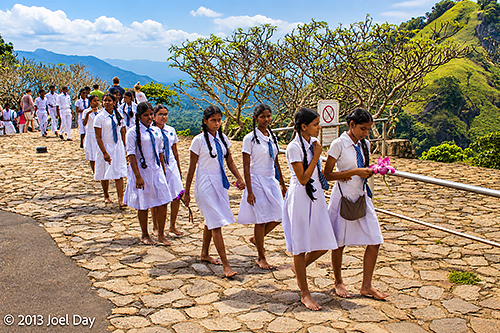
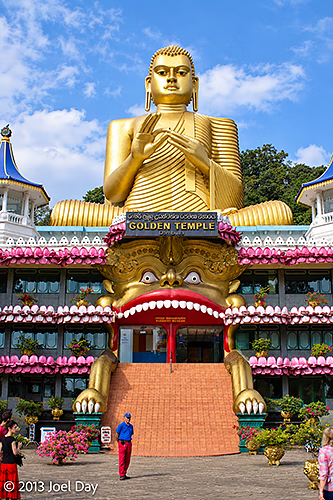
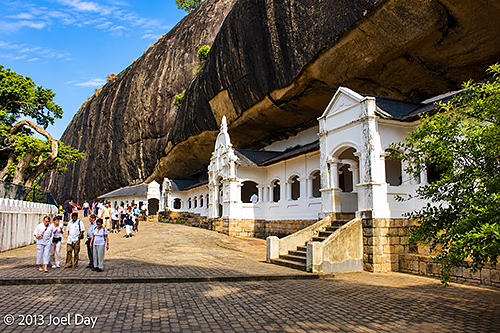
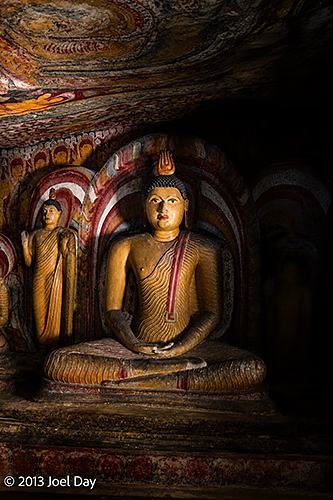
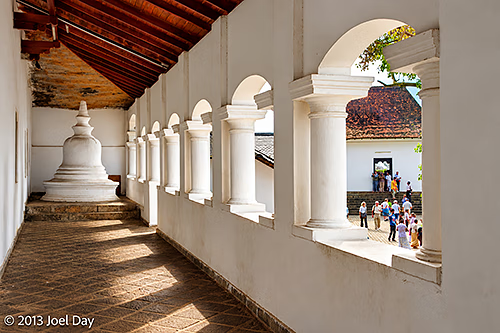
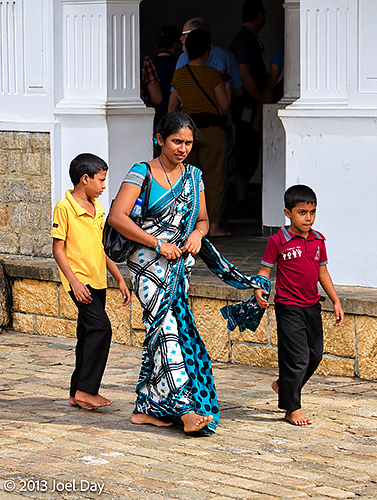
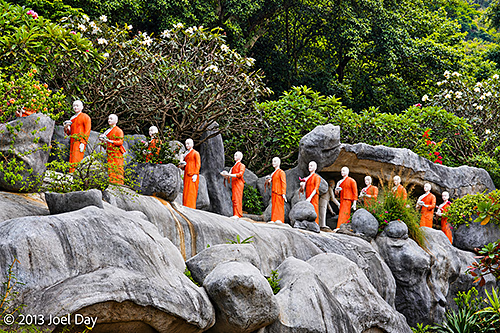
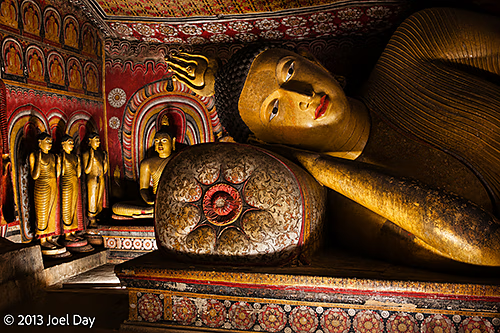
Made my way to Kandy today with several more stops at Buddhist and Hindu temples. They’re nice to see, but you do tend to get a bit ‘templed out’ after a while. Lots of Buddha statues sit prominently on mountain tops in the area. You can also find lots of Buddha statues and frescoes in caves. The first stop was the Dambulla Royal Cave Temple, where many school groups of children happened to be walking barefoot and making offerings.
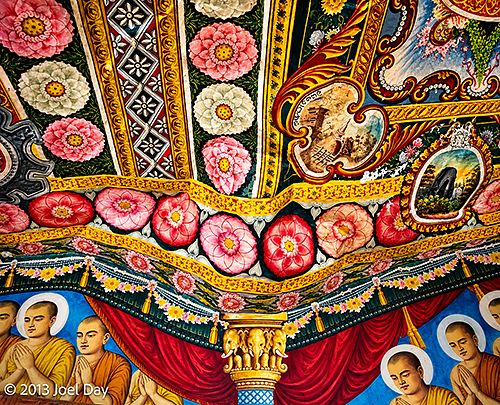
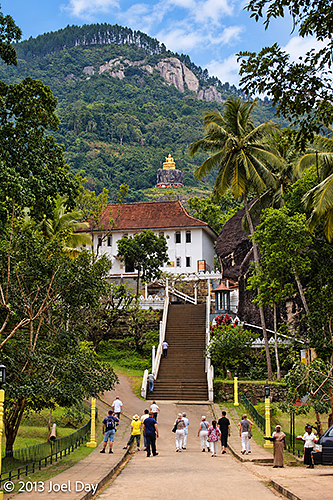
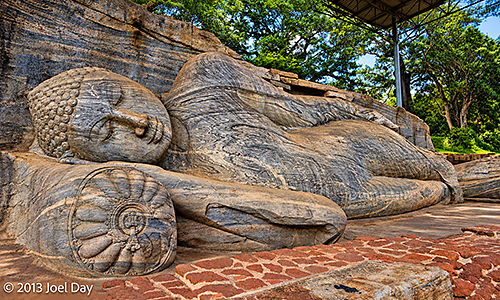
Buddhist Pilgrims Carrying Lotus Offerings, Dambulla Royal Cave Temple, Sri LankaGolden Buddha and Dragon Entrance, Golden Temple of Dambulla, Sri LankaCave Temple Entrance beneath the Rock Overhang, Dambulla Royal Cave Temple, Sri LankaSeated Buddha Statue and Cave Paintings, Dambulla Royal Cave Temple, Sri LankaDambulla Royal Cave Temple, Sri LankaBuddhist Pilgrims Visiting the Dambulla Royal Cave Temple, Sri LankaDambulla Royal Cave Temple, Sri LankaFloral Ceiling and Buddhist Murals, Dambulla Royal Cave Temple, Sri LankaReclining Buddha and Cave Paintings, Dambulla Royal Cave Temple, Sri LankaApproach to Aluvihare Rock Temple, Matale, Sri Lanka
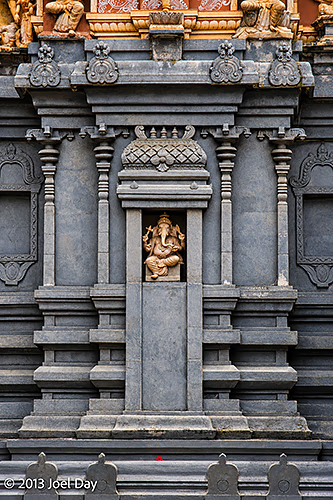
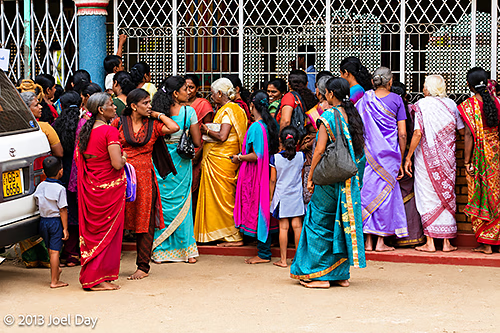
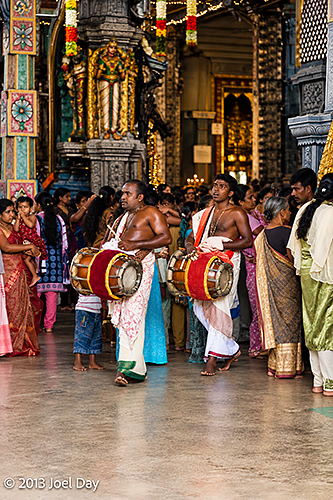
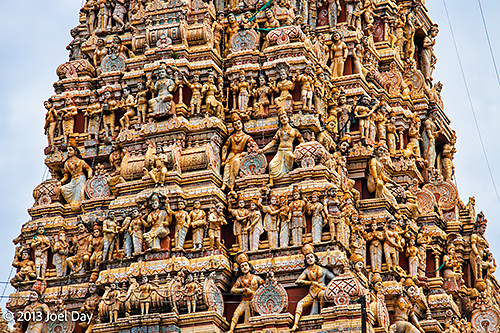
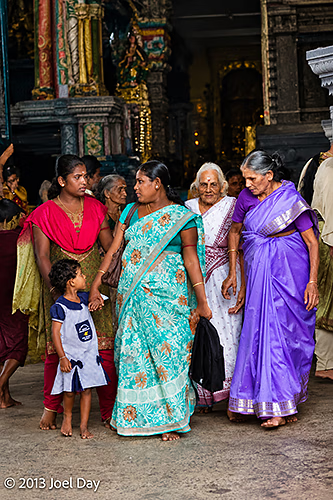
We also visited a Hindu temple in nearby Matale during a big celebration inside, which was interesting.
Detail of Sculpted Hindu Temple Gopuram, Matale, Sri LankaWorshippers during a Hindu Temple Ceremony, Matale, Sri LankaTemple Musicians during a Hindu Ceremony, Matale, Sri LankaSculpted Hindu Temple Gopuram, Matale, Sri LankaWorshippers during a Hindu Temple Ceremony, Matale, Sri Lanka
And today, being Friday, a Muslim holy day, we saw huge crowds of Muslims leaving their services on our way into Kandy.
My driver told me that about 32% of Sri Lanka is Buddhist, 12% Hindu, 12% Muslim, and all others, including Christian make up the remaining smaller percentages.
Reclining Buddha at Pidurangala Royal Cave Temple, near Sigiriya, Sri Lanka
Off on day two of my customised tour with James. Actually, his name is Francis. We headed 60 km west to see historic ruins from the 1100s. Before he started the car, he quietly performed a Buddhist prayer at the steering wheel.
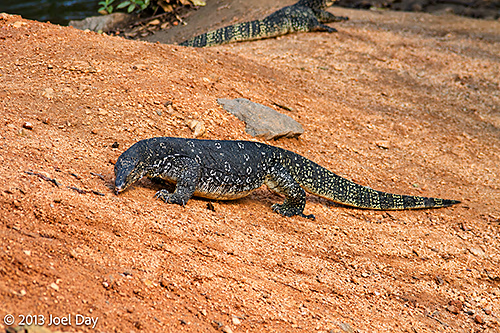
Toque Macaques (Macaca sinica) Grooming near Sigiriya Rock Fortress, Sri LankaSri Lankan Land Monitors (Varanus bengalensis) near Polonnaruwa, Sri Lanka
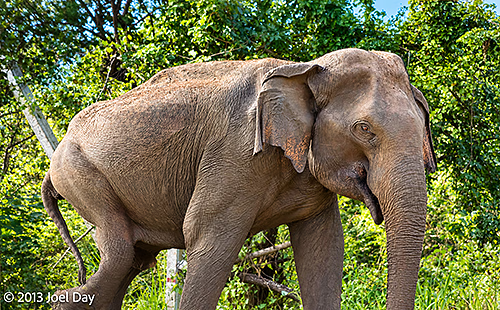
A very nice drive, with much less traffic than yesterday. We saw quite a few wild animals along the way, including 4 elephants (!) which he even said were very unusual. Elephants are generally nocturnal, so you are unlikely to see them during the day. They are also dangerous animals nobody wants to get too close to, so I kept my distance when photographing them. Some were huge; others were babies.
Elephant seen outside my car window in Sri LankaElephant seen outside my car window in Sri Lanka
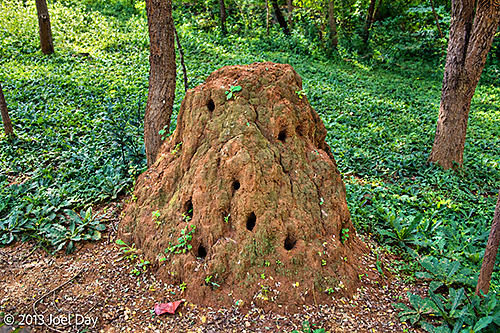
We also saw wild peacocks and evidence of many cobras. Cobras burrow into termite mounds to eat the insects, which is pretty amazing when you think about how tough termite mounds are.
Termite mound with large holes from Cobras burrowing into it to eat the insects in rural Sri Lanka
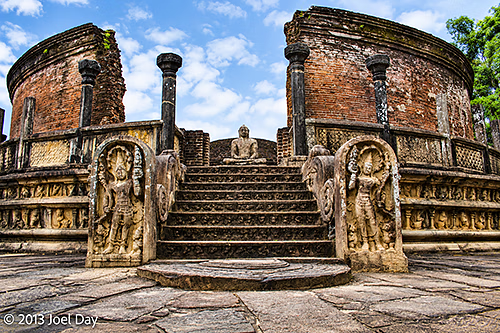
The historic Buddhist temples were very beautiful and reminded me of Sukhothai in Thailand (which was perhaps a little nicer, mainly because of a car-free district surrounding them and the close proximity of all the ruins). I spent some time wandering around Polonnaruwa Vatadage, an ancient structure dating back to the 12th century.
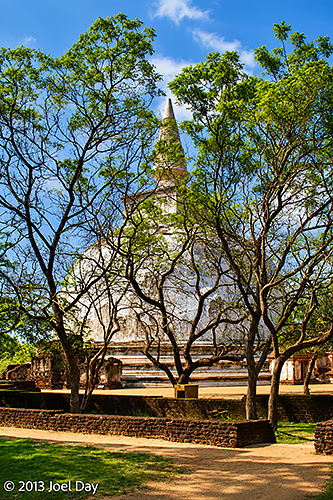
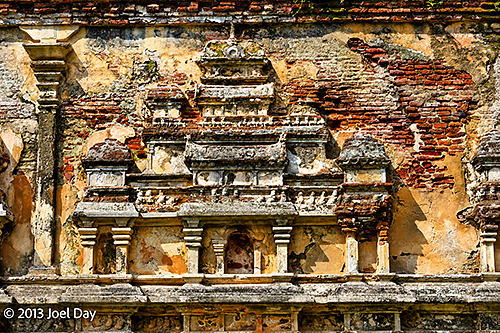
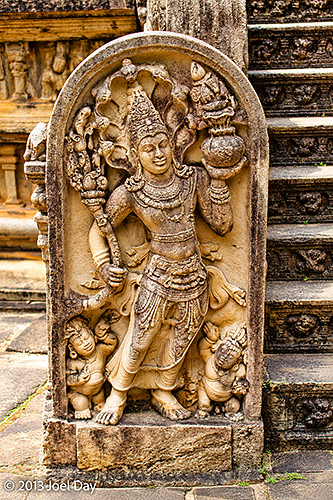
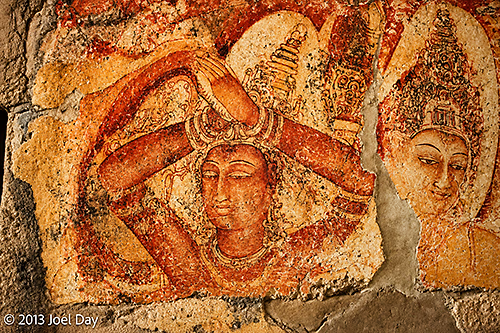
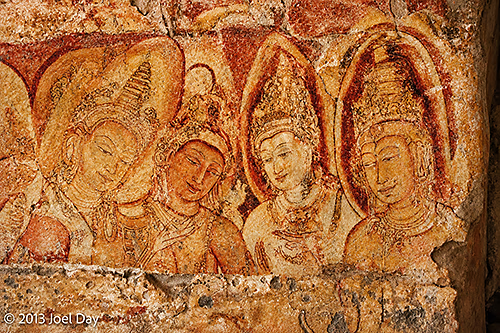
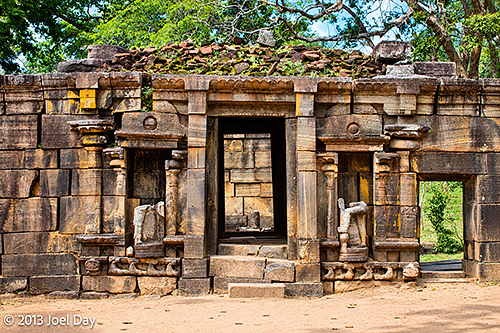
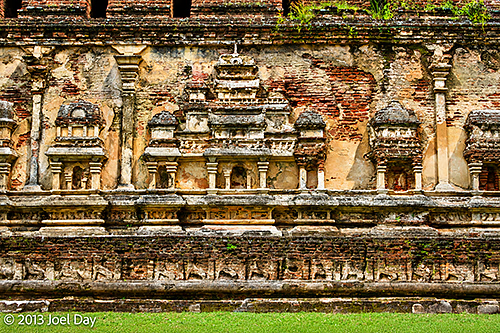
Ornately Carved Entrance to the Polonnaruwa Vatadage, Sri LankaKiri Vehera (Milk-White Stupa), Polonnaruwa, Sri LankaOrnate Shrine Carvings on Lankatilaka Image House, Polonnaruwa, Sri LankaCarved Guardian Stone (Muragala) at Polonnaruwa Vatadage, Sri LankaAncient Buddhist Wall Paintings, Tivanka Image House, Polonnaruwa, Sri LankaAncient Buddhist Wall Paintings, Tivanka Image House, Polonnaruwa, Sri Lanka
Either I’m much more used to hustlers these days, or Sri Lanka is pretty tame compared to other countries I’ve visited. They don’t seem to be too aggressive in their sales tactics at sites, but they do seem to mumble something under their breath when you turn them down. Cursing? Who knows what they’re saying…
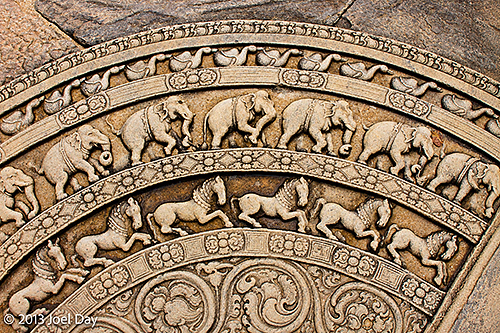
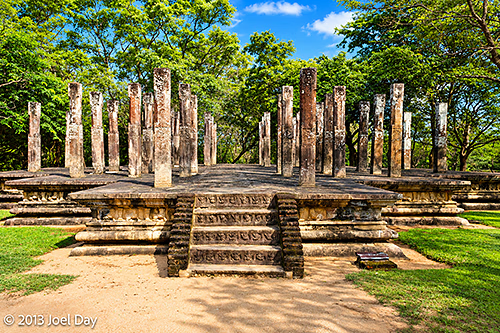
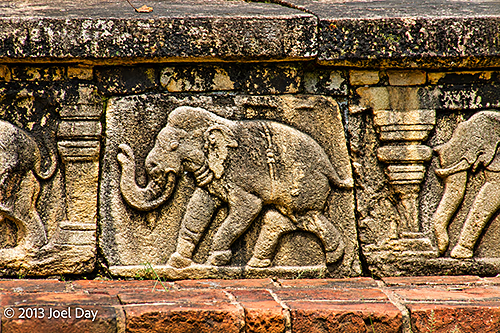
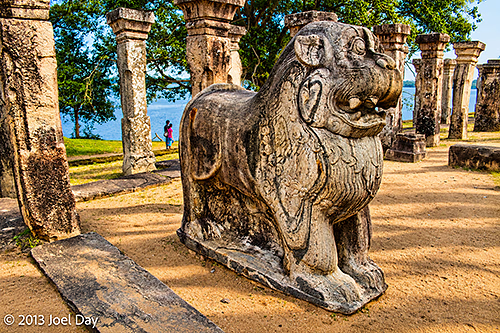
Ancient Stone Entrance to the Hatadage, Polonnaruwa, Sri LankaCarved Moonstone (Sandakada Pahana) at Polonnaruwa Vatadage, Sri LankaOrnate Shrine Carvings on Lankatilaka Image House, Polonnaruwa, Sri LankaRuins of King Parakramabahu’s Audience Hall, Polonnaruwa, Sri LankaCarved Moonstone (Sandakada Pahana) at Polonnaruwa Vatadage, Sri LankaStone Lion at the Royal Palace Ruins, Polonnaruwa, Sri Lanka
View from the top of Sigiriya Rock Fortress (Lion Rock), Sri Lanka
So my driver rocks up bright and early to start showing me around the island over the next seven days. I was told he spoke English and drove a good car. Well, he was quite old, his car was too, and his English was very poor. By lunchtime, I also realised that he appeared to be blind in one eye – but by then it was a bit late to do anything about it. The air-conditioning in the car seems practically nonexistent at times, but seems to kick in when he takes his foot off the gas.
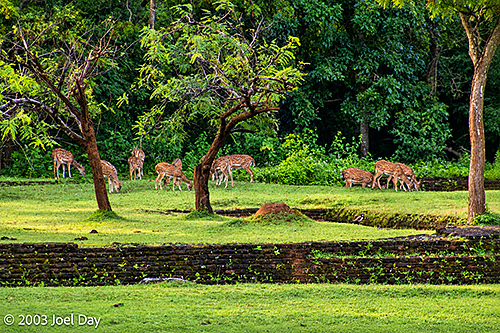
Spotted Deer (Chital, Axis axis) Grazing near Sigiriya Rock Fortress, Sri Lanka
That said, he seems like a good driver and a nice guy who’s eager to make sure I’m happy with his tour. His English seems okay when he has something tour-related to tell me, but if I ask him questions, he has a hard time understanding what I’m saying. After six hours of driving through mostly traffic jams, we finally arrived at a nice hotel spread out under a cool forest of rain trees, close to one of the sites I wanted to see. My tour fees include bed and breakfast, the driver and the car/fuel, but not the entrance fees to some of the sites.
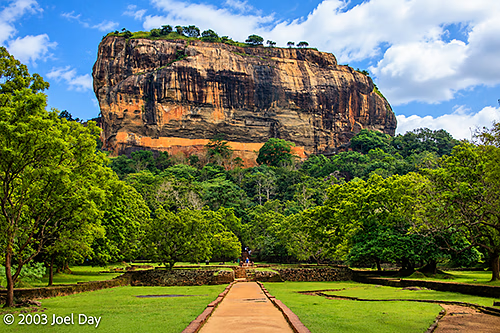
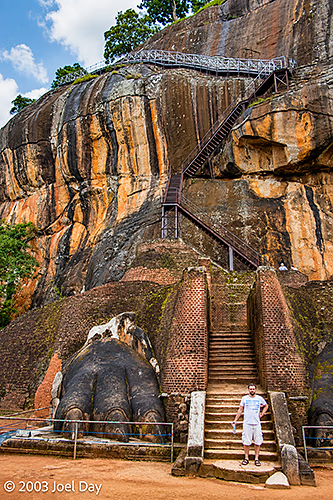
Sigiriya Rock Fortress (Lion Rock), Sri LankaSigiriya Rock Fortress (Lion Rock), Sri Lanka
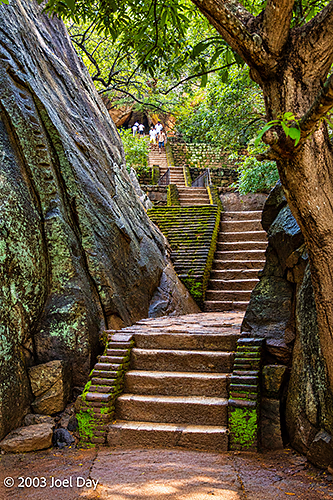
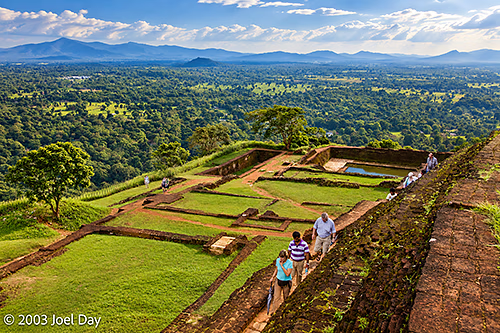
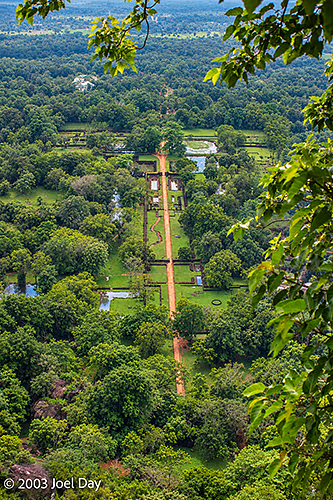
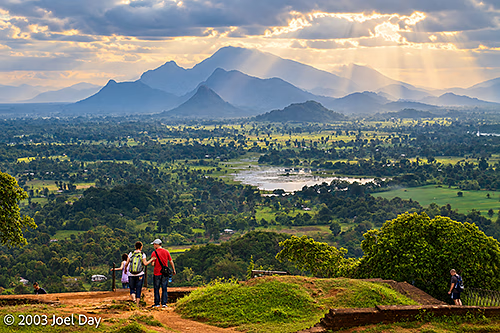
Like many developing countries, Sri Lanka charges one inflated price for visitors and a much lower price for locals. I was initially a bit put off by the entrance price of Sigiriya Rock (about $25), but after visiting, I felt it was well worth it. A UNESCO World Heritage Site, Sigiriya Rock Fortress (Lion Rock) was an amazing old fort, built by an empire in the 5th century, which used this enormous rock to protect against enemies.
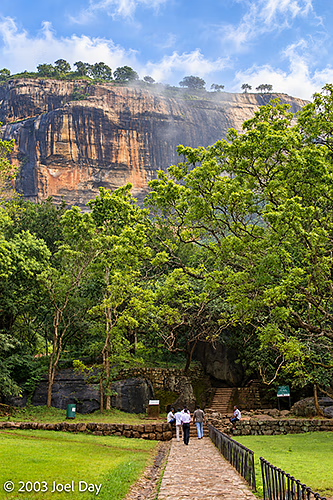
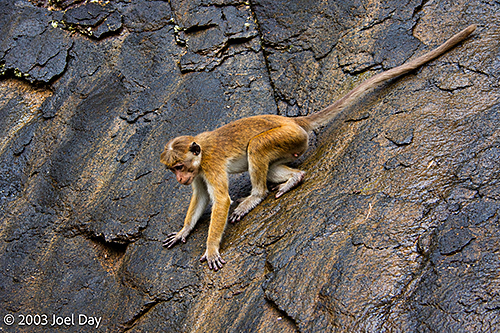
Toque Macaque (Macaca sinica) on a Rock Face near Sigiriya Rock Fortress, Sri LankaSteps at the base of Sigiriya Rock Fortress (Lion Rock), Sri LankaRuins of the 5th Century Royal Palace atop Sigiriya Rock Fortress, Sri LankaView from the top of Sigiriya Rock Fortress (Lion Rock), Sri Lanka
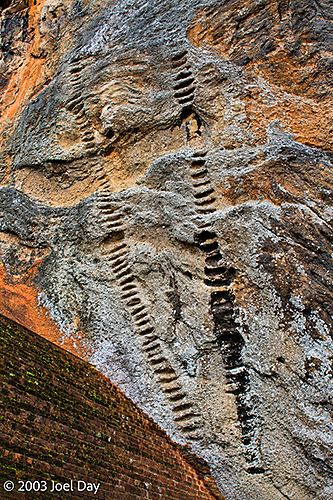
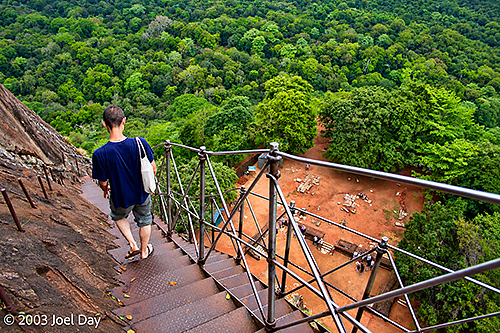
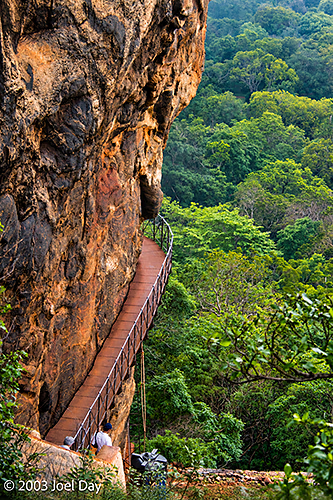
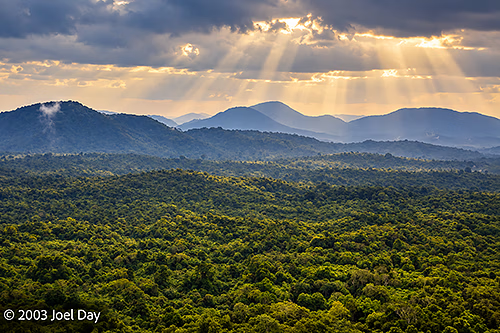
The ruins at the bottom are very cool to wander around, but the climb to the top, where the king kept his throne, was absolutely amazing. The stairs they built were scary enough for us to climb, but the ladders the original inhabitants used were baffling. Beautiful frescoes of Indian gods lined some caves on the way up, and the views of the lush countryside below were amazing, with mountains and lakes in the distance.
View from the top of Sigiriya Rock Fortress (Lion Rock), Sri LankaAncient Stairway Carvings on the Rock Face of Sigiriya Fortress, Sri LankaStaircase descending Sigiriya Rock Fortress (Lion Rock), Sri LankaWalkway around side of Sigiriya Rock Fortress (Lion Rock), Sri LankaView from the top of Sigiriya Rock Fortress (Lion Rock), Sri LankaStaircase descending Sigiriya Rock Fortress (Lion Rock), Sri Lanka
Sigiriya Rock Fortress Hike (with lots of GPS interference)
Map of the route “James”: 4,289 m, 103 m of climbing and 200 m of descent, elevation between 191 m and 352 m, time 01:19:11. It starts at 7.95662, 80.75911 and ends at 7.95538, 80.75753 (latitude, longitude).
Map of the route “20 Million in One Teardrop”: 2,908,603 m, 2,692 m of climbing and 2,393 m of descent, elevation between -56 m and 2,295 m, time 04:14:09. It starts at 1.35280, 103.99131 and ends at 7.17678, 79.88537 (latitude, longitude).
After a 2 am arrival at my hotel in Colombo, Sri Lanka, in which my driver had to repeatedly ring the doorbell to wake up the night watchman, I arose to find a nice buffet breakfast waiting for me downstairs as part of the deal. Afterwards I walked about a block and a half to a golden beach and walked up and down it past numerous cheap hotels, cafes, and restaurants. Plenty of stray dogs roamed around, and a train line ran through, with the widest-gauge tracks I’d ever seen.
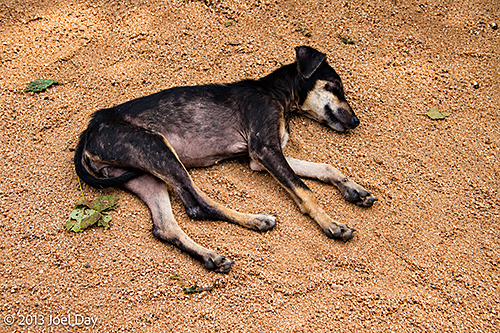
Stray dog sleeping in rural Sri Lanka
My plan for the day? Get some money changed over, inquire about tours, pop into the centre of town to see what there was to see and compare tour prices, and then return to the hotel. Simple enough, I thought. Well, the money changing, which is very simple and straightforward in Singapore (just rock up to a man behind some glass and fork over your dough for his dough), seemed very bureaucratic. There were numerous forms to fill in, passport requirements, and endless double-checking and running around between desks in the chaotic bank office. What would have taken seconds in Singapore took me hours in Colombo.
Next I tried to find out about tours through the head of my hotel, but her English was good; she kept telling me to tell her exactly what I wanted to see (when I was hoping for advice on what was worth seeing), and she was a bit cagey when I asked her about prices. She was also busy talking with others much of the time, so I finally gave up and decided to hop a tuk-tuk into the centre of town to see what other tours might be on offer.
The hotel recommended the tuk-tuk ride as the safest option for getting into town because of pickpockets, but the drive in was long and crazy. I felt like the ride was a long game of bumper cars – except you never actually hit anyone. Just constant near misses! At the end, the tuk-tuk driver ripped me off, shortchanging me by the equivalent of the entire trip (not much, but still). Welcome to Sri Lanka!
Colombo is busy, noisy, and full of crowded markets and chaotic traffic. Every time I ventured toward what looked like an interesting historical part of town, it turned out to be a high-security government office; security guards waved me away.
It seemed hard to find any information at all about touring the island. The most common way to see the island seems to be to hire a driver (for the price of renting a car) and have them chauffeur you around to all the big sites. I tried to walk all the way back to my hotel but gave up after about 15 km. When I tried to buy a soft drink to rehydrate, the shop owner insisted I drink it on the spot so he could keep the bottle. Perhaps he just sent it back to the bottling plant to be refilled, but it sounded a bit dodgy, so I declined.
My Exploration of Colombo and Hike Back to My Guesthouse
Map of the route “20 Million in One Teardrop”: 13,894 m, 109 m of climbing and 84 m of descent, elevation between 63 m and 104 m, time 02:48:20. It starts at 6.93436, 79.85162 and ends at 6.83913, 79.86538 (latitude, longitude).
Finally back at my hotel, I flipped through my Lonely Planet with my hotel manager and told her what I wanted to see. She said she would call her driver and get a quote. It all worked out in the end, but paying for the tour became a major nightmare due to the price – which wasn’t that bad by Western standards, but converted into Sri Lankan Rupees made it sound astronomical. ATMs wouldn’t pay out that much in a day, and I couldn’t find an American Express office to cash a check. Finally, after much scheming to pay for it, I noticed a Visa / MasterCard machine under their front desk – even though I had already specifically asked if they took any credit cards (No! They said). So, after a lot of headache running around about yet another issue, it was all easily resolved with a credit card.

You must be logged in to post a comment.