I’m spending my second night in a youth hostel in Esperance. Yesterday, I was the youngest resident (with several retirees). Today I’m the oldest. Ahhh… you’re never too old to backpack.
A farmer staying here told me yesterday that there are big bucks to be made selling “Blood and Bone” fertiliser, and that’s what the kangaroo collector was probably doing with them in South Australia. He also told me how road train drivers approach livestock when they’re on the road — usually aiming to knock them on the edge and not hitting them full on (which would cause too much damage to their trucks). Ah, the joys of road kill talk…
The weather has been very stormy for most of my stay here, but it has just begun to settle down. To take refuge from the rain, I spent some time perusing the local museum. The coolest exhibit they had was the remains of Skylab, which fell here in 1979. It was really interesting to see all the bits, some of them huge, and read all the newspaper articles. I can remember everyone worrying about whether it would fall on them back in the U.S. I also remember NASA claiming that it had safely landed in the Indian Ocean — just before the people of Esperance announced that, actually, it had fallen on them. There were big things in the exhibit like the freezer, hatch door, and a giant cylinder. It’s a miracle none of it landed on anyone’s head.
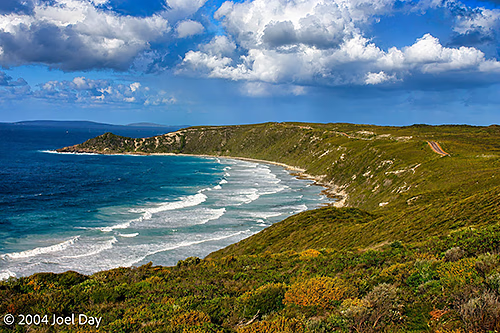
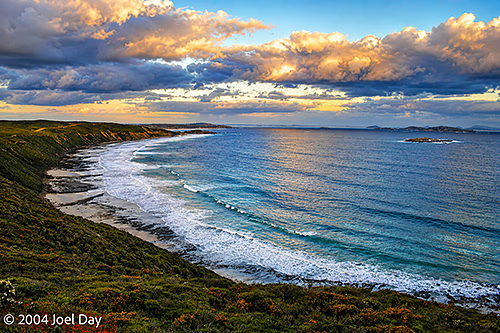
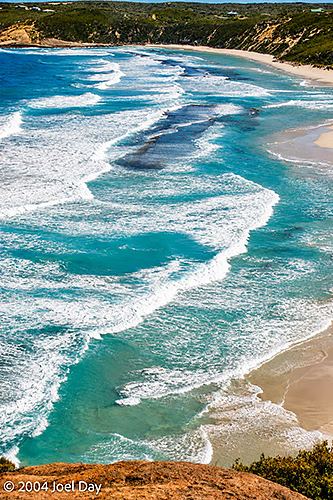
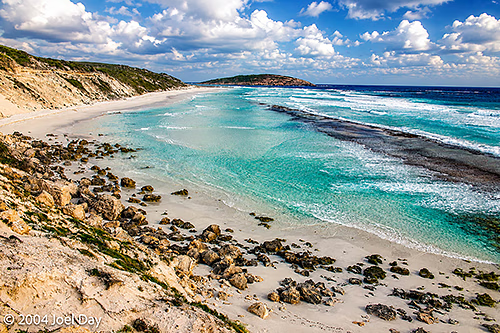
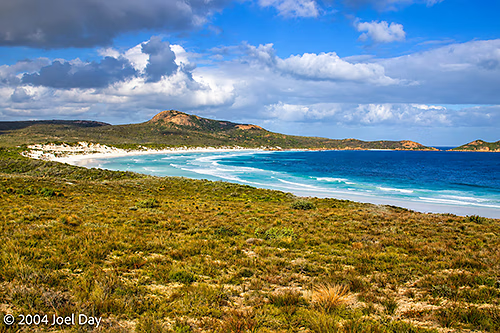
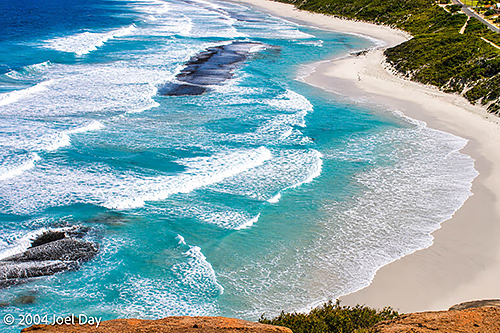
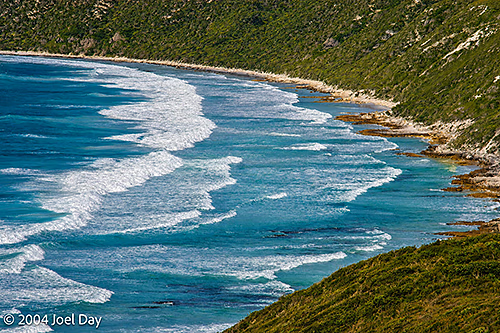
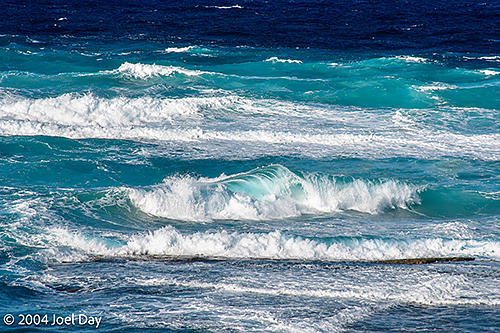
View from Great Ocean Drive, Esperance, Western Australia
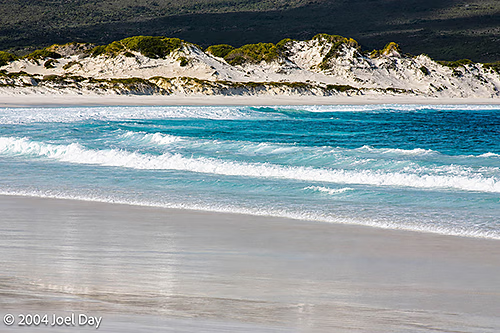
The weather did manage to clear up enough for me to see the outdoor sites as well. The “Big Sur” type drive is really spectacular with many an endless beach with lots of white sand and huge rocks. The local national park has pure white beaches that seem to run for dozens of miles. There were also whales in the neighbourhood, but I didn’t personally see any.
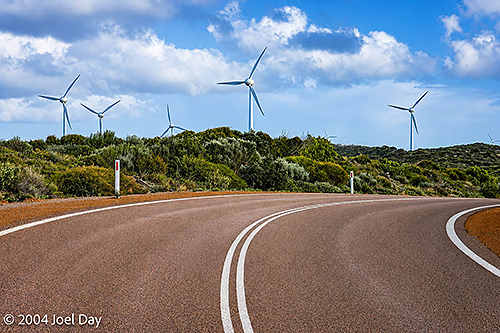
View from Great Ocean Drive, Esperance, Western AustraliaView from Great Ocean Drive, Esperance, Western AustraliaView from Great Ocean Drive, Esperance, Western AustraliaView from Great Ocean Drive, Esperance, Western AustraliaView from Great Ocean Drive, Esperance, Western AustraliaWind farms along the Great Ocean Drive, Esperance, Western AustraliaView from Great Ocean Drive, Esperance, Western AustraliaView from Great Ocean Drive, Esperance, Western AustraliaView from Great Ocean Drive, Esperance, Western Australia
Tomorrow, I will head for Walpole (in the thick of the Karri forests south of Perth) to spend the night before making that final 5-hour leg back to Perth on Sunday.
After my night sleeping on the state line, I got up bright and early and soldiered back to the car for another long day of driving. One of the reasons I decided to sleep at the border village was because it was actually on the South Australian side, and there was an Agricultural Inspection Station waiting for me to get into Western Australia. This was the fourth zone I’ve had to cross into, where I was expected to throw away all my produce, and I was getting a bit sick of it. The other zones were around Kununarra, the Northern Territory state line, and the lower parts of South Australia. I still had some oranges and apples I bought at Adelaide’s Central Market, so I had them all for breakfast before getting started on my journey.
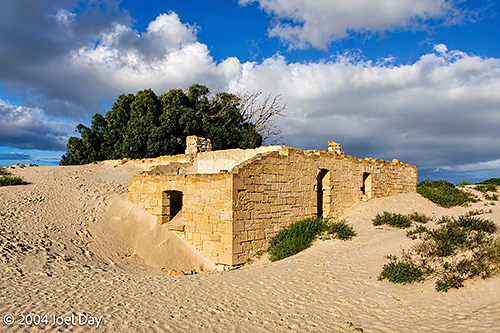
Old Telegraph Station near Eucla, Western AustraliaNinety Mile Straight, Western Australia
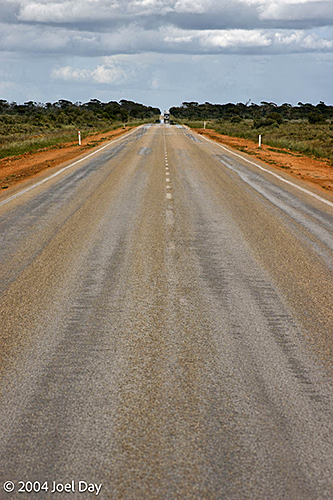
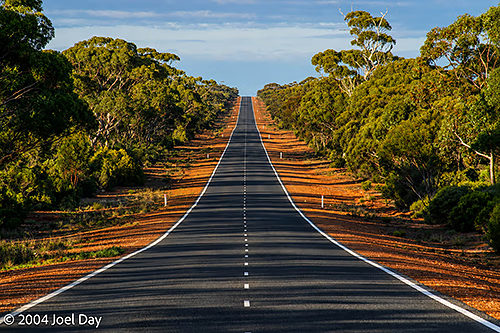
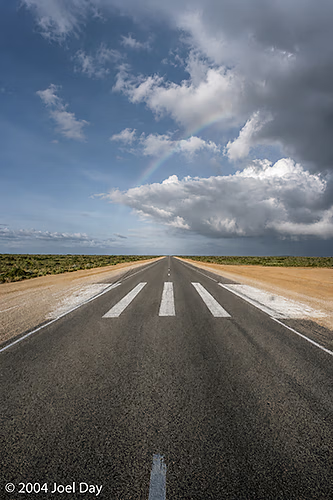
This drive had a few more trees than the Nullarbor, but it also had the distinction of holding Australia’s longest straight stretch of road — the Ninety Mile Straight, which got a bit boring. I actually found it a bit dangerous because oncoming traffic seemed to appear out of nowhere. You would get tired of constantly looking in the same place for too long and find it hypnotising, so you would try to keep your eyes moving around, looking from side to side, just to stay awake. And then, pow, there would be a truck barrelling down on you.
Ninety Mile Straight, Western Australia
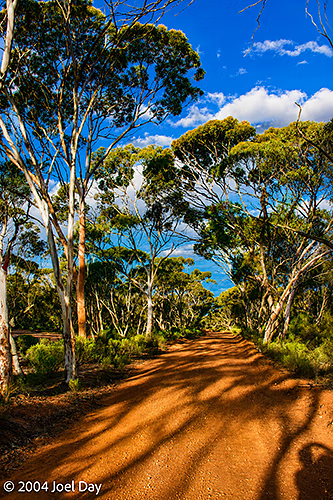
I finally arrived in Norseman in Western Australia in the mid-afternoon, where the tourist centre greeted me with a free hot shower and a free private camping spot 22 kms south of town. It was quite nice, private, isolated, and beautiful with lots of thick bush.
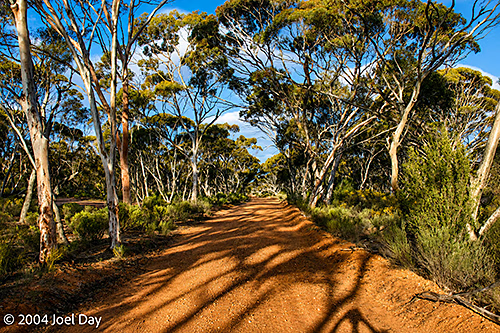
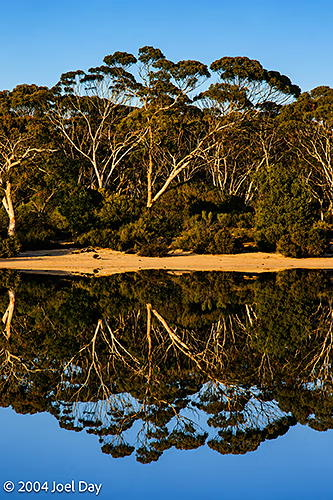
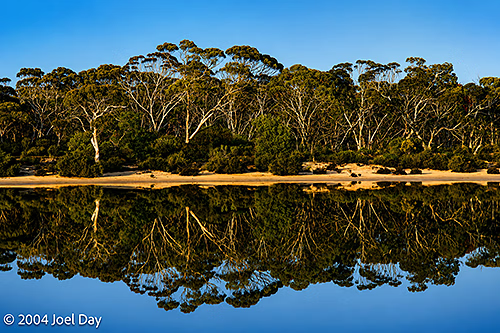
Dundas Rocks Road near Salmon Gums, Western AustraliaSalt lake along Dundas Rocks Road near Salmon Gums, Western AustraliaSalt lake along Dundas Rocks Road near Salmon Gums, Western AustraliaDundas Rocks Road near Salmon Gums, Western AustraliaSalt lake along Dundas Rocks Road near Salmon Gums, Western Australia
From there, I made the final few hours of driving this morning to get to the southern coastal town of Esperance — which is actually only about 8 hours away from Perth.
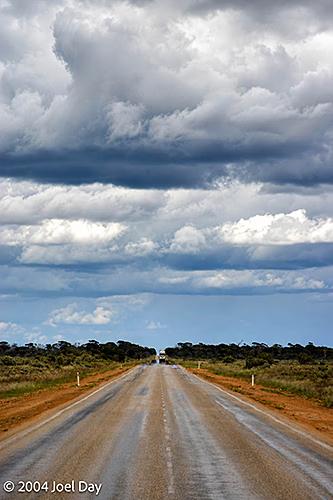
Coolgardie Esperance Highway through Salmon Gums, Western Australia
Esperance is supposed to be beautiful, but it’s been pouring rain ever since I got here. I’ve checked into another single room at the YHA in anticipation of another nasty storm front passing through. I think it’s probably already here. Esperance is famous for having lots of big, beautiful beaches here with pure white sand. They have a bay full of islands and a local national park with some good hikes (I’ve been told). There is also a scenic drive nearby that it supposed to be like Big Sur. I’ll let you know when the weather clears.
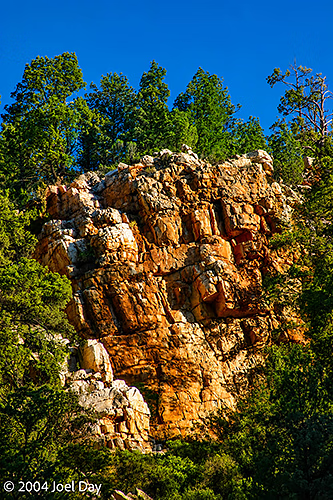
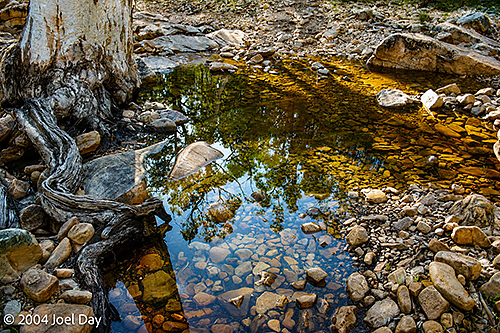
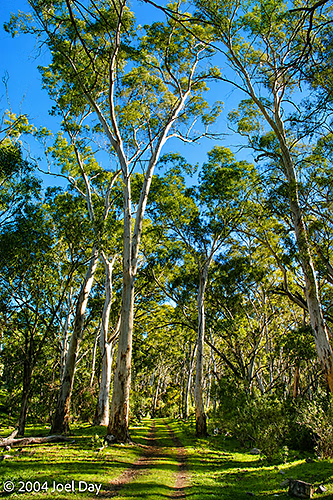
So after a few days of freezing nights in the damp cold of Adelaide, I decided I should start making my way back to Perth—as time was running out. I thought it would be more interesting to try and camp in as many national parks as I could on the way across the Nullarbor. One park I camped in was Mount Remarkable National Park, a little but, ummm, remarkable park just outside of Port Augusta (which I had to pass back through to get around the Spencer Gulf, anyway). Mt. Remarkable had lots of nice trails I could hike, running through gorges and up to the tops of mountains. I saw an echidna there, a relative of the porcupine, doing a bit of echidna-type business along the river.
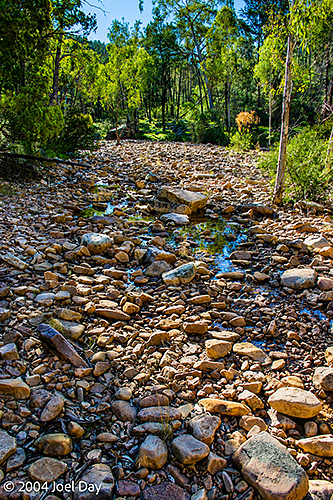
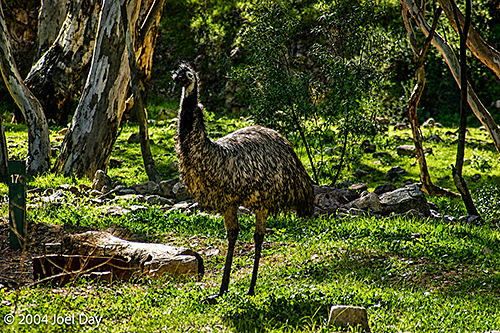
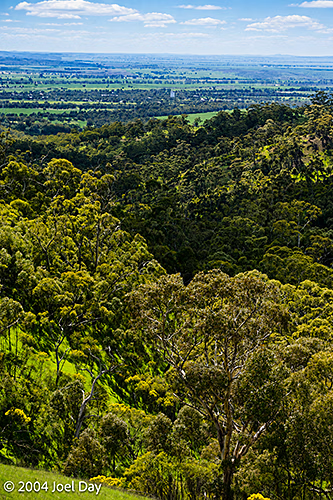
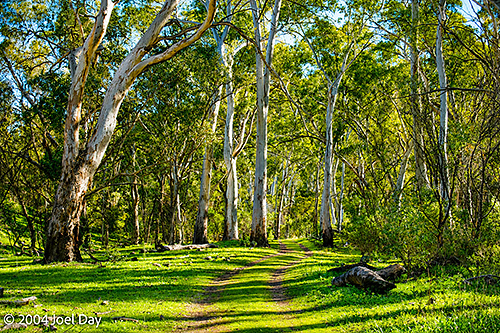
Mount Remarkable National Park, South AustraliaMount Remarkable National Park, South AustraliaEmu in Mount Remarkable National Park, South AustraliaMount Remarkable National Park, South AustraliaMount Remarkable National Park, South AustraliaMount Remarkable National Park, South AustraliaMount Remarkable National Park, South AustraliaMount Remarkable National Park, South Australia
After a night in Mount Remarkable, I headed through Port Augusta and down to the southern end of the Eyre Peninsula to camp at Lincoln National Park (next to Port Lincoln, and not named after Abe). The Eyre Peninsula was quite nice with a lush green interior and nice, quiet little coastal towns that are probably a bigger attraction during the summer months. It was cold (again), but I was able to get my own campground and private beach there. I could tell a storm was brewing in the distance, but I didn’t know what was in store for me until the next day. Fortunately, I was able to find the perfect sheltered spot for my tent, so I didn’t suffer.
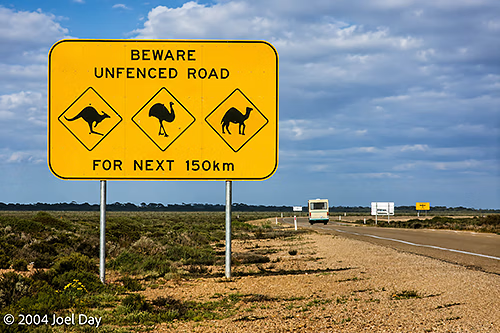
Animal crossing sign along the Eyre Highway, South AustraliaChadwick Roadstrip for Royal Flying Doctor Service planes along Eyre Highway in South Australia
My original plan was to break the run across the Nullarbor Plain up into about 500-600 kilometer sections. Unfortunately, a huge nasty storm front moved through with driving rain and gale-force winds that didn’t make the idea of stopping to camp anywhere along the way a desirable one. Instead, I just headed as far west as I could, hoping to get through to the other side of the storm (which was coming from the west)
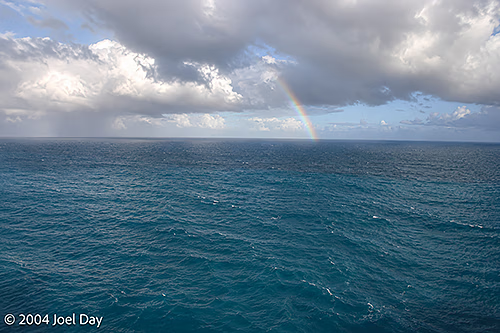
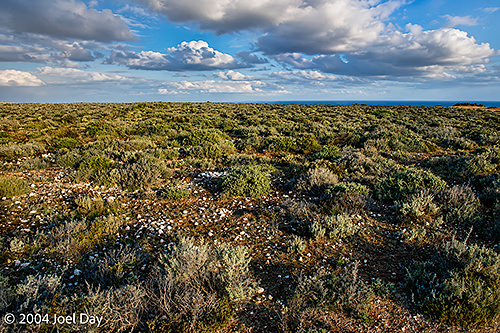
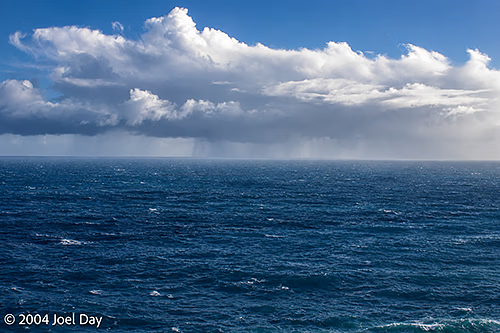
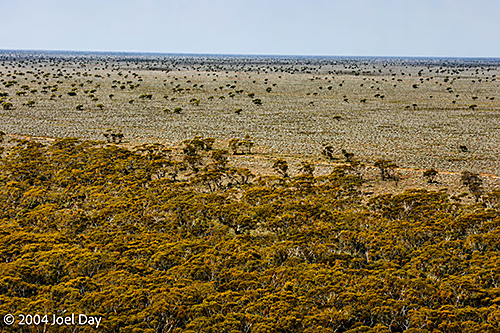
Cloudbursts and rainbows over the Southern OceanThe real Nullarbor: Null (no) Arbor (trees)Cloudbursts over the Southern Ocean
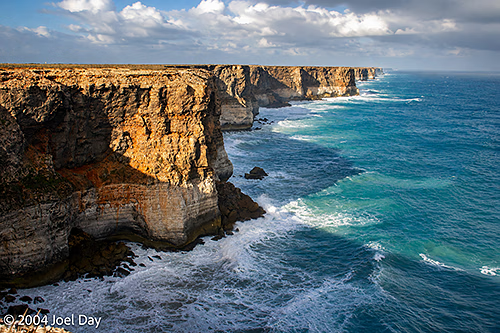
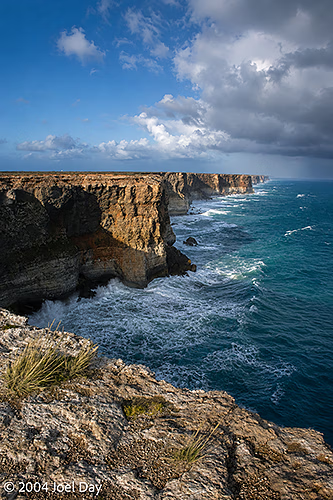
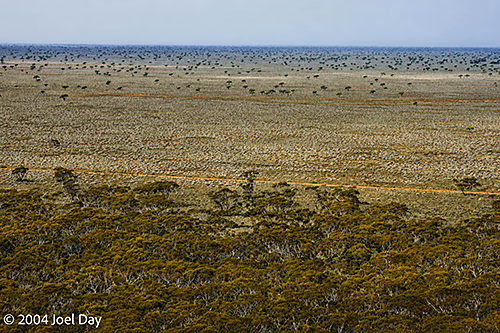
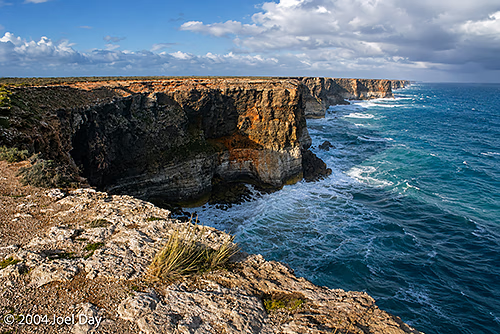
The storm made what would otherwise have been a notoriously boring drive (“Nullarbor” means “no trees” in Latin) into a beautiful drive with huge dark cloud formations, distant storms, and lots of full rainbows. The drive across the bottom of Australia runs very close to the edge of the continent, and there are numerous places you can pull off the road to watch the Southern Ocean crashing into sheer cliffs. There were also a couple of passes up onto and off of plateaus that were really spectacular to look down from.
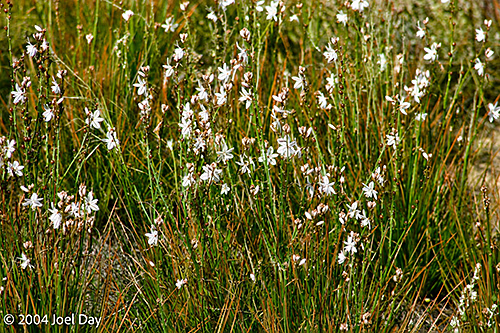
Nullarbor PlainThe Great Australian Bight along Eyre Highway, South AustraliaWildflowers along the Nullarbor Plain, South AustraliaThe Great Australian Bight along Eyre Highway, South AustraliaNullarbor PlainThe Great Australian Bight along Eyre Highway, South Australia
I made it to the Western Australian / South Australian border and found a cheap cabin in the tiny “border village” for the night so I didn’t have to worry about camping in the elements. $25. Not a bad deal. It even came with a tea kettle so I can boil water and make dinner in my room. The first night I’ve slept indoors in about 5 weeks!
After another long boring drive through the desert, I decided to make a pit stop in Adelaide — even though it is actually about 600 kilometers out of my way. The desert I had to drive through in northern South Australia (if that makes any sense) was largely in a government protected military area titled “Woomera” and famous locally for housing boat people in camps (indefinitely).
The South Australian desert has two distinctive characteristics in Australia. They seem to have a lot more flies than anywhere else I’ve been. Flies in Australia are not like the flies they have in the U.S. They seem preoccupied with trying to fly into every orifice on your body. Your nose, your ears, your mouth. Whatever they can find open. It’s very annoying. In the U.S. they just seem interested in your food. In Australia they seem to love the heat. In the U.S. they seem to like hanging out in cool places like your garage.
The other distinctive characteristic of the South Australian desert is the amount of road kill. When I pulled back on to the Stuart Highway from Uluru and started heading south, I was taken by the number of dead kangaroos lying by the side of the road that looked like they had only been hit in the past day or two. I even saw one with blood draining out of it into the middle of the road, but that may have had more to do with the vulture picking at its flesh than having just been hit. The odd thing was that I couldn’t seem to find any dead kangaroos that looked like they had been lying there for more than just a day or two. It was like some mass slaughter had just taken place.
Then after hundreds of kilometers of driving, I saw a truck pull over ahead of me and turn on some flashing orange lights. A man jumped out from his cab with a huge meat hook and swiped in down towards one of the fresh dead kangaroos. I just managed to pass him before the impact, but I did notice some sort of odd grinder on a trailor attached to the back of his truck. Ugh! Their kangaroo problem, I figured, must be so bad that they have to send this guy out to collect them every day. That’s why there wasn’t any older skeleton road meat like you find on most Australian highways.
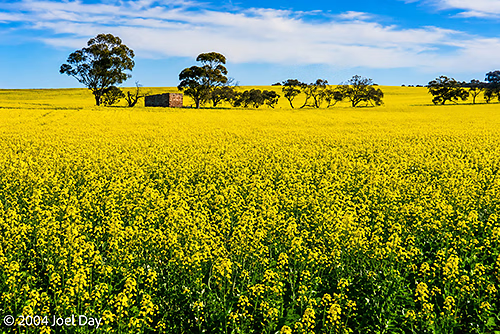
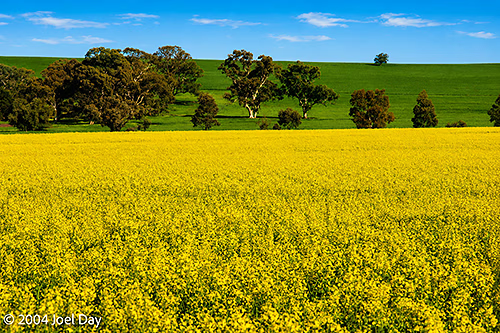
Canola field in South AustraliaCanola field in South Australia
Southern South Australia turned out to be completely different. Except for the flies. The boring desert turned into rolling green and yellow flowering hills and distant mountain ranges. It became absolutely beautiful as I headed into Port Augusta. I was a bit stunned when I arrived in Port Augusta, because I pulled over to take a break at a park and found the sea lapping up at my feet. It suddenly dawned on me that I had just driven entirely across a continent from sea to sea (Timor Sea to the Spencer Gulf).
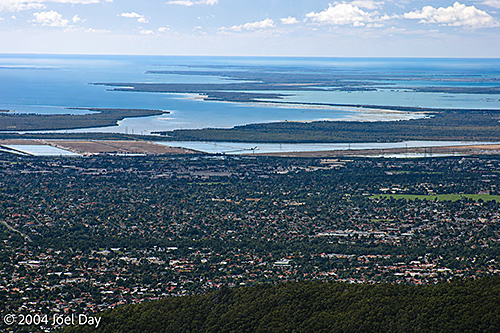
Saint Vincent Gulf near Adelaide, South Australia
I continued driving south to Adelaide, Australia’s next largest city after Perth, through beautiful countryside for another three hours. I managed to find a camping spot in a caravan park right next to the beach. Only problem was that it wasn’t warm like it was up north. It was that freezing damp cold I knew too well from living in Melbourne for six months back in 1992. I ended up spending a few nights and a full day in Adelaide before starting my trek back west to Perth.
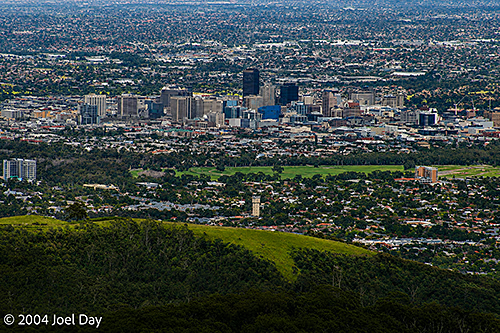
Adelaide, South Australia
Adelaide was nice, but the longer I spent there, the more it just seemed like just another big city with the same shops and attractions as any other big Australian city. The one thing Adelaide had that Perth doesn’t (besides being very green and shady and wet) was their Central Market. I started my day there and it was really great. Very much like Reading Terminal Market in Philadelphia. Just about the same size, too. And very well supported by the locals. Lots of fresh produce, fresh meats, fabulous looking deserts and other gourmet foods, surrounded my nice cafes.
After a few days of freezing nights in damp cold, I decided I should start to make my way back to Perth in time to catch my flight to New Zealand.
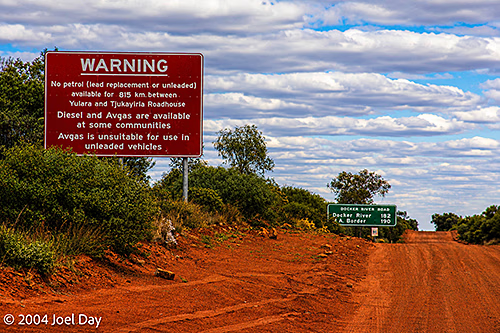
I’ve now reached the point where I really have to start making some progress in getting back to Perth. One interesting thing about visiting Uluru and The Olga’s was a little shortcut from there to Perth. It’s known as “The Great Central Road”. The problem with it is that it’s all dirt. Not only does it require a 4-wheel drive, but it also requires that you have a special permit to use it. And on some stretches of the road, I’ve been told that you are not allowed to travel along it unless you are part of a 4-wheel drive convoy. Hmmm…. sounds exciting!
Start of Great Central Road from Uluru, Northern Territory to Perth, Western Australia
So instead, I’ve found myself having to travel hundreds (if not thousands) of kilometres out of the way to make it back to Perth on sealed (paved) roads in my little two-wheel drive car. This paved route takes me down to Adelaide first (to the southeast) and then back west across the Nullabor Plain to Perth.
I’ve already had to backtrack 100s of kilometres to get out to the main “Stuart Highway” from Uluru and Kings Canyon today. I’m hoping to make it to Adelaide for a few days of battery recharging by tomorrow, but I’ve had to make an evening stop in Coober Pedy for the night.
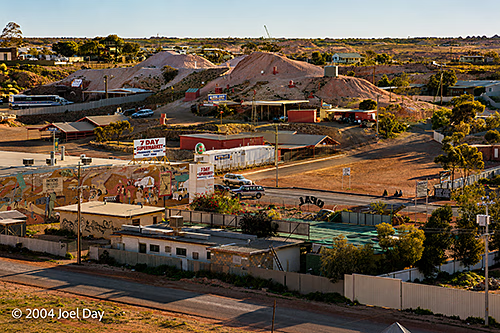
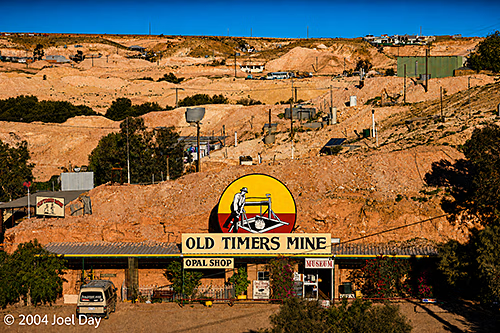
Coober Pedy, South Australia
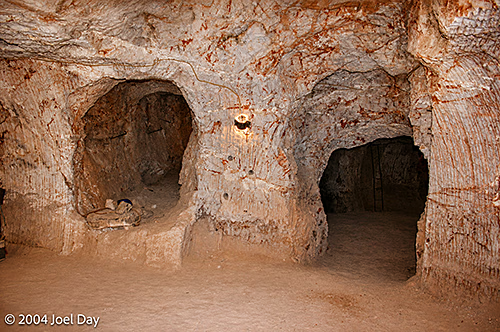
Coober Pedy turned out to be really cool. It is famous for opal mining and has a lot of dwellings in former mines to give locals refuge from the summer heat and cold winter nights.
Opal mine pits in Coober Pedy, South Australia
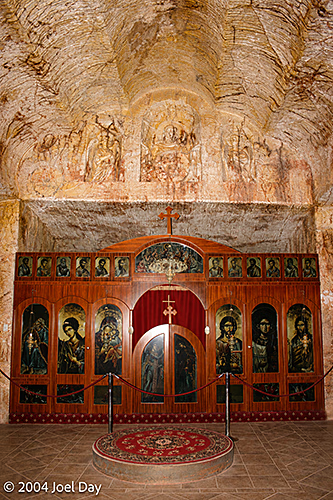
Even the churches, shops, hotels, and hostels (where I’m typing this entry) have made use of the leftover mine shafts.
Coober Pedy, South AustraliaUnderground church in Coober Pedy, South Australia
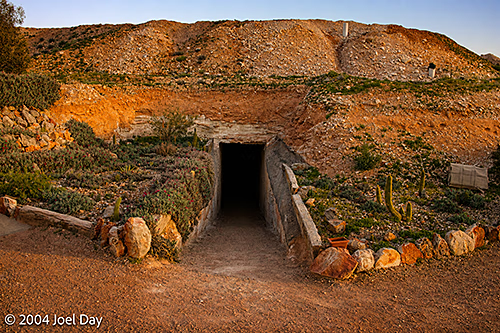
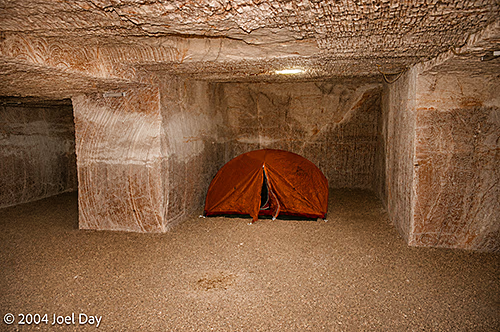
I was even able to find an underground campsite, so I pitched my tent in a mine shaft for the evening. The campsite included a free tour of a former mine.
Disused opal mine entrance to underground campsite in Opal mine in Coober Pedy, South Australia
The tour was conducted by an eccentric mine owner. Eccentricity seems to be standard in these family tour operations I come across. I guess that’s part of what you’re paying for. It was mostly interesting information about how they go about finding where the opals are and what procedure they use to get to them (part voodoo).
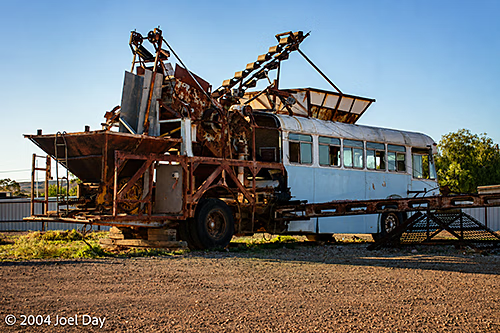
A movie titled Pobby and Dingan was due to begin filming in the same deserted mine the week after I was there. It won’t be the first. The town was littered with artifacts from other famous movies that were filmed in the area, including Mad Max.
Old Mad Max movie prop in Coober Pedy, South Australia
The best part about sleeping underground was that I didn’t have to worry about insects or the cold night because the temperature underground always stays the same. The worst part about it was a family of four who set up next to me and snored all night. Oh well. They were very nice, actually. Did the tour with me.
Disused opal mine underground campsite in Opal mine in Coober Pedy, South Australia
The stars in Coober Pedy were probably the best I’ve seen around Australia, probably due to its very dry desert environment. The Milky Way has been a regular feature in the skies for me over the past three weeks.
You must be logged in to post a comment.