Australia, South Australia, Western Australia

The Real Nullarbor Plain

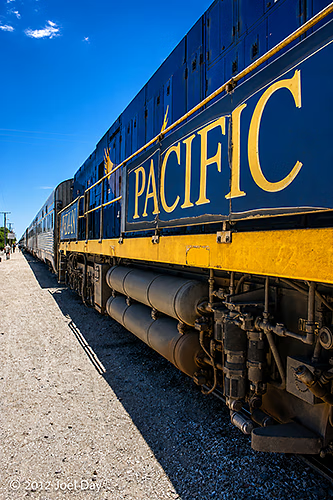
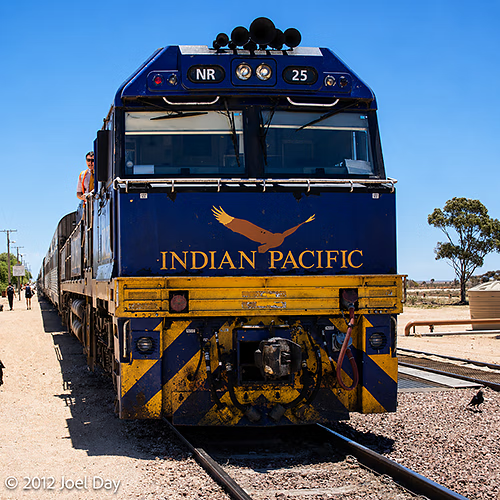
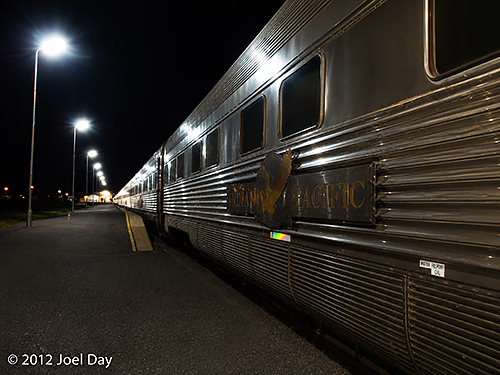
To get started on another around-the-world tour, I thought I would do what I did last time and explore parts of Australia that I haven’t had the chance to visit yet. Because I’ve seen so much in the west I thought I would take a different tack from driving or flying and catch the Indian Pacific train from Perth to Adelaide with my car on-board. A lot people I know have always been interested in seeing what it would be like to ride the train over 43 hours through some of the least populated deserts in Australia.

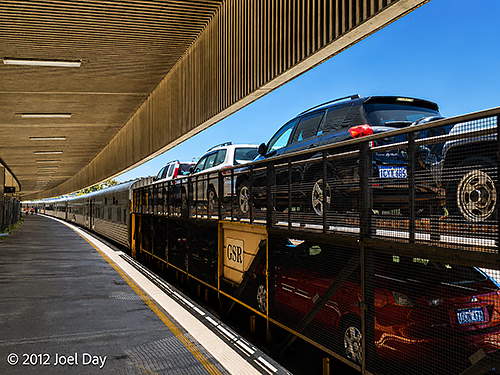
Cars loaded on Indian Pacific for journey from Perth to Adalaide.

I chose to take a cheap sleeper seat to save a few bucks and see how tolerable it would be. The trip turned out to really be great and a lot more interesting than you would think for rolling through endless views with flat surfaces and no trees (via the Nullarbor Plain). The trip was really quite comfortable – even for us spendthrifts. There were 50 of us riding the cheap way (from very young to very old) and we had one train carriage for doing whatever we wanted (sleeping, eating, relaxing, socializing) and two other cars with some restrictions on what we could do there. One of the other cars was a lounge and the other a diner. Sleeping was not permitted outside of our main carriage and only their food could be consumed in the dining car. Otherwise, we could do pretty much whatever we wanted in our 3 cars and had quite a bit of room to spread out. The lounge car was only available for an additional fee of $15 for the trip. For some reason this put off most of the passengers I was riding with – which resulted in me and about 7 other people having the whole place to ourselves. It had big comfortable seating and plenty of windows to view out through.
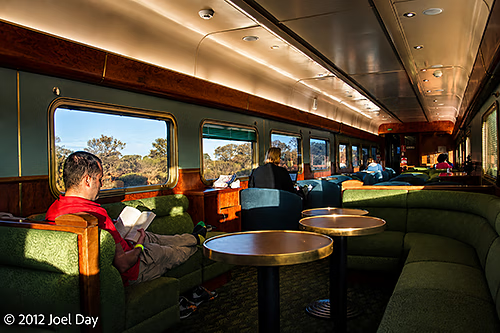
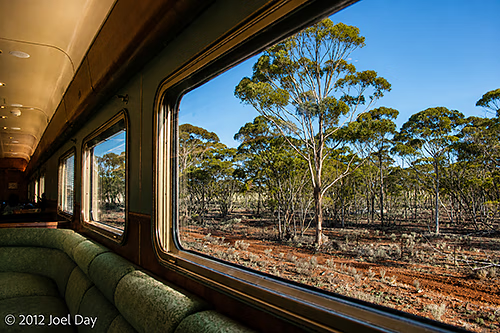
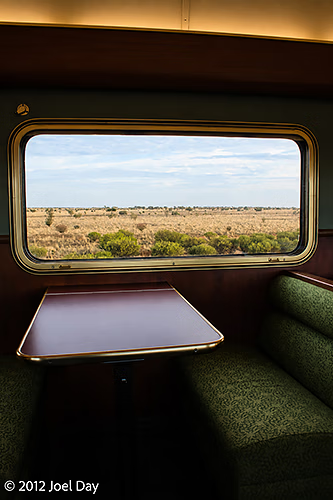
View of the Indian Pacific Lounge Car (Red Class) while train shoots through wheat belt region outside of Perth.

The food was really quite good and only about $13 a meal. I had a very nice Thai Chicken Curry the first night and a nice homemade Chicken Pie meal the second night. They cooked up Big Aussie Breakfast for the morning and had a range of sandwiches and snacks that could be purchased all day. The pricing was comparable to what you would normally pay anywhere (or even possibly cheaper).

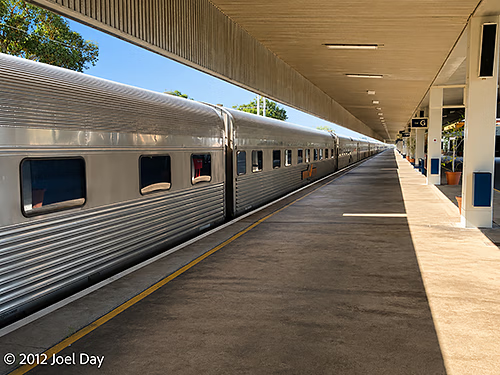
The train was huge and contained 37 carriages overall (including 2 carriages full of automobiles in the back – including mine). This may have had something to do with “The Christmas Train” event having happened on the last trip out to Perth a week earlier or it may just be the norm. Aside from our cheap “red” class there were gold and platinum classes with formal dining cars and proper sleeping quarters. Now that I have had the chance to ride overnight trains in proper beds vs seats, I have no regrets about the red service they were offering. I could never sleep that well on the trains in Thailand and Egypt due to constant irregular motion of the train rocking the beds, but these Indian Pacific sleeper seats could be reclined to almost completely flat and had tons of leg room. I actually slept quite well in them once I figured out how to get on my side. I think perhaps we have all slept in cars while growing up and might somehow find seats more natural to sleep in when motion is a constant factor.
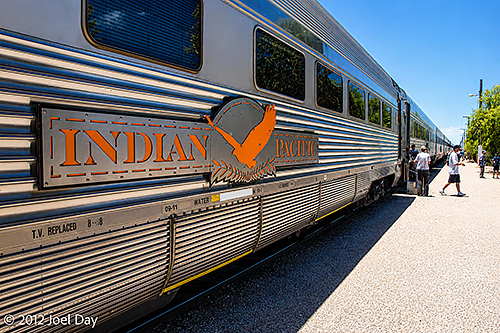
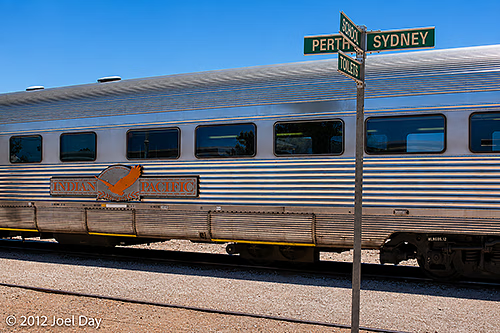
The train runs over 2500 kilometers between Perth and Adelaide, but continues on to Sydney – connecting the Indian Ocean with the Pacific Ocean. Before we arrived in Kalgoorlie for our first stop the train needed to pull over and allow freight trains and smaller passenger trains pass through from time to time. Once we got past Kalgoorlie there were minimal interruptions and a steady progression at about 115kph (according to my trusty GPS watch). For one (almost) 500km stretch the train travels down a perfection straight stretch with no bends at all in the track.
Unlike the road that runs across the bottom of the continent, the Indian Pacific route rides about 150km north through the heart of the Nullarbor Plain. While traveling from Perth to Adelaide the train needs to stop 3-4 times to deliver mail to people who live in the Western Australia parts these very remote areas. When traveling through the South Australia section of the trip it stops to pick up mail from a few places. When traveling west the train drops mail in South Australia and picks up mail in Western Australia. Each mail drop represents about 35 people sprawled out across hundreds of square kilometers. In addition to mail, the Indian Pacific is also used to pick up people from these remote regions so they can visit doctors in major cities or tend to other business they need to tend to in person. And then every year they send through Christmas train that stop to entertain young children and people living in these remote areas with music and Christmas treats. The conductors on the train have come to know quite a few of these people living on large pastoral leases because they are often their only physical contact with the outside world.
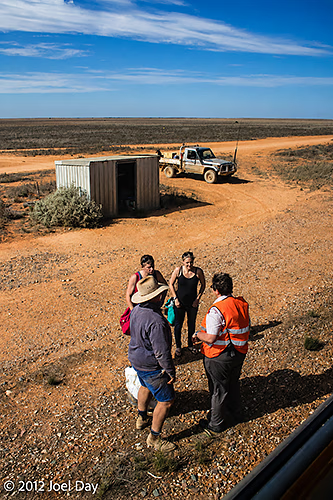
One of 3-4 mail drop locations servicing around 35 people scattered across 100's of square kilometers in the Nullarbor Plain
One of 3-4 mail drop locations servicing around 35 people scattered across 100’s of square kilometers in the Nullarbor Plain

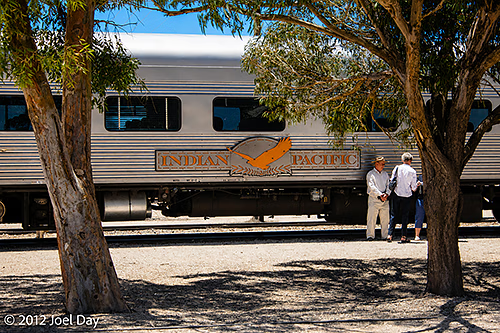
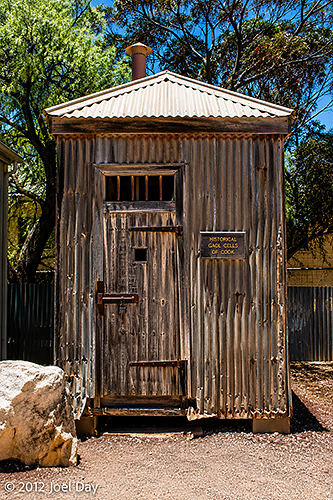
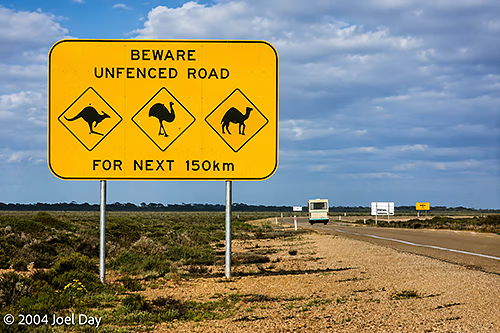
The locals share tales of camels on the loose and dingoes surrounding their homes and eating their water pipes to get water out of their plastic irrigation pipes in the dry seasons. There were many kangaroos to be seen hopping away from the train as well as livestock who just roam over the rails. I asked one of the conductors whether they ever get hit and he acted like it was a fairly regular event. Putting up fences in such remote areas just isn’t worth it. Of the stops the train made, we were only permitted to get off at two of them, both for fuel and water: Kalgoorlie in Western Australia and Cook in South Australia. Kalgoorlie is still a sizable town thriving off the gold industry, but Cook is more or less a ghost town now with only a 4 residents. Cook was originally set up to service all trains with fuel and water with a school, hospital, swimming pool, golf course, airport, etc with 35 inhabitants — all at government expense but it with dissolved when the train networks were privatized. Cook has reached 48C (118F) at times but it was merely 23C (the mid 70’s) where we were there.
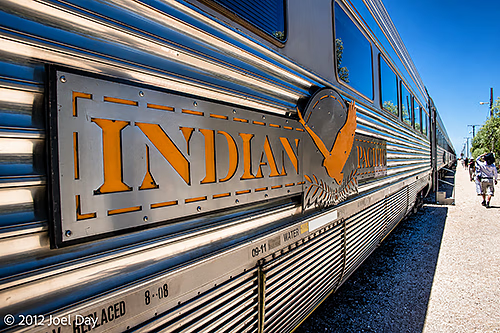
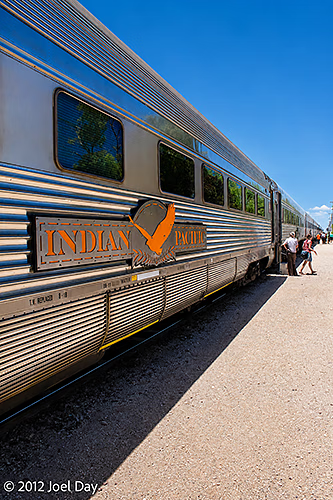
The Indian Pacific only stops twice for passengers to get off, this one in Cook, South Australia.

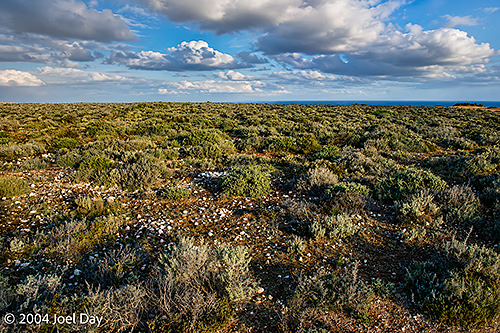
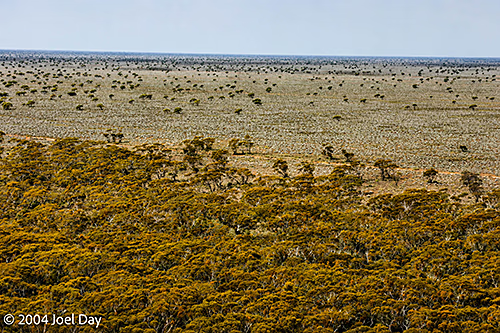
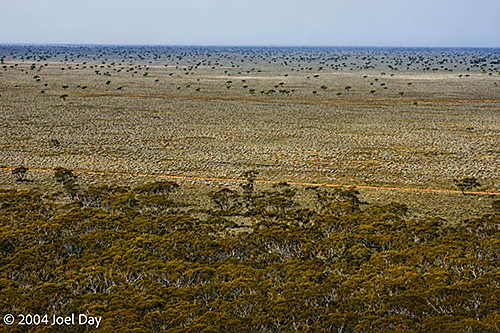
Along the Nullarbor Plain you would see the odd radio tower or tiny community. Everything seemed to rely on solar panels and rainwater tanks for survival. At one point we even came past a fresh looking brand new sizable airport in the middle of nowhere. Staring off into the horizon in any direction often brought strange parallax illusions of small objects racing in different directions because it was hard to judge distances. Even with all the desolate views out the windows, I still found myself quite mesmerized by the eerily beautiful scenery.
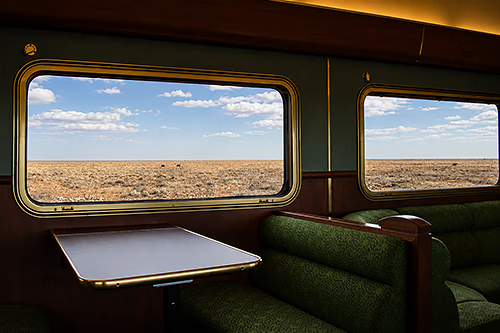
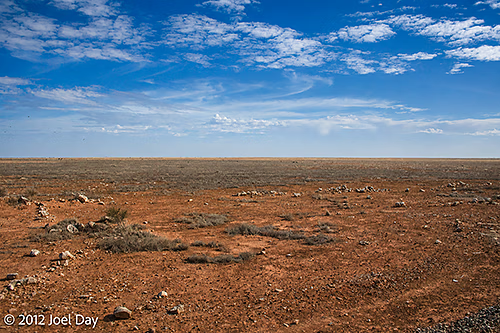
Looking back towards Perth while crossing to Adelaide.
Australia, South Australia, Western Australia

Esperance… 10,000 miles later!

After my night sleeping on the state line, I got up bright and early and soldiered back to the car for another long day of driving. One of the reasons I decided to sleep at the border village was because it was actually on the South Australian side and there was a Agricultural Inspection Station waiting for me to get into Western Australia. This was the fouth zone I’ve had to cross into where I was expected to throw away all my produce and I was getting a bit sick of it. The other zones were around Kununarra, the Northern Territory state line, and the lower parts of South Australia. I still had some oranges and apples I bought at Adelaide’s Central Market, so I had them all for breakfast before getting started on my journey.
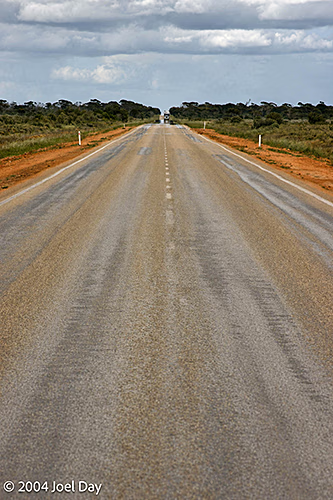
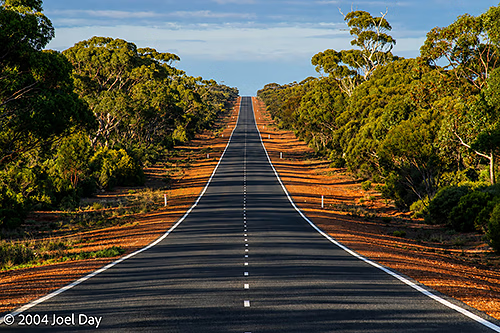
This drive had a few more trees than the Nullarbor, but it also had the distinction of holding Australia’s longest straight stretch of road — the Ninety Mile Straight, which got a bit boring. I actually found it a bit dangerous because oncoming traffic seemed to appear out of nowhere. You would get tired of contantly looking in the same place for too long and find it hypnotizing, so you would try to keep your eyes moving around, looking from side to side, just to stay awake. And then pow, there would be a truck barrelling down on you.
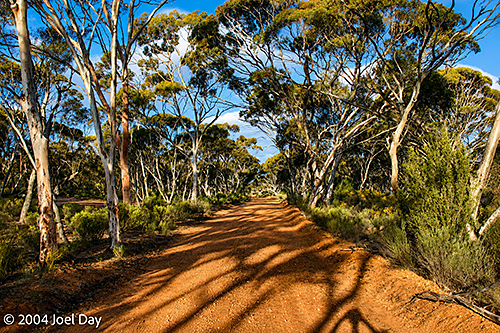
I finally arrived in Norseman in Western Australia in the mid-afternoon, where the tourist center greeted me with a free hot shower and free private camping spot 22 kms south of town. It was quite nice, private, isolated, and beautiful with lots of thick bush. From there I made the final few hours of driving this morning to get to the southern coastal town of Esperance — which is actually only about 8 hours away from Perth.

Esperance is supposed to be beautiful, but it’s been pouring rain ever since I got here. I’ve checked into another single room at the YHA in anticipation of another nasty storm front passing through. I think it’s probably already here. Esperance is famous for having lots of big beautiful beaches here with pure white sand. They have a bay full of islands and a local national park with some good hikes (I’ve been told). There is also a scenic drive nearby that it supposed to be like Big Sur. I’ll let you know when the weather clears.

Australia, South Australia

The Nullarbor Run

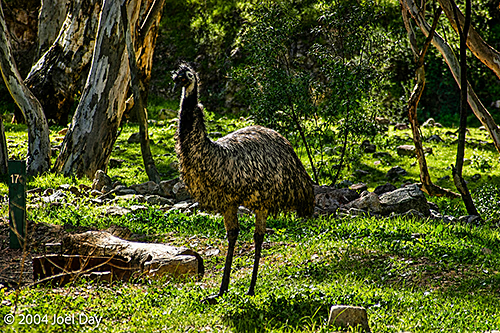
So after a few days of freezing nights in the damp cold of Adelaide, I decided I should start to make my way back to Perth — as time was running out. I thought it would be more interesting to try and camp in as many national parks as I could on the way across the Nullarbor. One park I camped in was Mount Remarkable National Park, a little but, ummm, remarkable park just outside of Port Augusta (which I had to pass back through to get around the Spencer Gulf, anyway). Mt. Remarkable had lots of nice trails that I could hike along that ran along gorges and up to the tops of mountains. I saw an echidna there, a relative of the porcupine, doing a bit of echidna-type business along the river.

After a night in Mount Remarkable, I headed through Port Augusta and down to the southern end of the Eyre Peninsula to camp at Lincoln National Park (next to Port Lincoln, and not named after Abe). The Eyre Peninsula was quite nice with a lush green interior and nice quiet little coastal towns that are probably a bigger attraction during the summer months. It was cold (again), but i was able to get my own camp ground and private beach there. I could tell a storm was a brewing in the distance, but I didn’t know what was in store for me until the next day. Fortunately I was able to find the perfect sheltered spot for my tent so I didn’t suffer.

My original plan was to break the run across the Nullarbor Plain up into about 500-600 kilometer sections. Unfortunately, a huge nasty storm front moved through with driving rain and gale force winds that didn’t make the idea of stopping to camp anywhere along the way a desirable one. Instead, I just headed as far west as i could, hoping to get through to the other side of the storm (which was coming from the west)

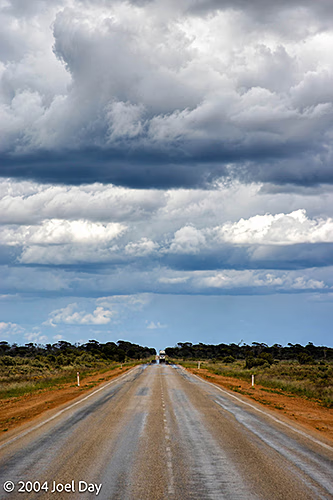
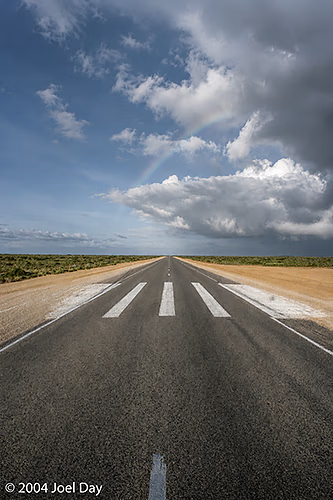
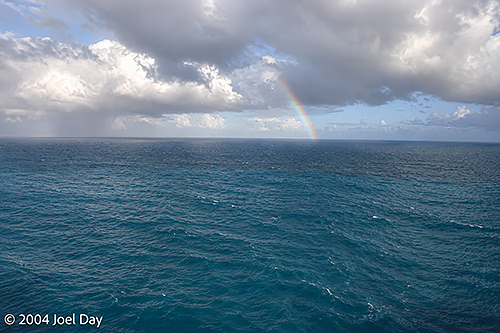
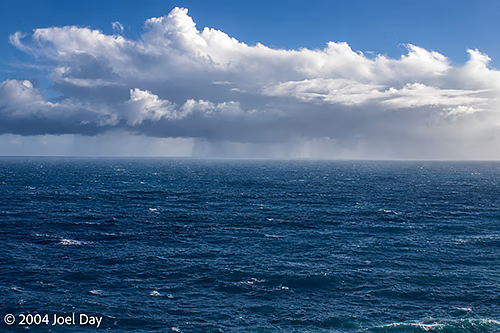
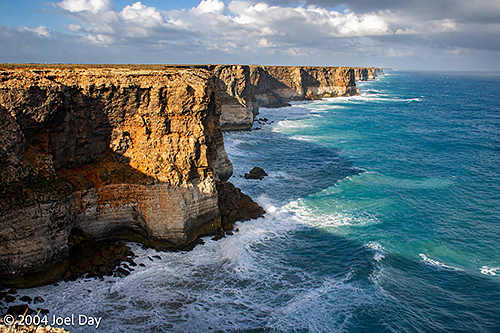
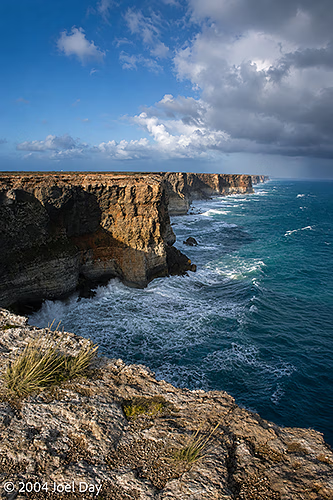
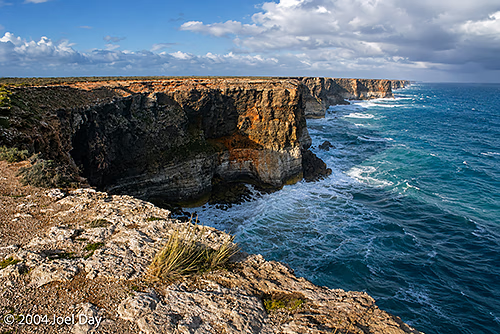
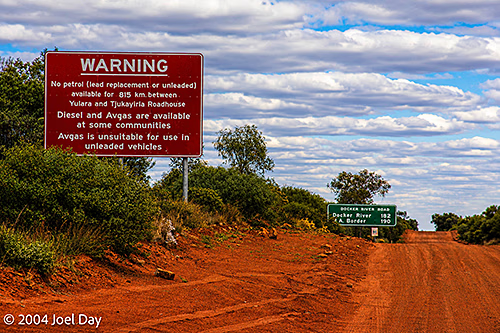
The storm made what would otherwise have been a notoriously boring drive (“Nullarbor” means “no trees” in latin) into a beautiful drive with huge dark cloud formations, distant storms, and lots of full rainbows. The drive across the bottom of Australia runs very close to the edge of the continent, and there are a numerous places you can pull off the road to watch the southern ocean crashing into sheer cliffs. There were also a couple of passes up onto and off of plateaus that were really spectacular to look down from.

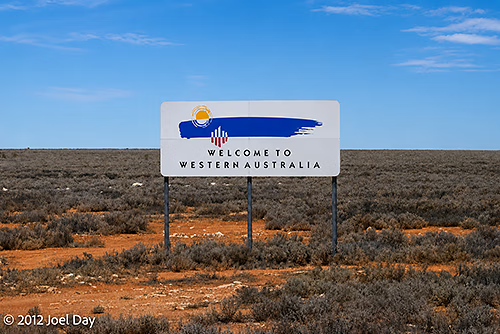
I made it to the Western Australian / South Australian border and found a cheap cabin in the tiny “border village” for the night so I didn’t have to worry about camping in the elements. $25. Not a bad deal. It even came with a tea kettle so I can boil water and make dinner in my room. The first night I’ve slept indoors in about 5 weeks!

Australia, South Australia

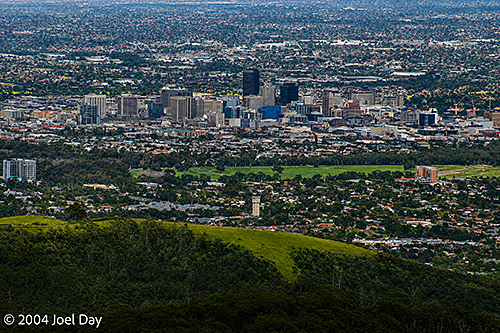
Adelaide, South Australia

After another long boring drive through the desert, I decided to make a pit stop in Adelaide — even though it is actually about 600 kilometers out of my way. The desert I had to drive through in northern South Australia (if that makes any sense) was largely in a government protected military area titled “Woomera” and famous locally for housing boat people in camps (indefinitely).

The South Australian desert has two distinctive characteristics in Australia. They seem to have a lot more flies than anywhere else I’ve been. Flies in Australia are not like the flies they have in the U.S. They seem preoccupied with trying to fly into every orifice on your body. Your nose, your ears, your mouth. Whatever they can find open. It’s very annoying. In the U.S. they just seem interested in your food. In Australia they seem to love the heat. In the U.S. they seem to like hanging out in cool places like your garage.

The other distinctive characteristic of the South Australian desert is the amount of road kill. When I pulled back on to the Stuart Highway from Uluru and started heading south, I was taken by the number of dead kangaroos lying by the side of the road that looked like they had only been hit in the past day or two. I even saw one with blood draining out of it into the middle of the road, but that may have had more to do with the vulture picking at its flesh than having just been hit. The odd thing was that I couldn’t seem to find any dead kangaroos that looked like they had been lying there for more than just a day or two. It was like some mass slaughter had just taken place.

Then after hundreds of kilometers of driving, I saw a truck pull over ahead of me and turn on some flashing orange lights. A man jumped out from his cab with a huge meat hook and swiped in down towards one of the fresh dead kangaroos. I just managed to pass him before the impact, but I did notice some sort of odd grinder on a trailor attached to the back of his truck. Ugh! Their kangaroo problem, I figured, must be so bad that they have to send this guy out to collect them every day. That’s why there wasn’t any older skeleton road meat like you find on most Australian highways.

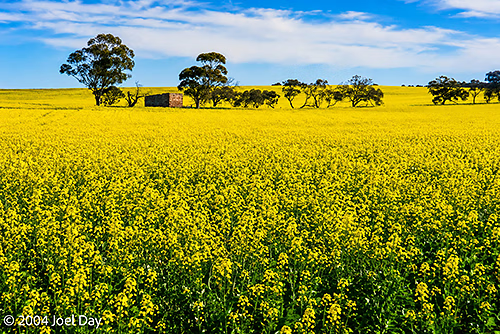
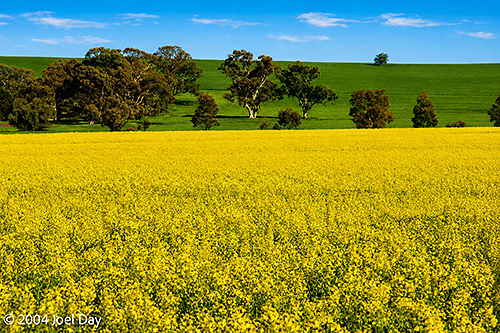
Southern South Australia turned out to be completely different. Except for the flies. The boring desert turned into rolling green and yellow flowering hills and distant mountain ranges. It became absolutely beautiful as I headed into Port Augusta. I was a bit stunned when I arrived in Port Augusta, because I pulled over to take a break at a park and found the sea lapping up at my feet. It suddenly dawned on me that I had just driven entirely across a continent from sea to sea (Timor Sea to the Spencer Gulf).

I continued driving south to Adelaide, Australia’s next largest city after Perth, through beautiful countryside for another three hours. I managed to find a camping spot in a caravan park right next to the beach. Only problem was that it wasn’t warm like it was up north. It was that freezing damp cold I knew too well from living in Melbourne for six months back in 1992. I ended up spending a few nights and a full day in Adelaide before starting my trek back west to Perth.

Adelaide was nice, but the longer I spent there, the more it just seemed like just another big city with the same shops and attractions as any other big Australian city. The one thing Adelaide had that Perth doesn’t (besides being very green and shady and wet) was their Central Market. I started my day there and it was really great. Very much like Reading Terminal Market in Philadelphia. Just about the same size, too. And very well supported by the locals. Lots of fresh produce, fresh meats, fabulous looking deserts and other gourmet foods, surrounded my nice cafes.

After a few days of freezing nights in damp cold, I decided I should start to make my way back to Perth in time to catch my flight to New Zealand.

Australia, South Australia

I slept in a mine shaft…

I’ve now reached the point where I really have to start making some progress in getting back to Perth. One interesting thing about visiting Uluru and The Olga’s was a little short cut from there to Perth. It’s known as “The Gun Barrel Highway”. The problem with it is that it’s all dirt. Not only does it require a 4 wheel drive, it also requires that you have a special permit to use it. And on some stretches of the road I’ve been told that you are not allowed to travel along it unless you are part of a 4 wheel drive convoy. Hmmm…. sounds exciting!

So instead, I’ve found myself having to travel hundreds (if not thousands) of kilometers out of the way to make it back to Perth on sealed (paved) roads in my little two-wheel drive car. This paved route takes me down to Adelaide first (to the south east) and then back west across the Nullabor Plain to Perth.

I’ve already had to backtrack 100’s of kilometers to get out to the main “Stuart Highway” from Uluru and Kings Canyon today. I’m hoping to make it to Adelaide for a few days of battery recharging by tomorrow, but I’ve had to make an evening stop in Coober Pedy for the night.

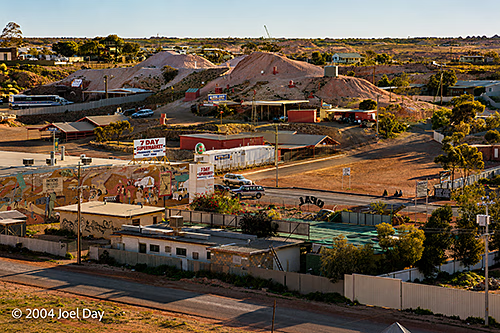
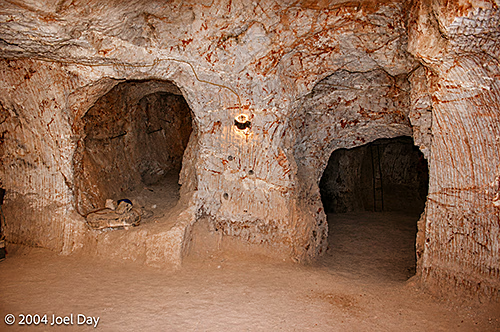
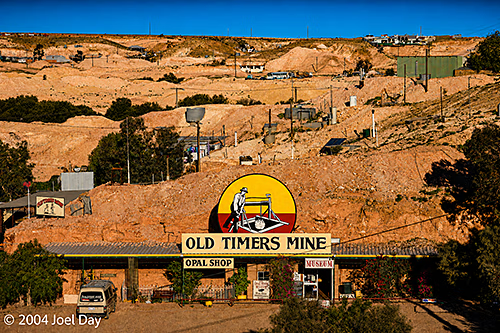
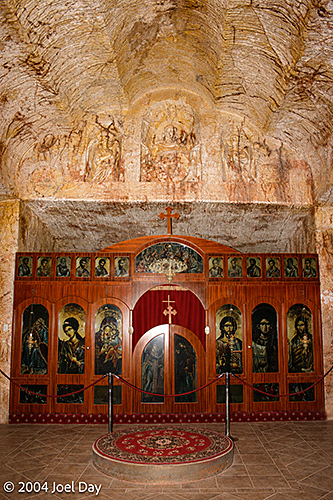
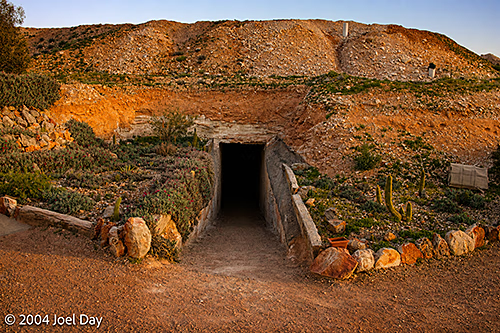
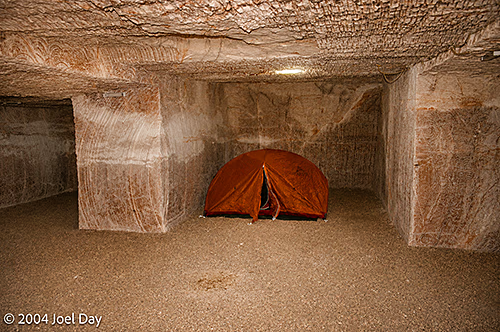
Coober Pedy turned out to be really cool. It is famous for opal mining and has a lot of dwellings in former mines to give locals refuge from the summer heat and cold winter nights. Even the churches, shops, hotels, and hostels (where I’m typing this entry) have made use of the leftover mine shafts. I was even able to find an underground camp site, so I pitched my tent in a mine shaft for the evening. The camp site included a free tour of a former mine.

The tour was conducted by an eccentric mine owner. Eccentricity seems to be standard in these family tour operations I come across. I guess that’s part of what you’re paying for. It was mostly interesting information about how they go about finding where the opals are and what procedure they use to get to them (part voodoo).

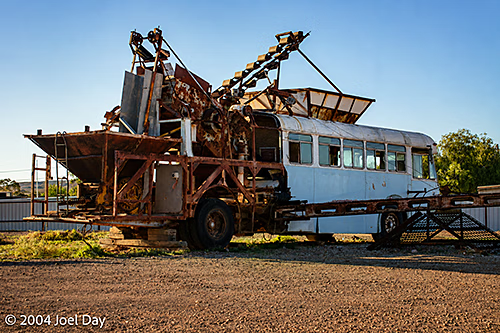
A movie titled Pobby and Dingan was due to begin filming in the same deserted mine the week after I was there. It won’t be the first. The town was littered with artifacts from other famous movies that were filmed in the area, including Mad Max.

The best part about sleeping underground was that I didn’t have to worry about insects or the cold night because the temperature underground always stays the same. The worst part about it was a family of four who set up next to me and snored all night. Oh well. They were very nice, actually. Did the tour with me.

The stars in Coober Pedy were probably the best I’ve seen around Australia, probably due to its very dry desert environment. The Milky Way has been a regular feature in the skies for me over the past three weeks.