For my final night of camping before hopping a flight to Los Angeles, I chose the driest place on the island — knowing I would probably need to dry out my tent before packing it up. The main perimeter road around Kauai dead-ends at either side of the northwestern Na Pali ranges. One side is very wet (near the YMCA where I camped), and this other side was very dry. In fact, it reminded me a bit of Australia and even had one of the nicest beaches I had come across in Hawaii with broad banks of white sand running for miles along the coast. The drive into this area, known as Polihale State Park, was pretty far off the beaten path. There were miles of dirt roads to traverse to get to the very end of the line where the Na Pali Cliffs started, but it was a very serene place to camp for the night, and my neighboring campers all actually seemed to be travelers themselves. It was a very nice was to spend my last night of camping on the island.
One interesting characteristic of this most western point of the most western inhabited Hawaiian Island was all the secret U.S. government installations. Along the cliff tops and along the sand there were mysterious installations for NASA, the U.S. Military, and the Hawaiian National Guard.
After a number of days dodging rainstorms, I was looking forward to seeing the sunny side of Kauai. I made the long trip half way around the island (about a 45 minute drive) down to Salt Pond Park on a Sunday afternoon. Well I blessed my lucky stars that I didn’t schedule a Friday or Saturday night at this place because it was party city. Sunday afternoon was still pretty busy, party-wise, but things finally simmered down in the late evening as families packed up their celebrations and went home to rest up for the coming workweek.
Salt Pond was a pretty nice little spot with a nice sandy beach and a nice calm surf (something hard to find in Kauai this time of year). Like just about every Hawaiian campground I came across, you were expected to park your car far away from your tent. I suppose this is all part of their efforts at discouraging long-term campers, but I found it a bit unnerving to park in dark isolated places late a night without being able to stay near your car. I had a dream sleeping here about repeated car crashes down the road from my office in a city office building only to wake up and realize I was listening to the sound of the surf crashing just meters from my tent. I think I slept closer to the crashing surf here than anywhere else. High tide must have just missed me by ten feet or so.
Not being one to hang around on beaches for very long, I woke up early, packed up my stuff and headed up into Kokee State Park for a day of muddy hiking and exploring. I have to say that up until this point, I was not all that impressed with Kauai. I hadn’t really seen anything on Kauai that I hadn’t already seen on The Big Island. Kokee State Park was definitely different, and really quite spectacular. 4000 feet up in a rain forest, Kokee State Park had lots of nice hiking trails, a grand canyon, and a spectacular view out over The Kalalau Valley, where the Na Pali Trail ends up.
Although the canyon wasn’t nearly as big as the Grand Canyon in Arizona, it was much greener and very beautiful. And while the region was known for its persistent rain, I happened to luck out and see the Na Pali cliffs overlook with anything but deep blue sky. This place even had really nice individual campsites, carved out of the rainforest undergrowth. The only problem I ran into was with the jungle chickens and roosters (known as Moa) that insisted on cock-a-doodle-doing all night long. The Moa were introduced by Polynesian visitors ions ago and have been removed from all the other Hawaiian Islands but this one.
Spending a few nights in Kapaʻa allowed me to get the rest of my accommodation organised for my week on Kauai. I did my research before descending on this place and learned that camping was really the only budget accommodation option. And like The Big Island, the state and county (island) parks required you to know exactly where you want to be and when. I spent my first afternoon cruising around to visit the various beach parks to see what the camping was like. After all, the island really isn’t that big.
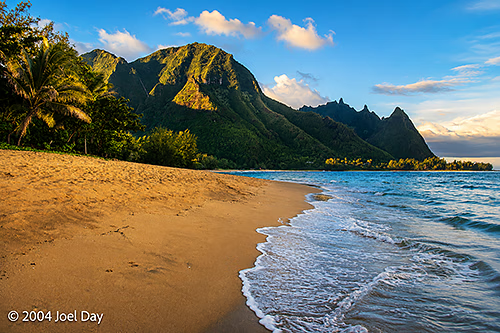
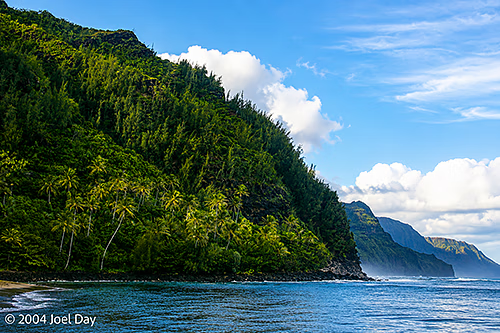
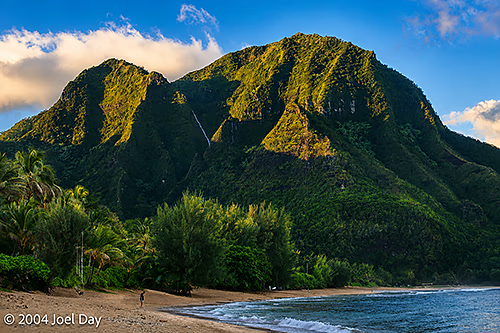
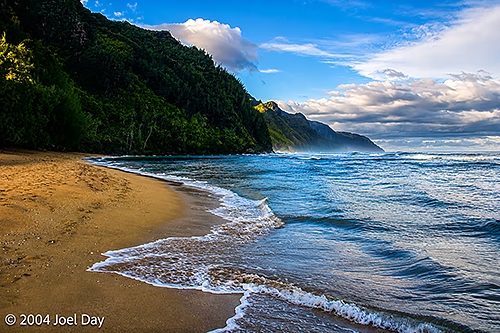
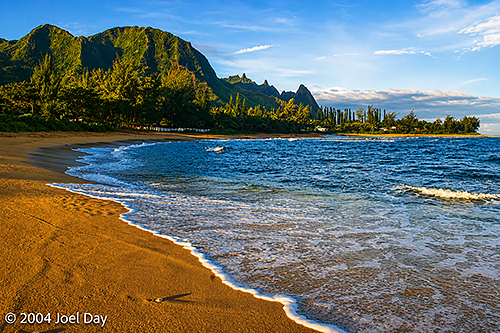
Hāʻena State Park, Island of Kauai, Hawai’i
What I hadn’t anticipated was how much rain this place gets. The rainiest point on top of Mount Waialeale averages more than 40 feet (12+ meters) of rain a year! And I thought Milford Sound in New Zealand was wet! Fortunately, the coastal areas aren’t THAT bad, but they are still very wet on the eastern and northern coasts. My strategy was to camp where it’s wet first so I could use the camping where it’s dry (in the south and west) to dry out my tent before I have to pack it up for another flight.
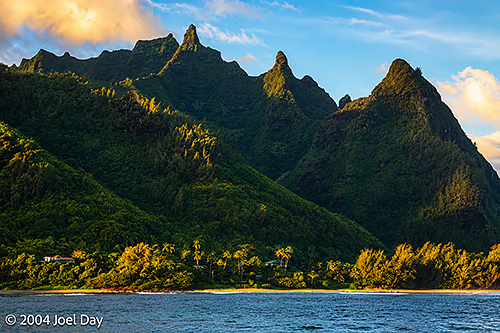
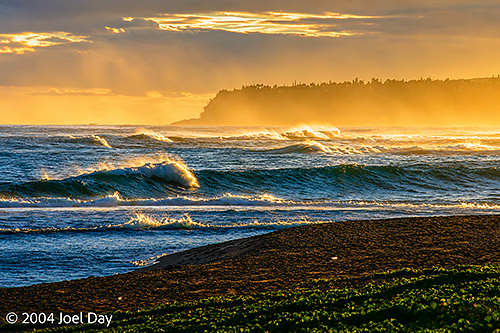
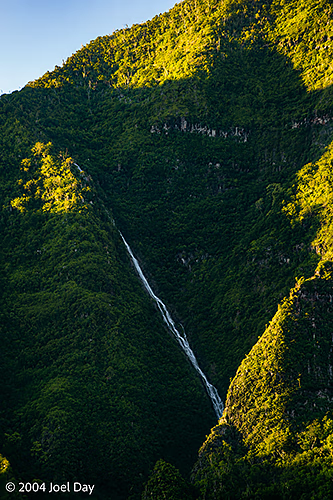
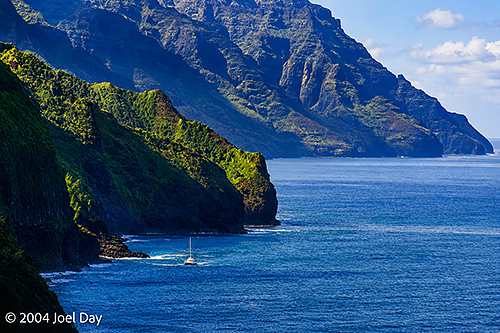
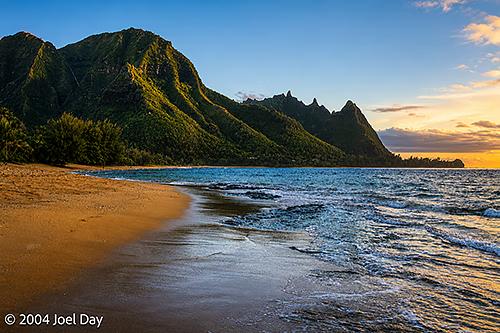
Hāʻena Point, Island of Kauai, Hawai’iHāʻena State Park, Island of Kauai, Hawai’iHāʻena State Park, Island of Kauai, Hawai’i
My first night of camping started out very nice. I found a beautiful spot right on the beach under some pine trees at Anini Beach Park. The swimming was very nice, but as with most of Kauai at this time of the year, the sea was a bit too rough for good clear snorkelling. There was a brief shower after I got my tent set up, but no other precipitation problems until around 6 AM. I wouldn’t have minded a downpour overnight while I stayed nice and dry in my tent, but an 8-hour downpour starting at 6 AM is no fun at all — especially when you are expected to pack up your tent and head to your next destination by 10 AM.
Hāʻena Point, Island of Kauai, Hawai’i
With a nice, lightweight freestanding tent, I worked out a strategy to pull up the stakes holding it in place, carry it into the men’s room, and pack it up out of the rain there. It seemed to work okay, and I got the tent and the rest of my gear back in the car. Good for the time being, but the thought of attempting to set the tent back up in the continuing downpour at a dodgy-looking park didn’t thrill me. I was confined to my driver’s seat, where I tried to read papers and pass the time waiting for the downpour to finish.
Hāʻena State Park, Island of Kauai, Hawai’iHāʻena State Park, Island of Kauai, Hawai’i
And then I remembered something about a YMCA camp being available if it wasn’t hosting any groups. I found the deserted place, knocked on all the doors I could find, and, as I was just about to give up, a woman walked across the lawn (in the rain) with her dog. I saw a big pavilion on the far side of the grass on the edge of a beautiful cove and asked whether she’d mind if I pitched my tent under there. It was cool with her, and it turned out to be one of the best spots I found to camp on this island. I could set up my tent out of the pouring rain, sprawl out on the picnic tables and read the paper, cook my meals, and have lots of privacy, darkness, dryness, and quiet when it came time to sleep. I decided to stay there two nights while I explored the area. It was the perfect spot for the rainy climate.
Hāʻena Point, Island of Kauai, Hawai’i
For my last few days on the northern wet coast, I explored the area around Hanalei, Princeville, Haena (where I camped) and the rainforests of the Na Pali Coast. There was a hike I was hoping to make along the spectacular northern cliffs (known as “Bali Hai” in the movie “South Pacific”), but I was advised by the state park service that it was very slippery, very wet, and closed in many sections due to flash flooding. Instead, I did some short hikes and a bit of snorkelling at Tunnel Beach, which turned out okay.
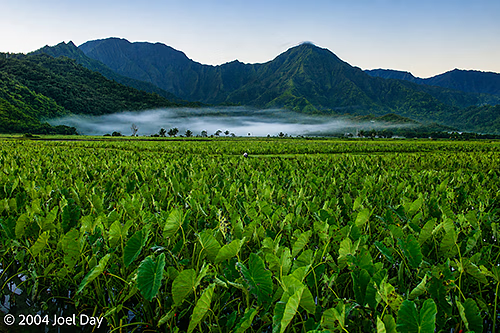
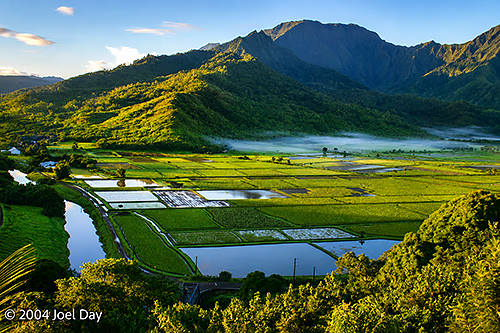
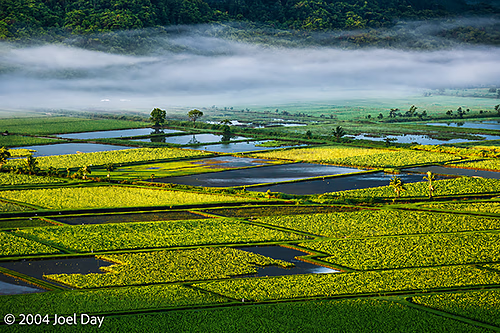
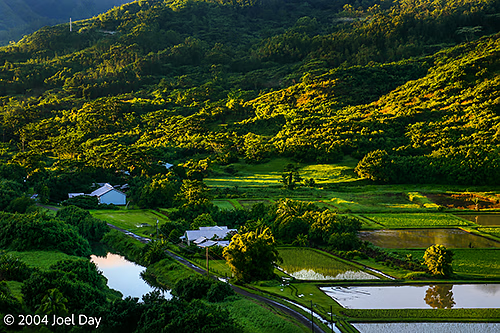
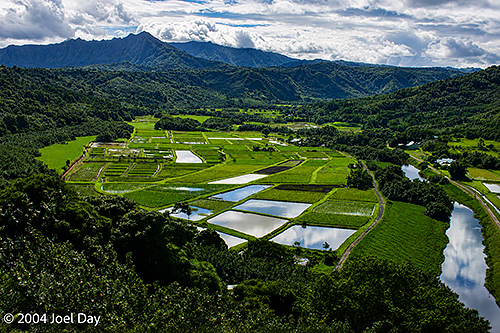
Hawaiian Loʻi Kalo (Taro) fields near Princeville, Island of Kauai, Hawai’iHawaiian Loʻi Kalo (Taro) fields near Princeville, Island of Kauai, Hawai’iHawaiian Loʻi Kalo (Taro) fields near Princeville, Island of Kauai, Hawai’iHawaiian Loʻi Kalo (Taro) fields near Princeville, Island of Kauai, Hawai’iHawaiian Loʻi Kalo (Taro) fields near Princeville, Island of Kauai, Hawai’iHawaiian Loʻi Kalo (Taro) fields near Princeville, Island of Kauai, Hawai’i
After spending a week on Hawaii’s newest island, I hopped a flight from Hilo to Lihue on Hawaii’s oldest and westernmost (inhabited) island: Kauai. Kauai is known as “The Garden Island” for its lush greenery, but all I saw for my first few days there was traffic. Kauai is just a fraction of the size of The Big Island with a population of only 58,000, so there aren’t as many places for tourists to spread out. Basically, there is just one major road that doesn’t even go all the way around the island, and everybody seems to be driving on it. It’s also the wettest place on earth, so there is lots of rain to contend with.
Kapa’a Beach, Island of Kauai, Hawai’i
I decided to head up to the town of Kapaʻa on the east coast as soon as I hit the ground. Although halfway up the island on a map, it was actually only 8 miles from Lihue (where I landed), the biggest town on the island. I found a groovy beach house hostel overlooking the ocean in Kapaʻa. I later realised it was the only hostel worth staying at on the whole island.
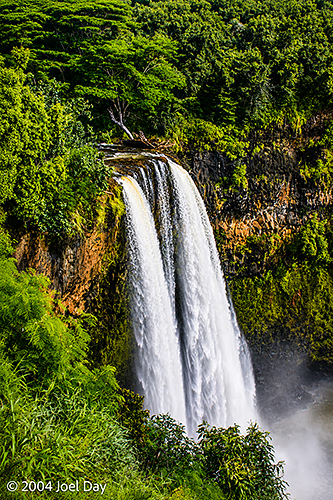
Wailua Falls, Island of Kauai, Hawai’i
On the one hand, the laid-back hostel owner, a purported chiropractor (who never seemed to see any clients), had done a nice job setting the hostel up with mosquito nets and drapes around each bed for privacy. There was a nice constant sea breeze flowing through the premises to cool things down in the evening. On the downside, it quickly became apparent that most of the tenants were long-term.
Most of the hostels I visited in Hawaii seemed deserted, perhaps because of restrictions on how long a visitor could stay. I witnessed two people being kicked out of a HI hostel in Honolulu for overstaying their welcome. This one hostel in Kapaʻa was about half full, but most of the tenants seemed to have had menial jobs in the area and old clunker cars parked out back. They had no real ambition other than to live in Hawaii. The showers were full of old half-used shampoo bottles, just like you would expect to find in someone’s private bathroom. These are the kinds of things you wouldn’t find in most hostels. And the long-term tenants seemed a bit flaky, too. You would ask someone why he or she chose to live on a particular island, and they would respond with phrases like, “I didn’t choose this island. It chose me!”
The problem I find with allowing long-term tenants is they’re not interested in what they perceive as transient tenants, like myself. They’re only interested in networking with other mainlanders who share the same lame ambitions as they do. The whole fun of staying in hostels is meeting other travellers from around the world with similar interests and comparing notes on what’s worth seeing and what’s worth skipping. This policy of allowing long-term tenants made my stay at this hostel somewhat awkward after a few days.
One thing I found different about backpacking around Hawaii was the tourists. Where in most countries you would find about half local tourists, lots of other people from all over the world, and a smattering of American visitors, Hawaii seemed to be 99% Americans and hardly anyone else. And while most Americans seemed to end up at resorts as part of package deals, the low-budget places were full not of tourists but of mainlanders trying to make a go of it in Hawaii.
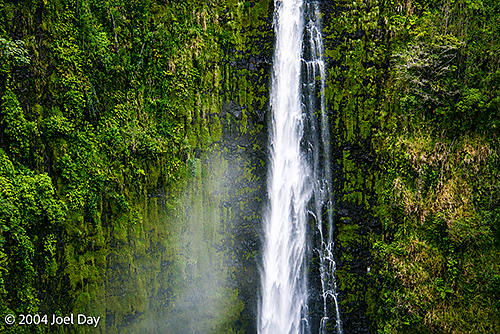
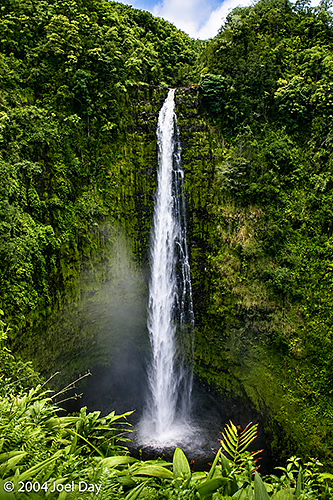
My last full day on The Big Island was quite a fitting one. As an island that is immensely diverse, with every climate imaginable and elevations that range from a warm sea level to a freezing, snow-capped 13,796-foot-high Mauna Kea Mountain, I figured it would be good to start under the ocean and end up in the stars. Sure enough, I started the day snorkelling in my newfound favourite spot of Puako north of Kona before heading up around the northern rim of the island, past the amazing 420-foot-high Akaka Falls on my way back to my Hilo hotel. From there I made an evening side-trip up the forbidden Saddle Road to an elevation of 9200 feet where the Onizuka Center of International Astronomy Visitor Center is positioned, just below the summit, for an evening of stargazing from just below one of the most revered astronomy locations in the world.
128m / 420ft high ʻAkaka Falls, Island of Hawai’i, Hawai’i128m / 420ft high ʻAkaka Falls, Island of Hawai’i, Hawai’i128m / 420ft high ʻAkaka Falls, Island of Hawai’i, Hawai’i
Mauna Kea is home to multimillion-dollar observatories operated by top scientists from the U.S., the U.K., and Japan. No matter how crappy the weather may be below, this mountain is high enough to poke through the clouds of most storm systems, and it is isolated enough from light pollution elsewhere in the world to offer a better view of space than anywhere else on Earth. The cities of Hilo and Kona even use special low-density, dark-yellow streetlights that emit a single wavelength, so astronomers can filter them out of their observations.
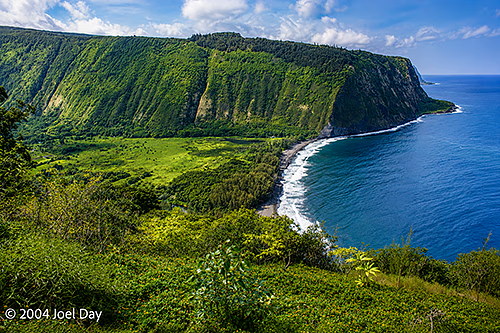
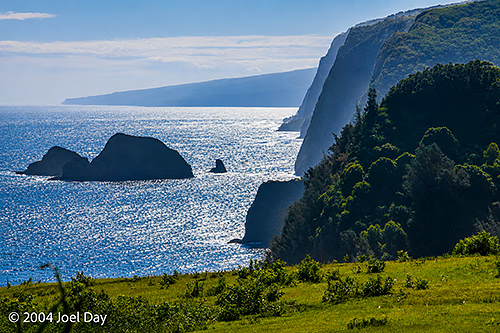
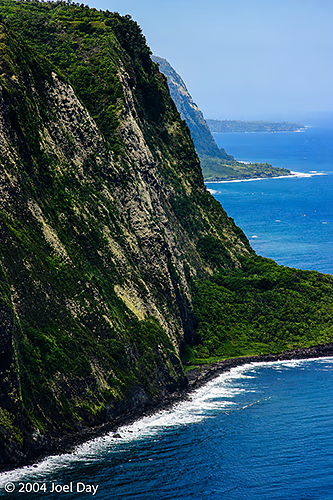
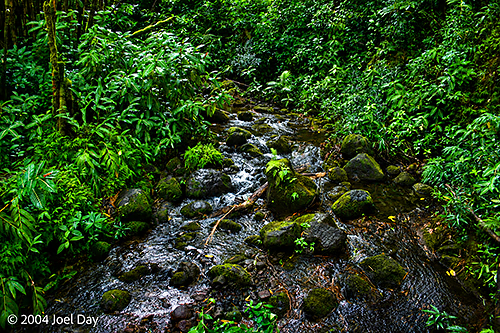
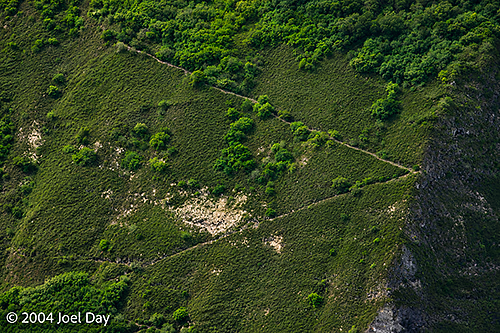
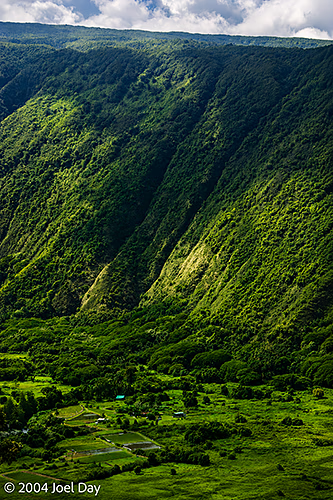
Pololū Valley Lookout on the northern end of the Island of Hawai’i, Hawai’iNorthern coast beyond Waipiʻo Valley, Island of Hawai’i, Hawai’iRainforest Creek, Island of Hawai’i, Hawai’i
The locals in Hilo also seem to like to have a bit of fun living in the tropics while being so close to the snow-capped peaks on the island. On one occasion while I was driving through Hilo, I noticed a pickup truck full of snow parked in front of a local high school. The students were using it to supply ammunition for a big snowball fight on the school’s front lawn in the hot, balmy tropical weather. What an odd scene!
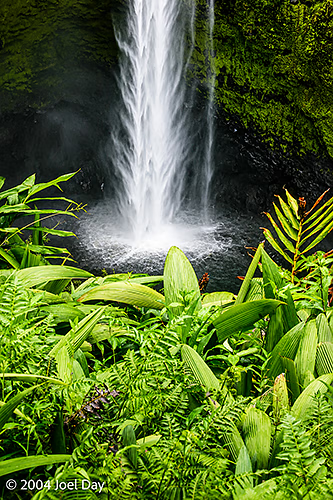
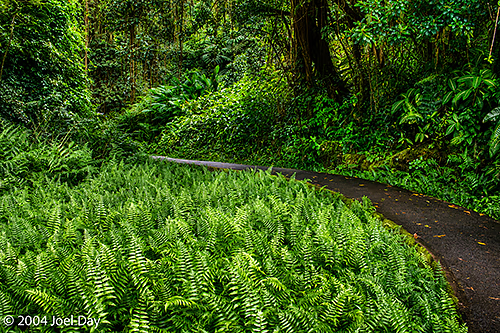
Steep trail descending into Waipiʻo Valley, Island of Hawai’i, Hawai’iWaipiʻo Valley, Island of Hawai’i, Hawai’iFerns along trail to 128m / 420ft high ʻAkaka Falls, Island of Hawai’i, Hawai’i
It was a pretty long, but very cool day. The north side of the Big Island was quite spectacular.
Like most Hawaiian Islands, the Big Island has a very wet windward coast on the east and a very dry leeward coast in the west. The rain forests on the windward coasts are usually really fascinating and full of hippies (or “ferals”, as they are known in Australia), but the constant rain and dampness can eventually start to wear you down. The dry, leeward coasts offer much warmer and sunnier weather with much calmer surf. Of course, the heat in these places can start to wear you down just as quickly.
It seems most visitors to places like the Hawaiian and Fiji Islands are primarily interested in hanging out on a beach, so these dry coasts seem to attract most tourists and tourist resorts. I can’t say I’m much for hanging out on beaches personally, but it’s nice to do a bit of everything while you’re travelling. And besides, there are some places in these areas that are good for snorkelling, and that is something I do like to do.
So there amongst the $500-a-night resorts, including a multi-million dollar Hilton (dubbed “Disneyland” by the locals), I checked into my $20-a-night cabin with ocean views overlooking Hapuna Beach State Park. Okay, it was pretty basic, and it looked like it hadn’t really had any maintenance since it was built in the 1970’s — but it did the trick and was a short walk from a fabulous beach. After being visited by a few spiders, geckos, mosquitoes, ant colonies and mice in my cabin, I just decided to pitch my freestanding tent on the floor so I could sleep in peace. I’ve been used to such nighttime visitors since I first arrived in Fiji.
Hapuna Beach State Park was a good base to use for swimming and some decent snorkelling along some reefs near the southern end of the cove. But the really nice snorkelling was a few clicks down the road behind a wealthy neighbourhood called Puako. I knew I had found a great spot when I spotted an expensive snorkelling tour operator anchored just offshore and other divers climbing out of the surf. Sure enough, it was one of the best snorkelling spots I’ve ever found, with loads of colourful tropical fish swimming into and out of deep canyons a few hundred feet offshore. The divers told me they liked it for the big underwater lava tube they could explore.
While I stayed at Hapuna Beach State Park, I also did the obligatory visit to the Hilton Waikoloa Village (aka Disneyland) — just to see how the other half lives. The answer? They live just like they do at home, with giant shopping malls right there on the beach with them. It reminded me more of King of Prussia Mall than anything else. And to think that King of Prussia is what I try to take vacations from…
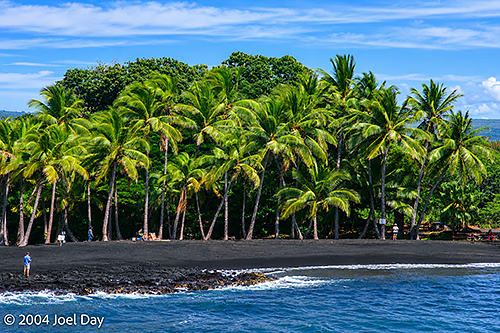
Black Sand and Palm Trees of Punalu’u Beach, Island of Hawai’i, Hawai’i
When I travel, I don’t like to be too organised with accommodation reservations. Part of the fun, for me, is letting myself drift to whatever areas interest me. This strategy works well during low-tourist seasons, but it can backfire when the crowds come in. This made travelling through some parts of New Zealand and Australia difficult.
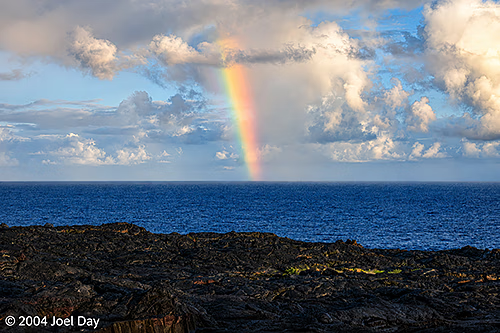
Pacific Ocean Rainbow, Hawai’i Volcanoes National Park, Island of Hawai’i, Hawai’i
Tourism on the Big Island of Hawaii seemed to be at its low point when I flew in, so I thought I would just wing it with accommodation as I made my way around the island. The only problem with Hawaii is that it doesn’t really cater for backpackers like many countries do, and finding cheap accommodation can get a bit difficult. One of the cheapest ways to spend a night is by camping in the numerous state and county (island) parks. The only problem with camping in Hawaii is that you are expected to know exactly which campsites you want to camp in and commit to specific dates as early as possible. Prices range from $3 for county parks to $5 for state parks.
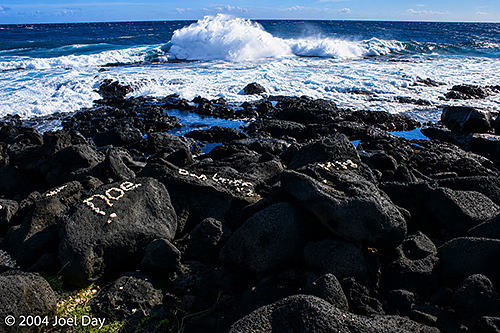
Southernmost Point of the 50 United States, Island of Hawai’i, Hawai’i
Before I left Hawaiian Volcanoes National Park (where camping was fabulous and free), I made an effort to organise my accommodation for the rest of my stay on the Big Island. This required that I make a trip back to Hilo to visit the state park system offices to make my reservations and pay my dues. I thought I was all squared away and continued on my journey from Hawaiian Volcanoes National Park down around the southern end of the island (where I popped down to see Ka Lae, the very southernmost point in the USA) before dropping off at Manuka State Wayside Park.
Much to my dismay, the Manuka State Wayside Park was a real dive. It was right along the main highway circling the island, and there was a constant stream of drunken locals dropping by to use the restrooms, and there were no other campers in sight. I couldn’t even find where I was supposed to camp in the first place.
A few hours before nightfall, I decided to see what other places I could spend the night at up the west coast (in the direction I was heading). There were very few options listed in my Lonely Planet Guide, and I had a lot of trouble finding them. Some were in seemingly unwelcome neighbourhoods with no one answering their doors; others were just too hard to find. After a long, frantic search, I finally ended up at a sister hostel to the one I stayed at on the east coast in Mountain View. This one was in the town of Captain Cook, which I thought was fitting for me since it’s where the Hawaiians killed the European founder of Australia.
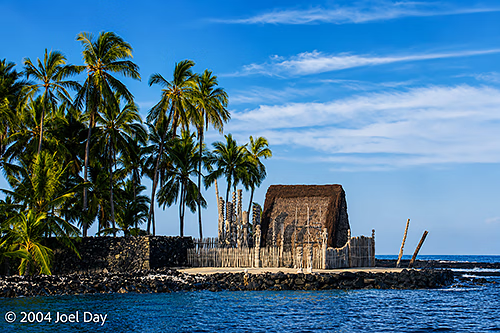
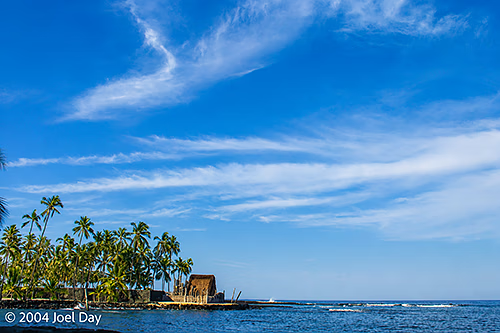
Hale o Keawe at Puʻuhonua o Hōnaunau National Historical Park, Island of Hawai’i, Hawai’i
I was expecting a nice hostel due to its association with the Mountain View hostel on the East Coast, but this place was really nothing special. The son of the eccentric woman running the East Coast hostel ran it, and you sure could see the family resemblance. Like many other former mainlanders I’ve met around here in their late fifties, the owner seemed to be an aging hippie who was bitter and cynical about a life spent too long in what was supposed to be paradise. Perhaps he lived there for decades, and his island life didn’t turn out as he had hoped. Nevertheless, I really had no option but to spend the night and avoid his proselytising friend (whom he warned me about when I checked in).
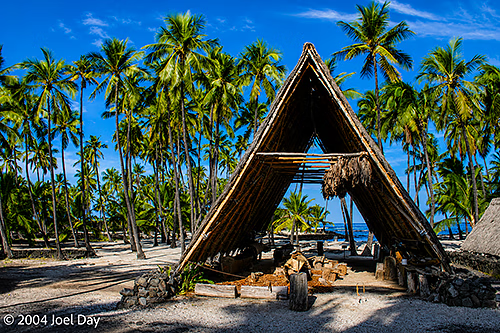
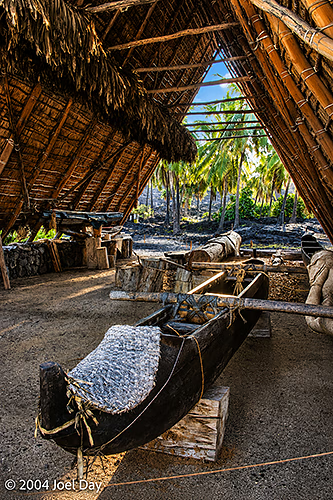
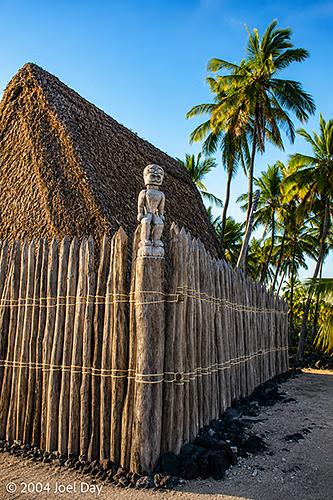
Thatched Shelter at Puʻuhonua o Hōnaunau National Historical Park, Island of Hawai’i, Hawai’i
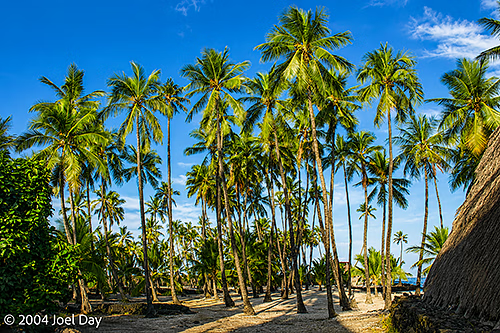
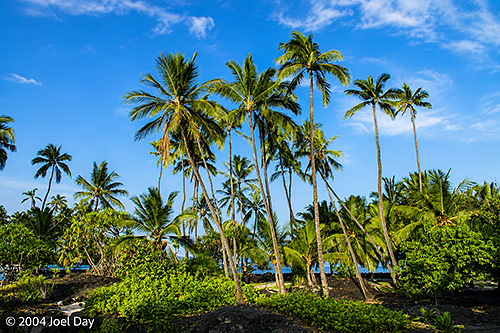
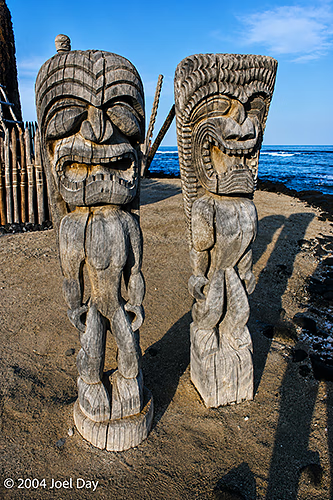
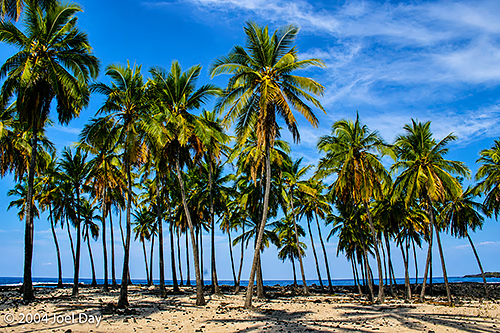
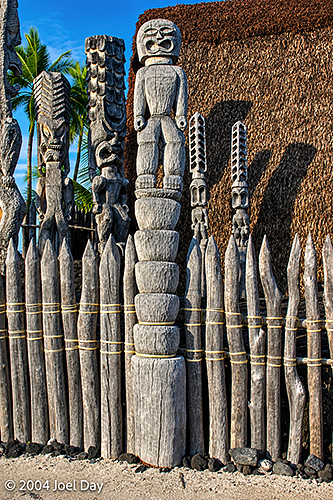
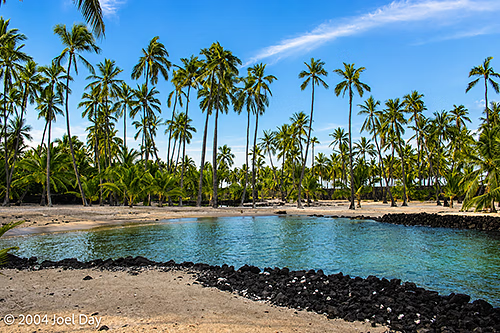
I ducked out early in the morning and headed down to a really cool and beautiful National Historical Park on Hōnaunau Point called Puʻuhonua o Hōnaunau. Like the other National Parks I came across in Hawaii, it was much nicer than the state and county parks. Historically, Puʻuhonua o Hōnaunau was a safe haven where Hawaiians could escape to avoid death sentences. It is also a place where many powerful chiefs of the Hawaiian Islands once lived. It’s yet another place around here that Mark Twain visited and wrote about. The views around Puʻuhonua o Hōnaunau were more along the lines of what people envision the paradise of Hawaii to be like, and less like what it really is.
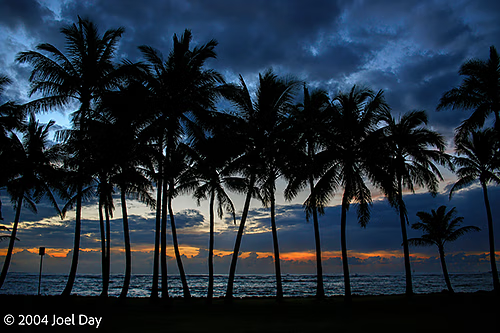
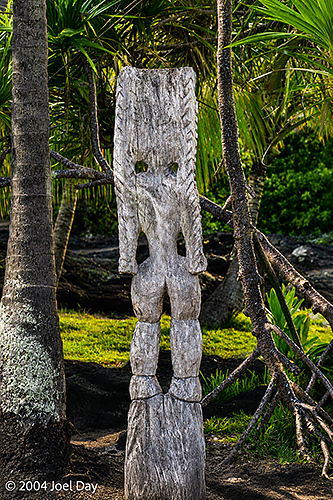
Palm Trees on Beach at Puʻuhonua o Hōnaunau National Historical Park, Island of Hawai’i, Hawai’iThatched Shelter at Puʻuhonua o Hōnaunau National Historical Park, Island of Hawai’i, Hawai’iPalm Trees on Beach at Puʻuhonua o Hōnaunau National Historical Park, Island of Hawai’i, Hawai’iGuardians of Hale o Keawe at Puʻuhonua o Hōnaunau National Historical Park, Island of Hawai’i, Hawai’iPalm Trees on Beach at Puʻuhonua o Hōnaunau National Historical Park, Island of Hawai’i, Hawai’iHale o Keawe at Puʻuhonua o Hōnaunau National Historical Park, Island of Hawai’i, Hawai’iPalm Trees on Beach at Puʻuhonua o Hōnaunau National Historical Park, Island of Hawai’i, Hawai’iHale o Keawe at Puʻuhonua o Hōnaunau National Historical Park, Island of Hawai’i, Hawai’iHale o Keawe at Puʻuhonua o Hōnaunau National Historical Park, Island of Hawai’i, Hawai’iGuardian of Hale o Keawe at Puʻuhonua o Hōnaunau National Historical Park, Island of Hawai’i, Hawai’i
After spending a few early hours around Puʻuhonua o Hōnaunau, I started to head up north to my next night’s destination: Hapuna Beach.
You must be logged in to post a comment.